EN / FR
Skip to main content

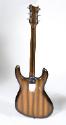
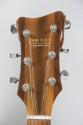
Joyce Smith Electric Guitar

Not available for use in Recording Studios
On exhibit
On exhibit
Artifact TypeGuitar, Electric
Manufacturer Frank Gay guitar-maker | born 1920 - 1982
Manufacturer LocationAlberta, Canada
Date20th Century

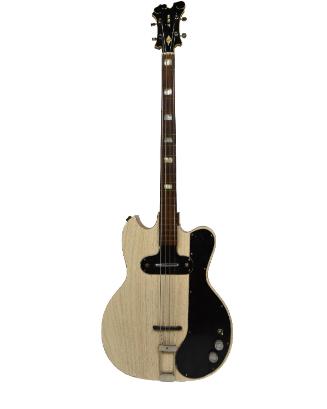
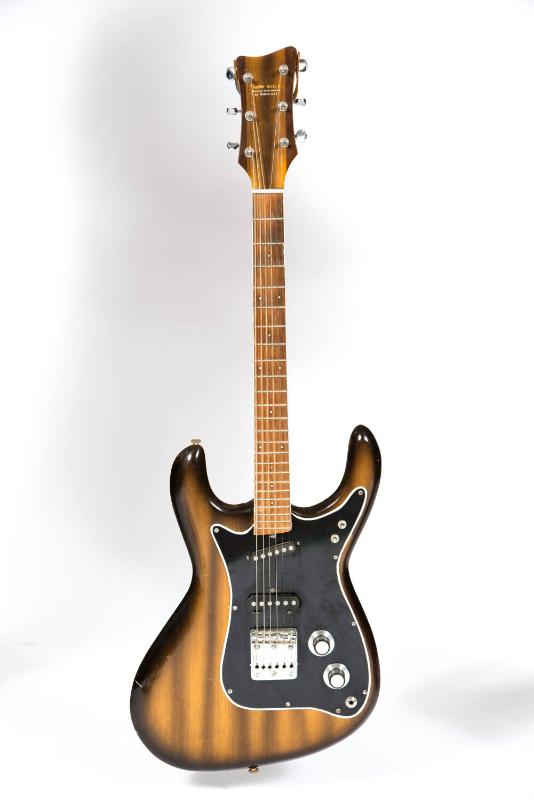
This electric guitar was once owned by Canadian country music legend Joyce Smith. A longtime Edmonton resident, Smith found early fame on CHED’s “Jubilee Jamboree,” but it was her song “Leavin’ on Your Mind,” a hit for Patsy Cline in 1963, that truly made her career. The guitar was built by Canadian musician and instrument maker Frank Gay—whose early steel-string acoustic guitars were a favourite with the likes of Johnny Cash and Hank Snow.


On loan from Joyce Smith

Operation/FunctionThis particular artifact consists of a solid wooden body, six steel strings, a wooden neck, and accompanying machine heads and metal fingerboard. It employs standard tuning, with open string pitches beginning at the bottom with the highest pitch, the E a major third above middle C, and moving downwards in pitch by a fourth to B, downwards by a major third to G, downwards by a fourth to D, downwards by a fourth to A, and downwards by a fourth to E, spanning two octaves in total. The instrument is referred to as being ‘standard-handed’, meaning it is to be strummed with the right hand while the left hand controls the frets.Cultural SignificanceThe cultural significance of both the acoustic and electric guitar cannot be overstated. Gibson remains at the forefront of guitar manufacture as one of the leading companies. Although the acoustic guitar is perhaps not used quite as commonly as the electric guitar, both have remained throughout the course of the twentieth century one of, if not the most, exploited instruments in popular music.Technological SignificanceBoth acoustic and electric guitars have undergone a number of technological advances that have improved their tone and construction quality, however it is the mere advent of the latter that has had the most lasting technological impact. Les Paul (1915 – 2009) helped pioneer both the design and popularity of the electric guitar, and is considered one of the founders of solid-body technology, having produced a prototype called “The Log” in 1940. Additionally, Paul also conducted a number of experiments in guitar design and recording technology, essentially establishing the revolutionary practices of multi-track recording and overdubbing, as well as delay and phasing effects. Fender was the first company to produce a commercial solid-body electric guitar in 1950 with the release of the Telecaster, and Gibson responded in 1952 with the Les Paul, named in recognition of the fact that Paul helped design the instrument with Gibson’s president of the time, Ted McCarty. Gibson also contributed several other innovations throughout its history, including the Tune-o-matic bridge, which first featured on the Les Paul and remains the standard bridge of Gibson electric guitars, as well as the first semi-hollow-body electric guitar in 1958. Gibson also produced the first commercial humbucker pickup, designed in 1955 and patented in 1959, which eliminated the hum of single-coil pickups without compromising the tone quality. In the late 1950s and early 1960s, Gibson also premiered several series of electric guitars that featured futuristic body shapes, including the Flying V, Explorer, and Firebird. Although the acoustic guitar is not recognized as having made as significant a contribution in instrument technology, it has also seen many important changes throughout its history. The instrument finds it origins in the lute, which featured a varying number of gut strings and was most popular throughout the Renaissance, and the Baroque guitar, which featured five sets or courses of gut strings and eclipsed the popularity of the lute in the early eighteenth century. The majority of usage of such instruments took place in Europe, however a number of variants of these instruments, such as the Middle Eastern oud, were equally as prevalent. The modern guitar shares the same basic construction approach as its predecessors, consisting of a curved wooden sound box and soundboard, designed to optimize amplification and tone quality, as well as a neck and fretboard across which a series of tuned strings are strung. Although performance techniques and tuning systems have been considerably adapted over the years, the same basic approach of plucking or strumming with one hand and coordinating frets with the other has also been maintained. The modern acoustic guitar was pioneered by the American C.F. Martin & Company, which was founded in 1833 by the German craftsman Christian Frederick Martin. Martin established the body shape and size still used in modern acoustic guitars, which employed a larger lower bout, smaller upper bout, and deeper box than its Classical predecessors so as to produce a louder volume and accentuate bass frequencies. Martin’s design was known as the “dreadnought”, and quickly became the most common body style on account of its ability to project the guitar above other instruments in an ensemble. Martin was also pivotal in introducing steel strings to replace the nylon strings used in Classical guitars. Steel strings significantly altered the structural requirements of the instrument and, along with Martin’s inclusion of a series of bracing pieces in the box and the truss rod in the headstock, further enhanced the tone quality and volume. Most modern pickups come in the form of the humbucker pickup, which employs two coils in inverse phase so as to reduce the amount of extraneous noise or AC hum included in the signal. The first dedicated pickup was designed by Hawaiian steel-guitar player, George Beauchamp, in collaboration with Adolph Rickenbacker in the early 1930s. The use of pickups rendered any need for a hollow wooden soundboard or resonating structure obsolete in associated instruments. Of course, the use of pickups also meant that the conventional tone of the acoustic instruments to which they were applied, such as guitars, pianos, and harpsichords, could be modified through the use of external effects pedals and amplification systems.Users/PerformersJoyce Smith was born on 22 October 1940 in Lethbridge, Alberta, later settling in Edmonton, Alberta at the age of twelve. Smith displayed a talent for musical ventures at an early age, singing and performing both on the radio and television as a teenager, including guest appearances on “The Noon Show”, “The Chuckwagon Show”, and CHED’s “Jubilee Jamboree”. Smith also performed in the group, Rogers Brothers Band, who served as the opening act for many notable groups, both locally and throughout the country, including George Jones, Wilf Carter, and Hank Snow. It was not long before Smith was maintaining a steady performance and recording schedule, eventually earning the opportunity to work with legendary producer Owen Bradley at Columbia Studios in Nashville, Tennessee. Her hit, “Leavin’ on Your Mind”, was later recorded by Patsy Cline in 1963. Smith has released a total of six albums and numerous singles, and has toured extensively throughout Canada, the US, and Europe. She was inducted into the Alberta Country Music Hall of Fame in 1991, and the CCMA Hall of Honour in 2010, and was the recipient of the prestigious ‘Bev Munro Award of Dedication’ in 2002. She was married in 1962 to George Myren, a former Canadian champion bronco rider and bass player, and have resided in Edmonton since 1964.
Object numberT.2016.05.01
Photo credit: Meghan MacKrous, courtesy of the National Music Centre
Frank Gay
1957
Not available for use in Recording Studios
On View: Not currently on exhibit
isVirtual:
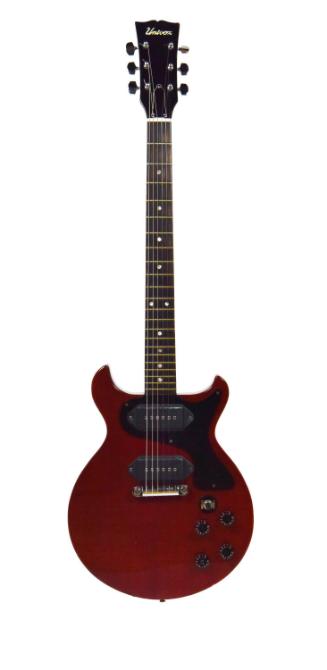
Photograph by Meghan MacKrous, courtesy of the National Music Centre.
Not available for use in Recording Studios
On View: On exhibit
isVirtual:
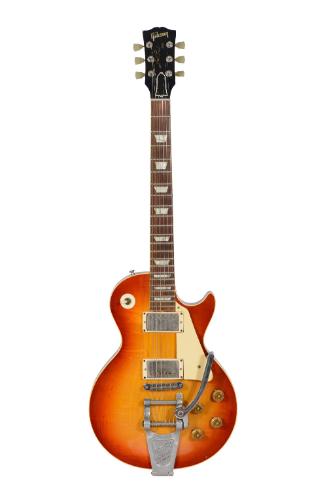
Photo credit: Don Kennedy
Gibson Guitar Corporation
1959
Not available for use in Recording Studios
On View: Not currently on exhibit
isVirtual:
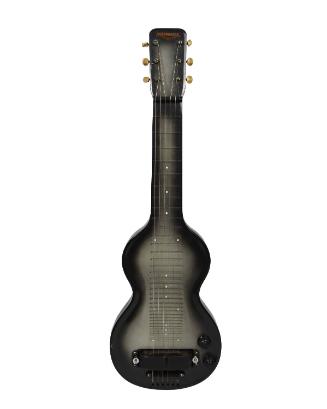
Photo credit: Meghan MacKrous, courtesy of the National Music Centre
Rickenbacker International Corporation
c. 1941
Available for use in Recording Studios
On View: Not currently on exhibit
isVirtual:
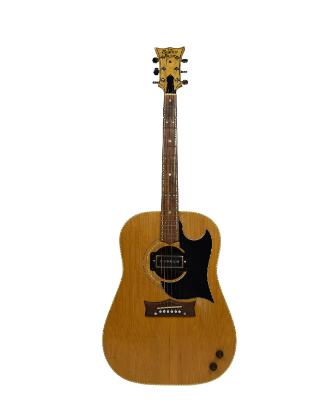
Photo credit: Meghan MacKrous, courtesy of the National Music Centre
Grammer Guitar Inc (Ampeg Corporation)
1971
Available for use in Recording Studios
On View: Not currently on exhibit
isVirtual:
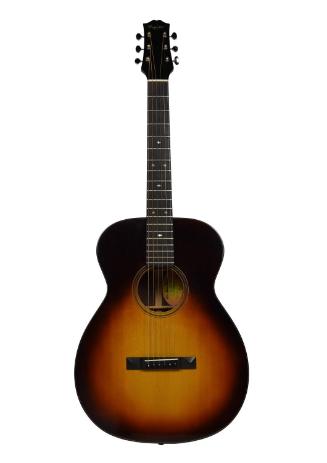
Photo credit: Meghan MacKrous, courtesy of the National Music Centre
2009
Available for use in Recording Studios
On View: Not currently on exhibit
isVirtual:
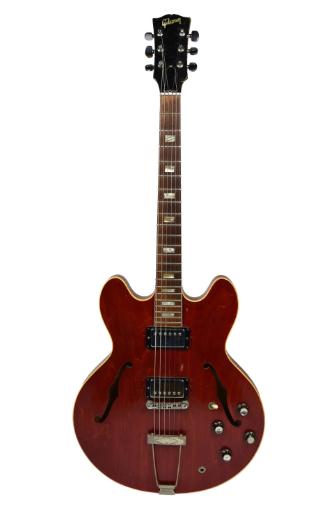
Photo credit: Meghan MacKrous courtesy of the National Music Centre
Gibson Guitar Corporation
1961
Not available for use in Recording Studios
On View: On exhibit
isVirtual:
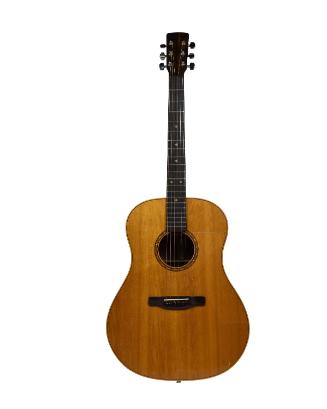
Photo credit: Meghan MacKrous, courtesy of the National Music Centre
1980
Available for use in Recording Studios
On View: Not currently on exhibit
isVirtual:
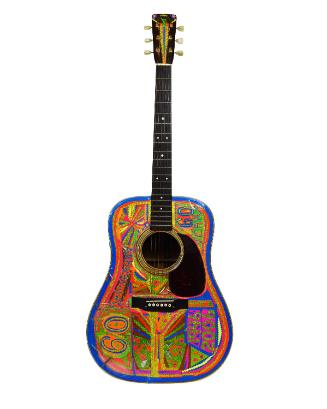
Photo Credit: Meghan MacKrous courtesty of the National Music Centre
c. 1960
Available for use in Recording Studios
On View: Not currently on exhibit
isVirtual:
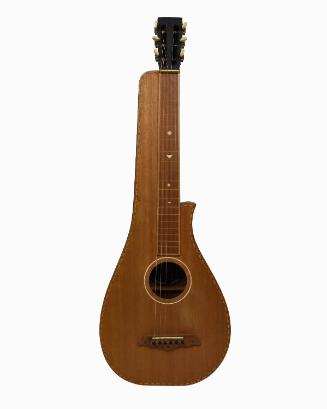
Photo Credit: Meghan MacKrous, courtesy of the National Music Centre
Greenfield Hawaiian Guitars
1930
Not available for use in Recording Studios
On View: Not currently on exhibit
isVirtual:
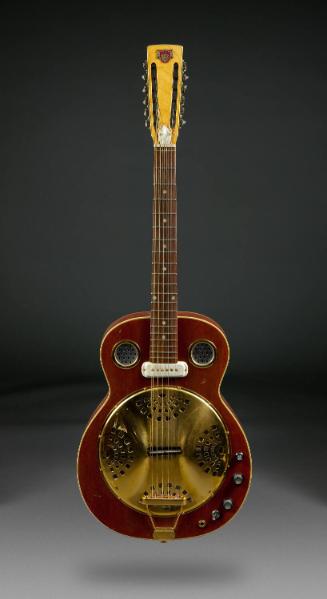
Photograph by Don Kennedy.
Not available for use in Recording Studios
On View: On exhibit
isVirtual:
Photograph by Don Kennedy.
Not available for use in Recording Studios
On View: On exhibit
isVirtual:
Back