EN / FR
Skip to main content

Roger Luther Moog

Available for use in Recording Studios
Not currently on exhibit
Artifact TypeSynthesizer
Manufacturer R.A. Moog Inc./ Moog Music Inc. (division of Norlin Music Instruments, Ltd.) (division of Norlin Music Instruments, Ltd.)
Customized by Roger Luther
Manufacturer LocationUSA, North America
Datec. 1973
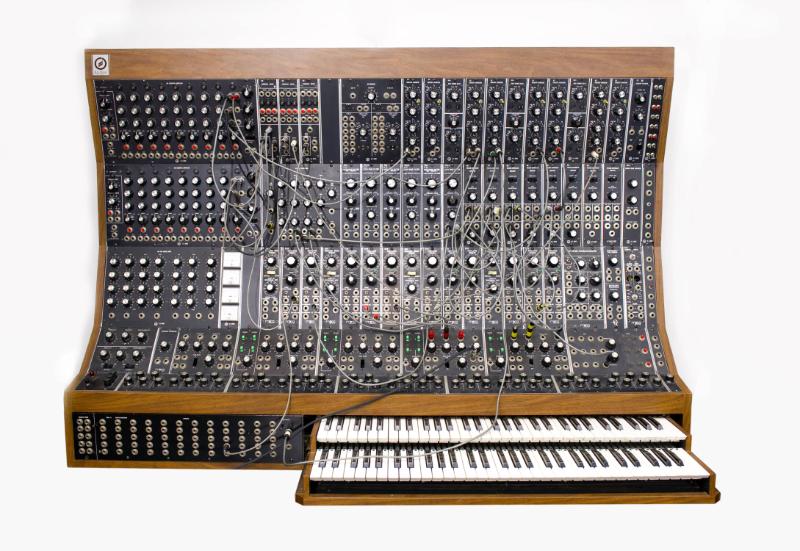
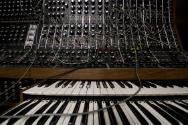
The modular synthesis technology developed by Moog incorporated various modules for sound production, manipulation, and amplification within a single cabinet—allowing for uninhibited methods of experimentation and control. This innovation set the standard that was followed and expanded on by every other manufacturer in the 1970s and 1980s—with several of Moog’s module creations becoming essential components of standard synthesizer design. This particular system was customized by former Moog employee, Roger Luther, who joined the company as a technician in 1972 and served as the company’s General Manager until 1993. 
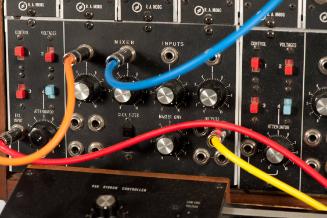
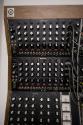
Operation/FunctionThis particular artifact is a customized, analog modular synthesizer system. This system contains 53 basic modules along with associated mixer modules, keyboards, and switchboard module housed within a wooden ‘angled U’ cabinet. Arranged from top to bottom, left to right, this system contains the following modules: 960 Sequential Controller, with three rows of eight steps each; 962 Sequential Switch (x2); 961 Interface, for sequencer, which includes voltage-trigger inputs and S-trigger output; three groups of 911 Envelope Generator (x2), with ADSR labeled as ‘T1’, ‘T2’, ‘T3’, and ‘E’, and 911-A Dual Trigger Delay; one grouping of 911 Envelope Generator (x2) and 912 Envelope Follower; 960 Sequential Controller; 914 Fixed Filter Bank, with twelve bands split between 125 Hz and 5.6 kHz and both high- and low-pass knobs; three groups of 904 and 904A Voltage Controlled Low Pass Filter, with 24 dB/octave scaling; 902 Voltage Controlled Amplifier (x8), 903A Random Signal Generator, producing either white or pink noise; 984 Four Channel Mixer; 921A Oscillator Driver (x4); 921B Voltage Controlled Oscillator (x11), with sine, triangle, square (pulse), and sawtooth waveforms, also functional as a low frequency oscillator; 921 Voltage Controlled Oscillator; 928 Sample Hold; as well as additional envelope and frequency followers, mixer modules, 950 and 950A 49-note and 91-note keyboards, 950C switchboard, and associated power supply. It employs 1/4”, or phone jacks for patching.Cultural SignificanceModular synthesis has left an indelible mark on the way in which current trends in synthesizer design are informed. In the 1960s, these instruments offered a way forward for composers and musicians who felt stifled by the rigour of early electronic music techniques, such as those practiced in Germany and France throughout the 1950s. They promised new timbres and uninhibited methods of control and ultimately set into motion the foundations of synthesis practices that would follow throughout the 1970s and 1980s. Although these bulky and cumbersome analog machines did not survive the technological and commercial advances of the late 1970s, the modular spirit was revived at the turn of the century and, today, this flexible design still proves to be a desirable and fruitful approach to music making. Historically, Robert Moog is perhaps the most notable synthesizer manufacturer referenced in popular culture; so much so that the name ‘Moog’ is often used in layman vernacular to describe the term ‘synthesizer’, regardless of the actual manufacturer, not unlike brand names ‘Kleenex’ and ‘Q-Tip’. Although Moog instruments were not the choice of all musicians – with many experimentally-minded composers opting for the more flexible Buchla systems and most European composers relying on the readily-available EMS systems emerging out of London – they were by far the most commercially successful, permeating popular music in a manner that few other manufacturers experienced throughout the 1970s. The cultural impact of the Moog modular system was eclipsed only by that of the hugely iconic Minimoog of 1970. Although the invention of the first voltage-controlled modular synthesizers can be equally credited to both Robert Moog and the Berkeley-based Donald Buchla, who independently built similar instruments at similar times on opposite sides of the country, Robert Moog is regarded as having set the standards that were largely followed in most synthesizer design, particularly throughout the 1970s but even into today.Technological SignificanceThe synthesizer is arguably one of, if not the most technologically significant contributions to the course of electronic music. Although earlier electronic instruments such as the Theremin, Clavivox, and Ondes Martenot offered new and unique ways of articulating sound, their sonic template was, for the most part, quite limited, capable of producing only a few distinct timbres. The modern synthesizer, on the other hand, was viewed as an integrated electronic orchestra, as it were, allowing the user to sculpt a wide and varied array of tones and gestures. What’s more, it allowed the user to modify their sounds in real time, seemingly without the sorts of physical limitations imposed on acoustic instruments. Of course, each instrument did come with its own characteristic tonal qualities and control limitations, however the wealth of opportunity inherent in the ability to manipulate and define nearly every parameter of sound structure solidified the synthesizer’s place as one of the most powerful musical innovations of the twentieth century. The concept of modular design was initially quite desirable to professional and studio musicians in that it allowed one to more or less completely customize their instrument and modify its functions as desired; for instance, if an extra oscillator was required, an extraneous module was simply removed and the additional oscillator module was inserted into the integrated cabinet. The modular nature of early synthesizers also meant that an array of patches, or defined sounds that could be altered in real time, were possible, offering the musician a high degree of flexibility and the opportunity to develop their own performance technique and signature tone. Analog modular synthesis was quite prevalent as a music-making practice in academic institutions and private studios throughout the late 1960s and into the early 1980s, both in Europe and throughout North America. Electronic instruments of this era were entirely transistor-based, with solid-state devices such as the transistor representing the next generation in technology following the vacuum tube, which was used extensively throughout the first half of the twentieth century. Solid-state technology was far smaller, lighter, more reliable, more durable, and less expensive than vacuum tube technology. This technology developed even further in around 1970 into the form of integrated circuits (ICs), which house the many discrete components of transistor-based circuits within a single silicon chip, as they are often called. Integrated circuits were significantly smaller and less expensive to manufacture than the circuits from which they derived. Although not all analog synthesizers designed in the very early 1970s employed integrated circuitry, their use was mostly standardized by the late 1970s with the inclusion of the first affordable eight-bit microprocessors, such as the Zilog Z80, that emerged mid-decade. As a result, integrated circuits adapted to incorporate more sophisticated digital components. Although modular-type systems are still in production today ¬– the Buchla 200e, for instance, is based on the modular design of the Buchla 200 analog system – the advent of affordable microprocessor chips in the mid 1970s and the rise of programmable polyphonic instruments in the late 1970s resulted in the relative obsolescence of the discrete transistor-based systems of the early 1970s. The earliest dedicated studios that arose in the 1950s and 1960s consisted of discrete components such as sine, sawtooth, and square wave generators, filters, noise generators, mixers, and units for reverberation and ring modulation. The music making practice of the time was cumbersome, requiring the composer to record audio components onto magnetic tape, which would then undergo a series of splicing and manipulations. The modular systems of the late 1960s and 1970s were differentiated from their “primitive” counterparts in that they could be made to interact with one another under the governance of voltage control. The concept of voltage control, which was implemented into early electronic instruments such as Hugh Le Caine’s Electronic Sackbut, is based on the principle by which the function of electrical components relates to voltage, or the flow of electrical current: in order for an oscillator to maintain a frequency, it requires a constant applied voltage; in order for the oscillator to increase in frequency, it requires a proportional increase in voltage. The most unique aspect of the concept of voltage control, which modular synthesizers took full advantage of, suggests that a voltage produced by one component or module can be used to control some function of another module via connection by patch cords or related means. For instance, envelopes and low frequency oscillators may be used specifically to affect the voltage of another module in some regular and repeatable way. These techniques enabled a very rich and highly interactive approach to the idiom of electronic music composition. The term ‘modular’ simply implies that various dedicated modules for sound production, manipulation, and amplification are integrated within a single cabinet, so as to operate as one system. Although the functions intended for specific modules were maintained, the design approaches of the major companies differed in some crucial ways: many Buchla instruments used a tunable pressure-sensitive touch-plate instead of a keyboard, while instruments such as the EMS Synthi AKS offered a combination keyboard-sequencer; unlike Moog, Buchla and Serge separated control and audio signals; certain early Moog systems featured a ribbon controller, which sat above the keyboard; frequency control on Moog oscillators was not as variable as on single-sweep Buchla oscillators, and resembled the system of ranking used on pipe organs; Buchla 100 series oscillators were not capable of producing frequencies below 5 Hz, while Moog low-frequency oscillators were able to reach below 1 Hz; unlike the patch cords used by Moog and Buchla, most EMS instruments instead used matrix-boards that enabled “circular” signal routing. The modular systems of the 1960s and 1970s were more compact than earlier synthesizers such as the RCA Mark II of the Columbia-Princeton Electronic Music Center, however their overwhelming size and hefty price tag often meant that they were accessible, for the most part, only to professionals, with a number of systems having initially been installed in recording studios and educational institutions. In response to this, most of the major companies of the era also released smaller, more portable systems (both modular and non-modular) throughout the 1970s that were also suitable for live performance, such as the Minimoog, ARP 2600 and Odyssey, EMS VCS3 and Synthi, and the Buchla Music Easel. Although most of these instruments borrowed elements from their modular ancestors, they were not in themselves modular by nature, but rather featured set configurations that were usually internally affixed. With the advent of integrated circuits, synthesizers increasingly began to adopt the smaller, more compact aesthetic exhibited in these performance-oriented instruments, especially that of the revered Minimoog. The once popular modular approach gave way to more streamlined designs that, while still offering users the ability to control numerous aspects of the instrument’s tone and gesture, limited the way in which the instrument could be operated. Although the modular synthesizer was highly regarded for its flexibility, it was also criticized for being largely unintuitive and cumbersome; the smaller, integrated digital-analog hybrids of the late 1970s, such as the Sequential Circuits Prophet 5, though still not relatively inexpensive, responded more readily to the technological demands of an increasingly burgeoning consumer market. The synthesizers of the microprocessor era were, to varying extents, programmable, meaning that various parameters could be stored within the instrument’s internal memory. The analog modular instruments of the 1960s and early 1970s lacked this ability, and required the user to make note of specific patch settings in order to recreate them later. Throughout the 1980s and 1990s, synthesizers continued to develop following the compact, user-friendly model established in the mid 1970s. Interestingly, modular design resurfaced in the late twentieth century with the introduction of the Rack system. The Rack system – the most popular of which is referred to as Eurorack – encompasses a generalized design approach that is standardized in module size and power distribution, allowing any module that’s produced under its specifications to be operable with any other. This was certainly not the case with the earliest modular instruments, as each employed different patching methods, power distribution, and panel size; Buchla panels were shorter in height than those produced by Moog and ARP, and Moog was the only manufacturer to rely solely on the use of quarter-inch patch cables with Buchla employing both banana and mini cables, EMS employing pins, and ARP employing sliders. As such, it was difficult, if not impossible, to combine modules belonging to different manufacturers within the same system. There are a multitude of Rack system manufacturers currently in business, including New York’s Make Noise and Vancouver’s Intellijel, and thanks to a decrease in production costs and an increase in the stability of electronic components, this industry is still thriving into the twenty-first century. The flexibility of these systems allows users to purchase modules from any manufacturer and mount them into the same cabinet with any other Rack system module. The apparent renewed desires for the flexibility and physicality of the modular approach illustrate a very potent example of just one of the ways in which earlier technologies have overshadowed contemporary synthesizer design. Modular design has even resurfaced in the realm of computer music, with programming environments such as max/MSP borrowing from the concept of patching. The earliest customizable Moog modular systems were, along with the Buchla & Associates 100 Series modular system, the first voltage-controlled synthesizer to emerge in the commercial market. Both systems revolutionized the course of electronic music – albeit in very different ways – and offered future manufacturers a way forward in design approach and implementation. Although early Buchla modular systems were lauded for their unique and alternative approach, which appealed particularly to those composers in the emerging west coast experimental scene, the Moog modular systems were by far the more commercially successful, becoming the instrument of choice of many professional studio and performing musicians. One obvious difference between Moog’s approach to voltage-controlled synthesis and that employed by Buchla was the way in which control and audio signals were handled: in Buchla systems, these two signal forms are separated, each corresponding to a different type of jack, while in Moog systems they are subsumed under the same type of jack. Moog’s patching approach was also far less adventurous than that of its main commercial competitor, the Massachusetts-based ARP Instruments, Inc., founded by former NASA test engineer, Alan R. Pearlman, in 1969. ARP’s only modular offering, the model 2500 of 1970, employed a highly unique matrix scheme that eliminated the need for loose patch cables, resulting in a much cleaner albeit significantly less intuitive interface. ARP oscillators were also noticeably more stable than those of other manufacturers, even despite Moog’s upgrade of the earlier model 901 oscillators to the more stable 921B oscillators in 1973. In many ways, the functions of the Moog modular served as the standard upon which designers such as Buchla, ARP, and EMS strove to modify in new and experimental ways. And, although these manufacturers enjoyed varying degrees of success in future products, the Moog modular remained the most popular and well respected not only for its design, which was both sophisticated yet accessible, but also for its high quality sound. Unlike the ARP modular, which featured somewhat confusing arrows indicating paths of signal flow and an intricate patching matrix, or the Buchla modular, which used somewhat esoteric terms to describe its module’s functions as well as an experimental touch-plate keyboard, the modules of the Moog modular were straightforward and intuitive, relatively speaking. Although it may seem as though the Moog modular was perhaps not as pioneering in innovative designs as its competitors, this could not be farther from the truth: as aforementioned, the Moog modular set the standard that was followed and expanded upon by nearly every other manufacturer, with several of Moog’s module designs, having not previously existed, becoming essential and fundamental components of synthesizer design. Perhaps Robert Moog’s most significant contribution came in the form of his 24 dB/octave low-pass filter, the only design for which he sought a patent. This filter, which is often referred to as a “ladder” filter, came to define the Moog sound and was used in nearly every subsequent Moog product. Many tried and failed to improve upon the filter’s design, which largely remained the industry standard for most synthesizer manufacturers throughout the 1970s and into the 1980s. Moreover, Moog was the first to introduce the ADSR (attack, sustain, decay, and release) shape in envelope generators, the result of a parameter specification requested by composer Vladimir Ussachevsky. Since its implementation in the earliest Moog modular systems, the ADSR envelope has been used in virtually every other synthesizer, both modular and non. Moog also pioneered the ribbon controller, which also became an oft-incorporated feature in many subsequent analog synthesizers such as the famed Yamaha CS-80. The waveforms employed in Moog oscillators – namely, sine, sawtooth/ramp, square/pulse, and triangle – have also since become standard offerings. One unique feature of the Moog modular system came in relation to its oscillator modules, which were not formatted in a dedicated low frequency oscillator (LFO) design. Instead, the oscillator’s range was made to extend below 1 Hz, allowing regular oscillators to function either as an audible-range oscillator or a low-frequency oscillator. What’s more is that these oscillators also extended one octave above the human limit of 20 000 Hz, allowing ultrasonic frequencies to also behave as control mechanisms. Moog was also the only modular manufacturer to offer both joystick controllers and foot pedal controllers in addition to keyboards and ribbon controllers. Perhaps the main drawback of the Moog modular’s interface is its use of S-trig logic, which is not compatible with the gate/trigger systems of other manufacturers. Moreover, the earliest modular prototypes and production systems were constructed with inexpensive parts, resulting in model 901 oscillators that were severely unstable, prone to drift even at the slightest external temperature change or power supply shift. The Moog modular was not the company’s only standard-setting product: the Minimoog, which was introduced in 1970, featured an integrated VCO-VCF-VCA architecture that also became the norm in virtually every synthesizer that followed.Users/PerformersAmong the most notable users of early Moog modular systems are Wendy Carlos, Keith Emerson, Tangerine Dream, and David Borden. This particular system was customized by former Moog employee, Roger Luther, who joined the company as a technician in 1972 and served as the company’s General Manager until ceasing operations in 1993. Luther also founded the online Moog Archives in 1999, which houses an extensive collection of historical documents, including module brochures and catalogs with accompanying descriptions, and high-resolution photographs of various Moog products and individuals who were associated with the company throughout the 1970s and 1980s. He currently resides in Binghamton, New York, near the Pennsylvania border, and is active as an historian, preservationist, and photographer. Wendy Carlos was born 14 November 1939 in Pawtucket, Rhode Island and was one of the foremost synthesists throughout the 1970s and 1980s. Her most notable projects include the album Switched-On Bach of 1968, the scores for several of Stanley Kubrick’s films, including The Shining of 1980 and A Clockwork Orange of 1971, as well as Disney’s Tron of 1982. Carlos holds bachelor’s degrees in music and physics from Brown University and a master’s degree in music from Columbia University, where she studied with Vladimir Ussachevsky and Otto Luening in the Columbia-Princeton Electronic Music Center. She first came across Robert Moog in 1963 while attending the Audio Engineering Society’s annual conference. In 1971, Carlos contributed to the revered Whole Earth Catalog, an American counterculture magazine published between 1968 and 1972, comparing systems manufactured by Moog, Buchla, ARP, and EMS, referring to the latter’s VCS3 system as, “a real toy”. Carlos is also a staunch advocate of transgender issues, having herself undergone a transition starting in early 1968. In 2005, she was the recipient of a lifetime achievement award from SEAMUS (Society for Electro-Acoustic Music in the United States). She remains an active member of the Audio Engineering Society, the Society of Motion Picture and Television Engineers, and the National Academy of Recording Arts and Sciences, and has consulted for numerous companies, including Mark of the Unicorn, better known as MOTU. Keith Emerson was born 2 November 1944 in Todmorden, England is notable for his keyboard work with the group Emerson, Lake and Palmer, one of the most successful groups of the progressive rock genre. His stage presence was characterized by a showmanship typically unheard of in the prog rock genre, incorporating both simulated and real destruction of his instruments, primarily Hammond organs. Emerson often toured with his customized Moog modular system, which he acquired in 1969. Moreover, he is the only documented user of a Moog Constellation system, which incorporated three separate products, the Taurus bass pedals, the Lyra monophonic synthesizer, and the Apollo polyphonic synthesizer, featuring the unit on the group’s Brain Salad Surgery album. As a solo artist, Emerson has released six full-length albums. Mother Mallard’s Portable Masterpiece Company was formed in 1969 by musician David Borden (born 25 December 1938 in Boston, Massachusetts). With the support of Robert Moog, who allowed Borden to practice in the studios of Moog Music in his off-time as a women’s physical education instructor at Cornell University, Mother Mallard’s effectively became the first all-synthesizer ensemble, featuring many Moog instruments and exhibiting a keen interest in intricate counterpoint and minimalist aesthetics. The concept for the group was inspired by the collaborative work Borden witnessed while attending a performance by Merce Cunningham’s dance troupe in Ithaca, which often featured live electronic music produced by famed American experimental composers John Cage, Robert Ashley, Gordon Mumma, David Behrman, and David Tudor. The group saw several personnel changes over the years, with Borden the only founding member to have remained throughout. Among the group’s notable releases are the self-titled debut of 1973 and Like a Duck to Water of 1976. Borden is also an accomplished solo artist, with his most recognized contribution in the form of Music for Amplified Keyboard Instruments of 1981, recently reissued on the Editions Mego label. Tangerine Dream was formed in 1967 by musician Edgar Froese (1944 – 2015, Austrian-German), with its core lineup of 1971 through to 1977 also including Peter Baumann (born 29 January 1953 in Berlin, Germany) and Christopher Franke (born 6 April 1953 in Berlin, Germany). Prior to Baumann’s introduction in 1971, the group also included musicians Klaus Schulze (born 4 August 1947 in Berlin, Germany, founding member of the group Ash Ra Tempel) and Conrad Schnitzler (1937 – 2011, German, founding member of the group Kluster and co-founder of the famed Zodiak Free Arts Lab in West Berlin). The group’s first successful albums, Atem of 1973 and Phaedra of 1974, with the latter published under the Virgin Records label, were released to critical acclaim. These albums were preceded by the lesser known Electronic Meditation of 1970, Alpha Centauri of 1971, and Zeit of 1972. Several other successful albums followed, including Rubycon and Ricochet of 1975, Stratosfear of 1976, Encore of 1977, and the soundtrack to the 1977 film Sorcerer. Following Baumann’s departure in 1977, Tangerine Dream continued to record and tour extensively, releasing the albums Cyclone in 1978, Force Majeure in 1979, and the soundtrack to Michael Mann’s film Thief in 1981. The group is notable for exhibiting a strong fascination with the emerging electronic technologies – namely analog synthesizers, sequencers, and tape loops – of the late 1960s and early 1970s. In 1975, the group performed an historic concert at Coventry Cathedral in England’s West Midlands, with each member wielding many of the iconic electronic instruments of the era, including several Moog modular systems, EMS Synthis, and Mellotrons. Their unique combination of electronic and experimental aesthetics with ambient sensibilities helped define one aspect of what came to be known as the “krautrock” genre, which consisted in contemporaneous groups such as Can, Faust, Harmonia, Neu!, Kraftwerk, Amon Düüll II, and Popol Vuh, in addition to Cluster and Ash Ra Tempel. The krautrock genre – which grew to incorporate elements of rock, psychedelic, early techno, and free jazz – had a massive influence outside Germany, inspiring parallel aesthetics in electronic dance music, progressive rock, experimental music, new age music, and noise. Tangerine Dream in particular were known for their willingness to pioneer the use of new technologies, such as the sequencer and digital synthesizer. Klaus Schulze has led a hugely successful solo career since his departure from Tangerine Dream and Ash Ra Tempel in the early 1970s that is characterized by nearly exclusive use of numerous notable analog synthesizers. Among his most significant releases are the seminal Irrlicht of 1972, which also incorporates severely processed recordings of orchestral instruments, Cyborg of 1973, Picture Music of 1975, Moondawn of 1976, which was the first to include a Moog modular, and X of 1978, which blends the sounds of the Moog modular with a processed string quartet.
Object number2003.01.03
Photo credit: Don Kennedy
Moog Music, Inc.
1969
Not available for use in Recording Studios
On View: On exhibit
isVirtual:
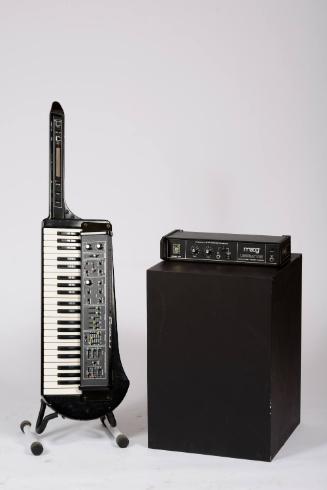
Photo credit: Don Kennedy
Moog Music, Inc.
1980
Not available for use in Recording Studios
On View: On exhibit
isVirtual:
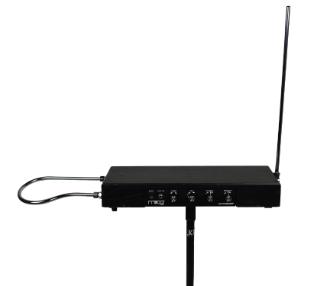
Photo credit: Meghan MacKrous, courtesy of the National Music Centre
Moog Music, Inc.
2001
Available for use in Recording Studios
On View: Not currently on exhibit
isVirtual:
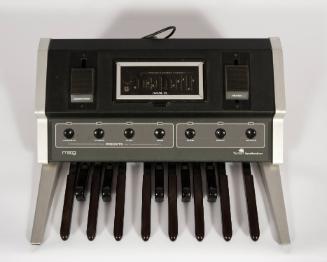
Photo credit: Don Kennedy
Moog Music, Inc.
c. 1978
Not available for use in Recording Studios
On View: On exhibit
isVirtual:
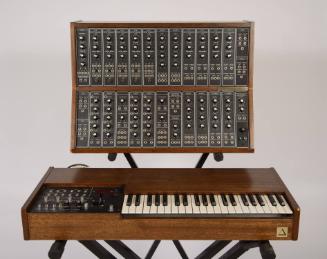
Photo credit: Don Kennedy
Delta Music Research Limited
c. 1980
Available for use in Recording Studios
On View: Not currently on exhibit
isVirtual:
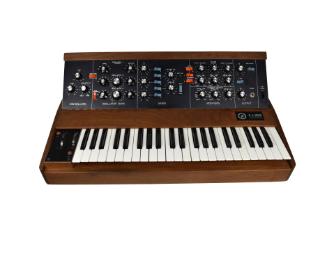
Photo credit: Meghan MacKrous, courtesy of the National Music Centre
R.A. Moog, Inc.
1970
Available for use in Recording Studios
On View: Not currently on exhibit
isVirtual:
Photo credit: Don Kennedy
Moog Music, Inc.
1973
Available for use in Recording Studios
On View: Not currently on exhibit
isVirtual:
Photo credit: Meghan MacKrous, courtesy of the National Music Centre
Moog Music, Inc.
1976
Available for use in Recording Studios
On View: Not currently on exhibit
isVirtual:
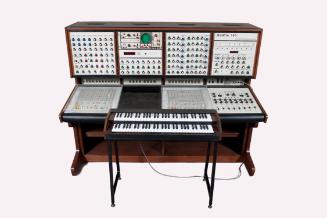
Photo credit: Don Kennedy
Electronic Music Studios (London) Limited
1972
Available for use in Recording Studios
On View: Not currently on exhibit
isVirtual:
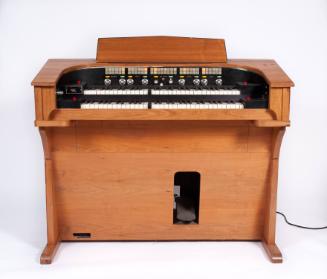
Photo credit: Don Kennedy
Chamberlin Instruments Company, Inc.
1970
Not available for use in Recording Studios
On View: On exhibit
isVirtual:
Photo credit: Don Kennedy
Buchla & Associates
2006
Available for use in Recording Studios
On View: Not currently on exhibit
isVirtual:
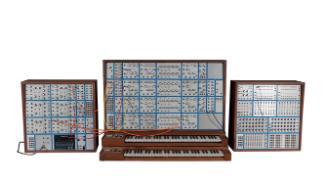
Photo credit: Don Kennedy
E-mu Systems, Inc.
About 1973
Available for use in Recording Studios
On View: Not currently on exhibit
isVirtual:
Back