Moog Music, Inc.
(division of Norlin Music Instruments, Ltd.)
ActiveWilliamsville/Buffalo, New York, USA
ActiveTrumansburg, New York, USA
BornQueens, New York, USA
BiographyMoog Music, Inc. was a later instantiation of R.A. Moog, Inc. The company originated with its founder and namesake, Dr. Robert A. Moog, who is widely regarded as being one of, if not the most influential figures in electronic music technology. Robert Moog (23 May 1934 – 21 August 2005) was born in the neighbourhood of Flushing, in the borough of Queens, in New York City, New York. He exhibited a keen interest in electronic technology and musical instruments at a young age, citing Russian inventor Leon Theremin as an early influence. By his late teenage years, he was constructing Theremin kits with his father, George, an electrical engineer for Consolidated Edison, Inc.; several years later, in 1956, these kits would form the sub-assembly basis of Raymond Scott’s Clavivox, essentially a keyboard-controlled version of the instrument. Moog attended the Bronx High School of Science, followed by post-secondary studies at Queens College (CUNY) and Columbia University, both in New York City, to obtain his bachelor’s and master’s degrees in physics and electrical engineering, respectively. In 1957 he relocated upstate to Ithaca, New York to pursue doctoral studies in Cornell University’s engineering physics department, graduating in 1965. It is alleged that Moog was able to pay his way through graduate studies on the continued sales of his R.A. Moog Company Theremin kits, which had garnered public interest thanks to an article he published on the subject in Radio and Television News in January 1954. In 1963, while attending a New York State Educator’s Music Conference, Moog came into contact with experimental composer and jazz musician, Herbert A. Deutsch (born 1932 in Baldwin, New York), who held a professorship with Hofstra University in Hempstead, New York at the time. The two collaborated on what would become among the first voltage-controlled synthesizers.
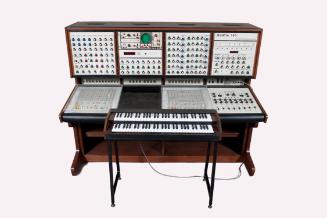
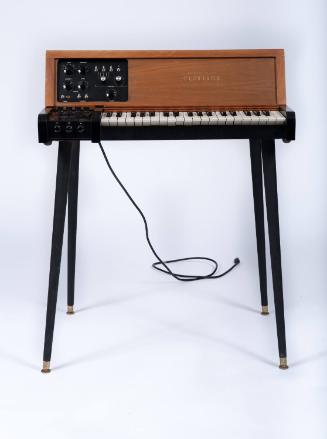
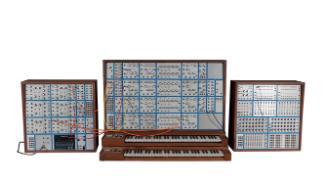
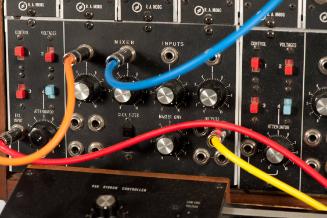
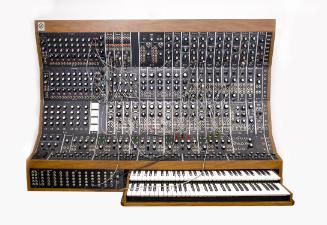
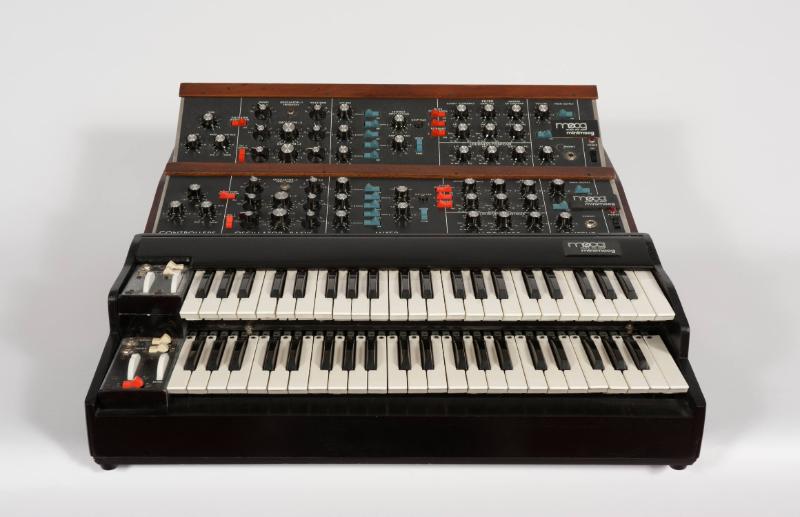
Design and construction began on Moog’s first modular synthesizer in 1963, with the first prototype presented at the annual AES (Audio Engineering Society) convention in 1964. A patent for his famed 24 dB/octave low-pass filter was filed in 1966. In 1967, R.A. Moog, Inc. became officially registered in Trumansburg, New York along with the introduction of the company’s first modular systems, the models I, II, and III. In 1968, American composer and synthesist Wendy Carlos (born 1939 in Rhode Island) released the seminal Switched-On Bach, which featured her performing a series of Baroque compositions on a customized Moog modular system, demonstrating how this new and, for the time, unorthodox machine could serve as a viable musical instrument. Although Moog’s modular systems are still revered for their iconic nature, the company’s most successful and influential product emerged in 1970 with the compact, performance-oriented Minimoog. The technological and cultural impact of the Minimoog cannot be overstated: with its highly functional and streamlined design, it effectively influenced the internal and external design approaches of nearly every other integrated synthesizer that followed throughout the 1970s and early 1980s. The Minimoog was moved through four different prototype revisions before settling on the model D production unit. In 1971, following a purchase by Musonics’ Bill Waytena, the company name was briefly changed to Moog/Musonics and was relocated to Williamsville, just outside of Buffalo, New York; in 1973, another transfer to Norlin Music Instruments, Inc. resulted in establishing the company’s first instantiation as Moog Music, Inc. Their next line of modular synthesizers also came in 1973 in the form of the pre-configured model 15, 35, and 55 systems. This year also saw the release of several more integrated systems, including the Sonic 6 and Satellite, as well as a series of synthesizer accessories, including an external sample-and-hold, ribbon controller, and foot pedal controller. The company’s next series of highly influential products came in 1975 with the introduction of the fully polyphonic Polymoog, which employed the divide-down oscillator technology used in early electric organs such as the Hammond Novachord of 1939, and the Taurus bass pedals, a foot-operated monophonic synthesizer. New facilities were purchased in Cheektowaga, also near Buffalo, New York, and the company relocated operations in 1976. In 1977, Robert Moog formally terminated his business relationship with Moog Music, Inc., thereafter remaining associated with the company only as a figurehead and namesake; the following year, he relocated to Asheville, North Carolina. The remainder of the 1970s and the beginning of the 1980s saw the release of several Moog Music products, including the Multimoog, Prodigy, Taurus II, Liberation, Opus 3, Rogue, and Source, the latter of which was the company’s first microprocessor-controlled and programmable unit. Production on the hugely successful Minimoog came to an end in 1981, with over 12 000 units manufactured in its eleven year run. During this time, Robert Moog served as a consultant for the Italian manufacturer, Crumar, on the Spirit, an analog, monophonic synthesizer. In 1984, he became vice president of research with Kurzweil Music Systems, remaining in this role until 1989. In the early 1990s he served as a music professor at the University of North Carolina at Asheville.
Back in New York, another major transfer of power came in 1983, when David Luce, a Moog employee since 1973, and F. Scott Chapman purchased the company from Norlin and added a new division, Moog Electronics, Inc., in addition to the original Moog Music, Inc. In 1987, both divisions were liquidated by EJE Research Corporation, and by 1993 the company completely ceased operations with assets later sold at auction. In the mid 1990s, Robert Moog released a series of Etherwave brand Theremins, available both assembled and as kits, under his newly formed company, Big Briar. The development of the Voyager, essentially a reissue of the Minimoog, began in 1999, along with the Moogerfooger line of effects pedals, most of which were designed by Robert Moog himself. In the late 1990s, the Moogerfooger pedals were adapted as ProTools plug-ins in collaboration with the Bomb Factory recording studio in Los Angeles, California. In 2002, Robert Moog regained the legal rights to his trademarked name, and rebranded Big Briar as the second instantiation of Moog Music, Inc., establishing production headquarters at his home in North Carolina. Among the new company’s products was the MIDI-based Piano Bar, which was designed by Moog’s northern California-based contemporary, Donald Buchla of Buchla & Associates. Robert Moog passed away in August of 2005 as a result of a brain tumor. Shortly thereafter, one of Moog’s daughters established the Bob Moog Foundation, which supports research, education, and archival practices. Robert Moog has received numerous awards and honours, including an honorary doctorate from the Polytechnic Institute of New York University, a Lifetime Achievement Grammy Award in 1970, the Polar Music Prize in 2001, and a Technical Grammy Award in 2002. Moog Music continues to develop new and vintage-inspired products, having most recently reissued Keith Emerson’s customized modular system in 2014, and the model 15, 35, and 55 systems in 2015.
Design and construction began on Moog’s first modular synthesizer in 1963, with the first prototype presented at the annual AES (Audio Engineering Society) convention in 1964. A patent for his famed 24 dB/octave low-pass filter was filed in 1966. In 1967, R.A. Moog, Inc. became officially registered in Trumansburg, New York along with the introduction of the company’s first modular systems, the models I, II, and III. In 1968, American composer and synthesist Wendy Carlos (born 1939 in Rhode Island) released the seminal Switched-On Bach, which featured her performing a series of Baroque compositions on a customized Moog modular system, demonstrating how this new and, for the time, unorthodox machine could serve as a viable musical instrument. Although Moog’s modular systems are still revered for their iconic nature, the company’s most successful and influential product emerged in 1970 with the compact, performance-oriented Minimoog. The technological and cultural impact of the Minimoog cannot be overstated: with its highly functional and streamlined design, it effectively influenced the internal and external design approaches of nearly every other integrated synthesizer that followed throughout the 1970s and early 1980s. The Minimoog was moved through four different prototype revisions before settling on the model D production unit. In 1971, following a purchase by Musonics’ Bill Waytena, the company name was briefly changed to Moog/Musonics and was relocated to Williamsville, just outside of Buffalo, New York; in 1973, another transfer to Norlin Music Instruments, Inc. resulted in establishing the company’s first instantiation as Moog Music, Inc. Their next line of modular synthesizers also came in 1973 in the form of the pre-configured model 15, 35, and 55 systems. This year also saw the release of several more integrated systems, including the Sonic 6 and Satellite, as well as a series of synthesizer accessories, including an external sample-and-hold, ribbon controller, and foot pedal controller. The company’s next series of highly influential products came in 1975 with the introduction of the fully polyphonic Polymoog, which employed the divide-down oscillator technology used in early electric organs such as the Hammond Novachord of 1939, and the Taurus bass pedals, a foot-operated monophonic synthesizer. New facilities were purchased in Cheektowaga, also near Buffalo, New York, and the company relocated operations in 1976. In 1977, Robert Moog formally terminated his business relationship with Moog Music, Inc., thereafter remaining associated with the company only as a figurehead and namesake; the following year, he relocated to Asheville, North Carolina. The remainder of the 1970s and the beginning of the 1980s saw the release of several Moog Music products, including the Multimoog, Prodigy, Taurus II, Liberation, Opus 3, Rogue, and Source, the latter of which was the company’s first microprocessor-controlled and programmable unit. Production on the hugely successful Minimoog came to an end in 1981, with over 12 000 units manufactured in its eleven year run. During this time, Robert Moog served as a consultant for the Italian manufacturer, Crumar, on the Spirit, an analog, monophonic synthesizer. In 1984, he became vice president of research with Kurzweil Music Systems, remaining in this role until 1989. In the early 1990s he served as a music professor at the University of North Carolina at Asheville.
Back in New York, another major transfer of power came in 1983, when David Luce, a Moog employee since 1973, and F. Scott Chapman purchased the company from Norlin and added a new division, Moog Electronics, Inc., in addition to the original Moog Music, Inc. In 1987, both divisions were liquidated by EJE Research Corporation, and by 1993 the company completely ceased operations with assets later sold at auction. In the mid 1990s, Robert Moog released a series of Etherwave brand Theremins, available both assembled and as kits, under his newly formed company, Big Briar. The development of the Voyager, essentially a reissue of the Minimoog, began in 1999, along with the Moogerfooger line of effects pedals, most of which were designed by Robert Moog himself. In the late 1990s, the Moogerfooger pedals were adapted as ProTools plug-ins in collaboration with the Bomb Factory recording studio in Los Angeles, California. In 2002, Robert Moog regained the legal rights to his trademarked name, and rebranded Big Briar as the second instantiation of Moog Music, Inc., establishing production headquarters at his home in North Carolina. Among the new company’s products was the MIDI-based Piano Bar, which was designed by Moog’s northern California-based contemporary, Donald Buchla of Buchla & Associates. Robert Moog passed away in August of 2005 as a result of a brain tumor. Shortly thereafter, one of Moog’s daughters established the Bob Moog Foundation, which supports research, education, and archival practices. Robert Moog has received numerous awards and honours, including an honorary doctorate from the Polytechnic Institute of New York University, a Lifetime Achievement Grammy Award in 1970, the Polar Music Prize in 2001, and a Technical Grammy Award in 2002. Moog Music continues to develop new and vintage-inspired products, having most recently reissued Keith Emerson’s customized modular system in 2014, and the model 15, 35, and 55 systems in 2015.
electronic instruments manufacturer | founded 1969