EN / FR
Skip to main content

Moog Taurus Pedals

Not available for use in Recording Studios
On exhibit
On exhibit
Artifact TypeSynthesizer
Manufacturer Moog Music, Inc. (division of Norlin Music Instruments, Ltd.)
Manufacturer LocationUSA, North America
Datec. 1978
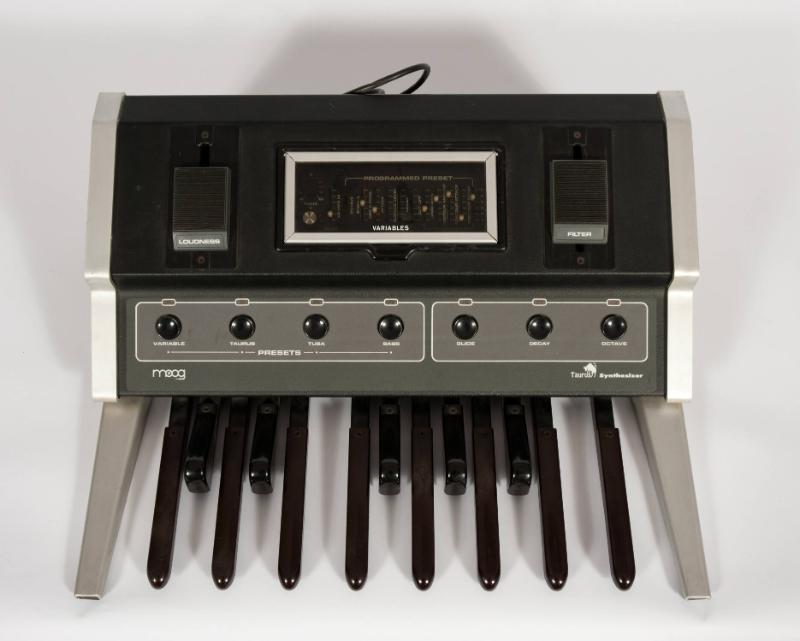
Meant to be performed with the feet, this monophonic bass synthesizer frees up a user’s hands to play another instrument simultaneously—a valuable asset during live performance. Taurus pedals were used extensively by many progressive rock groups of the late 1970s and early 1980s, including Genesis and Rush, who sought a heavy and lush sound. Though the instrument was commercially successful in its heyday, it was never manufactured in large numbers and remains a rarity.
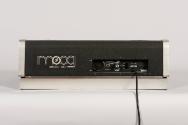
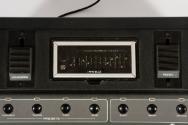
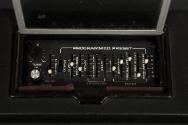
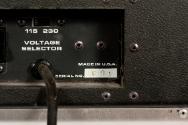
Operation/FunctionThis particular artifact is a monophonic bass pedal synthesizer containing thirteen (one-octave plus one note compass) organ-style wooden pedals and a series of variable and preset controls, including an octave slide switch that allows the instrument’s compass to expand to a range of up to five octaves, and two tuning knobs. There are two voltage-controlled oscillators per voice (square and sawtooth), one 24 dB/octave low-pass voltage-controlled “ladder” filter (VCF), and one voltage-controlled amplifier (VCA). The instrument features three preset tones (labeled ‘Taurus’, ‘Tube’, and ‘Bass’) as well as a variable preset that the user can adjust. The variable preset can be continuously altered according to ten different parameters: ‘B-mix-A’, ‘Osc B Freq’, ‘Attack’ (VCA), ‘Sustain Level’ (VCA), ‘Decay’ (VCA), ‘Cut-Off’ (VCF), ‘Emphasis’ (VCF), ‘Contour Amount’ (VCF), ‘Contour Attack’ (VCF), and ‘Contour Decay’ (VCF). There is also a glide function that allows the user to incorporate varying amounts of portamento. The various presets are selected on the instrument’s front panel by a series of four buttons. Another three buttons on the front panel are required to activate the instrument’s glide, decay, and transposition settings. There are also two rubber sliding pedals located on either side of the variable controls, which allow the user to adjust the instrument’s overall volume or to open and close the filter effect by foot. Unlike most electronic devices, which function either under North American or European AC power, but not generally both, the Taurus can be operated with either a 115 or 230 V direct line.Cultural SignificanceThe Moog Taurus bass pedals remain a unique instrument in their interface approach, and, along with electronic instruments such as the Mellotron, helped to define the tonal aspects of the progressive rock sound. Their spacious and heavy quality is still regarded as being second to none, with many contemporary musicians and collectors seeking out original units. More generally, the alternative approach employed by the Taurus is representative of an ongoing trend in the efforts of designers and musicians who seek new ways to control electronic instruments in opposition to the traditional, chromatic keyboard. Although many synthesizers offer various controls that shadow the inherent articulations of the keyboard, the desire to obtain more direct and expressive connection to sound remains a prevailing notion in electronic musical instrument design. Perhaps the most notable pioneer in this field is American synthesizer designer Donald Buchla, who developed a number of alternative synthesizer interfaces and controllers inspired by a desire to bridge the gap between physiology and technology. Moog Music is perhaps the most well known synthesizer manufacturer, with the term ‘Moog’ often assigned in layman vernacular to any synthesizer, regardless of the actual manufacturer.Technological SignificanceThe synthesizer is arguably one of, if not the most technologically significant contributions to the course of electronic music. Although earlier electronic instruments such as the Theremin, Clavivox, and Ondes Martenot offered new and unique ways of articulating sound, their sonic template was, for the most part, quite limited, capable of producing only a few distinct timbres. The synthesizer, on the other hand, was viewed as an integrated electronic orchestra, as it were, allowing the user to sculpt a wide and varied array of tones and gestures. What’s more, it allowed the user to modify their sounds in real time, seemingly without the sorts of physical limitations imposed on acoustic instruments. Of course, each instrument did come with its own characteristic tonal qualities and control limitations, however the wealth of opportunity inherent in the ability to manipulate and define nearly every parameter of sound structure solidified the synthesizer’s place as one of the most powerful musical innovations of the twentieth century. The Taurus I belongs to what could be considered the second generation of analog synthesizers, the first being those modular and integrated systems of the late 1960s and early 1970s that made use of discrete transistor-based components in replacement of vacuum tubes. Most synthesizers from the early 1970s onward replaced these discrete components with integrated circuits, which were smaller, more lightweight, cheaper, and more reliable than their predecessors. Analog integrated circuits were used exclusively until the late 1970s, when the first microprocessor-based units emerged in instruments such as the Sequential Circuits Prophet 5. The Prophet 5 represented what was essentially the first polyphonic and programmable synthesizer, employing analog sound generation and digital control. Although the Taurus I was often marketed as being programmable, it in fact lacked the ability to store and recall presets, as with the majority of fully analog synthesizers from the era. As an integrated system, the Taurus followed a hard-wired signal path that was standardized by its predecessor, the revered Minimoog. Featuring three VCOs that ran to a VCF and VCA, all controlled by a monophonic keyboard with pitch bend and modulation wheels, the design of the Minimoog influenced the layout of virtually every synthesizer that followed. Although most of the early analog synthesizers were monophonic, meaning that their keyboards were capable of sounding only a single key at any one time, the Taurus implemented a tuning feature that allows one of its two oscillators to be tuned up to an octave above the other. The only drawback of this feature, of course, is that as successive notes are played, the intervallic relationship is maintained, thus producing parallel intervals. Although this allows for a more expanded tone, it is not, in the truest sense of the word, polyphony, which corresponds with multiple voices moving independent of one another. As with most Moog products, the Taurus also employs the famed 24 dB/octave “ladder” filter that was used in the 904A filter module of the earliest Moog modular systems. Moreover, the Taurus uses the oscillator range terminology set in the earliest Moog modulars, which use a ranking system not unlike that used with pipe organs. The lowest frequency range of the instrument is labeled as 16’, with ascending octaves corresponding to the 8’, 4’, 2’, and 1’ ranges. In pipe organ construction, these values are used to indicate the length of the longest pipe in that particular rank; if a pipe is halved or doubled in length, the frequency corresponds directly, producing a pitch that is either one octave above or below, respectively. The Taurus was, however, unique in its interface, which, also borrowing from organs, implements a series of pedals to produce the lowest frequency ranges of the average synthesizer. That being said, its tone is distinctly heavy, and is further enhanced by the instrument’s unique tuning mechanisms. The Taurus offers two tuning alterations: one form consists in the aforementioned feature that allows one oscillator to be set at different intervals from the first – almost in keeping with an organ’s coupling mechanism ¬– to give the overall sound an extra layer that is often missing in most monophonic synthesizers; the second comes in the form of a fine tune function, which can be used to exploit certain psychoacoustic phenomena to particularly useful effect on the instrument’s exclusively bass range. Typically, when two or more sound sources – in this case, oscillators – are stacked atop one another, if they are perfectly in tune, their amplitudes will simply combine to produce a stronger signal. Generally speaking, this is the desired goal in synthesizer construction, however, it is very rarely obtained given the inherent instabilities of analog technologies. When the sound sources are very slightly out of tune with one another, a series of combination and difference tones that result from the slight discrepancies in frequency emerge. Although this can sometimes be problematic, very slight discrepancies actually serve to adorn the output sound with a much richer quality, akin to acoustic instruments; it is for this reason that analog sound generation is often revered above digital sound generation. When this is deliberately done in the Taurus, which employs low frequencies that oscillate at relatively slow rates, a sort of sweeping, phasing effect is generated instead of the faster beating patterns that would arise in higher frequencies. This sweeping character is one of the defining characteristics of the Taurus’ sound.Users/PerformersIconic usage of the Taurus I pedals includes: Phil Collins’ “I Don’t Care Anymore” from Hello, I Must Be Going of 1982; Steve Hackett’s “Clocks – The Angel of Mons” from Spectral Mornings of 1979; Genesis’ “Dance on a Volcano” from A Trick of the Tail of 1976; Rush’s “Subdivisions” from Signals of 1982; and, more recently, Daniel Lanois’ “I Love You” from Shine of 2003. Perhaps the instrument’s most notable users are the Canadian progressive rock band, Rush, and the British progressive rock band, Genesis. Rush was formed in Toronto, Ontario in August 1968 by founding members Geddy Lee (bass, keyboard, vocals) and Alex Lifeson (guitar, vocals), who were joined in 1974 by Neil Peart (percussion, lyricist), who is widely regarded as one of the greatest drummers of the twentieth century. Their self-titled debut album of 1974 and follow up, Fly by Night of 1975, were met with critical acclaim, establishing the group’s penchant for virtuosity, instrumental complexity, and conceptual lyricism. Later albums such as A Farewell to Kings and Hemispheres of 1977 and 1978, respectively, helped solidify the group as one of the leading proponents of the progressive rock genre. This era also saw an increase in Lee’s use of synthesizers such as the Taurus I, Minimoog, and Oberheim OB-X. Lifeson and Peart also expanded their instrument catalogues, with Peart’s drum kit rounding out at approximately thirty pieces. Their mainstream success continued into the 1980s with a more commercial approach yielding hits such as “The Spirit of Radio” and “Freewill”; the group’s most iconic song, “Tom Sawyer”, was released on Moving Pictures of 1981. 1982’s Signals saw a return to synthesizer use and extended compositional influences, with hits such as “Subdivisions” and “New World Man”. Following a brief hiatus at the turn of the century, Rush continues to release new albums and tour, with their alleged final world tour wrapping up in 2015. Among their many awards and accolades are several Juno awards and inductions into the Canadian Music Hall of Fame (1994) and Rock and Roll Hall of Fame (2013). Genesis was formed in Surrey, England in 1967 by founding members Peter Gabriel (vocals, flute), Anthony Phillips (lead guitar), Tony Banks (keyboard), Mike Rutherford (bass guitar), and Christ Stewart (percussion). The group saw many personnel changes throughout the years, perhaps the most notable being the replacement in 1975 of vocalist Peter Gabriel, who left to pursue a solo career, with Phil Collins, who had initially joined the group in 1970 as a percussionist. Their earliest albums, Trespass of 1970, Nursery Cryme of 1971, Foxtrot of 1972, and Selling England by the Pound of 1973, established them as one of the forerunning progressive rock bands in England, with extended durations, expanded instrumentation (such as flute, cello, Mellotron, electric piano, dulcimer, and twelve-string guitar), complex structures, folk imagery, and theatrical live performances. Upon Gabriel’s departure in 1975, the group continued to refine this aesthetic with albums such as A Trick of the Tail of 1976. Other active members of the group included Steve Hackett (lead guitar) and Bill Bruford (percussion), who also performed with seminal British progressive rock groups Yes and King Crimson. Genesis was inducted into the Rock and Roll Hall of Fame in 2010. They continue to tour with members Phil Collins, Tony Banks, and Mike Rutherford.
Object number2002.05.32
Photo credit: Don Kennedy
Moog Music, Inc.
1980
Not available for use in Recording Studios
On View: On exhibit
isVirtual:
Photo credit: Meghan MacKrous, courtesy of the National Music Centre
Moog Music, Inc.
1976
Available for use in Recording Studios
On View: Not currently on exhibit
isVirtual:
Photo credit: Don Kennedy
Hammond Organ Company
1957
Not available for use in Recording Studios
On View: Not currently on exhibit
isVirtual:
Photo credit: Don Kennedy
Moog Music, Inc.
1973
Available for use in Recording Studios
On View: Not currently on exhibit
isVirtual:
Bösendorfer Klavierfabrik GmbH
1855
Not available for use in Recording Studios
On View: Not currently on exhibit
isVirtual:
Photo credit: Don Kennedy
Sébastien Érard
1820
Not available for use in Recording Studios
On View: On exhibit
isVirtual:
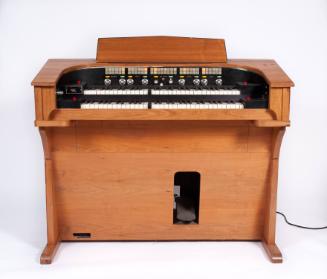
Photo credit: Don Kennedy
Chamberlin Instruments Company, Inc.
1970
Not available for use in Recording Studios
On View: On exhibit
isVirtual:
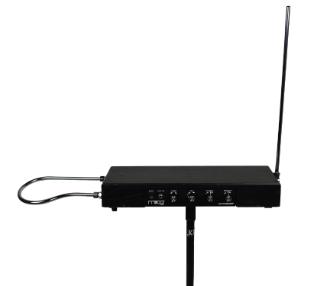
Photo credit: Meghan MacKrous, courtesy of the National Music Centre
Moog Music, Inc.
2001
Available for use in Recording Studios
On View: Not currently on exhibit
isVirtual:
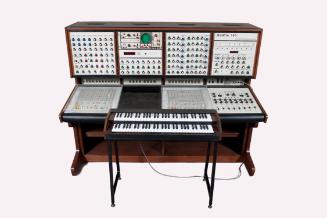
Photo credit: Don Kennedy
Electronic Music Studios (London) Limited
1972
Available for use in Recording Studios
On View: Not currently on exhibit
isVirtual:
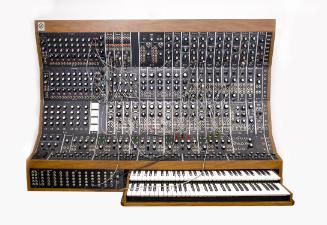
Photo credit: Don Kennedy
R.A. Moog Inc./ Moog Music Inc. (division of Norlin Music Instruments, Ltd.)
c. 1973
Available for use in Recording Studios
On View: Not currently on exhibit
isVirtual:
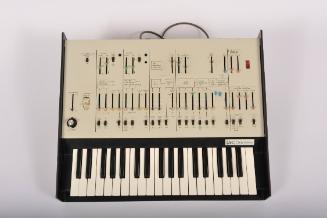
Photo credit: Don Kennedy
ARP Instruments, Inc.
1972
Available for use in Recording Studios
On View: Not currently on exhibit
isVirtual:
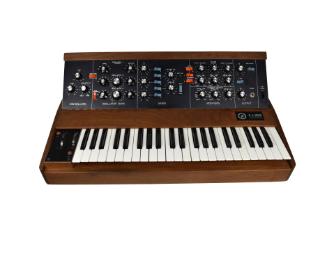
Photo credit: Meghan MacKrous, courtesy of the National Music Centre
R.A. Moog, Inc.
1970
Available for use in Recording Studios
On View: Not currently on exhibit
isVirtual:
Back