
EN / FR
Skip to main content

Buchla 200e

Available for use in Recording Studios
Not currently on exhibit
Artifact TypeSynthesizer
Manufacturer LocationUSA
Date2006
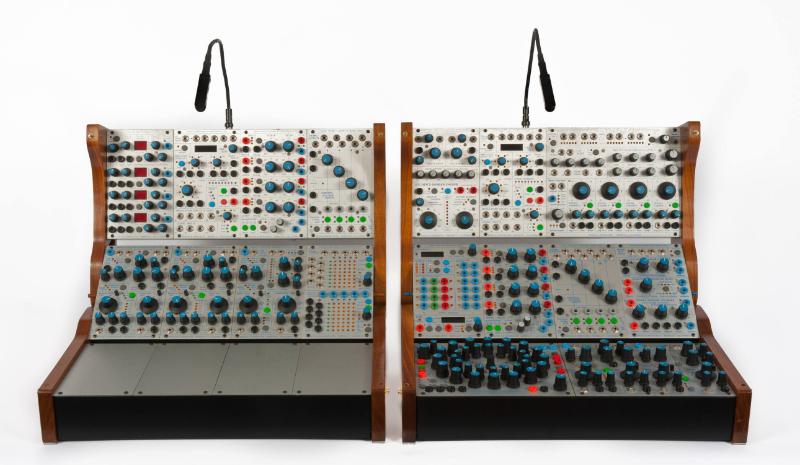
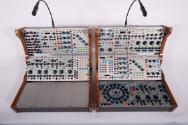
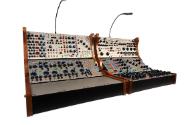
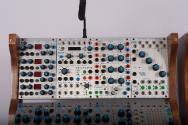
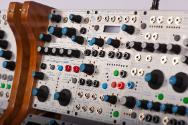
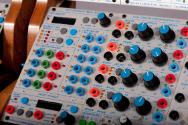
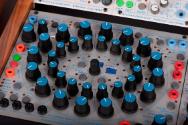
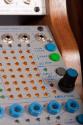
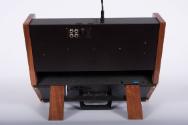
With its mystifying array of multicoloured dials, switches and input jacks, the Buchla 200e looks like it could be the control panel of a primitive spaceship. A digital-analog modular synth, it updates Buchla’s earlier 200 series of the 1960s—the so-called “Electric Music Box”—by adding computerized voltage control and memory (it can store up to 30 presets). The renowned Canadian electronic musician Deadmau5 has outfitted his production studio with a pair of 200e synthesizers.
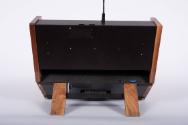
Operation/FunctionThis particular artifact is a digital-analog modular synthesizer system. The system contains 19 separate modules from the 200e series, housed within two separate wooden cabinets, including the following: 210e Control and Signal Router; 222e Multi-Dimensional Kinesthetic Input Port; 225e MIDI Decoder / Preset Manager; 227e System Interface; 250e Arbitrary Function Generator; 256e Quad Voltage Control Processor; 258e Complex Waveform Generator (x2); 260e Duophonic Pitch Class Generator; 261e Complex Waveform Generator (x3); 266e Source of Uncertainty; 281e Quad Function Generator (x2); 291e Triple Morphing Filter (x2); and, 292e Quad Dynamics Manager (x2).Cultural SignificanceModular synthesis has left an indelible mark on the way in which current trends in synthesizer design are informed. In the 1960s, these instruments offered a way forward for composers and musicians who felt stifled by the rigour of early electronic music techniques, such as those practiced in Germany and France throughout the 1950s. They promised new timbres and uninhibited methods of control and ultimately set into motion the foundations of synthesis practices that would follow throughout the 1970s and 1980s. Although these bulky and cumbersome analog machines did not survive the technological and commercial advances of the late 1970s, the modular spirit was revived at the turn of the century with fully digital and digital-analog instruments such as the 200e and similar offerings from the Eurorack industry. Today, this flexible design proves to be a more desirable and fruitful approach to electronic music making than ever before. Typically, Robert Moog is more popularly associated with the introduction of the first synthesizers. However, in the mid 1960s, both Don Buchla and Robert Moog – who was, at the time, based in New York – independently developed the first voltage-controlled synthesizers, both employing a modular structure and offering similar functions. Although their instruments catered to different demographics, both designers were highly influential to the next generation of synthesizer manufacturers, though perhaps in varying ways. Buchla stood primarily as an inspiration to designers looking to implement ideas that were less conventional and more aesthetically minded. The emergence of Buchla’s first instrument at a time when the counterculture of the 1960s was near its apex, as well as his involvement in related concerts and events such as the infamous Altamont Free Concert in 1969, certainly helped establish the designer as something of a figurehead for the movement. Moreover, being situated in the San Francisco Bay Area, which has been historically recognized as a national haven for innovation and less-than-conventional attitudes for several decades, allowed for Buchla’s instruments to enjoy a heightened reception that may not have been as prevalent elsewhere in the country.Technological SignificanceThe synthesizer is arguably one of, if not the most technologically significant contributions to the course of electronic music. Although earlier electronic instruments such as the Theremin, Clavivox, and Ondes Martenot offered new and unique ways of articulating sound, their sonic template was, for the most part, quite limited, capable of producing only a few distinct timbres. The modern synthesizer, on the other hand, was viewed as an integrated electronic orchestra, as it were, allowing the user to sculpt a wide and varied array of tones and gestures. What’s more, it allowed the user to modify their sounds in real time, seemingly without the sorts of physical limitations imposed on acoustic instruments. Of course, each instrument did come with its own characteristic tonal qualities and control limitations, however the wealth of opportunity inherent in the ability to manipulate and define nearly every parameter of sound structure solidified the synthesizer’s place as one of the most powerful musical innovations of the twentieth century. The concept of modular design was initially quite desirable to professional and studio musicians in that it allowed one to more or less completely customize their instrument and modify its functions as desired; for instance, if an extra oscillator was required, an extraneous module was simply removed and the additional oscillator module was inserted into the integrated cabinet. The modular nature of early synthesizers also meant that an array of patches, or defined sounds that could be altered in real time, were possible, offering the musician a high degree of flexibility and the opportunity to develop their own performance technique and signature tone. Analog modular synthesis was quite prevalent as a music-making practice in academic institutions and private studios throughout the late 1960s and into the early 1980s, both in Europe and throughout North America. Electronic instruments of this era were entirely transistor-based, with solid-state devices such as the transistor representing the next generation in technology following the vacuum tube, which was used extensively throughout the first half of the twentieth century. Solid-state technology was far smaller, lighter, more reliable, more durable, and less expensive than vacuum tube technology. This technology developed even further in around 1970 into the form of integrated circuits (ICs), which house the many discrete components of transistor-based circuits within a single silicon chip, as they are often called. Integrated circuits were significantly smaller and less expensive to manufacture than the circuits from which they derived. Although not all analog synthesizers designed in the very early 1970s employed integrated circuitry, their use was mostly standardized by the late 1970s with the inclusion of the first affordable eight-bit microprocessors, such as the Zilog Z80, that emerged mid-decade. As a result, integrated circuits adapted to incorporate more sophisticated digital components. Although modular-type systems such as the 200e are still in production today, ¬the advent of affordable microprocessor chips in the mid 1970s and the rise of programmable polyphonic instruments in the late 1970s resulted in the relative obsolescence of the discrete transistor-based systems of the early 1970s. The earliest dedicated studios that arose in the 1950s and 1960s consisted of discrete components such as sine, sawtooth, and square wave generators, filters, noise generators, mixers, and units for reverberation and ring modulation. The music making practice of the time was cumbersome, requiring the composer to record audio components onto magnetic tape, which would then undergo a series of splicing and manipulations. The modular systems of the late 1960s and 1970s were differentiated from their “primitive” counterparts in that they could be made to interact with one another under the governance of voltage control. The concept of voltage control, which was implemented into early electronic instruments such as Hugh Le Caine’s Electronic Sackbut, is based on the principle by which the function of electrical components relates to voltage, or the flow of electrical current: in order for an oscillator to maintain a frequency, it requires a constant applied voltage; in order for the oscillator to increase in frequency, it requires a proportional increase in voltage. The most unique aspect of the concept of voltage control, which modular synthesizers took full advantage of, suggests that a voltage produced by one component or module can be used to control some function of another module via connection by patch cords or related means. For instance, envelopes and low frequency oscillators may be used specifically to affect the voltage of another module in some regular and repeatable way. These techniques enabled a very rich and highly interactive approach to the idiom of electronic music composition. The term ‘modular’ simply implies that various dedicated modules for sound production, manipulation, and amplification are integrated within a single cabinet, so as to operate as one system. Although the functions intended for specific modules were maintained, the design approaches of the major companies differed in some crucial ways: many Buchla instruments used a tunable pressure-sensitive touch-plate instead of a keyboard, while instruments such as the EMS Synthi AKS offered a combination keyboard-sequencer; unlike Moog, Buchla and Serge separated control and audio signals; certain early Moog systems featured a ribbon controller, which sat above the keyboard; frequency control on Moog oscillators was not as variable as on single-sweep Buchla oscillators, and resembled the system of ranking used on pipe organs; Buchla 100 series oscillators were not capable of producing frequencies below 5 Hz, while Moog low-frequency oscillators were able to reach below 1 Hz; unlike the patch cords used by Moog and Buchla, most EMS instruments instead used matrix-boards that enabled “circular” signal routing. The modular systems of the 1960s and 1970s were more compact than earlier synthesizers such as the RCA Mark II of the Columbia-Princeton Electronic Music Center, however their overwhelming size and hefty price tag often meant that they were accessible, for the most part, only to professionals, with a number of systems having initially been installed in recording studios and educational institutions. In response to this, most of the major companies of the era also released smaller, more portable systems (both modular and non-modular) throughout the 1970s that were also suitable for live performance, such as the Minimoog, ARP 2600 and Odyssey, EMS VCS3 and Synthi, and the Buchla Music Easel and 101. Although most of these instruments borrowed elements from their modular ancestors, they were not in themselves modular by nature, but rather featured set configurations that were usually internally affixed. With the advent of integrated circuits, synthesizers increasingly began to adopt the smaller, more compact aesthetic exhibited in these performance-oriented instruments, especially that of the revered Minimoog. The once popular modular approach gave way to more streamlined designs that, while still offering users the ability to control numerous aspects of the instrument’s tone and gesture, limited the way in which the instrument could be operated. Although the modular synthesizer was highly regarded for its flexibility, it was also criticized for being largely unintuitive and cumbersome; the smaller, integrated digital-analog hybrids of the late 1970s, such as the Sequential Circuits Prophet 5, though still not relatively inexpensive, responded more readily to the technological demands of an increasingly burgeoning consumer market. The synthesizers of the microprocessor era were, to varying extents, programmable, meaning that various parameters could be stored within the instrument’s internal memory. The analog modular instruments of the 1960s and early 1970s lacked this ability, and required the user to make note of specific patch settings in order to recreate them later. Throughout the 1980s and 1990s, synthesizers continued to develop following the compact, user-friendly model established in the mid 1970s. Interestingly, modular design resurfaced in the late twentieth century with the introduction of the Rack system. The Rack system – the most popular of which is referred to as Eurorack – encompasses a generalized design approach that is standardized in module size and power distribution, allowing any module that’s produced under its specifications to be operable with any other. This was certainly not the case with the earliest modular instruments, as each employed different patching methods, power distribution, and panel size; Buchla panels were shorter in height than those produced by Moog and ARP, and Moog was the only manufacturer to rely solely on the use of quarter-inch patch cables with Buchla employing both banana and mini cables, EMS employing pins, and ARP employing sliders. As such, it was difficult, if not impossible, to combine modules belonging to different manufacturers within the same system. There are a multitude of Rack system manufacturers currently in business, including New York’s Make Noise and Vancouver’s Intellijel, and thanks to a decrease in production costs and an increase in the stability of electronic components, this industry is still thriving into the twenty-first century. The flexibility of these systems allows users to purchase modules from any manufacturer and mount them into the same cabinet with any other Rack system module. The apparent renewed desires for the flexibility and physicality of the modular approach illustrate a very potent example of just one of the ways in which earlier technologies have overshadowed contemporary synthesizer design. Modular design has even resurfaced in the realm of computer music, with programming environments such as max/MSP borrowing from the concept of patching. The 200e series represents a unique niche within the modular world in that the majority of its functions are still analog yet incorporate various aspects of digital control and modernized improvements such as MIDI. In recent years, numerous manufacturers have reissued somewhat modernized reissues of their earlier analog offerings, however Buchla & Associates was effectively the first to bring to the market a contemporary instrument that truly fuses the advantages of both analog and digital approaches. To the extent that Buchla instruments were revered by the experimental composers of the 1960s, they were also met with hesitance by the more commercially-minded musicians of the early 1970s, who opted for similar products manufactured by Moog and ARP, which were, by and large, more straightforward in their functions and certainly more stable. Although Buchla & Associates remained more or less on the fringe of the mainstream from the 1970s onward, their instruments were still regarded as among the most innovative, unique, and sophisticated. Buchla & Associates were also regarded as never having fully bowed to commercial pressures, instead continuing to expand their idiomatic design aesthetic throughout the 1970s and 1980s despite a lack of popular usage. As a designer, Buchla was also unique in that he approached his instruments both as an engineer and as a musician. Just as Alan R. Pearlman, a former test engineer with NASA, used his background to produce components that were extremely stable, Buchla made certain decisions for the user in his designs that could be seen as helpful from a performance standpoint. For instance, most singular functions on his modules each contain two identical outputs, allowing the same signal to be directed to two different locations. In addition to being credited as one of the inventors of the voltage-controlled synthesizer, along with Robert Moog, Donald Buchla is recognized as one of the most innovative synthesizer designers.Users/PerformersMorton Subotnick (born 14 April 1933 in Los Angeles, California) is one of the earliest pioneers of electronic music and is a strong advocate for supporting new and immersive technologies. His 1967 record, Silver Apples of the Moon, recorded on one of the first Buchla 100 systems, was the first wholly electronic record to be released by a major label, and is one of only 300 works entered into the National Registry of Recorded Works at the Library of Congress. Subtonick continued recording with early Buchla systems and, between 1967 and 1975, released four more albums making exclusive use of the instrument: The Wild Bull, Touch, Sidewinder, and Four Butterflies. In the early 1960s, Subtonick and composer Ramòn Sender were pivotal in developing what was then known as the San Francisco Tape Music Center, and, in 1963 they were the first to theorize what would later become the Buchla 100 Series Electronic Music System, or Buchla Music Box. With a grant from the Rockefeller Foundation, Subotnick and Sender approached Bay Area engineer Donald Buchla about devising a machine for exploring new electronic musical practices. In 1967, the San Francisco Tape Music Center became subsumed by Mills College to become the Mills College Tape Music Center and, later, the Center for Contemporary Music, taking the first prototype 100 Series Buchla designed along in the transition. Sender, along with composer Pauline Oliveros, became the first directors of the Mills College Tape Music Center, however Subotnick relocated first to New York then to Los Angeles to help plan the creation of a new school for the arts. This school, which later became the renowned California Institute of the Arts, or Cal Arts, saw Subotnick as its first Associate Dean. In 1970, Subotnick also took up residence at the newly formed Tisch School of the Arts at New York University, working closely with amateur composers and budding synthesists such as Éliane Radigue, Laurie Spiegel, and Rhys Chatham. In 1974, Subotnick became head of the composition department at Cal Arts, developing the school’s interactive multi-media curriculum. In addition to his electronic works, Subotnick has also composed numerous works for orchestra, chamber ensembles, dance, theatre, and multi-media productions. Deadmau5 is the moniker behind Canadian electronic musician and DJ, Joel Thomas Zimmerman (born 5 January 1981 in Niagara Falls, Ontario). Zimmerman has been releasing studio albums, both solo and in collaboration, since 2005 to great acclaim. His iconic logo, which features a coloured “mau5head”, is often worn as headdress during live performances. Notable releases include Get Scraped (2005), Random Album Title (2008), Album Title Goes Here (2012), and while(1<2) (2014). Zimmerman performed at the Grammy Awards in 2012 in a special telecast focusing on electronic music, and holds the recognition of being the first electronic musician to appear on the cover of Rolling Stone magazine. He has headlined music festivals around the globe, including Sonar, Virgin Mobile Free Fest, Electric Daisy Carnival, Outside Lands, and Lollapalooza.
Object number2006.13.01
Photo credit: Don Kennedy
Buchla & Associates
1999
Not available for use in Recording Studios
On View: On exhibit
isVirtual:
Photo credit: Don Kennedy
Buchla & Associates
1999
Available for use in Recording Studios
On View: Not currently on exhibit
isVirtual:
Photo credit: Don Kennedy
Buchla & Associates
1982
Not available for use in Recording Studios
On View: Not currently on exhibit
isVirtual:
Photo credit: Don Kennedy
Buchla & Associates
c. 1968
Available for use in Recording Studios
On View: Not currently on exhibit
isVirtual:
Photo credit: Don Kennedy
Buchla & Associates
c. 1990
Not available for use in Recording Studios
On View: Not currently on exhibit
isVirtual:
Photo credit: Don Kennedy
E-mu Systems, Inc.
1979
Not available for use in Recording Studios
On View: Not currently on exhibit
isVirtual:
Photo credit: Don Kennedy
E-mu Systems, Inc.
About 1973
Available for use in Recording Studios
On View: Not currently on exhibit
isVirtual:
Photo credit: Don Kennedy
Moog Music, Inc.
1969
Not available for use in Recording Studios
On View: On exhibit
isVirtual:
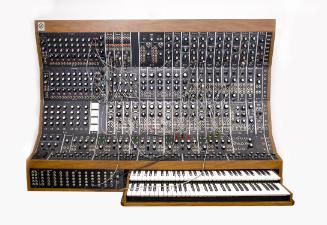
Photo credit: Don Kennedy
R.A. Moog Inc./ Moog Music Inc. (division of Norlin Music Instruments, Ltd.)
c. 1973
Available for use in Recording Studios
On View: Not currently on exhibit
isVirtual:
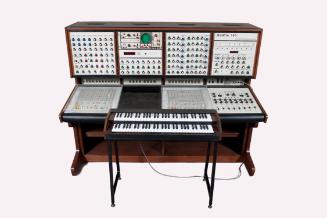
Photo credit: Don Kennedy
Electronic Music Studios (London) Limited
1972
Available for use in Recording Studios
On View: Not currently on exhibit
isVirtual:
Photo credit: Meghan MacKrous, courtesy of the National Music Centre
Kurzweil Music Systems
1985
Available for use in Recording Studios
On View: Not currently on exhibit
isVirtual:
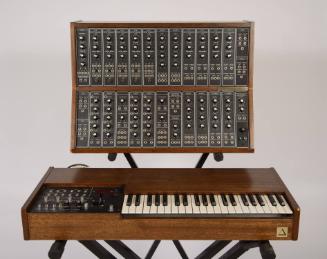
Photo credit: Don Kennedy
Delta Music Research Limited
c. 1980
Available for use in Recording Studios
On View: Not currently on exhibit
isVirtual:
Back