Optigan Corporation (of Mattel)
Founded inEl Segundo, California, USA
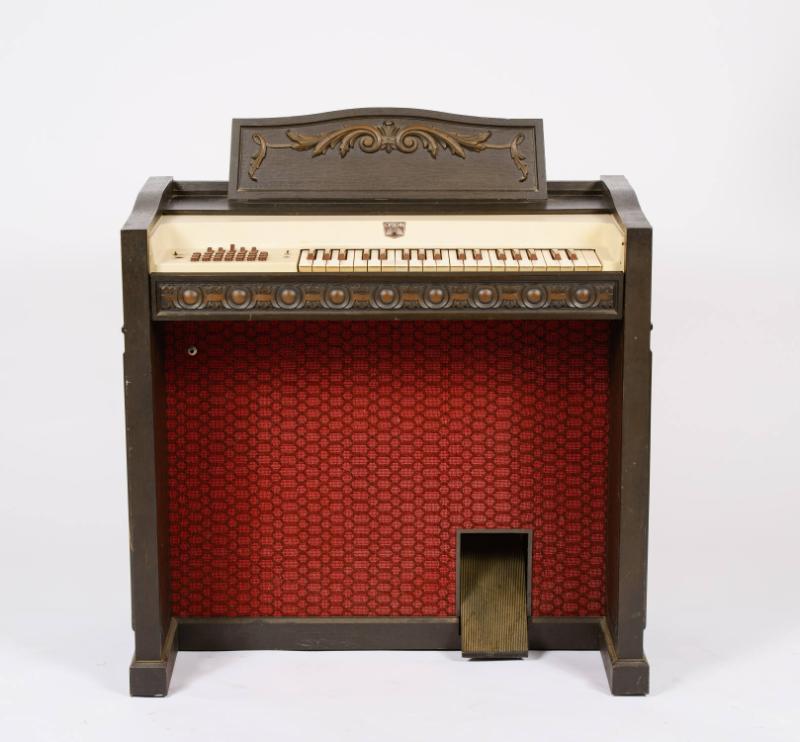
BiographyOptigan Corporation, a subsidiary of the hugely successful toy manufacturer, Mattel, Inc., was founded in 1945 in El Segundo in southern California. The Optigan Corporation’s manufacturing facilities were located nearby, in Compton, California. Mattel is best known for their products released under the Fisher-Price, Masters of the Universe, and Barbie brands. Development of the Optigan project began in 1968 with hardware research and development and early samples collected in Cologne, Germany. The first patents were filed in 1970 under the application titles, “Disc Drive”, “Music Instrument with Variable Amplitude”, “Optical Disc Drive for Organ”, and “Electronic Organ wherein Musical Sounds and a Tremolo Effect are provided by Electro-Optical Apparatus”. The first model, the 34001, emerged in 1971 and was debuted in a presentation at the Century Plaza Hotel in Century City, California on January 27. On the same day, Johnny Largo was made the subsidiary’s musical director. Marketing was put into full effect that year, with the instrument exhibited at both the NAMM (National Association of Music Merchants) trade show in Anaheim and the CES (Consumer Electronics Show) in Chicago. In 1972, Largo began offering training seminars in the Optigan for the Sears Music School; along with JC Penney, Sears was one of the primary retailers of the instrument throughout the early 1970s. In September of 1972, the Optigan Corporation launched what would become the largest campaign advertisement of a musical instrument ever produced for television, existing primarily as the Make Your Own Kind of Music commercial, which ran for ten straight weeks.
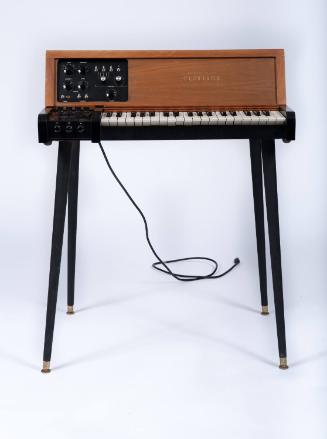
A blow was delivered to the company in April of 1973, when the former president of the Optigan Corporation, F. Roy Chilton of the Chilton Corporation (a subsidiary of General Electro Music) in Torrance, California, revealed a new instrument called the TalentMaker, which employed the same technologies and similar layout to the Optigan. The TalentMaker was manufactured by the Galanti Electronics Group, the European branch of General Electro Music, and purported to have significantly improved upon the Optigan’s mechanism. In June of 1973 – the same month the TalentMaker appeared at NAMM – Mattel made the decision to formally abandon the Optigan project on account of declining sales and, “disappointing operating results”. The rights to the Optigan trademark, its patents, and discs, were also sold that month to the New York-based organ manufacturer, Miner Industries, who established the Opsonar subsidiary in New Kensington, Philadelphia to continue production. Opsonar’s first order of business was to issue a cease and desist notification to Chilton based upon perceived patent infringements in the TalentMaker; although the TalentMaker was not produced in large numbers, its continued manufacture beyond 1973 did not seem to have been greatly hindered by the public warning. Despite a slump in sales at the close of 1973, Opsonar enjoyed a brief period of record sales at the start of 1974. Production of new Optigan discs ended in August of 1975 and, by 1976, Miner Industries folded on the project, due in large part to the instrument’s continued mechanical faults. The technology was again picked up a former Moog Music employee, Dave VanKoevering, and his Vako company, who produced the more professionally-minded Orchestron optical sampler. Only a short run of these instruments were produced over the following years before Vako, too, ceased operations on account of their equally poor sonic quality.
A blow was delivered to the company in April of 1973, when the former president of the Optigan Corporation, F. Roy Chilton of the Chilton Corporation (a subsidiary of General Electro Music) in Torrance, California, revealed a new instrument called the TalentMaker, which employed the same technologies and similar layout to the Optigan. The TalentMaker was manufactured by the Galanti Electronics Group, the European branch of General Electro Music, and purported to have significantly improved upon the Optigan’s mechanism. In June of 1973 – the same month the TalentMaker appeared at NAMM – Mattel made the decision to formally abandon the Optigan project on account of declining sales and, “disappointing operating results”. The rights to the Optigan trademark, its patents, and discs, were also sold that month to the New York-based organ manufacturer, Miner Industries, who established the Opsonar subsidiary in New Kensington, Philadelphia to continue production. Opsonar’s first order of business was to issue a cease and desist notification to Chilton based upon perceived patent infringements in the TalentMaker; although the TalentMaker was not produced in large numbers, its continued manufacture beyond 1973 did not seem to have been greatly hindered by the public warning. Despite a slump in sales at the close of 1973, Opsonar enjoyed a brief period of record sales at the start of 1974. Production of new Optigan discs ended in August of 1975 and, by 1976, Miner Industries folded on the project, due in large part to the instrument’s continued mechanical faults. The technology was again picked up a former Moog Music employee, Dave VanKoevering, and his Vako company, who produced the more professionally-minded Orchestron optical sampler. Only a short run of these instruments were produced over the following years before Vako, too, ceased operations on account of their equally poor sonic quality.


(division of Norlin Music Instruments, Ltd.)