Raymond Scott Enterprises
BornBrooklyn, New York, USA
BiographyExperimental music pioneer and electronic instrument builder Raymond Scott (10 September 1908 – 8 February 1994), was born Harry Warnow in Brooklyn, New York, USA. Scott showed an early aptitude for music, having learned to play the piano at the tender age of two. Although he initially intended to study engineering after completing high school, his brother, Mark Warnow, an accomplished violinist and conductor, persuaded him to pursue music instead, even gifting him a Steinway grand piano. After graduating from New York’s Institute of Musical Arts – which would later become the renowned Juilliard School – in 1931, where he studied piano performance and theory and composition, Scott became an employee of the CBS Radio orchestra, then under the direction of his brother. In an effort to distinguish himself from his brother, Scott informally changed his name, allegedly selecting the name ‘Raymond Scott’ at random from a local phonebook. Scott struggled aesthetically with the orchestra, finding the repertoire dissatisfying and uninspired. This led him to establish his first musical group in 1936, comprised of CBS session musicians, who begin performing Scott’s original experimental compositions. The group, which included six members, became somewhat misleadingly known as the Raymond Scott Quintette. In addition to Scott on piano, original members included Pete Pumiglio on clarinet, Bunny Berigan on trumpet, Lou Shoobe on upright bass, Dave Harris on tenor saxophone, and Johnny Williams, father of the famed Hollywood film composer, John Williams, on percussion. Scott’s unorthodox compositional approach, which merged elements of swing, bebop, pop, and avant-garde music, emphasized a rigid and structured method, relying less on the improvisatory practices that characterized jazz music of the era. Despite the music’s unconventional appearance, the group garnered critical acclaim among the American public, offering Scott an early rise to fame. In 1937, they released their first official recording with Master Records. Despite their popularity, several group members found it difficult to work under Scott, citing his obsessive and perfectionist nature as being too stifling for creative work; in the end, this would be the undoing of the group. Among his more unusual compositional practices was the way in which Scott would dictate his music to other musicians orally, rather than through written scores, demanding the same of them. Moreover, his compositions were complex and sometimes unplayable, juxtaposing various melodies and implementing uncommon time signatures and orchestrations. As a competent recording engineer, Scott also took control in the studio during sessions. His cumbersome technique consisted in recording rehearsals onto lacquer discs then, using a cut-and-paste method akin to the musique concrète practices of the 1940s, editing passages together to form a fixed composition. Many of his compositions also referenced, or sampled, so to speak, recognizable motifs from Classical compositions, and featured somewhat bizarre titles, such as “Dinner Music for a Pack of Hungry Cannibals” and “Boy Scout in Switzerland”. Before dismantling in 1939, the Raymond Scott Quintette recorded and released a number of works, many of which are still popular today, including “The Toy Trumpet”, “Powerhouse”, and “In An Eighteenth-Century Drawing Room”.
The second instantiation of the band was formed in 1939 as a big band, and was met with equal success and popular acclaim. In 1940, following a tour with the group, Scott became music director of CBS Radio. In 1942, he assembled the orchestra’s first racially diverse company, enlisting some of the most prolific African American musicians in New York City, which was also a first in broadcast history. In 1941, Scott made the decision to sell his back catalog to a then floundering Warner Bros. animation department. Looney Tunes music director, Carl Stalling, began to adapt twenty of Scott’s compositions into popular cartoon series such as Bugs Bunny, Daffy Duck, Porky Pig, as well as numerous animated shorts. Despite having never composed a single work specifically for animation, it became the medium with which his music was, and still is, most closely associated. In 1944, following a highly successful year spent producing numerous commercial jingles, Scott left CBS to focus on his own studio composition projects, which included scoring the music for a 1946 Broadway musical starring the famed Yul Brynner. In addition to his work as a composer and band leader, Scott is also well known for his pioneering work as a recording engineer, exploiting the same experiments in multi-track recording that were simultaneously being practiced by famed guitarist, Les Paul. In 1948, Scott returned to CBS with a new group (again, referred to as a quintet despite containing six members) and took on the role of orchestra leader for the show, Your Hit Parade, following the passing of his brother, who formerly held the position, in 1949. Scott employed the earnings he received from this lucrative post in order to fund research and development into his budding interest in electronic musical instrument design.
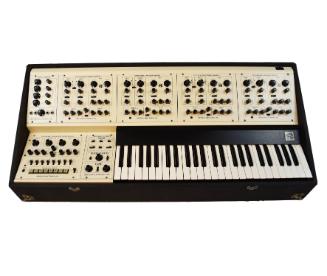
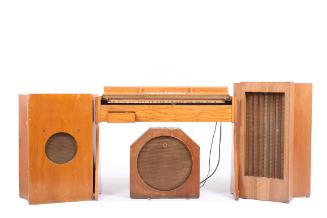
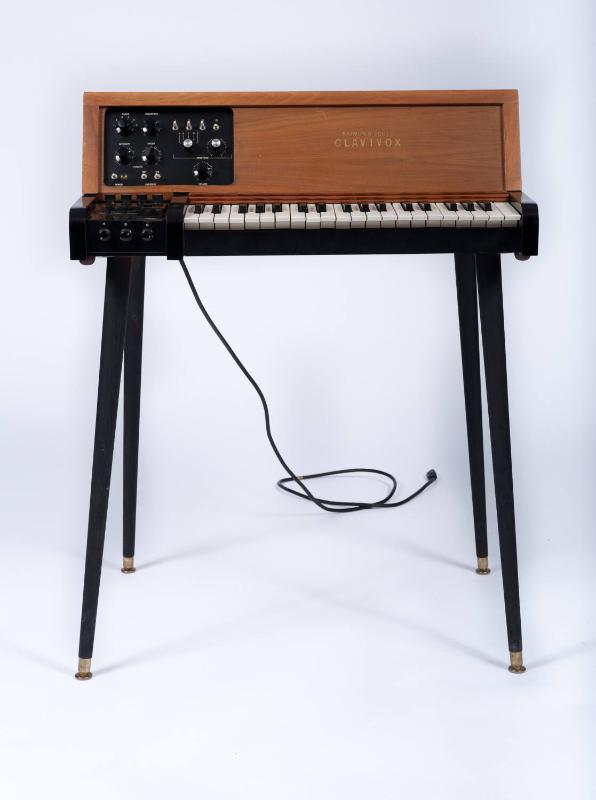
In 1946, Scott created a subsidiary electronic music studio within his company, Raymond Scott Enterprises, called Manhattan Research. The aim of the studio was to focus specifically on the use, design, and manufacture of new electronic musical instrument technologies. The studio’s earliest products were a series of modified electronic devices such as sine tone generators, ring modulators, and envelope shapers, many of which were expanded from their original formats to take on what Scott referred to as “infinitely variable” control. Scott’s first electronic instrument came in 1948 with the creation of the Karloff, a sampling device used to produce sound effects for film. The Clavivox, which is perhaps Scott’s most recognizable invention, followed in the early 1950s, not reaching completion and patent until 1956. In this instrument’s earliest instantiation, it featured a sub-assembly Theremin module built by a 22-year-old Robert Moog, then a master’s student in Columbia University’s electrical engineering program and a budding electronic musical instrument designer. Scott’s most innovative design, however, came in 1949 with the Electronium, a sort of generative compositional instrument that could sequence random pitches and rhythms, and which also included components constructed by Moog. Among his other creations was the Videola, a combination musical instrument and television screen, designed for use in film composition. In addition to Scott’s own instruments, Manhattan Research also contained notable electronic instruments of the era, including an Ondioline, an Ondes Martenot, and a modified Hammond organ. Throughout the 1950s, Scott continued composing in more traditional formats, premiering his first and only large-scale classical work, the Suite for Violin and Piano at Carnegie Hall in 1950, while also experimenting in electronic composition and instrument design. Other compositions from the 1950s include This Time with Strings and At Home with Dorothy and Raymond, produced with his then wife, Dorothy Collins, a notable actress and singer. Scott also worked as a record producer in the late part of the decade. The 1950s was a very prolific era with respect to his commercial recordings as well, and saw him score numerous television and film projects, found two record labels, and serve as A&R director at Everest Records. His commercial work during this time has left a lasting impression, illuminating highly unique timbres and gestures that were quite foreign to the musical landscape of the time.
In the early 1960s, Scott assembled a massive super-instrument that connected the Ondes Martenot, a modified Hammond organ, sixteen oscillators, and two Clavivox units. The instrument, which measured approximately six feet high and thirty feet long, was used in 1963 to produce three volumes of recordings entitled Soothing Sounds for Baby, which were, essentially, a series of early ambient compositions meant to both stimulate and relax infants. This series was developed in collaboration with the Gesell Institute of Child Development. Scott’s commercial work in the 1960s also consisted in the sound design for a number of consumer and household electronic devices, including telephone ringers, alarms, and sirens. Scott withdrew from the public sphere in the late 1960s, nevertheless still maintaining close relationships with many notable electronic designers including Moog, Herb Deutsch, and Jean-Jacques Perrey, creator of the Ondioline. In 1966, Scott also collaborated with Muppets creator Jim Henson on the electronic soundtrack to a number of his experimental films. Scott undertook odd jobs throughout the late 1960s and 1970s, including director of electronic music and research for Motown Records’ Los Angeles department, before suffering a major stroke in 1987 that left him unable to work. His last composition, “Beautiful Little Butterfly” was created in 1986 using MIDI technology. Many of his unreleased recordings were rediscovered in his Los Angeles home in 1992 and were published by Columbia Records, bringing him back into the limelight after his brief episode in obscurity. Once again, Scott’s compositions of the 1930s returned to the animated scene, with extensive appearances in popular shows such as Ren and Stimpy, Animaniacs, and The Simpsons. The composition “Powerhouse” was used in a Cartoon Network advertisement, and is among the most sampled of Scott’s works in contemporary popular music, frequently used to accompany scenes of repetitive action, such as production lines. As a result of this usage, Scott’s compositions have become instantly recognizable in popular culture, despite his name remaining relatively unknown. Many notable musicians have performed and recorded his compositions, as well, including famed experimentalists, the Kronos Quartet, the New York-based Raymond Scott Orchestrette, and Canadian progressive rock band, Rush. Moreover, several feature films have either featured or adapted his music as part of their soundtrack, including Rebecca of Sunnybrook Farm (1938), Never Love a Stranger (1958), and Honey, I Shrunk the Kids (1989). The only unit Scott produced of his Electronium was acquired in 1996 by founding Devo member and film composer, Mark Mothersbaugh. Among his most notable releases are Raymond Scott and His Orchestra Play (1953, MGM Records), The Secret 7: The Unexpected (1960, Top Rank Records, reissued in 2003), Soothing Sounds for Baby (1963, Epic Records, reissued in 1997), The Music of Raymond Scott: Reckless Nights and Turkish Twilights (1992, Columbia Records, reissued in 1999), and Microphone Music (2002, Basta Audio-Visuals).
The second instantiation of the band was formed in 1939 as a big band, and was met with equal success and popular acclaim. In 1940, following a tour with the group, Scott became music director of CBS Radio. In 1942, he assembled the orchestra’s first racially diverse company, enlisting some of the most prolific African American musicians in New York City, which was also a first in broadcast history. In 1941, Scott made the decision to sell his back catalog to a then floundering Warner Bros. animation department. Looney Tunes music director, Carl Stalling, began to adapt twenty of Scott’s compositions into popular cartoon series such as Bugs Bunny, Daffy Duck, Porky Pig, as well as numerous animated shorts. Despite having never composed a single work specifically for animation, it became the medium with which his music was, and still is, most closely associated. In 1944, following a highly successful year spent producing numerous commercial jingles, Scott left CBS to focus on his own studio composition projects, which included scoring the music for a 1946 Broadway musical starring the famed Yul Brynner. In addition to his work as a composer and band leader, Scott is also well known for his pioneering work as a recording engineer, exploiting the same experiments in multi-track recording that were simultaneously being practiced by famed guitarist, Les Paul. In 1948, Scott returned to CBS with a new group (again, referred to as a quintet despite containing six members) and took on the role of orchestra leader for the show, Your Hit Parade, following the passing of his brother, who formerly held the position, in 1949. Scott employed the earnings he received from this lucrative post in order to fund research and development into his budding interest in electronic musical instrument design.
In 1946, Scott created a subsidiary electronic music studio within his company, Raymond Scott Enterprises, called Manhattan Research. The aim of the studio was to focus specifically on the use, design, and manufacture of new electronic musical instrument technologies. The studio’s earliest products were a series of modified electronic devices such as sine tone generators, ring modulators, and envelope shapers, many of which were expanded from their original formats to take on what Scott referred to as “infinitely variable” control. Scott’s first electronic instrument came in 1948 with the creation of the Karloff, a sampling device used to produce sound effects for film. The Clavivox, which is perhaps Scott’s most recognizable invention, followed in the early 1950s, not reaching completion and patent until 1956. In this instrument’s earliest instantiation, it featured a sub-assembly Theremin module built by a 22-year-old Robert Moog, then a master’s student in Columbia University’s electrical engineering program and a budding electronic musical instrument designer. Scott’s most innovative design, however, came in 1949 with the Electronium, a sort of generative compositional instrument that could sequence random pitches and rhythms, and which also included components constructed by Moog. Among his other creations was the Videola, a combination musical instrument and television screen, designed for use in film composition. In addition to Scott’s own instruments, Manhattan Research also contained notable electronic instruments of the era, including an Ondioline, an Ondes Martenot, and a modified Hammond organ. Throughout the 1950s, Scott continued composing in more traditional formats, premiering his first and only large-scale classical work, the Suite for Violin and Piano at Carnegie Hall in 1950, while also experimenting in electronic composition and instrument design. Other compositions from the 1950s include This Time with Strings and At Home with Dorothy and Raymond, produced with his then wife, Dorothy Collins, a notable actress and singer. Scott also worked as a record producer in the late part of the decade. The 1950s was a very prolific era with respect to his commercial recordings as well, and saw him score numerous television and film projects, found two record labels, and serve as A&R director at Everest Records. His commercial work during this time has left a lasting impression, illuminating highly unique timbres and gestures that were quite foreign to the musical landscape of the time.
In the early 1960s, Scott assembled a massive super-instrument that connected the Ondes Martenot, a modified Hammond organ, sixteen oscillators, and two Clavivox units. The instrument, which measured approximately six feet high and thirty feet long, was used in 1963 to produce three volumes of recordings entitled Soothing Sounds for Baby, which were, essentially, a series of early ambient compositions meant to both stimulate and relax infants. This series was developed in collaboration with the Gesell Institute of Child Development. Scott’s commercial work in the 1960s also consisted in the sound design for a number of consumer and household electronic devices, including telephone ringers, alarms, and sirens. Scott withdrew from the public sphere in the late 1960s, nevertheless still maintaining close relationships with many notable electronic designers including Moog, Herb Deutsch, and Jean-Jacques Perrey, creator of the Ondioline. In 1966, Scott also collaborated with Muppets creator Jim Henson on the electronic soundtrack to a number of his experimental films. Scott undertook odd jobs throughout the late 1960s and 1970s, including director of electronic music and research for Motown Records’ Los Angeles department, before suffering a major stroke in 1987 that left him unable to work. His last composition, “Beautiful Little Butterfly” was created in 1986 using MIDI technology. Many of his unreleased recordings were rediscovered in his Los Angeles home in 1992 and were published by Columbia Records, bringing him back into the limelight after his brief episode in obscurity. Once again, Scott’s compositions of the 1930s returned to the animated scene, with extensive appearances in popular shows such as Ren and Stimpy, Animaniacs, and The Simpsons. The composition “Powerhouse” was used in a Cartoon Network advertisement, and is among the most sampled of Scott’s works in contemporary popular music, frequently used to accompany scenes of repetitive action, such as production lines. As a result of this usage, Scott’s compositions have become instantly recognizable in popular culture, despite his name remaining relatively unknown. Many notable musicians have performed and recorded his compositions, as well, including famed experimentalists, the Kronos Quartet, the New York-based Raymond Scott Orchestrette, and Canadian progressive rock band, Rush. Moreover, several feature films have either featured or adapted his music as part of their soundtrack, including Rebecca of Sunnybrook Farm (1938), Never Love a Stranger (1958), and Honey, I Shrunk the Kids (1989). The only unit Scott produced of his Electronium was acquired in 1996 by founding Devo member and film composer, Mark Mothersbaugh. Among his most notable releases are Raymond Scott and His Orchestra Play (1953, MGM Records), The Secret 7: The Unexpected (1960, Top Rank Records, reissued in 2003), Soothing Sounds for Baby (1963, Epic Records, reissued in 1997), The Music of Raymond Scott: Reckless Nights and Turkish Twilights (1992, Columbia Records, reissued in 1999), and Microphone Music (2002, Basta Audio-Visuals).

(division of Norlin Music Instruments, Ltd.)