Patrick Gleeson
BornSan Francisco, California, USA
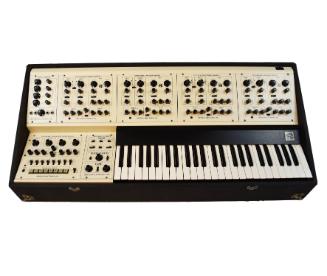
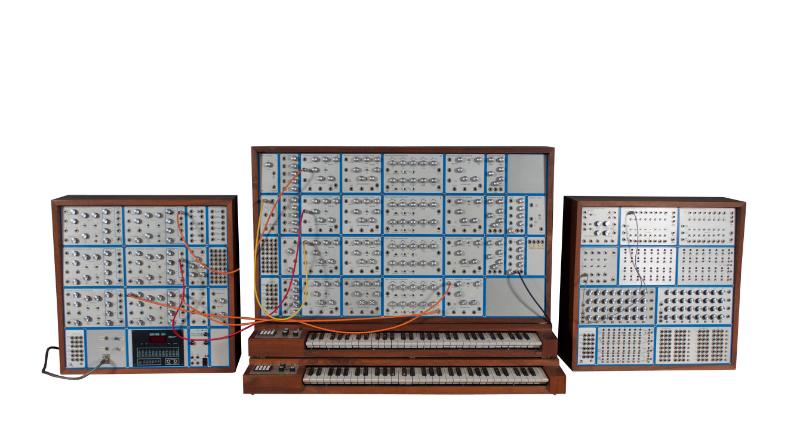
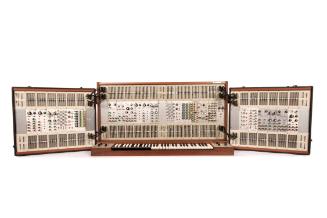
BiographyPatrick Gleeson is a notable composer, producer, and professional sound designer, born on 9 November 1934 in San Francisco, California. His interest in electronic music blossomed in the mid 1960s while working at the famed San Francisco Tape Music Center, the organization that funded and fostered the development of Donald Buchla’s first line of modular synthesizers in the late 1960s. In 1968, along with recording engineer John Vieira, Gleeson founded the Different Fur recording studio, which still operates out of San Francisco’s Mission district. The name of the studio was initially The Different Fur Trading Company, reportedly inspired by the fashion aesthetic of poet Michael McClure, a key member of the Beat Generation in San Francisco. The studio’s first formal acoustic design was conceived in the early 1970s by John Storyk, an architect and acoustician whose previous projects included the famed Electric Lady Studios in New York’s Greenwich Village, designed in 1970 to the specifications of owner Jimi Hendrix. Having previously employed Moog and ARP synthesizers, Gleeson purchased a customized E-mu modular synthesizer system in early 1973, citing the importance of the instrument’s polyphonic digital scanning keyboard in his performance approach. In the first few years of the 1970s, the studio’s most high-profile client was composer Herbie Hancock, who realized the albums Sextant and Head Hunters, both of 1973, with Gleeson performing on his E-mu modular. These albums, as well as Crossings of 1972, were engineered by Fred Catero. Gleeson also toured the instrument with Hancock and was among the first to do so, with most modular synthesizers residing in studios rather than on the live stage. From the mid 1970s, Gleeson began producing his own solo electronic works, beginning with the Grammy-nominated album Beyond The Sun: An Electronic Portrait of Holst’s “The Planets” of 1976 on Mercury Records, which was performed both by Gleeson on the E-mu modular and by jazz trombonist Julian Priester (born 1935 in Chicago, Illinois), featuring liner notes by synthesist Wendy Carlos. In 1977, he released his follow-up, Patrick Gleeson’s Star Wars, which consisted in him performing the music of John Williams on a variety of his synthesizers. A similar album, Computer Realization of Vivaldi: The Four Seasons, was released in 1982, performed on a Synclavier II. His sound design and film and television scoring began in the late 1970s, as well, with projects such as Apocalypse Now of 1979, and continued into the early 1990s, with work on the Knots Landing series realized within the first few years of the decade. Gleeson sold the studio to clients Howard Johnston and Susan Skaggs in 1985, after having produced albums such as Paul Kantner and Grace Slick’s Sunfighter of 1971, Coke Escovedo’s Comin’ at Ya! of 1976, and a small portion of Devo’s Q: Are We Not Men? A: We Are Devo! of 1978, which was primarily produced by Brian Eno at a studio in Cologne, Germany. Other notable artists to have recorded at Different Fur over the decades include Neil Young, Van Morrison, Stevie Wonder, Phil Collins, Jonathan Richman, and the Kronos Quartet. In 2004, Johnston and Skaggs sold the studio to record label-owner Jeremy Smith, who upgraded recording services to include the now-standard Pro Tools HD. The studio is currently owned by Patrick Smith, a former intern.



(division of Norlin Music Instruments, Ltd.)


electronic instruments manufacturer | founded 1969