EN / FR
Skip to main content

Buchla Thunder

Not available for use in Recording Studios
Not currently on exhibit
Artifact TypeSynthesizer, Controller
Manufacturer LocationUSA, North America
Datec. 1990
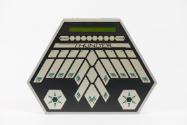
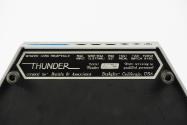
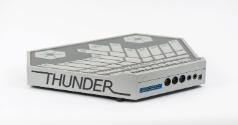
The Buchla Thunder is a rare type of synthesizer controller that was designed specifically for musicians who don’t play the keyboard. Based on tactile control, the instrument generates sound in response to variations in pressure, movement, and location of a player’s fingers on its surface. Less rigid and more intuitive than a regular keyboard, the Thunder’s touch control facilitates an alternate approach to musical performance. With over 50 different pads (or keys), it is entirely configurable—allowing the musician the freedom to adapt the instrument in infinite ways to suit their needs.
Operation/FunctionMIDI controller featuring ergonomic layout of fifty separate, programmable regions along the device’s keys. Each region may be mapped to a specific parameter or function and edited by the user. This device is simply a controller and must be connected to a synthesizer in order to operate.Cultural SignificanceThe Thunder, being one among only a few alternate controllers designed specifically for non-keyboard players, was extremely innovative and useful at the time of its production. In creating an interface that is more intuitive to non-keyboard players, Buchla has helped expand the demographic of synthesizer users, showing non-keyboard players that these instruments, which were almost always accompanied by a piano-style keyboard, are in fact accessible. Typically, Robert Moog is more popularly associated with the introduction of the first synthesizers. However, in the mid 1960s, both Don Buchla and Robert Moog – who was, at the time, based in New York – independently developed the first voltage-controlled synthesizers, both employing a modular structure and offering similar functions. Although their instruments catered to different demographics, both designers were highly influential to the next generation of synthesizer manufacturers, though perhaps in varying ways. Buchla stood primarily as an inspiration to designers looking to implement ideas that were less conventional and more aesthetically minded. The emergence of Buchla’s first instrument at a time when the counterculture of the 1960s was near its apex, as well as his involvement in related concerts and events such as the infamous Altamont Free Concert in 1969, certainly helped establish the designer as something of a figurehead for the movement. Moreover, being situated in the San Francisco Bay Area, which has been historically recognized as a national haven for innovation and less-than-conventional attitudes for several decades, allowed for Buchla’s instruments to enjoy a heightened reception that may not have been as prevalent elsewhere in the country.Technological SignificancePerhaps on account of his background in physiology, Buchla seemed to be particularly preoccupied in eliminating the distance between the user and the machine. This is certainly no more evident than in the design of his alternate controllers, including the touch plates of the early modular systems and the MIDI controllers of the 1990s such as the Lightning, Thunder, and Marimba Lumina. Although the Thunder was not necessarily among the first alternate controllers produced specifically for use with synthesizers – having been preceded by controllers such as Nyle Steiner’s EVI (trumpet-style) and EWI (woodwind-style) and EMS’s Synthi Hi-Fli guitar synthesizer in the 1970s – it remains one of the most unique in that it was not designed to represent or emulate the interface of any particular acoustic instrument. The first commercially minded synthesizers emerged into the market in the late 1960s, with analog modular systems remaining popular until well into the late 1970s; the first alternate controllers were intended for use with such instruments, and often came equipped with a dedicated module that could be connected to the instrument, enabling the controller to operate as an interface. Although a number of synthesizer designers have experimented over the years with alternate methods of interacting with their instruments, the keyboard interface has remained the dominant tool, having first emerged in early electronic instruments such as the Ondes Martenot and Ondioline, and being retained throughout the progression of early electric organs and sampling instruments on account of its relatively intuitive and “fool proof” nature. The advent of the alternate controller is one of the most important in the development of synthesizer technology in that it helped to expand both the range of the instrument, allowing players to articulate sounds in ways that are not afforded by the physical limitations of the keyboard, and the demographic of users, giving access to those who are trained in non-keyboard instruments. The Thunder in particular, with its more intuitive physical layout, invited non-musicians who were not familiar with any particular musical interface to perform with instruments they may not have been otherwise comfortable playing. The keyboards of most early modular synthesizers were quite basic; they did not allow the player to vary the tone with finger pressure or articulation, and were similar to piano keyboards in that their octaves were divided evenly into only twelve tones, generally not enabling the player to access a greater number of frequencies at one time. To the extent that Buchla instruments were revered by the experimental composers of the 1960s, they were also met with hesitance by the more commercially-minded musicians of the early 1970s, who opted for similar products manufactured by Moog and ARP, which were, by and large, more straightforward in their functions and certainly more stable. Although Buchla & Associates remained more or less on the fringe of the mainstream from the 1970s onward, their instruments were still regarded as among the most innovative, unique, and sophisticated. Buchla & Associates were also regarded as never having fully bowed to commercial pressures, instead continuing to expand their idiomatic design aesthetic throughout the 1970s and 1980s despite a lack of popular usage. As a designer, Buchla was also unique in that he approached his instruments both as an engineer and as a musician. Just as Alan R. Pearlman, a former test engineer with NASA, used his background to produce components that were extremely stable, Buchla made certain decisions for the user in his designs that could be seen as helpful from a performance standpoint. In addition to being credited as one of the inventors of the voltage-controlled synthesizer, along with Robert Moog, Donald Buchla is recognized as one of the most innovative synthesizer designers. The introduction of MIDI in 1982, which was a joint effort by Roland’s Ikutaro Kakehashi, Sequential Circuits’ Dave Smith and Oberheim Electronics’ Tom Oberheim, also had a profound impact on the course of electronic music. It allowed for greater interaction between devices and greater ease of use, and was appealing to both domestic amateurs and industry professionals, paving the way for an influx of highly flexible and adaptable digital synthesizers, samplers, and workstations throughout the 1980s and 1990s.Users/PerformersAs aforementioned, use of these kinds of devices has typically been limited to academic circles and there is little documented usage of this particular model. Perhaps the best-known user of the Thunder is the late American composer and educator David Wessel, who served as the co-director for the Center for New Music & Audio Technologies (CNMAT) at the University of California at Berkeley.
Object number2002.22.01
Photo credit: Don Kennedy
Buchla & Associates
1999
Not available for use in Recording Studios
On View: On exhibit
isVirtual:
Photo credit: Don Kennedy
Buchla & Associates
1982
Not available for use in Recording Studios
On View: Not currently on exhibit
isVirtual:
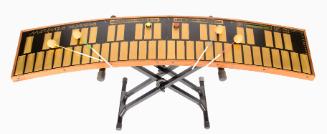
Photo credit: Don Kennedy
Buchla & Associates
1999
Available for use in Recording Studios
On View: Not currently on exhibit
isVirtual:
Photo credit: Don Kennedy
Korg, Inc.
About 1999
Available for use in Recording Studios
On View: Not currently on exhibit
isVirtual:
Photo credit: Don Kennedy
Yamaha Corporation/Nippon Gakki Company Limited
1987
Not available for use in Recording Studios
On View: On exhibit
isVirtual:
Photo credit: Don Kennedy
Buchla & Associates
c. 1968
Available for use in Recording Studios
On View: Not currently on exhibit
isVirtual:
Photo credit: Don Kennedy
Buchla & Associates
2006
Available for use in Recording Studios
On View: Not currently on exhibit
isVirtual:
Photo credit: Meghan MacKrous, courtesy of the National Music Centre
Waldorf Electronics GmbH
1993
Available for use in Recording Studios
On View: Not currently on exhibit
isVirtual:
Photo credit: Don Kennedy
E-mu Systems, Inc.
1979
Not available for use in Recording Studios
On View: Not currently on exhibit
isVirtual:
Photo credit: Don Kennedy
Hammond Organ Company
1957
Not available for use in Recording Studios
On View: Not currently on exhibit
isVirtual:
Photo credit: Don Kennedy
Moog Music, Inc.
c. 1978
Not available for use in Recording Studios
On View: On exhibit
isVirtual:
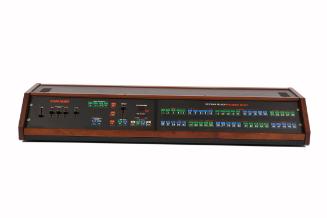
Photo credit: Don Kennedy
CBS Musical Instruments
c. 1982
Available for use in Recording Studios
On View: Not currently on exhibit
isVirtual:
Back