EN / FR
Skip to main content

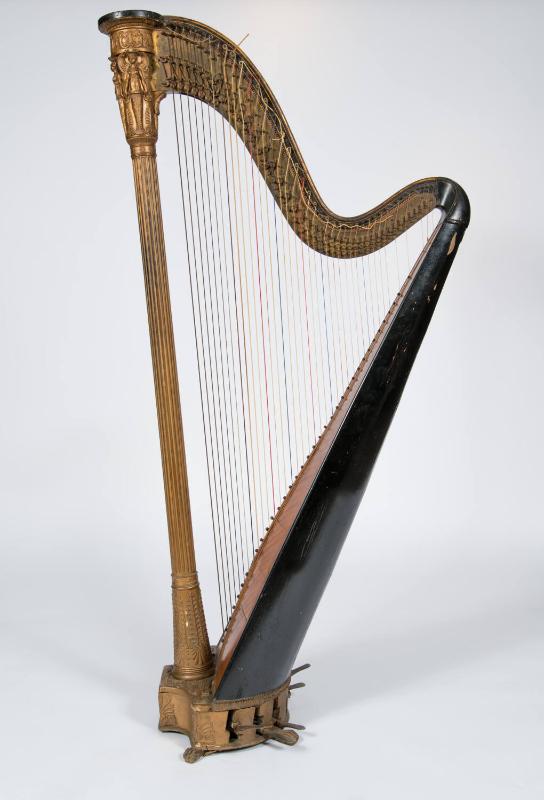
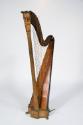
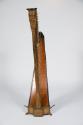
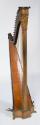
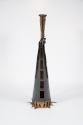
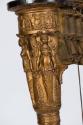
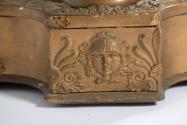
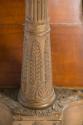
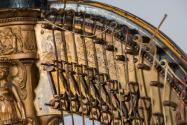
Érard Pedal Harp

Not available for use in Recording Studios
On exhibit
On exhibit
Artifact TypeHarp
Manufacturer LocationEngland, Europe
Date1820
The renowned French instrument builder Sébastien Érard (1752 - 1831) revolutionized the design of the modern, professional harp—developing a double-action pedal mechanism that allowed the player to alter the pitch produced at certain strings. Patented in 1810, this harp design has remained the standard for classical, jazz and pop music ever since. Of course, Érard’s innovative legacy goes beyond the harp—he’s also credited with establishing the modern piano after he patented a double-escapement action in 1823 and a series of pedals that are still used to this day.
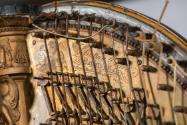
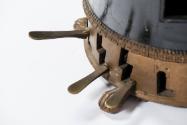
Operation/FunctionThis artifact is an example of a pedal concert harp. Its compass spans approximately six and a half octaves (approximately 47 strings). Typically, pedal harps employ bass strings constructed of copper or steel-wound nylon, mid-range strings constructed of gut, and upper strings constructed of nylon or gut. The instrument features seven brass pedals (C, D, E, F, G, A, and B) that operate a double-action fourchette mechanism, as well as a semi-cylindrical hardwood sound box, and a soundboard likely constructed of pine, spruce, or maple.Cultural SignificanceAlthough various formations of the harp have been and remain in use throughout different parts of the world, the double-action pedal harp designed by Sébastien Érard remains the standard professional instrument that dominates the world of Western classical music. The instrument gained initial popularity very early on in the nineteenth century, with many musicians preferring the double-action to the single-action in that the former offers easier access to a greater range of pitches and scales. Throughout the nineteenth century, Érard produced in excess of 6,000 harps, rendering the company the largest manufacturer of the instrument. Érard leaves a similar legacy in piano building: having been one of the foremost manufacturers of the instrument in France, and essentially establishing the modern piano with the addition of the double-escapement action and a series of pedals. His instruments, both harps and pianos, were sought out by professional musicians such as Liszt and Mendelssohn, and royals of the eighteenth and nineteenth centuries, including Queen Victoria and Louis XVI, who granted Sébastien a license to manufacture pianos for the French Court. The pedal harp maintained its popularity throughout the nineteenth and twentieth centuries, and inspired other harp builders to improve upon and develop other forms of the instrument, such as the electroacoustic harp. Moreover, many composers and performers of the nineteenth and twentieth centuries were preoccupied with developing unique and expanded performance techniques for the instrument, which fostered new timbres and textures that had been previously unachievable in earlier harps. Throughout the twentieth century, the instrument also spread various other genres including jazz and popular music. The twentieth century also saw the development of the virtuosi harpist, as well as the founding of various conventions and conferences, societies, and festivals dedicated solely to the harp. The harp has been a central instrument throughout the centuries in many different cultures, including those in Egypt and other parts of Africa, the Middle East, Central and East Asia, and Europe. Following the Spanish colonization of South and Central America, the instrument spread to the Western hemisphere. The harp experienced particularly higher degrees of usage throughout antiquity, along with the lyre, and through the Middle Ages, when music became a much larger component of the social and religious fabric in Europe. As the instrument continued to expand and improve in its construction, its popularity similarly increased and spread. Among variations of the harp that are used in other regions of the world are West Africa’s kora, Afghanistan’s Kafir harp, Japan’s koto, and China’s konghou.Technological SignificanceWith the patent of the first double-action pedal harp mechanism, Sébastien Érard effectively invented the modern, professional harp. Although versions of both the single- and double-action had existed since around 1784, with Érard patenting a single-action mechanism that used a simpler version of his double-action mechanism in 1794, it was his double-action design of 1810 that proved to be the most streamlined and innovative. Érard’s double-action instruments employ a series of seven pedals, which became the standard in harps in 1810 despite pedals having been incorporated in various arrangements since 1697. The most important contribution Érard gave to the harp was the double fourchette mechanism that defines his double-action: located within the neck of the instrument are two rows of fourchettes, each containing a series of small metal discs that correspond to individual strings. The discs are outfitted with two prongs and, when a pedal is depressed, the fourchette is activated, the discs are rotated, and the two prongs pull the string slightly in opposing directions to effectively tighten its tension and tune it upwards by a semitone. The double fourchette mechanism enables this action to be performed twice, thereby allowing each pitch to be moved by a full whole tone through either its flattened, natural, or sharpened orientation. Thus, by setting each of the seven pedals (one for each pitch in the Western diatonic scale) to one of three different positions, the corresponding strings can be tuned to cover every pitch within the twelve-note chromatic scale, allowing the player to access any scale. Moreover, the pedals may be moved during performance, allowing the player to modulate keys and insert inharmonic pitches. The double-action mechanism is significant in light of the fact that harps were traditionally designed to be diatonic instruments, meaning that their strings were tuned only to those certain pitches that correspond to a particular key or scale. Historically, most of the diatonic harps that preceded Érard’s double-action harp were tuned to E-flat major, while Érard’s instrument, with all the pedals at rest, is tuned to C-flat major. Immediately prior to the advent of the double-action mechanism, many modern concert harps often employed a single-action mechanism that allowed the strings to be tuned upwards by one semitone. A number of similar devices were used to perform this action, including a single version of the fourchette mechanism that Érard employed in his single-action instruments. Although the single-action mechanism did greatly expand the number of available pitches, it was not sufficient as it did not allow pitches to be tuned downward so as to be flattened, and therefore still lacked access to specific pitches. The single-action orientation of strings was also somewhat unintuitive; with Érard’s double-action design, the strings are aligned from C through to B and each can be set to either a flat, natural, or sharp position. In effect, Érard’s double-action mechanism was the first fully functional method for achieving chromaticism within a diatonic context, and seemed to satisfy the needs of performers who were not content with the limitations of the single-action mechanism. It is not well documented as to why the first harps were built in a diatonic arrangement, however one can speculate that, since the maximum possible length of the instrument is limited by the relative arm length of the average player, the first builders of early modern harps tried to optimize pitch range by opting for a diatonic and not chromatic arrangement. Of course, the difficulty with purely diatonic arrangements, as were employed in the earliest harps that lacked levers and pedals, was that the player could only perform in whatever key the instrument was tuned to. Érard’s design was also more efficient, and did not result in the strings becoming detuned, misaligned, or affected in tone quality. The development of the single-action harp mechanism is attributed to the Austrian builder Jacob Hochbrucker, who first began experiments with the design in 1720. Other builders who contributed to the development of the single-action mechanism included Nadermann, Cousineau, Renault & Chatelain, Wolter, Louvet, and Holztmann. Although these harps remained in manufacture throughout the nineteenth century, they gradually became less popular with the increase in usage and popularity of Érard’s double-action instrument. By the mid eighteenth century, the double-action pedal harp had become the standard format of the instrument. Érard’s 1810 patent (England, number 3332) was preceded by several other patents, obtained in 1801 (England, patent number 2502), 1802 (France, patent number 2595), and 1808 (England, patent number 3170), however none of these earlier patents were put into production. In addition to his highly innovative double-action mechanism for the harp, Sébastien Érard was also prolific in producing new designs and mechanisms for the piano, the instrument with which his company is perhaps best known today. Among his innovations for the piano was the patenting of a double-escapement action in 1823. The double-escapement action employed what Érard referred to as a repetition lever, which allowed the hammers to be reactivated without having to first reach a resting position. The single-escapement action that had been developed by Bartolomeo Cristofori in the earliest fortepianos was itself innovative in that it produced a much larger sound than the clavichord, an instrument that was commonly used in the home throughout the Baroque era, and in that it allowed for the type of dynamic expression that was not possible in the harpsichord, which was essentially the dominant keyboard instrument throughout the seventeenth and eighteenth centuries. That being said, Cristofori’s single-escapement action required each hammer to return to its horizontal position before again being activated by the key. As a result, the single-escapement action used in early fortepianos made the performance of fast-moving passages or quick-repeated notes difficult. Érard’s double-escapement action, however, enabled performers to work through increasingly more complex and virtuosic passages and, in effect, helped direct many of the technically-challenging compositional attitudes that arose in the Romantic era. Another important innovation Érard contributed to the piano was the installment of a full set of pedals, including a sustaining pedal, a muting pedal that shifts the hammer action such that only one of the strings is struck instead of all three, and occasionally a series of Janissary pedals. Janissary pedals were employed to colour the tone of the piano with influences of Turkish music, which served to satisfy an interest in exoticism that was prevalent throughout European culture in the eighteenth and nineteenth centuries. Among the Janissary pedals were a pedal that lowers either a piece of parchment or leather above the strings to allow them to “buzz”, so to speak, much like a bassoon, as well as a percussive pedal that when depressed halfway would ring a bell located on the inside of the instrument and, when depressed all the way, would also activate a hammer that would strike underneath the soundboard, much like a drum. Érard also developed patents to improve keyboard action, the soundboard, and the tuning mechanisms used in pianos. The majority of Érard’s innovations and modifications have been maintained in both the piano and harp with little change over the years and, as such, he is often recognized as one of the foremost founders of the modern piano. Érard is also credited with the design of the fourchette mechanism as it was used in both his single- and double-action designs, as well as a series of structural improvements that both he and his nephew, Pierre, contributed to the modern harp throughout the eighteenth century. Among the improvements Sébastien gave to the harp included strengthening the neck by laminating the wood with a grain that runs in the same direction, and producing a more rounded sound box The proliferation of harp use on account of the development of the double-action harp also led to new developments in composing and writing for the instrument. Effects such as the chordal glissando, which is one of the most common techniques used today, was relatively unknown before the 1830s. Other effects such as bisbigliando, an effect that combines glissando with generation of harmonics, pedal glissandi, key modulation, and quick repetition of the same pitch were all techniques that were developed by Elias Parish Alvars, and would not have been possible without the Érard double-action harp. Moreover, Érard’s factories were also quite impressive for the time, taking advantage of the rising industrial era of the early and mid eighteenth century and featuring equipment that had been customized for specialized tasks. Manufacturers around the world, including Lyon & Healy, who were the prominent manufacturers of the instrument in the United States, further popularized the double-action pedal harp design throughout the twentieth century. The double-action pedal harp was followed in the late nineteenth century by the first chromatic-strung harps, which were produced by the famed Pleyel company, a rival Paris-based piano manufacturer. All the same, both the double-action harp and the chromatic harp remained in use throughout the remainder of the nineteenth and twentieth century, with the production of the latter having little affect on the popularity of the former. The early modern harp was preceded by a number of iterations, though its closest relative is the European, or Irish, harp, which was primarily used in the Middle Ages and continued to increase in size as structural developments were contributed up to Érard’s time. The earliest harps can be said to date back to nearly 3500 B.C.E., with depictions of harp-like instruments existing in the wall paintings of the ancient Egyptians. The angled harp seems to have originated from Asia in around 1500 B.C.E., and consisted of a hollow sound box, frame, strings, and tuning pegs. The structural column of the modern harp was introduced in Europe during the Middle Ages to support the addition of extra strings. The first version of a mechanism that allowed the strings to be tuned up by a semitone arose toward the end of the seventeenth century, and consisted of each string having a small lever that could be manually turned by the player. The basic frame design of the modern harp seems to have been first used in the British Isles. The first version of a pedal harp was developed in Austria.Users/PerformersWell known harpists of the Classical, Romantic, and early Twentieth-Century eras include Francois-Joseph Naderman (1781 – 1835), the son of a famous French harp builder and the first professor of the instrument at the Paris Conservatoire, Elias Parish Alvars (1808 – 1849), an English harpist and composer who explored expanded techniques on the double-action harp, Alphonse Jean Hasselmans (1845 – 1912) who is regarded as having begun the French School of harp technique and who taught at the Paris Conservatoire, Henriette Renie (1875 – 1956), who was one of the first well-known female harpists and a staunch supporter of the double-action harp, Carlos Salzedo (1885 – 1961), a composer and performer who performed with the Metropolitan Opera and designed the Salzedo Harp for Lyon & Healy, Marcel Grandjany (1891 – 1976), who performed extensively throughout the United States and Paris and taught harp at the Julliard School of Music, and Harpo Marx (1888 – 1964), one of the most revered performers and composers of harp music in popular culture. In popular music, the harp has been used by performers such as Gayle Levant, who has worked as a session musician in Los Angeles since the 1960s and appeared on numerous Hollywood feature soundtracks, American singer-songwriter Joanna Newsom, Welsh experimental musician and improviser Rhodri Davies, and American experimental musician and improviser Zeena Parkins, who performs with Björk. Loreena McKennitt is a well-known Celtic harper, having featured the instrument in a number of commercial recordings.
Object number2002.07.01
Photo credit: Don Kennedy
Garnet "Gar" Gillies
Available for use in Recording Studios
On View: Not currently on exhibit
isVirtual:
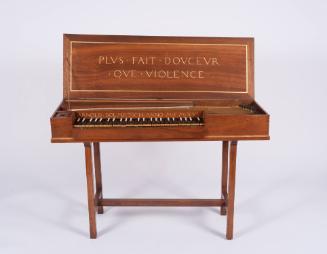
Photo credit: Don Kennedy
Arnold Dolmetsch
1926
Not available for use in Recording Studios
On View: On exhibit
isVirtual:
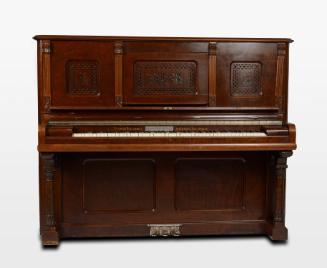
Photo credit: Don Kennedy
Heintzman & Co.
1908
Not available for use in Recording Studios
On View: On exhibit
isVirtual:
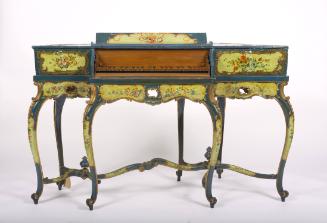
Photo credit: Don Kennedy
Francesco Bonafinis
c. 1560
Not available for use in Recording Studios
On View: On exhibit
isVirtual:
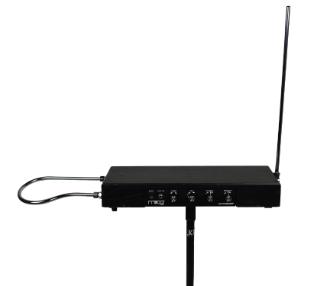
Photo credit: Meghan MacKrous, courtesy of the National Music Centre
Moog Music, Inc.
2001
Available for use in Recording Studios
On View: Not currently on exhibit
isVirtual:
Bösendorfer Klavierfabrik GmbH
1855
Not available for use in Recording Studios
On View: Not currently on exhibit
isVirtual:
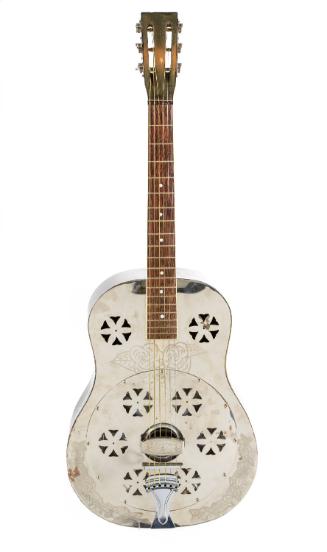
Photo Credit: Don Kennedy
Not available for use in Recording Studios
On View: On exhibit
isVirtual:
Photo credit: Don Kennedy
Joseph Johannes Couchet
1679
Not available for use in Recording Studios
On View: On exhibit
isVirtual:
Photo credit: Don Kennedy
Vido Trasuntino
1591
Available for use in Recording Studios
On View: Not currently on exhibit
isVirtual:
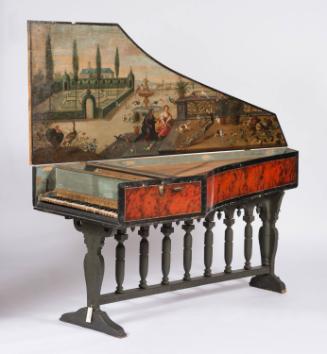
Photo credit: Don Kennedy
Carl (Karl) Leopold Röllig
c. 1800
Not available for use in Recording Studios
On View: Not currently on exhibit
isVirtual:
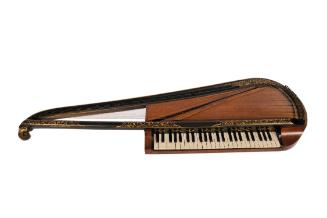
Photo credit: Don Kennedy
c. 1800
Not available for use in Recording Studios
On View: Not currently on exhibit
isVirtual:
Photo credit: Don Kennedy
1999
Not available for use in Recording Studios
On View: Not currently on exhibit
isVirtual:
Back