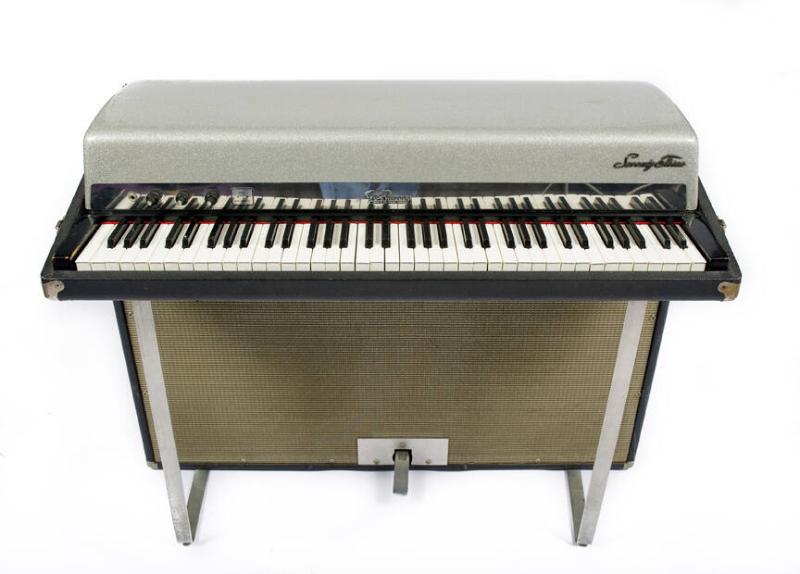
Rhodes
1910 - 2000
ActiveLos Angeles, California, USA
BornSan Fernando Valley of Los Angeles, California, USA
BiographyHarold Burroughs Rhodes was born in 1910 in the San Fernando Valley of Los Angeles, California and by 1930 had established a series of music education institutions across the country after briefly studying at the University of Southern California. Known as the Harold Rhodes School of Popular Piano, educators taught based on a unique teaching method Rhodes had also developed, dubbed the ‘Rhodes Method’. From this early age, he exhibited a keen interest in music education and felt that students should be taught not only to play music, but also the mechanisms behind the instruments they were playing so as to gain a better appreciation for how sound actually functions. With the onset of the United States’ involvement in the Second World War in 1942, Rhodes abandoned this project and joined the Army Air Corps. While stationed in between classifications, Rhodes was tasked with offering therapeutic services to wounded and recovering soldiers. He took this as an opportunity to further refine his pedagogical theories, and sought to develop a low-cost piano that was portable enough for even those who were bed ridden to use. Sourcing the most readily available parts, Rhodes gathered hydraulic aluminum pipes from the wings of out-of-service B-17 bomber airplanes as his tone generators, cutting them to resemble the bars of a xylophone. He then fashioned the bars into a sort of suitcase-enclosed toy piano, spanning a compass of only 2.5 octaves. His design was hugely popular, and garnered him a Medal of Honor from the United States government in 1945. A description of the instrument can be found in Air Corps Manual No. 29 of the army’s archives. Following the war, Rhodes established the Rhodes Piano Corporation, choosing to attempt mass manufacture of his instrument independently rather than with the support of the music industry. He revealed his newly redesigned Pre-Piano at the 1946 NAMM (National Association of Music Merchants) trade show, with a slightly expanded keyboard and strings derived from a doorbell mechanism. Seeking to improve the instrument’s tone through amplification, subsequent versions incorporated an electrostatic microphone, amplifier, and single 6” loudspeaker.
In the early 1950s, Rhodes altered the design to remove the piano-like strings and return to the tone generation method he developed during the war: metal bars. Instead of using singular bars, however, he borrowed the approach used in earlier acoustic instruments such as the dulcitone and celesta, which employ a series of two-pronged metal tuning forks. His concept entailed the creation of an asymmetrical tuning fork, with a small metal tine to generate the initial tone, and a larger resonant tonebar to shape the tonal quality of the overall sound. He obtained a patent for the design and constructed the first prototype, which contained 72 notes and was built into a modified piano frame. The instrument quickly piqued the interest of American inventor Leo Fender (1909 – 1991, born Clarence Leonidas Fender in Anaheim, California), founder of the Fender Electric Instrument Company, who had already released several massively successful musical products including the Telecaster and Stratocaster guitars, the former of which was the first commercial solid-body electric guitar, as well as a series of what were to become classic guitar amplifiers. The two partnered in 1959 but, throughout the next five years, designed and manufactured just one product together: the Fender Rhodes Piano Bass, a 32-note version of Rhodes’ piano that featured only the notes of the lowest octaves as Fender did not like the sound of the previous instrument’s upper registers. In 1964, Rhodes was approached by Goddard Lieberson and Don Randall of the CBS Corporation, who were set to establish a musical instrument division within the company and keen to acquire Fender. CBS offered Rhodes the option either to terminate his agreement with Fender, or to continue working with CBS under the Fender Rhodes moniker. Rhodes accepted the latter offer, and, in 1965, following a whopping 13 000 000 USD buy out of Fender, CBS overtook manufacture of Fender Rhodes instruments, which continued until 1983. Around the same time, the CBS Musical Instruments division also acquired Electro Music, Inc. (producers of the Leslie tone cabinet), the Steinway & Sons piano manufacturers, and, briefly, the Buchla & Associates 100 series modular synthesizer. From 1965, Rhodes began to manufacture the first of his commercial electric pianos with CBS, the Silver-Top suitcase model with 73 keys and black Tolex case.
The CBS years saw mass manufacture of the instrument’s various revisions, which were demarcated in terms of ‘Mark’ designations, with nearly fifty instruments being produced daily at the height of production. In an effort to further develop his concepts in music education, Rhodes also designed a series of student and teacher consoles with CBS, a highly innovative design that allowed numerous student units to be connected and interfaced with a single teacher unit. The Berklee School of Music in Boston, Massachusetts was one of the first buyers of these instruments, acquiring 22 units in 1968 and another 24 units the following year. In 1970, Rhodes increased the compass of his electric pianos to the full 88 keys of a traditional piano, and introduced the first stage models, which were smaller, lighter, and cheaper than their suitcase counterparts. Within this revision, dubbed the Mark I, four different models were available: the Mark I stage 73, the Mark I stage 88, the Mark I suitcase 73, and the Mark I suitcase 88. The tops of these instruments were made available exclusively in black, unlike previous models, which featured an iconic silver-top finish. The Mark II, which came with a ridged flat-top, and Mark III followed shortly thereafter, each improving the design and components in various ways. In 1974, ‘Fender’ was dropped from the nameplate of the instruments, with subsequent instruments only bearing the name ‘Rhodes’, and, in 1981, CBS acquired the financially troubled ARP Instruments, Inc. of Massachusetts, establishing a surrogate manufacturing facility in Fullerton, California. Although there was no documented overlap of design between Rhodes and ARP, CBS branded the Chroma synthesizer, which ARP had begun prototyping just prior to ceasing operations, as the somewhat misleading Rhodes Chroma. CBS’s final instrument with Rhodes was the Domestic 88 of 1982. Between 1983 and 1987, Rhodes was privately owned by William Schultz, CBS’s then head, who released the Mark V. In 1987, Rhodes was acquired by the Roland Corporation of Japan, who had several years prior released the hugely influential TR-808 and TR-909 drum machines. In 1989, they released the MK-80 digital electric piano, controversial in that it allegedly was not endorsed by Rhodes himself. In 1997, Harold Rhodes re-obtained the rights to the piano and established the Rhodes Music Corporation once again, which still operates to this day, having recently released the Mark 7. Up until his death in 2000, a result of complications from pneumonia, Harold Rhodes continued to work in the field of music education, particularly with youth in his native Los Angeles, advocating the value of relating physical touch to the musical sound source.
In the early 1950s, Rhodes altered the design to remove the piano-like strings and return to the tone generation method he developed during the war: metal bars. Instead of using singular bars, however, he borrowed the approach used in earlier acoustic instruments such as the dulcitone and celesta, which employ a series of two-pronged metal tuning forks. His concept entailed the creation of an asymmetrical tuning fork, with a small metal tine to generate the initial tone, and a larger resonant tonebar to shape the tonal quality of the overall sound. He obtained a patent for the design and constructed the first prototype, which contained 72 notes and was built into a modified piano frame. The instrument quickly piqued the interest of American inventor Leo Fender (1909 – 1991, born Clarence Leonidas Fender in Anaheim, California), founder of the Fender Electric Instrument Company, who had already released several massively successful musical products including the Telecaster and Stratocaster guitars, the former of which was the first commercial solid-body electric guitar, as well as a series of what were to become classic guitar amplifiers. The two partnered in 1959 but, throughout the next five years, designed and manufactured just one product together: the Fender Rhodes Piano Bass, a 32-note version of Rhodes’ piano that featured only the notes of the lowest octaves as Fender did not like the sound of the previous instrument’s upper registers. In 1964, Rhodes was approached by Goddard Lieberson and Don Randall of the CBS Corporation, who were set to establish a musical instrument division within the company and keen to acquire Fender. CBS offered Rhodes the option either to terminate his agreement with Fender, or to continue working with CBS under the Fender Rhodes moniker. Rhodes accepted the latter offer, and, in 1965, following a whopping 13 000 000 USD buy out of Fender, CBS overtook manufacture of Fender Rhodes instruments, which continued until 1983. Around the same time, the CBS Musical Instruments division also acquired Electro Music, Inc. (producers of the Leslie tone cabinet), the Steinway & Sons piano manufacturers, and, briefly, the Buchla & Associates 100 series modular synthesizer. From 1965, Rhodes began to manufacture the first of his commercial electric pianos with CBS, the Silver-Top suitcase model with 73 keys and black Tolex case.
The CBS years saw mass manufacture of the instrument’s various revisions, which were demarcated in terms of ‘Mark’ designations, with nearly fifty instruments being produced daily at the height of production. In an effort to further develop his concepts in music education, Rhodes also designed a series of student and teacher consoles with CBS, a highly innovative design that allowed numerous student units to be connected and interfaced with a single teacher unit. The Berklee School of Music in Boston, Massachusetts was one of the first buyers of these instruments, acquiring 22 units in 1968 and another 24 units the following year. In 1970, Rhodes increased the compass of his electric pianos to the full 88 keys of a traditional piano, and introduced the first stage models, which were smaller, lighter, and cheaper than their suitcase counterparts. Within this revision, dubbed the Mark I, four different models were available: the Mark I stage 73, the Mark I stage 88, the Mark I suitcase 73, and the Mark I suitcase 88. The tops of these instruments were made available exclusively in black, unlike previous models, which featured an iconic silver-top finish. The Mark II, which came with a ridged flat-top, and Mark III followed shortly thereafter, each improving the design and components in various ways. In 1974, ‘Fender’ was dropped from the nameplate of the instruments, with subsequent instruments only bearing the name ‘Rhodes’, and, in 1981, CBS acquired the financially troubled ARP Instruments, Inc. of Massachusetts, establishing a surrogate manufacturing facility in Fullerton, California. Although there was no documented overlap of design between Rhodes and ARP, CBS branded the Chroma synthesizer, which ARP had begun prototyping just prior to ceasing operations, as the somewhat misleading Rhodes Chroma. CBS’s final instrument with Rhodes was the Domestic 88 of 1982. Between 1983 and 1987, Rhodes was privately owned by William Schultz, CBS’s then head, who released the Mark V. In 1987, Rhodes was acquired by the Roland Corporation of Japan, who had several years prior released the hugely influential TR-808 and TR-909 drum machines. In 1989, they released the MK-80 digital electric piano, controversial in that it allegedly was not endorsed by Rhodes himself. In 1997, Harold Rhodes re-obtained the rights to the piano and established the Rhodes Music Corporation once again, which still operates to this day, having recently released the Mark 7. Up until his death in 2000, a result of complications from pneumonia, Harold Rhodes continued to work in the field of music education, particularly with youth in his native Los Angeles, advocating the value of relating physical touch to the musical sound source.

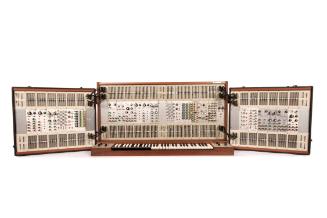
electronic instruments manufacturer | founded 1969


(division of Norlin Music Instruments, Ltd.)



Contemporary Country Singer-Songwriter | born 1961