
Steinway & Sons
ActiveNew York, New York, USA
BiographySteinway & Sons was founded on 5 March 1853 by Heinrich Engelhard Steinweg, a talented cabinetmaker and craftsman who emigrated from Germany to the United States in 1850, settling with his wife and children in a loft on Varick Street in Manhattan, New York. Steinweg had begun assembling pianos in the kitchen of his house in Seesen, Germany as early as the 1820s and had constructed 482 units prior to the formal establishment of his company. In 1864, his name was Anglicized to Henry E. Steinway. After a brief period at the Varick Street loft, a new workshop was established on Walker Street, also in Manhattan; in the 1860s, a third facility was opened on Park Avenue in between 52nd and 53rd Streets, the current site of German architect Ludwig Mies van der Rohe’s famous Seagram Building. It was during the last half of the nineteenth century that Henry Steinway, along with his sons C.F. Theodore, Charles, Henry Jr., William, and Albert developed their most significant contributions to the modern piano; of the company’s 127 patented inventions, nearly half were developed during this time. Steinway’s innovations were strongly influenced by emerging scientific research of the time, including the acoustical theories of the revered German physicist Hermann von Helmholtz, a family friend. Establishing an early reputation based on revolutionary and state-of-the-art design as well as workmanship of an extremely high caliber, the company quickly began receiving national and international recognition. Gold medals were awarded from both American and European exhibitions as early as 1855, and, in 1867, the company received the prestigious Grand Gold Medal of Honor for Excellence in Manufacturing and Engineering at the Paris Exhibition, dually holding the honor of being the first American company to receive the award. In 1857, the company began manufacturing a series of art case pianos that were designed by prominent artists of the time; these instruments are still produced today, however they are now only done to celebrate very unique or significant partnerships or occasions. In 1866, the first official Steinway Hall, located on East 14th Street in Manhattan, was inaugurated, featuring a concert hall of 2000 seats as well as several showrooms. This venue quickly became one of New York City’s primary cultural hubs, housing the New York Philharmonic orchestra until Carnegie Hall opened in 1891. This hall was closed in 1925, and a new hall on West 57th Street remained in use until 2014. In the 1870s, production shifted from Manhattan to Queens, with what became known as Steinway Village emerging in the Astoria section of that borough. The village – essentially a small hamlet – contained its own foundries, factory, post office, library, parks, and employee housing; this area now forms part of Long Island City, and remains the site of the current Steinway factory.
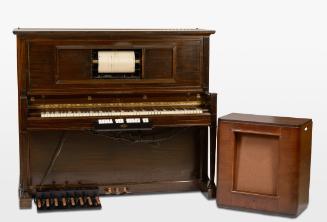
Henry Sr. passed away in 1871, resulting in sons C.F. Theodore and William assuming management of the company. C.F. Theodore, an accomplished pianist, took responsibility for the technical aspects of the company’s piano designs, earning a remarkable 45 patents including one for the modern concert grand piano in 1875. William focused his efforts on marketing and expanding the company’s accessibility to Europe, establishing a showroom in London in 1875 – first on Wigmore Street, then St. George Street, then Marylebone Lane, where it currently remains – and opening a second production facility in Hamburg, Germany in 1880. William is also credited with the concept of the Steinway Hall, with its design such that entrants to the concert hall have to first pass through the showrooms. Subsidiary production facilities were later opened in London, Berlin, Tokyo, and Shanghai, however the Hamburg factory currently remains the only manufacturer of Steinway pianos outside of New York. The early twentieth century saw the company venture into the production of player pianos in keeping with the domestic trends of the time. Throughout the Second World War, Steinway shifted manufacturing to aid in the Allied war effort, with normal demand and production rates increasing in the postwar era. Mounting financial difficulties throughout the 1970s resulted in the sale of the firm to the musical instrument division of CBS, who held numerous brands such as the famed Fender Rhodes moniker. The brand was again sold in 1985 and was eventually formed into the Steinway Musical Instruments conglomerate, a merger of Steinway Musical Properties and the Selmer Company. In 2000, the company began manufacturing mid-level and entry-level pianos under the Boston and Essex brands, respectively; Boston pianos are manufactured at the Kawai piano factory in Japan, while Essex pianos are manufactured at the Pearl River piano factory in China. Numerous Steinway Halls currently exist around the world. Steinway’s New York factory produces six models of grand piano: S (5’11”), M (5’7”), O (5’10.75”), A (6’2”), B (6’10.5”), and D (8’11.75”). The company maintains an illustrious roster of users, known as Steinway Artists, as well as a bank of approximately 300 pianos from which these and other notable musicians may choose an instrument with which to perform or record.
Henry Sr. passed away in 1871, resulting in sons C.F. Theodore and William assuming management of the company. C.F. Theodore, an accomplished pianist, took responsibility for the technical aspects of the company’s piano designs, earning a remarkable 45 patents including one for the modern concert grand piano in 1875. William focused his efforts on marketing and expanding the company’s accessibility to Europe, establishing a showroom in London in 1875 – first on Wigmore Street, then St. George Street, then Marylebone Lane, where it currently remains – and opening a second production facility in Hamburg, Germany in 1880. William is also credited with the concept of the Steinway Hall, with its design such that entrants to the concert hall have to first pass through the showrooms. Subsidiary production facilities were later opened in London, Berlin, Tokyo, and Shanghai, however the Hamburg factory currently remains the only manufacturer of Steinway pianos outside of New York. The early twentieth century saw the company venture into the production of player pianos in keeping with the domestic trends of the time. Throughout the Second World War, Steinway shifted manufacturing to aid in the Allied war effort, with normal demand and production rates increasing in the postwar era. Mounting financial difficulties throughout the 1970s resulted in the sale of the firm to the musical instrument division of CBS, who held numerous brands such as the famed Fender Rhodes moniker. The brand was again sold in 1985 and was eventually formed into the Steinway Musical Instruments conglomerate, a merger of Steinway Musical Properties and the Selmer Company. In 2000, the company began manufacturing mid-level and entry-level pianos under the Boston and Essex brands, respectively; Boston pianos are manufactured at the Kawai piano factory in Japan, while Essex pianos are manufactured at the Pearl River piano factory in China. Numerous Steinway Halls currently exist around the world. Steinway’s New York factory produces six models of grand piano: S (5’11”), M (5’7”), O (5’10.75”), A (6’2”), B (6’10.5”), and D (8’11.75”). The company maintains an illustrious roster of users, known as Steinway Artists, as well as a bank of approximately 300 pianos from which these and other notable musicians may choose an instrument with which to perform or record.


piano makers, entrepreneurs | incorporated 1866


piano manufacturer | founded 1857


piano manufacturer | founded 1828