k.d. lang
Contemporary Country Singer-Songwriter | born 1961
BornKathy Dawn Lang on November 2, 1961 in Edmonton, Alberta, Canada
Biographyby Jason McBride
While k.d. lang’s offstage life has occasionally overshadowed her music—she’s nabbed headlines for her appearance, eating habits and sexuality—it’s her remarkably rich voice that earned her a reputation as one of the world’s greatest singers. An unlikely country star early in her career, she’s since been a relentless musical shape-shifter, successfully experimenting with cabaret music, jazz and pop, and cracking the Billboard charts with hits like “Constant Craving” and a soul-stirring cover of Leonard Cohen’s “Hallelujah.” Seymour Stein, the legendary co-founder of Sire Records, the first American label to sign lang, summed her up this way: “k.d. defies categorization even in an era in America where categorization is king.”
IN DEPTH
In his song of (almost) the same name, Stompin’ Tom Connors called her, with a wink, “Lady k.d. lang.” The internal rhyme was no doubt appealing but the sentiment was also wry acknowledgment of the fact that Kathryn Dawn Lang had always resisted easy classification—musically, stylistically, sexually. Only now, though, thirty-odd years after lang began her professional career, can its pioneering power be clearly seen. But how exactly did this puckish, androgynous cowpunk from Podunk, Alberta, captivate (and confuse) Nashville, end up on the cover of Vanity Fair (pretending to be “shaved” by glamazon Cindy Crawford, no less), transform herself into the most enchanting of chanteuses and redefine what a pop star can be?
The answer, of course, is that voice. Deeply resonant, often sultry, and with an astonishing range, power and pitch, it’s an instrument that led lang’s legendary singing partner Tony Bennett to call her “the best singer since Judy Garland.” It’s a natural gift; lang had little professional training aside from singing and piano lessons her mother, a schoolteacher, took her to as a kid.
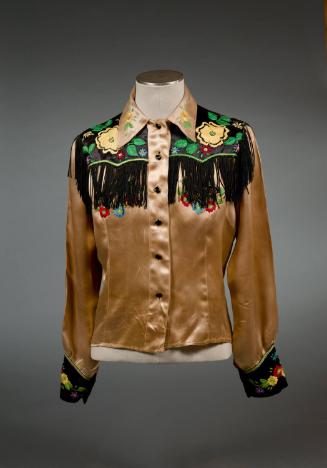
A headstrong tomboy, lang also had an early, sharp hunger for fame and ambition to match. While she wasn’t really interested in country music—she initially dreamed of being a jazz singer—at 21, she discovered Patsy Cline. It was the musical equivalent of Picasso learning about Cézanne. Lang claimed to be the reincarnation of the late country icon, but the wacky persona and look she affected then was something closer to Minnie Pearl: a hodgepodge of country kitsch that included flowing skirts, torn stockings, fringed shirts, and battered, sawed-off cowboy boots. She favoured spiky, homemade haircuts. The lowercase initializing of her name was a nod to poet e.e. cummings. With the help of guitarist/songwriter Ben Mink, she recorded numerous albums and one-off projects over their 20-year working relationship.
Her career accelerated quickly: Sire signed her, she dueted with Roy Orbison on a heart-rending version of his classic “Crying,” and then a dazzling appearance on the Tonight Show lured Owen Bradley, Cline’s old producer, out of retirement. He produced lang’s first solo album, Shadowland (and immediately placed her in a pantheon by teaming lang up with Nashville royalty Kitty Wells, Loretta Lynn and Brenda Lee on the song “Honky Tonk Angels Medley”). In 1989, lang won her first solo Grammy for her album, Absolute Torch and Twang. Lang’s timing was as perfect as her voice: so-called alternative country was the rage, and she fit well on a CD shelf between Mary Chapin Carpenter and Lyle Lovett.
Not surprisingly, though, Nashville proved too small. She told Spin: “I don’t eat meat, I’m not a Christian and I don’t have big fluffy hair, which basically stands against a lot of the fundamentalist values on which country music is based.” By that point, however, lang had moved on herself, existentially and musically. She came out to The Advocate in 1992, becoming, arguably, the first lesbian pop icon, and that same year, released Ingénue, a shift toward softer, subtler adult contemporary music. The album’s first single, “Constant Craving,” rose to No. 2 on Billboard’s Hot Adult Contemporary chart, and peaked at 38 on the Top 40.
The easy listening of Ingénue seemed to be lang’s comfort zone, but her subsequent albums rarely followed a stylistic pattern. She flirted with more commercial pop, novelty covers (Drag is a light-hearted all-covers tribute to, of all things, smoking, while Hymns of the 49th Parallel is an ode to other iconic Canadian songwriters), dug into the American songbook with Tony Bennett, and even, with 2011’s Sing It Loud, returned to her off-kilter country roots. Versatility seemed to be the point or, to put it another way, constraints were beside the point. “The singers I admired, like Peggy Lee, Roy Orbison and Elvis, these great singers sang many genres,” she said. “That’s the mark of a good vocalist. Music was never divided by genre in my mind. It’s about singing good music.”
While k.d. lang’s offstage life has occasionally overshadowed her music—she’s nabbed headlines for her appearance, eating habits and sexuality—it’s her remarkably rich voice that earned her a reputation as one of the world’s greatest singers. An unlikely country star early in her career, she’s since been a relentless musical shape-shifter, successfully experimenting with cabaret music, jazz and pop, and cracking the Billboard charts with hits like “Constant Craving” and a soul-stirring cover of Leonard Cohen’s “Hallelujah.” Seymour Stein, the legendary co-founder of Sire Records, the first American label to sign lang, summed her up this way: “k.d. defies categorization even in an era in America where categorization is king.”
IN DEPTH
In his song of (almost) the same name, Stompin’ Tom Connors called her, with a wink, “Lady k.d. lang.” The internal rhyme was no doubt appealing but the sentiment was also wry acknowledgment of the fact that Kathryn Dawn Lang had always resisted easy classification—musically, stylistically, sexually. Only now, though, thirty-odd years after lang began her professional career, can its pioneering power be clearly seen. But how exactly did this puckish, androgynous cowpunk from Podunk, Alberta, captivate (and confuse) Nashville, end up on the cover of Vanity Fair (pretending to be “shaved” by glamazon Cindy Crawford, no less), transform herself into the most enchanting of chanteuses and redefine what a pop star can be?
The answer, of course, is that voice. Deeply resonant, often sultry, and with an astonishing range, power and pitch, it’s an instrument that led lang’s legendary singing partner Tony Bennett to call her “the best singer since Judy Garland.” It’s a natural gift; lang had little professional training aside from singing and piano lessons her mother, a schoolteacher, took her to as a kid.
A headstrong tomboy, lang also had an early, sharp hunger for fame and ambition to match. While she wasn’t really interested in country music—she initially dreamed of being a jazz singer—at 21, she discovered Patsy Cline. It was the musical equivalent of Picasso learning about Cézanne. Lang claimed to be the reincarnation of the late country icon, but the wacky persona and look she affected then was something closer to Minnie Pearl: a hodgepodge of country kitsch that included flowing skirts, torn stockings, fringed shirts, and battered, sawed-off cowboy boots. She favoured spiky, homemade haircuts. The lowercase initializing of her name was a nod to poet e.e. cummings. With the help of guitarist/songwriter Ben Mink, she recorded numerous albums and one-off projects over their 20-year working relationship.
Her career accelerated quickly: Sire signed her, she dueted with Roy Orbison on a heart-rending version of his classic “Crying,” and then a dazzling appearance on the Tonight Show lured Owen Bradley, Cline’s old producer, out of retirement. He produced lang’s first solo album, Shadowland (and immediately placed her in a pantheon by teaming lang up with Nashville royalty Kitty Wells, Loretta Lynn and Brenda Lee on the song “Honky Tonk Angels Medley”). In 1989, lang won her first solo Grammy for her album, Absolute Torch and Twang. Lang’s timing was as perfect as her voice: so-called alternative country was the rage, and she fit well on a CD shelf between Mary Chapin Carpenter and Lyle Lovett.
Not surprisingly, though, Nashville proved too small. She told Spin: “I don’t eat meat, I’m not a Christian and I don’t have big fluffy hair, which basically stands against a lot of the fundamentalist values on which country music is based.” By that point, however, lang had moved on herself, existentially and musically. She came out to The Advocate in 1992, becoming, arguably, the first lesbian pop icon, and that same year, released Ingénue, a shift toward softer, subtler adult contemporary music. The album’s first single, “Constant Craving,” rose to No. 2 on Billboard’s Hot Adult Contemporary chart, and peaked at 38 on the Top 40.
The easy listening of Ingénue seemed to be lang’s comfort zone, but her subsequent albums rarely followed a stylistic pattern. She flirted with more commercial pop, novelty covers (Drag is a light-hearted all-covers tribute to, of all things, smoking, while Hymns of the 49th Parallel is an ode to other iconic Canadian songwriters), dug into the American songbook with Tony Bennett, and even, with 2011’s Sing It Loud, returned to her off-kilter country roots. Versatility seemed to be the point or, to put it another way, constraints were beside the point. “The singers I admired, like Peggy Lee, Roy Orbison and Elvis, these great singers sang many genres,” she said. “That’s the mark of a good vocalist. Music was never divided by genre in my mind. It’s about singing good music.”




Singer-Songwriter and TV Personality | born 1962

artist, singer-songwriter | 1950 - 1996