The Wurlitzer Company
ActiveDekalb, Illinois, USA
Founded inNorth Tonawanda, New York, USA
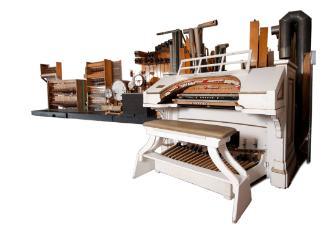
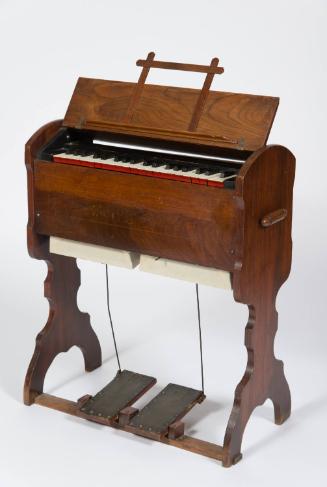
BiographyThe Rudolph Wurlitzer Company of North Tonawanda, New York, USA is often regarded as having been founded in 1659, which is when the Wurlitzer family began manufacturing, selling, and trading musical instruments in Saxony, Germany. The founder of the modern Wurlitzer company, Rudolph Wurlitzer, was born in Schilbach, Saxony, in 1829. In 1853, he immigrated to the United States, initially settling in Cincinnati, Ohio; the Rudolph Wurlitzer Company was founded shortly thereafter, in 1856, and was helmed by Rudolph and, eventually, his sons Howard, Rudolph, and Farny. The company first entered the American market with string, brass, and woodwind instruments imported from the family in Germany, but by 1880 they were manufacturing their own pianos, designing the very first coin-operated player piano in 1896. Interestingly, they were one of the major suppliers of musical instruments to the United States military during both the American Civil War and the Spanish-American War. In 1897, Wurlitzer relocated to North Tonawanda, New York, establishing a proper factory for mass production in the headquarters of former barrel organ manufacturer, Eugene DeKleist, with complete operations settled fully in the state by 1909. Starting in 1909, the company began manufacturing harps based on European prototypes, producing approximately eight different models by the 1930s. Wurlitzer’s first major contribution came with the advent of the theatre organ, often dubbed the “Mighty Wurlitzer”, which revolutionized the cinematic experience during the silent era of the 1920s and 1930s and left an indelible influence on the progression of the motion picture industry. In 1927, Wurlitzer sponsored the American tour of Russian electronic musical instrument designer Leon Theremin, inventor of the groundbreaking Theremin musical instrument. Their next major contribution came in 1933 with the invention of the first coin-operated automated music player, known as the jukebox. In an effort to expand this technology further into the home market, Wurlitzer began developing consumer-oriented organs in the early 1940s that were loosely based on the designs of their theatre organs, and quickly asserted themselves as the leader in this field. Around the same time, the company also updated its factory settings, incorporating state-of-the-art manufacturing and marketing facilities. The company’s first subsidiary, the Endless Roll Music Company, was also formed at this time, focusing on the production of player piano scrolls, in addition to the acquisition of their first satellite company, the Lyric brand of the Chicago-based All American Mohawk Radio Company, manufacturer of high-end radio consoles. Wurlitzer also partnered with a number of local businessmen to open a second factory that specialized in short-run production of instruments intended specifically for public spaces such as amusement parks and carnivals. As with many American companies, Wurlitzer halted production of their organs in 1942 when the United States entered into the Second World War, and began focusing on the manufacture of bomb proximity fuses. When the war ended, Wurlitzer resumed manufacture of its instruments, focusing more on the home market with a new series of radios, jukeboxes, and electronic organs. Yet another innovation emerged in the early 1950s when Wurlitzer began designing electric pianos, including the model 200. Wurlitzer electric pianos were produced by a separate division, The Wurlitzer Company, based in Dekalb, Illinois. These instruments employed a series of small, metal reeds – akin in shape and design to the reeds of preceding reed organs – instead of the strings that define traditional acoustic pianos.
With Rudolph’s company focusing primarily on keyboard-based instruments and automated machines such as the jukebox, the Rembert Wurlitzer Company, founded by Rudolph’s grandson, Rembert (1904 – 1964) emerged in 1948 specializing in rare and historic stringed instruments, particularly violins. The company’s shop on 42nd Street in Manhattan, which Rembert directed until his death, was recognized internationally as a leading facility for the care and production of such instruments. In 1964, the Rudolph Wurlitzer Company purchased the rights, trademarks, copyrights, patents, and engineering records of the Indiana-based Henry C. Martin Band Instrument Company, which specialized in brass and wind instruments. Wurlitzer made its next major business leap in 1967, when it briefly became the sole distributor of both the Holman-Woodell and Welson guitar manufacturers, before abandoning the venture in 1969. The rights to the Martin Company were also eventually sold in 1971 in light of the increasing financial burdens set by a market now inundated with companies producing modern jukeboxes. Unable to maintain its place as a leader in the production of these machines, Wurlitzer sold their jukebox brand to a German company in 1973 and ceased operations in the North Tonawanda factory, while manufacture of pianos and organs continued in satellite factories that had been established in Mississippi and Arkansas. In 1988, the Baldwin Piano Company purchased the brand and assets associated with Wurlitzer pianos before becoming subsumed by the Gibson Guitar Corporation in 1996. In 2006, Gibson reacquired Wurlitzer’s jukebox brand, Deutsche Wurlitzer; since 2009, jukeboxes remain the only Baldwin/Gibson product to employ the Wurlitzer name, with headquarters for the subsidiary located in Hüllhorst, Germany.
With Rudolph’s company focusing primarily on keyboard-based instruments and automated machines such as the jukebox, the Rembert Wurlitzer Company, founded by Rudolph’s grandson, Rembert (1904 – 1964) emerged in 1948 specializing in rare and historic stringed instruments, particularly violins. The company’s shop on 42nd Street in Manhattan, which Rembert directed until his death, was recognized internationally as a leading facility for the care and production of such instruments. In 1964, the Rudolph Wurlitzer Company purchased the rights, trademarks, copyrights, patents, and engineering records of the Indiana-based Henry C. Martin Band Instrument Company, which specialized in brass and wind instruments. Wurlitzer made its next major business leap in 1967, when it briefly became the sole distributor of both the Holman-Woodell and Welson guitar manufacturers, before abandoning the venture in 1969. The rights to the Martin Company were also eventually sold in 1971 in light of the increasing financial burdens set by a market now inundated with companies producing modern jukeboxes. Unable to maintain its place as a leader in the production of these machines, Wurlitzer sold their jukebox brand to a German company in 1973 and ceased operations in the North Tonawanda factory, while manufacture of pianos and organs continued in satellite factories that had been established in Mississippi and Arkansas. In 1988, the Baldwin Piano Company purchased the brand and assets associated with Wurlitzer pianos before becoming subsumed by the Gibson Guitar Corporation in 1996. In 2006, Gibson reacquired Wurlitzer’s jukebox brand, Deutsche Wurlitzer; since 2009, jukeboxes remain the only Baldwin/Gibson product to employ the Wurlitzer name, with headquarters for the subsidiary located in Hüllhorst, Germany.

piano manufacturer | founded 1857




(division of Norlin Music Instruments, Ltd.)