Sébastien Érard
BornStrasbourg, France
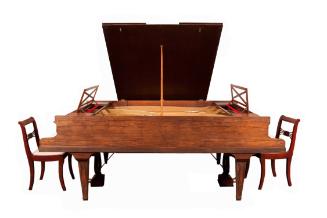
BiographyFamed French instrument builder Sébastien Érard is credited with inventing the modernized version of the double-action pedal harp. Érard worked as both a piano and harp builder, having made significant contributions to the development of both instruments, and effectively establishing the model for the modern piano. Érard, whose father was of Swiss-German origin, was born Sebastian Erhard on 5 April 1752 in Strasbourg, France. Sébastien was raised in a familial environment that was inundated with skilled artisans, and had the opportunity to assist his father, who worked as a joiner-cabinetmaker, in his workshop while he was quite young. Following his father’s death in 1768, Sébastien relocated to Paris, where he began apprenticing as a harpsichord builder. By 1777, Sébastien had secured his first workshop in Paris in a room at the Duchesse de Villeroi’s mansion on rue de Bourbon, and had constructed his first fortepiano, based on the designs of square pianos built by Johannes Zumpe, a German-born London resident who had previously worked for the Silbermann workshops in Strasbourg. In 1779, Sébastien increased production of his fortepianos, which had garnered a degree of popularity, and employed his brother, Jean-Baptiste Érard (1749 – 1826) to aid in the construction. Their first official Paris headquarters were located at 109 rue de Bourbon, then from 1781 at 13 rue de Mail, where the company remained until its final closure. In 1788, the brothers formalized their partnership and became known as Érard Frères, producing 254 fortepianos together in the same year.
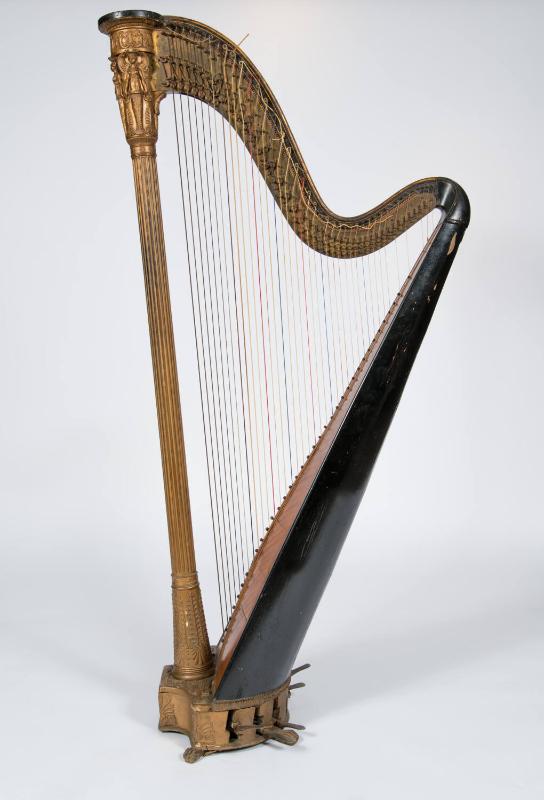
The Érard name quickly rose to prominence among the local piano manufacturers, with commissioned works including a transposing piano for Marie Antoinette that would help in her vocal training. In 1790, amid rising tensions associated with the French Revolution, a second factory and manufacturing office was opened in London at 18 Great Marlborough Street, where all operations would take place until Sébastien’s return to Paris in 1796, after which point production was split between both cities with Sébastien relocating every few years. While in London, Sébastien employed the help of his nephew Pierre Érard (1794 – 1855), Jean-Baptiste’s son, and after his return to Paris, extended members of the Érard family, including Pierre and Jean-Baptiste, maintained primary control over London operations. It was during this time that Sébastien began experimenting with his own improvements to the piano, and also to the harp building techniques he had observed both in France and throughout previous travels to England in the 1780s. In 1794, he obtained the first English patent for a refined version of a single-action harp; prior to this, harps used in England had been imported from France. In 1810, while living in London, he patented the first double-action harp mechanism – a mechanism that employs seven pedals and allows strings to be either flattened or sharpened whereas they had previously only been capable of being sharpened – and solidified the harp as a sophisticated, complex, and modern instrument suitable for both solo and orchestral performance. In the year following this patent, Érard manufactured and sold approximately £25, 000 in double-action harps. In 1823, while still continuing work in harp manufacture, Sébastien devised and patented the first iteration of a double-escapement action for modern grand pianos, consisting of a repetition lever that enables keys to be reactivated without the hammer having to come to a complete rest, as had been the case in the preceding single-escapement action employed within fortepianos. As had been the case with the double-action harp, Érard’s double-escapement mechanism greatly revolutionized the piano’s capabilities, and became the worldwide standard in modern piano building. In addition to the double-escapement action, Érard was also the first Paris manufacturer to incorporate several pedals into the piano, including the sustaining pedal, a softening pedal that moved the hammers horizontally so as to only strike one instead of all three strings, and, in some instruments, a series of Janissary pedals that were used to infuse elements of the Turkish aesthetic that had been very popular throughout the Classical era. Common Janissary pedals included a bassoon pedal that lowered typically either a piece of leather or parchment paper onto the strings so as to produce a more nasal quality, and a percussion pedal that activated a built-in bell and hammer to strike the wooden soundboard. Sébastien also obtained patents for improvements in keyboard action, the soundboard, and tuning mechanisms, most of which are still used in modern piano building.
Following Sébastian’s death on 5 August 1831, Pierre Érard was poised to subsume operations of the entire firm, having single-handedly managed the London office since 1814. Pierre’s contribution to the development of the company was the addition of Gothic-style instruments to the Érard roster in 1836, and a patent for an improvement on the harp in 1822. Pierre continued to manage the London office until 1829. Throughout the 1830s, the London offices became the centralized production location of Érard harps, while the Paris offices increased their focus on piano manufacture. Pierre Érard returned to Paris in 1834 and married his second cousin, Camille Février. Following Pierre’s death in 1855, Camille took over the business. Several other successor to the company were appointed by family members throughout the years that followed, with the company name changing to variations such as Érard et Cie. and Guichard et Cie (Maison Érard). Érard was highly regarded primarily for their grand pianos, and continued manufacturing these instruments at very high quality standards into the twentieth century, enjoying great success while doing so. Following the First World War, the company began to suffer financial setbacks, which signaled the beginning of its decline. By mid-century, the name had been sold to several different manufacturers, with the Schimmel Piano Company of Germany acquiring rights in 1971.
The Érard name quickly rose to prominence among the local piano manufacturers, with commissioned works including a transposing piano for Marie Antoinette that would help in her vocal training. In 1790, amid rising tensions associated with the French Revolution, a second factory and manufacturing office was opened in London at 18 Great Marlborough Street, where all operations would take place until Sébastien’s return to Paris in 1796, after which point production was split between both cities with Sébastien relocating every few years. While in London, Sébastien employed the help of his nephew Pierre Érard (1794 – 1855), Jean-Baptiste’s son, and after his return to Paris, extended members of the Érard family, including Pierre and Jean-Baptiste, maintained primary control over London operations. It was during this time that Sébastien began experimenting with his own improvements to the piano, and also to the harp building techniques he had observed both in France and throughout previous travels to England in the 1780s. In 1794, he obtained the first English patent for a refined version of a single-action harp; prior to this, harps used in England had been imported from France. In 1810, while living in London, he patented the first double-action harp mechanism – a mechanism that employs seven pedals and allows strings to be either flattened or sharpened whereas they had previously only been capable of being sharpened – and solidified the harp as a sophisticated, complex, and modern instrument suitable for both solo and orchestral performance. In the year following this patent, Érard manufactured and sold approximately £25, 000 in double-action harps. In 1823, while still continuing work in harp manufacture, Sébastien devised and patented the first iteration of a double-escapement action for modern grand pianos, consisting of a repetition lever that enables keys to be reactivated without the hammer having to come to a complete rest, as had been the case in the preceding single-escapement action employed within fortepianos. As had been the case with the double-action harp, Érard’s double-escapement mechanism greatly revolutionized the piano’s capabilities, and became the worldwide standard in modern piano building. In addition to the double-escapement action, Érard was also the first Paris manufacturer to incorporate several pedals into the piano, including the sustaining pedal, a softening pedal that moved the hammers horizontally so as to only strike one instead of all three strings, and, in some instruments, a series of Janissary pedals that were used to infuse elements of the Turkish aesthetic that had been very popular throughout the Classical era. Common Janissary pedals included a bassoon pedal that lowered typically either a piece of leather or parchment paper onto the strings so as to produce a more nasal quality, and a percussion pedal that activated a built-in bell and hammer to strike the wooden soundboard. Sébastien also obtained patents for improvements in keyboard action, the soundboard, and tuning mechanisms, most of which are still used in modern piano building.
Following Sébastian’s death on 5 August 1831, Pierre Érard was poised to subsume operations of the entire firm, having single-handedly managed the London office since 1814. Pierre’s contribution to the development of the company was the addition of Gothic-style instruments to the Érard roster in 1836, and a patent for an improvement on the harp in 1822. Pierre continued to manage the London office until 1829. Throughout the 1830s, the London offices became the centralized production location of Érard harps, while the Paris offices increased their focus on piano manufacture. Pierre Érard returned to Paris in 1834 and married his second cousin, Camille Février. Following Pierre’s death in 1855, Camille took over the business. Several other successor to the company were appointed by family members throughout the years that followed, with the company name changing to variations such as Érard et Cie. and Guichard et Cie (Maison Érard). Érard was highly regarded primarily for their grand pianos, and continued manufacturing these instruments at very high quality standards into the twentieth century, enjoying great success while doing so. Following the First World War, the company began to suffer financial setbacks, which signaled the beginning of its decline. By mid-century, the name had been sold to several different manufacturers, with the Schimmel Piano Company of Germany acquiring rights in 1971.