Nyle Steiner
ActiveSalt Lake City, Utah, USA
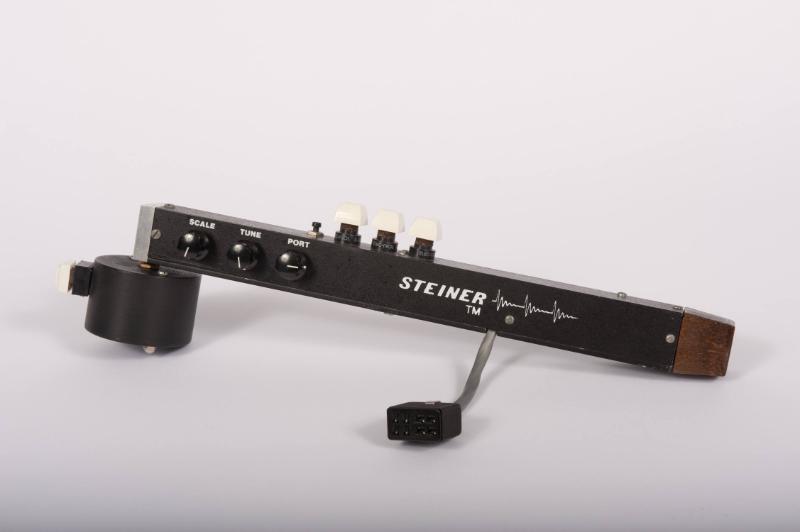
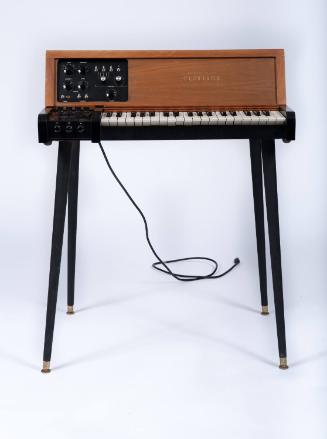
BiographyThere is little documented information about American inventor Nyle Steiner, however, he appears to have spent the majority of the 1970s and 1980s commuting between Los Angeles, California, where he worked as a studio performer for film soundtracks, and Salt Lake City, Utah, where his manufacturing business had been established. In 1964, Steiner, a classically trained trumpet player who worked as an engineer for an electronics company, began research and development for an electronic alternate controller that would employ a similar interface to the trumpet. His initial idea manifested in the form of an instrument that employed the same three-valve fingering system used in trumpets, but produced its sound by the vibration of strings. The valves of this instrument would function as levers, effectively shortening the sounding length of the string when depressed, not unlike a piano, with pitches beyond those produced by the three valves emerging simply from natural overtones. This idea was abandoned before prototyping, however, and Steiner turned his attention to the design of a voltage-controlled device that could replace the keyboard interface of a synthesizer. The prototype of what came to be known as the EVI, or Electronic Valve Instrument, emerged in 1972 and the earliest production models were released in 1975, initially under the moniker of the ‘Steiner Horn’. Steiner has cited that a large portion of the main components of the prototype and production models of the EVI were handmade, using whatever materials were available. In the mid 1970s, likely after the creation of the EVI prototype but just before the release of the first production models, Steiner formed a company with electrical engineer Dick Parker and a third partner whose name has never been disclosed. The company, which came to be known as Steiner-Parker, Inc., was based in Salt Lake City and is credited as being the manufacturer of the first EVI production models, despite only the name ‘Steiner’ appearing on the devices. This was done likely on account of the fact that Parker preferred contributing to the exterior design and enclosures of the instruments, including undertaking woodworking and cabinetry, leaving Steiner to oversee the majority of the circuitry design. In addition to the EVI, Steiner-Parker also produced a number of other analog instruments and devices throughout the 1970s, such as the revered Synthacon monophonic synthesizer, a duophonic version of the original Synthacon called the Synthacon II, the Sequencer 151, the Multiphonic Keyboard, and a programmable motion generator called the Selective Inverter. Steiner-Parker ceased operations in 1979 after having sold approximately 200 EVI units, and in 1980 Steiner began a five-year working contract with the Italian electronics manufacturer, Crumar. Steiner’s invention also garnered him the prestigious Linz prize in the same year. These devices were called the Crumar EVI, and were far more sophisticated than the first EVI production models, including voltage-controlled volume, vibrato, portamento, and pitch bend modifications. Approximately 500 Crumar EVI units were sold.
The EWI or Electronic Wind Instrument, a similar controller to the EVI that employs the mechanism and fingering of woodwind instruments, was released in the mid 1980s and remained the more commercially successful of the two, also briefly being released by Crumar in its earliest stages. Steiner continued development of these controllers into a small number of specialized EVIs and EWIs that he referred to as the ‘Steinerphones’, which were designed specifically for top professionals working as either recording artists or performers. These units were built into small attaché cases and contained all of the necessary components including cables and the requisite interfacing module. The EWI Steinerphones were accompanied by the Steiner Microcon, a synthesizer module that can either be used in combination with other modular synthesizers, or as a stand-alone instrument, containing its own voltage-controlled oscillator, filters, and envelope generator. Beginning in around 1986, the Japanese electronic instrument manufacturer, Akai, purchased the EVI and EWI prototypes and overtook development and marketing of the Steinerphones, employing the names EVI1000 and EWI1000 for the controllers and EWV2000 for the analog sound module. These devices were released in cases, similar in aesthetic to the earlier Steinerphones, however the controller could also be purchased independently of the case. The EWI was developed into several more revisions throughout the years that followed, with the working relationship of Steiner as the designer and Akai as the manufacturer being maintained throughout. Although the EVI was discontinued in 1990, Steiner continued to experiment with the development of a MIDI adapter for the device, which he had begun designing while still working with Crumar in the early 1980s. A MIDI compatible version of the EVI was not released at the time, however, as Steiner has admitted that he remained skeptical of the sound quality that would result from the generally limited resolution of the technology. It was not until 1998, nearly 15 years after the development of the Akai EVI1000, that Steiner introduced the first short-run edition of the MIDI EVI. Prior to the release of this controller, Steiner had been offering conversion services for the MIDI-compatible EWI3000, replacing the exterior case of the EWI with that of the EVI so as to cater to brass instrument players. Unlike all earlier versions of the EVI and EWI, the MIDI EVI does not require the use of a customized external sound module to interface with an instrument, and is compatible with any device that can operate under MIDI control. The EWI and EVI are still in joint production and development by Steiner and Akai.
Nyle Steiner’s film soundtrack output increased considerably towards the end of the 1970s and into the 1980s, with credits including Francis Ford Coppola’s Vietnam epic, Apocalypse Now (1979), and Peter Weir’s dystopian classic, The Mosquito Coast (1986), and he eventually relocated to Los Angeles in the early 1980s. Although also an accomplished trumpet player who performed with the Utah Symphony throughout the 1960s, Steiner focused the majority of his career efforts both on his work in film music and the development of his instruments. His extensive use of the EVI in the Los Angeles studios in which he worked greatly helped popularize and proliferate further usage of the device by studio musicians, particularly those also working in the film industry. Steiner has maintained his company, and continues to develop instruments and devices, including the MIDI compatible version of the EVI. Steiner-Parker was regarded in the 1970s as one of the fastest developing synthesizer manufacturers, and Nyle Steiner has been particularly lauded for his unique and innovative designs, and for his significant contributions to the development of the alternate controller.
The EWI or Electronic Wind Instrument, a similar controller to the EVI that employs the mechanism and fingering of woodwind instruments, was released in the mid 1980s and remained the more commercially successful of the two, also briefly being released by Crumar in its earliest stages. Steiner continued development of these controllers into a small number of specialized EVIs and EWIs that he referred to as the ‘Steinerphones’, which were designed specifically for top professionals working as either recording artists or performers. These units were built into small attaché cases and contained all of the necessary components including cables and the requisite interfacing module. The EWI Steinerphones were accompanied by the Steiner Microcon, a synthesizer module that can either be used in combination with other modular synthesizers, or as a stand-alone instrument, containing its own voltage-controlled oscillator, filters, and envelope generator. Beginning in around 1986, the Japanese electronic instrument manufacturer, Akai, purchased the EVI and EWI prototypes and overtook development and marketing of the Steinerphones, employing the names EVI1000 and EWI1000 for the controllers and EWV2000 for the analog sound module. These devices were released in cases, similar in aesthetic to the earlier Steinerphones, however the controller could also be purchased independently of the case. The EWI was developed into several more revisions throughout the years that followed, with the working relationship of Steiner as the designer and Akai as the manufacturer being maintained throughout. Although the EVI was discontinued in 1990, Steiner continued to experiment with the development of a MIDI adapter for the device, which he had begun designing while still working with Crumar in the early 1980s. A MIDI compatible version of the EVI was not released at the time, however, as Steiner has admitted that he remained skeptical of the sound quality that would result from the generally limited resolution of the technology. It was not until 1998, nearly 15 years after the development of the Akai EVI1000, that Steiner introduced the first short-run edition of the MIDI EVI. Prior to the release of this controller, Steiner had been offering conversion services for the MIDI-compatible EWI3000, replacing the exterior case of the EWI with that of the EVI so as to cater to brass instrument players. Unlike all earlier versions of the EVI and EWI, the MIDI EVI does not require the use of a customized external sound module to interface with an instrument, and is compatible with any device that can operate under MIDI control. The EWI and EVI are still in joint production and development by Steiner and Akai.
Nyle Steiner’s film soundtrack output increased considerably towards the end of the 1970s and into the 1980s, with credits including Francis Ford Coppola’s Vietnam epic, Apocalypse Now (1979), and Peter Weir’s dystopian classic, The Mosquito Coast (1986), and he eventually relocated to Los Angeles in the early 1980s. Although also an accomplished trumpet player who performed with the Utah Symphony throughout the 1960s, Steiner focused the majority of his career efforts both on his work in film music and the development of his instruments. His extensive use of the EVI in the Los Angeles studios in which he worked greatly helped popularize and proliferate further usage of the device by studio musicians, particularly those also working in the film industry. Steiner has maintained his company, and continues to develop instruments and devices, including the MIDI compatible version of the EVI. Steiner-Parker was regarded in the 1970s as one of the fastest developing synthesizer manufacturers, and Nyle Steiner has been particularly lauded for his unique and innovative designs, and for his significant contributions to the development of the alternate controller.
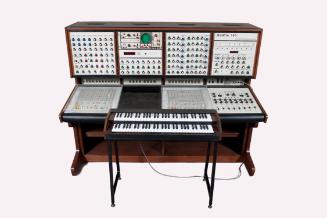

(division of Norlin Music Instruments, Ltd.)
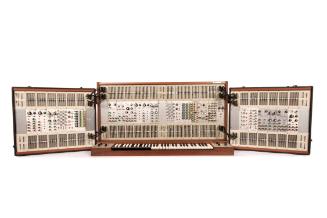
electronic instruments manufacturer | founded 1969