EN / FR
Skip to main content

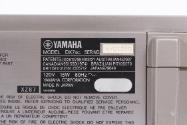
Yamaha DX7 Centennial

Not available for use in Recording Studios
On exhibit
On exhibit
Artifact TypeSynthesizer
Manufacturer LocationJapan
Date1987
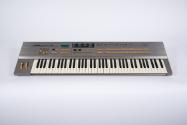
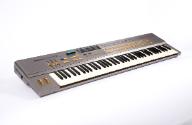
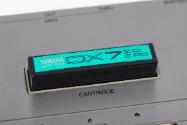
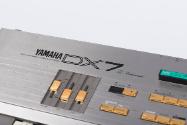
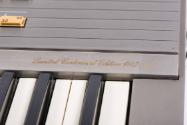
Heard on countless hits including Michael Jackson’s “Bad,” Europe’s “The Final Countdown” and Tina Turner’s “Private Dancer”—the DX7 was arguably the most popular synthesizer of the ‘80s, defining much of the pop sound of the era. A digital programmable algorithm synth, the DX7 came equipped with 128 preset sounds that users could play with and edit. This particular model, the “Centennial,” was released in 1987 to commemorate Yamaha’s 100th anniversary.
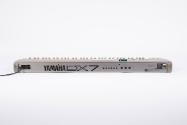
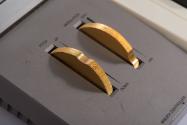
Operation/FunctionThis particular artifact is a digital programmable algorithm synthesizer that features sixteen-voice polyphony and six digital FM operators (16 bit, 32 algorithms) as tone generators. It also implements an onboard low frequency oscillator function capable of producing sine, square, triangle, sawtooth, ramp, and random waveforms, as well as six envelope generators, each with eight parameters. Keyboard compass spans six-and-a-half octaves (76 notes, E through to G), and is capable of velocity sensitivity and aftertouch. The keys on this instrument are also black light sensitive. The instrument comes equipped with 32 factory presets, which can be altered and saved into the internal ROM or onto external ROM and RAM memory cartridges. External cartridges are capable of holding up to 96 additional presets, giving the user access to a total of 128 voices. In addition to editing existing presets, new timbres can be made from scratch, so to speak. This particular model incorporates a floppy disk drive for memory storage. Control over the instrument’s operating system, parameter editing, programming, and sound generation is via a microcomputer. The instrument is also fully MIDI capable, with sixteen available channels. An LCD display is incorporated to enable ease of navigation while editing. External controllers such as a foot switch, foot pedal, and breath control may be used, as well as the onboard modulation wheel. In addition to the regular stereo audio outputs, there is also a 1/4" jack for headphones.Cultural SignificanceThe DX7 stood as perhaps the most influential synthesizer of the 1980s, spelling the near end of the complex and relatively unreliable analog and hybrid systems of the 1970s. The DX7 was stable, extremely powerful in its programming and memory capabilities, relatively inexpensive, and sophisticated in both its internal features and external design. As such, it effectively pioneered the era of the first commercial digital synthesizers. Its use was widespread throughout the decade, appearing alongside other iconic instruments such as the Linn LM-1 and E-mu Emulator on literally countless popular recordings. With its extensive set of synthesized presets, the DX7 and its numerous successors offered users access to a multitude of instruments that would have remained out of reach for the average musician, otherwise requiring complicated programming to simulate, or great expense to hire session musicians. Just as the earliest analog samplers had done in the 1960s, the DX7 once again pioneered an era reliant on the ability to access an orchestra, as it were, from a simple keyboard. Its electric piano and electric bass presets were particularly ubiquitous throughout the 1980s, with their distinct FM quality having defined the sonic character of much of the era’s recordings. Although the DX7 is still a revered and iconic instrument today, many musicians find its simulations somewhat cliché, dated, and cheesy, so to speak. This particular model was made to commemorate the 100th anniversary of Yamaha’s founding in 1887.Technological SignificanceThe synthesizer is arguably one of, if not the most technologically significant contributions to the course of electronic music. Although earlier electronic instruments such as the Theremin, Clavivox, and Ondes Martenot offered new and unique ways of articulating sound, their sonic template was, for the most part, quite limited, capable of producing only a few distinct timbres. The modern synthesizer, on the other hand, was viewed as an integrated electronic orchestra, as it were, allowing the user to sculpt a wide and varied array of tones and gestures. What’s more, it allowed the user to modify their sounds in real time, seemingly without the sorts of physical limitations imposed on acoustic instruments. Of course, each instrument did come with its own characteristic tonal qualities and control limitations, however the wealth of opportunity inherent in the ability to manipulate and define nearly every parameter of sound structure solidified the synthesizer’s place as one of the most powerful musical innovations of the twentieth century. The concept of modular design was initially quite desirable to professional and studio musicians in that it allowed one to more or less completely customize their instrument and modify its functions as desired. Although modular-type systems are still in production today, the advent of affordable eight-bit microprocessor-based integrated circuitry in the mid 1970s and the rise of programmable polyphonic instruments in the late 1970s resulted in the relative obsolescence of the discrete transistor-based systems of the early 1970s. Synthesizers increasingly began to adopt the smaller, more compact aesthetic exhibited in these performance-oriented instruments, especially that of the revered Minimoog. The once popular modular approach gave way to more streamlined designs that, while still offering users the ability to control numerous aspects of the instrument’s tone and gesture, limited the way in which the instrument could be operated. In the early 1970s, integrated circuits emerged in synthesizers, housing the many discrete components of transistor-based circuits within a single silicon chip, as they are often called. Integrated circuits were significantly smaller and less expensive to manufacture than the circuits from which they derived. With the introduction of the first affordable eight-bit microprocessors in the mid 1970s, such as the Zilog Z80, integrated circuits adapted to incorporate more sophisticated digital components. The DX7 of 1983 was among the first in a generation of synthesizers that were entirely digital, replacing voltage-controlled and digitally controlled analog oscillators with computer-generated waveforms. Although computers had existed for decades prior in the form of both analog and digital iterations, it was not until the early 1980s that the latter became increasingly mass-produced and, thus, more affordable for and accessible to the consumer market, with the relatively compact home and personal computers becoming a reality by the mid 1980s. These fully digital instruments had several advantages over their analog counterparts: they were far more flexible, allowing for greater programming and memory capabilities, far more stable with the ability to remain in tune, significantly less expensive, and generally smaller and even more streamlined. Digital synthesizers such as the DX7 are essentially microcomputers that come equipped with a built-in keyboard. Although they continued the compact aesthetic developed throughout the 1970s, they do not contain analog oscillator and filter circuitry as such, instead employing methods of digital synthesis and digital signal processing to generate and modify their tones. Their fundamental operation is based on the generation of binary code (a stream of 0s and 1s indicating either ‘off’ or ‘on’ functions, respectively), which processes information at a set sampling rate; the higher the sampling rate, the faster the computer. Another common feature of all digital synthesizers is the incorporation of a powerful digital-to-analog converter, enabling loudspeakers and associated amplification systems to produce corresponding audio signals. Frequency modulation is not a unique concept to musical application, with FM of radioband frequencies (frequencies in the MHz range, beyond the range of human hearing) practiced in communication systems of the early twentieth century. Yamaha was the first to adapt algorithms for digital frequency modulation synthesis to the commercial market in 1975, licensing a particular approach from John Chowning (born 22 August 1934 in Salem, New Jersey), a professor at Stanford University in Palo Alto, California, who was the first to investigate the musical application of digital FM synthesis in the late 1960s, later patenting his technique. Yamaha’s first product to employ this technology was the GS1 synthesizer, released in 1981 at just over 15 000 USD. The DX7 followed in 1983 with a more compact design and a significantly lower retail cost, thanks in large part to the increasing proliferation of digital technologies in the first few years of the decade. As such, the DX7 pioneered the next major trend in synthesizers, which favoured instruments that were more powerful, less expensive, and void of unreliable analog circuitry, and effectively made the concept of digital synthesis synonymous with its FM sound. The rapid succession of increasingly more sophisticated digital technology throughout the early 1980s also resulted in the emergence of a wave of commercially feasible digital samplers, such as the Linn LM-1 drum machine of 1980 and the E-mu Emulator sampler of 1981, offering an alternative to the more complex and studio-oriented Fairlight CMI and Synclavier synthesizer-sampler systems of the era. In addition to digital emulations of frequency modulation, additive, and subtractive synthesis, computer-based tone generation also gave way to new and more complex forms of synthesis that required high-speed microprocessing capabilities, such as wavetable synthesis, physical modeling, and granular synthesis. The DX7 remained the most successful digital synthesizer of the 1980s, with similar products offered from competing companies following throughout the decade, most notably the Roland D50 of 1987 and the Korg M1 of 1988. As such, control of the commercial synthesizer market shifted in the 1980s from the United States to Japan, with many of the original manufacturers of the 1970s, such as Sequential Circuits and ARP Instruments, folding due to the inability to compete. As digital sampling continued to improve in fidelity, the market once again shifted away from digital synthesizers, favouring sampling instruments that could provide high quality versions of the real thing, so to speak, rather than digital simulations. As such, instruments such as the Yamaha DX7, Roland D50, and Korg M1, though still frequently used, became comparatively less popular throughout the 1990s. The workstation synthesizer-sampler became the new product of the early 1990s, allowing the user to merge both worlds, offering samples and editing and modifying capabilities in addition to more studio-inspired sequencing and multi-track features for composition. Modern digital synthesizers such as the Waldorf Q still incorporate something of a hybrid approach, offering high quality samples that can be modified as well as a series of sophisticated digital synthesis and signal processing techniques, including those that perform a sort of “analog modeling”, imitating the revered icons of the 1970s. In addition to hardware digital synthesizers, software synthesis – that is, the implementation of computer applications and programs that enable highly flexible synthesis and sampling environments – is also among the most practiced forms of computer music, gaining particular notoriety within the past few decades thanks to sophisticated programs such as max/MSP and SuperCollider. The DX7 had many advantages over its preceding analog counterparts. Its clean yet complex timbres, a result of its unique digital FM synthesis approach, marked a sharp departure from the lush and wavering timbres of most analog synthesizers, which, by and large, employed subtractive synthesis. As a result of this new method of synthesis, the DX7 also offered the user a multitude of new parameters to vary and program. That being said, this feature actually proved to be something of a hindrance given that most users were perhaps all too familiar with analog synthesis techniques, thus finding it exceedingly difficult and cumbersome to program the DX7. Instead of the various knobs and switches offered on the hybrid instruments of the late 1970s, the DX7 featured only a select number of membrane buttons, a slider for modifying data, and an LCD screen, all of which were relatively foreign interface components at the time. Of course, the instrument’s digital control also resulted in a significant increase in programming and memory capabilities, allowing for up to 128 different preset sounds to be saved and recalled. To this end, Yamaha was wise to offer a series of factory-made presets at the time of purchase. These presets were, for the most part, comprised of digital simulations of more familiar orchestral and popular electronic instruments, including electric pianos, chimes, orchestral strings, the human voice, and the electric bass. With the DX7 too unintuitive for most to program, users became nearly entirely reliant on the expansive banks of pre-existing sounds, effectively rendering the DX7 more of a preset synthesizer, almost akin to a sampler, which employs recorded and not synthesized sounds. As such, an era of synthesizers that focused on the quality of their preset simulations emerged. Of course, this trend was somewhat short-lived as the fidelity of sampled sounds increased substantially throughout the decade, making it easier for users to access the real thing, so to speak. In particular, the DX7 was known for its metallic and percussive sounds, as well as its electric piano and electric bass simulations, which were ubiquitous throughout the 1980s. The DX7 also had the advantage of being among the first electronic instruments to incorporate MIDI. Although the first model emerged before MIDI had been fully specified, later versions such as the centennial edition were fully compatible. In the earliest versions of the instrument, MIDI data is scaled only between 0 and 99; in the now standardized MIDI protocol, the range spans values falling between 0 and 127. This simply meant that the earliest DX7 units were not as sensitive to more subtle variations in its various parameters. As with most synthesizers since the late 1970s, the DX7 also incorporated sixteen-voice polyphony. Yamaha had employed a digital scanning-style polyphonic keyboard in the GX1 of the mid 1970s, with contemporaneous instruments such as the Oberheim Four Voice of 1975 and the Sequential Circuits Prophet 5 of 1978 implementing a similar approach licensed from E-mu Systems, Inc. With the exception of early analog instruments such as the Korg PS-3100 of 1977, which incorporated true polyphony across its entire keyboard, full polyphony remained both financially and technically elusive for most instruments of the time, including the DX7. Another significant advantage the DX7 had over its analog predecessors was its stability with regard to tone generation. Oscillator drift was a problem that continually plagued analog circuitry, with many instruments susceptible to significant variations in tuning in response something as slight as a change in room temperature. Computer technology rendered this problem virtually obsolete, with instruments such as the DX7 capable of maintaining precise and stable frequencies. Although many twenty-first century users of both analog and digital synthesizers actually tend to prefer the instabilities of the former, which lends a certain acoustic feel and warmth to the overall sound, rather than the cold imperfection of the latter, the prospect of a having a comparatively stable synthesizer in the early 1980s at a time when no alternative options existed was completely groundbreaking.Users/PerformersExamples of the DX7’s usage are countless throughout the 1980s, with most occurring in pop and related genres, such as new wave. Notable examples to incorporate the DX7, including the iconic electric piano and bass presets, include A-Ha’s “Take On Me” of 1985, Michael Jackson’s “Bad” of 1987, Phil Collin’s “One More Night” of 1985, Berlin’s “Take My Breath Away” from the Top Gun soundtrack of 1986, Mr. Mister’s “Broken Wings” of 1985, Dead or Alive’s “You Spin Me Round” of 1985, Dire Straits’ “Money for Nothing” of 1985, Harold Faltermeyer’s “Axel F” from the Beverly Hills Cop soundtrack of 1984, George Michael’s “Hard Day” of 1987, The Cure’s “Kyoto Song” of 1985, Depeche Mode’s “People Are People” of 1984, Tears for Fears’ “Shout” and “Everybody Wants To Rule the World” of 1985, Kate Bush’s “Waking the Witch” of 1985, Howard Jones’ “What is Love?” of 1984, Madonna’s “Live To Tell” of 1986, Tina Turner’s “Private Dancer” and “What’s Love Got To Do With It?” of 1984, Frankie Goes to Hollywood’s “Relax” of 1984, Simply Red’s “Jericho” of 1985, Luther Vandross’ “Here and Now” of 1989, Samantha Fox’s “Touch Me” of 1987, Al Jarreau’s “High Crime” of 1984, Chicago’s “Hard Habit to Break” of 1984, Billy Ocean’s “There’ll Be Sad Songs (To Make You Cry)” of 1986, Janet Jackson’s “When I Think of You” of 1986, Sting’s “Love is the Seventh Wave” of 1985, Michel Polnareff’s “Toi et Moi” of 1990, Serge Gainsbourg’s “You’re Under Arrest” of 1987, Europe’s “The Final Countdown” of 1986, and Queen’s “One Vision” of 1986, among many, many more.
Object number2010.02.04
Photo credit: Don Kennedy
Yamaha Corporation/Nippon Gakki Company Limited
20th Century
Not available for use in Recording Studios
On View: Not currently on exhibit
isVirtual:
Photo credit: Don Kennedy
E-mu Systems, Inc.
1979
Not available for use in Recording Studios
On View: Not currently on exhibit
isVirtual:
Photo credit: Meghan MacKrous, courtesy of the National Music Centre
Waldorf Electronics GmbH
1993
Available for use in Recording Studios
On View: Not currently on exhibit
isVirtual:
Photo credit: Don Kennedy
Buchla & Associates
c. 1990
Not available for use in Recording Studios
On View: Not currently on exhibit
isVirtual:
Photo credit: Don Kennedy
Linn Electronics, Inc.
1982
Not available for use in Recording Studios
On View: On exhibit
isVirtual:
Photo credit: Don Kennedy
Linn Electronics, Inc.
c. 1982
Available for use in Recording Studios
On View: Not currently on exhibit
isVirtual:
Photo credit: Don Kennedy
Moog Music, Inc.
c. 1978
Not available for use in Recording Studios
On View: On exhibit
isVirtual:
Photo credit: Meghan MacKrous, courtesy of the National Music Centre
Moog Music, Inc.
1976
Available for use in Recording Studios
On View: Not currently on exhibit
isVirtual:
Photo credit: Don Kennedy
Hammond Organ Company
1957
Not available for use in Recording Studios
On View: Not currently on exhibit
isVirtual:
Photo credit: Don Kennedy
Korg, Inc.
c. 1988
Not available for use in Recording Studios
On View: Not currently on exhibit
isVirtual:
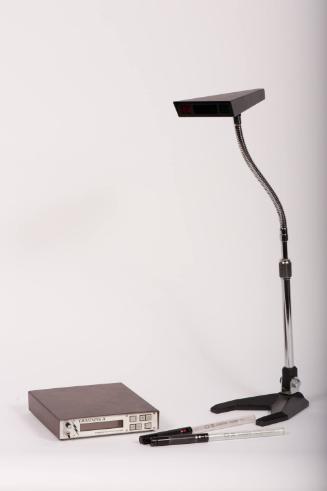
Photo credit: Don Kennedy
Buchla & Associates
1999
Not available for use in Recording Studios
On View: On exhibit
isVirtual:
Photo credit: Don Kennedy
Korg, Inc.
About 1999
Available for use in Recording Studios
On View: Not currently on exhibit
isVirtual:
Back