
EN / FR
Skip to main content

Wurlitzer SideMan

Not available for use in Recording Studios
On exhibit
On exhibit
Artifact TypeDrum Machine, Electromechanical
Manufacturer LocationUSA, North America
Datec. 1959
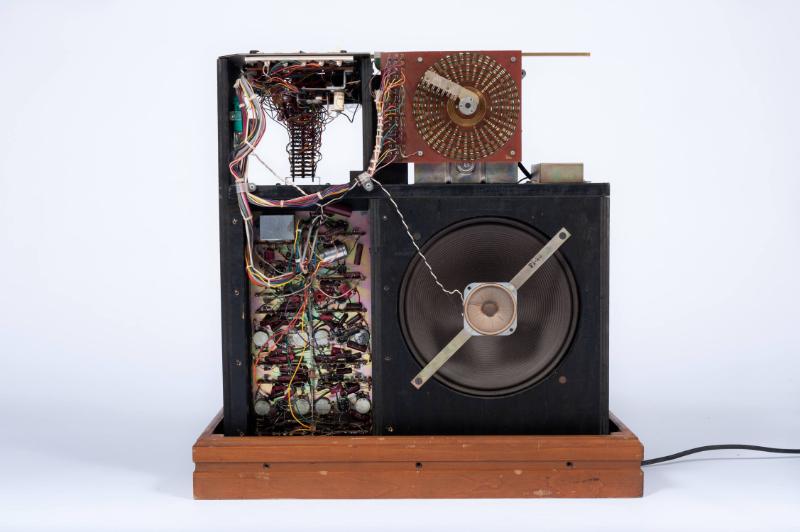
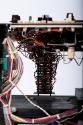
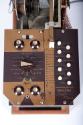
The first drum machine to be made available on the commercial market, the SideMan was initially devised to provide percussive accompaniment for an organist or pianist. The name even refers to the old term for studio musicians, brought in to deliver a particular musical specialty during a recording session. An analog, tube-based, electro-mechanical drum machine—the instrument produced its sound entirely via electronic means rather than pre-recorded samples. Capable of producing twelve distinct rhythmic patterns, each preset corresponds to a popular dance step of the era, from the waltz to the fox trot.
Operation/FunctionThe Sideman is capable of producing twelve distinct rhythmic patterns, each corresponding to a type of dance that was popular in the era, including Beguine, 4/4 March, Western, Waltz, Shuffle, 4/4 Bolero, Rhumba, Cha Cha, Tango, Samba, and Fox Trot either in two- or four-beat form, usually referred to as Fox Trot I and Fox Trot II. A twelfth rhythm comes in the form of a metronomic beat that corresponds to the selected tempo. These rhythms are selected using a rotary switch located in the centre of the control panel. The user has the option to engage the rhythms or to disable them using the ‘Rhythm Start/Stop’ switch selector, located at the top right of the control panel. When the rhythms are disabled, the user may employ any combination of the single-instrument push buttons, which are aligned in two vertical columns of five and include Bass Drum, Tom Tom I, Tom Tom II, Temple Block I, Temple Block II, Wood Block, Claves, Maracas, Brush, and Cymbal. The ‘Volume’ potentiometer controls the overall volume of the instrument. A metal rod attached to the motor of the instrument, which runs through the centre of the control panel, allows the user to adjust the tempo manually, between 195 and 36 bpm. When the tempo slider is pulled past 36 bpm, it functions as the main on/off switch for the instrument; most models also came equipped with a start/stop foot switch. Two lamps, located in the upper left of the control panel, light up as a visual cue aligned with the instrument’s tempo. The Fox Trot preset rhythm, in addition to being selectable between either two or four beats per measure, also features two rotary switches that allow the user to incorporate five different variations of the temple block and cymbals, or to mute the sounds altogether. The quality of the bass drum of the Fox Trot rhythm can also be adjusted between a drier tone and a more lush tone. The instrument contains nine vacuum tubes: one 6AV6, two 6C4, one 6BA6, and five 12AX7. There are also a series of trimpots that control the resonance of the various band-pass filters and shimmer generator, which define the tone of the drum and cymbal sounds, respectively. The instrument contains a single PCB (printed circuit board) with various filtering and shaping tube (commonly referred to as ‘valve’) circuits, adjustable motor, and rotating metal arm. The control panel, which is recessed into the top of the instrument, measures approximately 20 cm by 20 cm. An internal speaker and amplifier unit transmits the final output, with all components housed within a wooden Mahogany cabinet. An additional 1/8” direct line output is also featured on the control panel.Cultural SignificanceDespite the success of the Sideman at the time of its inception, the instrument is considered quite rare today and is used neither in commercial recordings nor live performances. That being said, it is still regarded as one of the most groundbreaking and influential drum machines, and its impact on the course of future designs cannot be overstated. The Sideman was effectively the first commercial drum machine, marketed towards home users who were likely to acquire the instrument in conjunction with one of Wurlitzer’s consumer-oriented organs. In so doing, the drum machine became a household, so to speak, device, enabling a wide demographic of users access to what was the relatively new practice of simulated percussive accompaniment. The success and popularity of the Sideman helped pave the way for future drum machines, which were extensively used throughout the 1980s, enjoying exposure to a variety of different musical genres. Today, the drum machine is a commonplace and highly flexible musical tool that permeates nearly every popular music practice. Of course, there were those during the time of the instrument’s inception – and it should be noted that there are many who still hold this belief today – that opposed the introduction of devices such as the drum machine, contending that its usage would eliminate the need for human performers. Although their fears were not without merit, it is generally regarded today that both the drum machine and the live percussionist offer vastly differing sonic experiences, allowing musicians to choose one or the other – or in some cases, both – based on the style and aesthetic they wish to achieve.Technological SignificanceThe drum machine has asserted itself as one of the most prevalent forces in modern music, with the usage of particular models even characterizing that which defines certain genres and styles. With each exhibiting its own unique sonic qualities, the device has moved far beyond its initial position as a stand-in for live percussion, and has become its own instrument. Although the Sideman was the first drum machine to be made available on the commercial market, it was by no means the first device of its kind. The Sideman was preceded by instruments such as the Rhythmate in 1949 and Rhythmicon in 1932. The Rhythmate was designed by Californian inventor Harry Chamberlin, who is credited with designing the first tape-replay samplers and the mechanism later employed in the hugely successful Mellotron series of analog samplers in England in the 1960s. The Rhythmate, which was technically referred to as the model 100, was itself an early tape-replay sampler that contained fourteen independent loops of distinct percussive patterns, derived primarily from an acoustic jazz kit, each prerecorded onto a separate 1/4” magnetic tape. The tape head in the instrument could be moved horizontally, allowing individual tapes to be isolated, or even blended (between adjacent tapes) if desired. Approximately only ten of these instruments were ever produced. The Rhythmicon was produced by Russian inventor Leon Theremin (1896 – 1993), who is credited with designing one of the first and most unique electronic instruments, the Theremin, which employs an interface that does not require the player to physically touch the instrument. The Rhythmicon, which was theorized and commissioned by American experimental composer Henry Cowell (1897 – 1965), never progressed past the prototyping phase, but allowed the user to produce intricate polyphonic rhythms of up to sixteen voices that are based on the intervallic relationships of the harmonic series, while also incorporating a mechanism that would enable it to interact with live dancers. This instrument – which, like the Sideman, was entirely tube-based ¬– was also occasionally referred to as the Polyrhythmophone. Contemporaneous with the Sideman were two other instruments produced by American engineer and inventor of the famed Clavivox, Raymond Scott (1908 – 1994). In 1960, Scott produced the Rhythm Synthesizer, and in 1963, an instrument he referred to as ‘Bandito the Bongo Artist’. These instruments were likely the first drum machines to be used on a commercial recording, namely Scott’s Soothing Sounds for Baby series of 1964. When the Sideman was introduced in 1959, it was highly unique in that it employed electronic generation of its percussive tones via vacuum tubes, rather than using sampled sounds as the Rhythmate had done a decade earlier. When drum machines exploded onto the market in the early 1980s, many followed the Sideman’s cue, aiming to produce new tones instead of simply replicating already existing tones. Many of the Sideman’s tones take on particular qualities: the bass drum tone is regarded as having a particularly deep or full quality, while instruments such as the tom tom and blocks were known for having a distinctly crisp quality. The maracas, brush, and cymbal tones were generally quite similar, really only exhibiting subtle filter variations to create the difference. The timbral choices are also quite unique for this instrument: interestingly, there is no dedicated snare sound, yet instruments typically not incorporated into the standard drum kit, such as claves and maracas, are featured. Since the Sideman does not employ tape loops, its presets are not limited to any particular time length and can play indefinitely; although the magnetic tapes of instruments such as the Rhythmate and Mellotron were looped, they were only capable of sounding for approximately eight or nine seconds before needing to release from the tape head and rewind. Although it was likely not done intentionally, the mechanism employed by the Sideman, which consists in a rotating arm triggering specific sounds as it makes contact with the soldered points of a circular, patterned sequencer, seems to borrow the structural form of the devices such as the barrel organ and music box. Due to the mechanical nature of the instrument, which employs a motor and sliding arm to adjust tempo, the Sideman was prone to slight instabilities and was not perhaps as reliable as its successors. That being said, many felt this gave the instrument a slightly human feel. Both the Rhythmate and the Sideman employ a 12” speaker, which itself was uncommon for the time, however the Sideman positioned a tweeter directly above the 12” driver. Tube, or valve as it was commonly referred to, technology was widely used until the 1960s, when it was eclipsed by the advent of solid-state technology, such as transistors. The first transistor-based drum machines emerged in the mid 1960s, with instruments such as the Rhythm Prince and Select-a-Rhythm of 1964, both of which were manufactured by Seeburg and Gulbransen, the latter of which was later incorporated into Fender Musical Instruments. In 1967, Ace Electronics, which would later become known as Ace Tone, released the Rhythm Ace, which also employed electronic generation. The founder of Ace Electronics, Ikutaro Kakehashi, later established the Roland Corporation, one of the most successful manufacturers of electronic instruments, including the hugely successful TR-808 and TR-909 – TR being an acronym for ‘transistor rhythm’ – drum machines. Roland introduced one of the first programmable drum machines, the CR-78, in 1978. In 1980 American designer Roger Linn released the Linn LM-1 Drum Computer, which was revolutionary for the time in that it did not employ electronic generation, but rather, much as Chamberlin had done decades prior, made use of acoustically-derived digital samples. The LM-1 and its successor, the LinnDrum of 1982, were used extensively throughout the early 1980s by groups such as The Human League, Devo, and Prince. Many other companies responded to the success of the LM-1 and LinnDrum with the release of similar digitally-sampled drum machines, including Oberheim Electronics’ DMX, Sequential Circuits’ Drum-Traks, and E-Mu Systems’ Drumulator. Roland released the TR-808 in 1980, which employed electronic generation of its tones, and the TR-909 in 1984, which employed digital samples; though sounding substantially different from one another, both instruments stand as among the most widely used drum machines in modern music. As a company, Wurlitzer was lauded for its technological contributions and its pioneering efforts in products such as the theatre organ and electric piano.Users/PerformersAlthough there is little documented information detailing explicit usage of the Sideman in either recordings or performances, two of the most well regarded users of the Sideman include the founders of the hugely successful Korg and Roland electronic instrument manufacturers. KORG was founded by Japanese accordionist Tadashi Osanai, who often performed solo works in accompaniment with a Sideman. In 1962, Osanai approached local club owner, Tsutomu Katoh, with a project that entailed improving upon the machine. Katoh provided the financial support Osanai required to see the project through; that same year, the partnership led to the establishment of the Keio Electronic Laboratories Company. In 1975, Keio changed its name to Korg, combining Keio with the ‘org’ of ‘organ’, in reference to one of the company’s first products. Another Japanese musician, Ikutaro Kakehashi, found similar inspiration in the Sideman, and began expanding upon the technology with a range of drum machines under the moniker Ace Electronics, such as the Rhythm Ace series. In 1971, Ace Electronics rebranded itself as Roland, who would later become one of the most successful manufacturers of electronic drum machines, including the highly influential TR-808 and TR-909 units. Roland was among the first manufacturers to abandon the electro-mechanical structure of the Sideman in its drum machines, and was also one of the first to design machines that were transistor-based instead of tube-based, such as the TR-33 machine of 1972.
Object number2002.05.63
Photo credit: Don Kennedy
The Wurlitzer Company
c. 1970
Available for use in Recording Studios
On View: Not currently on exhibit
isVirtual:
Photo credit: Don Kennedy
Electro Music / Donald Leslie
c.1972
Available for use in Recording Studios
On View: Not currently on exhibit
isVirtual:
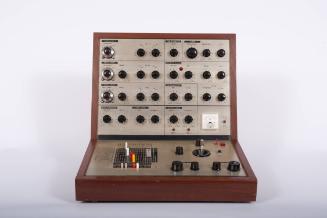
Photo credit: Don Kennedy
Electronic Music Studios (London) Limited
1969
Not available for use in Recording Studios
On View: Not currently on exhibit
isVirtual:
Photo credit: Don Kennedy
Radio-Victor Corporation of America (RCA)
1929
Not available for use in Recording Studios
On View: On exhibit
isVirtual:
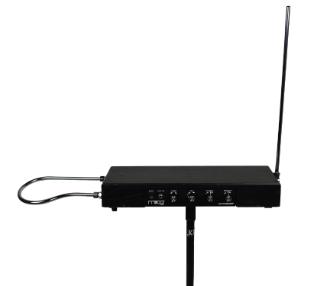
Photo credit: Meghan MacKrous, courtesy of the National Music Centre
Moog Music, Inc.
2001
Available for use in Recording Studios
On View: Not currently on exhibit
isVirtual:
Photo credit: Don Kennedy
CBS Musical Instruments
1966
Available for use in Recording Studios
On View: Not currently on exhibit
isVirtual:
Photo credit: Don Kennedy
Frank Morse Robb
1937
Not available for use in Recording Studios
On View: On exhibit
isVirtual:
Photo credit: Don Kennedy
Buchla & Associates
1982
Not available for use in Recording Studios
On View: Not currently on exhibit
isVirtual:
Photo credit: Don Kennedy
Everett Piano Company
1935
Not available for use in Recording Studios
On View: Not currently on exhibit
isVirtual:
Bösendorfer Klavierfabrik GmbH
1855
Not available for use in Recording Studios
On View: Not currently on exhibit
isVirtual:
Photo credit: Don Kennedy
Francesco Bonafinis
c. 1560
Not available for use in Recording Studios
On View: On exhibit
isVirtual:
Photo credit: Don Kennedy
Vladimir Bosnar
1979
Not available for use in Recording Studios
On View: On exhibit
isVirtual:
Back