EN / FR
Skip to main content

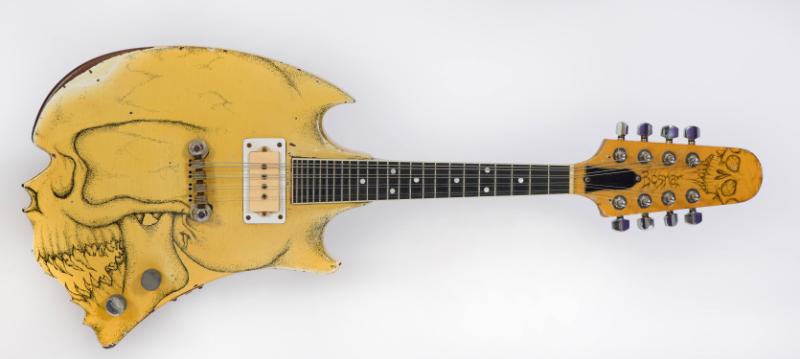
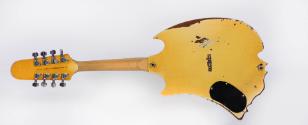
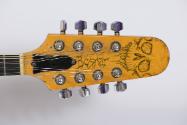
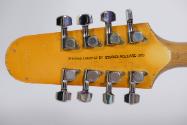
Nash the Slash Custom Skull Mandolin

Not available for use in Recording Studios
On exhibit
On exhibit
Artifact TypeMandolin, Electric
Manufacturer Vladimir Bosnar luthier | late 20th century
Manufacturer LocationToronto, Ontario, Canada
Date1979

A trailblazer in experimental rock and new wave music, Canadian artist Jeff Plewman—better known by his stage name Nash the Slash—was a master of theatrics, performing all shows in his trademark costume of tuxedo, top hat, glasses and bandage-wrapped head. Throughout his 40-year career, Nash employed many instruments that were underused and underappreciated at the time—including the electric mandolin, electric violin, and the musician’s union-banned drum machine. This custom-made electric “skull” mandolin was stolen from Nash while on tour in England, eventually turning up months later in a London phone booth.


Donated by the Estate of Nash the Slash

Operation/FunctionThis artifact is an electric mandolin that features four courses of two strings each (eight strings total), tuned across the soprano range to E (highest), A (440 Hz), D, and G. Its body, bridge, and neck are made of solid wood, and the strings are made of steel. The exterior skull design was customized, with the instrument based on the structure of the Gibson EM200 electric mandolin.Cultural SignificanceAlthough its use has not been as widespread as the guitar, even in its amplified form, the mandolin holds an important place in many musical traditions, most notably those exhibiting folk and bluegrass styling. Nash the Slash is regarded as having been a pioneer in experimental music, especially within Canada, employing instruments that are often unused in such musical genres, such as electric mandolin, electric violin, harmonica, and glockenspiel. His stage presence was highly iconic, incorporating theatrics and a trademark costume that consisted in a matching tuxedo and top hat, sunglasses, and surgical bandages wrapped around his entire head.Technological SignificanceAs with the guitar, the mandolin finds it origins in the lute, which features numerous (often as many as six) sets or courses of gut strings and was most popular throughout the Renaissance. Historically, the strings of most chordophones, including violins, harps, and lutes, were derived from the natural fibres present in the lining of animal intestines, typically of sheep and goats. Such strings are referred to as catgut strings, and were for a long time the standard in stringed instruments. Although they are still in use today, especially by those who perform on period instruments, most professional string instruments use high quality alloyed or hybrid strings of steel or synthetic polymer core. Catgut strings are revered for having a rich, deep, and full tone, however they are notoriously expensive to manufacture. As such, a more affordable alternative was developed and consisted in using pure steel strings, which are recognized as having a bright but rather thin tone. The basic design of the mandolin began to emerge in the seventeenth century, as an instrument played primarily with the player’s fingers rather than a plectrum. Structurally, the mandolin evolved in close relation to instruments such as the oud, which is widely used in many Middle Eastern traditions, and the bouzouki, which features in both Greek and Irish music. While the Neapolitan, or round-backed, design has remained the most common form of the acoustic mandolin, the carved- or arch-top design also emerged in the late nineteenth century, borrowing the curved shape of the violin body’s top and bottom. Orville Gibson, founder of the famed Gibson Guitar Corporation, is credited with this innovation, which is stylized in one of two ways: the Florentine, or F-style, which has a highly decorative exterior; and, the A-style, which follows the tear-drop shape of the Neapolitan, but with f-holes similar to those found on the violin instead of a circular sound hole. In addition to the mandolin, which covers the soprano range, the mandolin family also includes the mandola, which covers the alto range, the octave mandolin, which covers the tenor range, and the mandolone or mandocello, which covers the bass range; the various instruments diverge primarily in their size, with larger instruments capable of employing longer strings and, thus, producing lower frequencies. The electric mandolin emerged along with the resonator mandolin, which features a metal soundboard, in the 1930s as a response to the instrument’s quiet nature. As with most electric instruments, amplification is made possible in the mandolin by way of a series of pickups. Most modern pickups come in the form of the humbucker pickup, which employs two coils in inverse phase so as to reduce the amount of extraneous noise or AC hum included in the signal. The first dedicated pickup was designed by Hawaiian steel-guitar player, George Beauchamp, in collaboration with Adolph Rickenbacker in the early 1930s. Gibson is also credited with producing the first commercial humbucker pickup, designed in 1955 and patented in 1959. The use of pickups rendered any need for a hollow wooden soundboard or resonating structure obsolete in associated instruments. Of course, the use of pickups also meant that the conventional tone of the acoustic instruments to which they were applied could be modified through the use of external effects pedals and amplification systems. The famed Fender guitar company, manufacturers of the first solid-body electric guitar in 1950, produced a unique electric mandolin that incorporates an additional single string above the instrument’s highest E string course, a tremolo bridge, and two pickups–an orientation that is normally featured on electric guitars.Users/PerformersJeff Plewman, known professionally as Nash the Slash, was born James Jeffrey Plewman on 26 March 1948 in Toronto, Ontario, Canada. As both a performer and a musician, Plewman was particularly lauded for his unique stage presence, with a trademark tuxedo-and-hat costume and bandage-wrapped face, and for his diverse musical range, which incorporated elements of pop, rock, new wave, new age, instrumental, and experimental styles, as well as uncommon instruments such as electric mandolin, electric violin, harmonica, and glockenspiel. He cites his early musical influences as being quite varied, as well, including classical composers such as Beethoven, Tchaikovsky, and Prokofiev, krautrock pioneers such as Amon Duul, Kraftwerk, and Neu!, rock bands such as The Who and Hawkwind, and experimental luminaries such as Brian Eno, Silver Apples, and Moondog. His first public performance came in 1975 when then owner of Toronto’s Roxy Theatre, Gary Topper, invited him to perform alongside a screening of the silent film, Un chien andalou, a surrealist short produced in 1929 by Spanish filmmaker Luis Buñuel and artist Salvador Dali. Topper would later serve as a frequent promoter for Plewman and helped to inspire his Nash the Slash persona. A series of performances accompanying silent film, especially those dealing with the macabre, including classics such as Nosferatu (1922) and The Cabinet of Dr. Caligari (1920), followed, and in 1976, Plewman formed the group FM with local musicians with whom he had been improvising; the group released Black Noise in 1977, which would later become gold certified. Plewman left FM the following year, focusing on his solo career and newly formed stage appearance, which would become his trademark look. In order to release and distribute his outsider music, he formed his own label, Cut-throat Records, which stands as among the first independent labels in Canada. While his earliest works were exclusively instrumental, his efforts into the 1980s began to incorporate increasing vocals and elements of popular music, garnering him greater attention among venue promoters and radio stations. In 1980, Plewman was invited to join English new wave icon Gary Numan on a tour of the United Kingdom; the following year, Plewman released Children of the Night on the Dindisc imprint of Virgin Records, home to Orchestral Manoeuvres in the Dark. The 1980s was Plewman’s most prolific and experimental time, with the production of the first commercial record that could be listened to at any speed – a unique feat that earned a review in Playboy magazine – as well as work with famed Canadian producer Daniel Lanois, prior to his association with Brian Eno. In 1984, Plewman released The Million Year Picnic on Ralph Records, an American independent label managed by the San Francisco-based experimental rock group, The Residents. In addition to his use of instruments such as electric violin and electric mandolin, Plewman was also especially known for his use of drum machines, and held the honour of being the first Canadian musician to employ a drum machine on an album (1978’s Bedside Companion EP) at a time when the instrument was effectively banned according to the bylaws of the Toronto Musicians’ Association. In 1982, Plewman also successfully sued Pepsi Cola of Canada for misappropriation of his persona. He continued his work in film scoring throughout the 1990s, while also undertaking a series of multimedia collaborations with visual artists. Perhaps the most notable among these was his partnership with the surrealist artist, Robert Vanderhorst; the two performed under the moniker, Two Artists, first in 1978 and again in 2004. Plewman officially retired in 2012, and passed away in his Toronto home on 10 May 2014.
Object number2023.08.22
Photo credit: Don Kennedy
Gibson Guitar Corporation
1959
Not available for use in Recording Studios
On View: Not currently on exhibit
isVirtual:
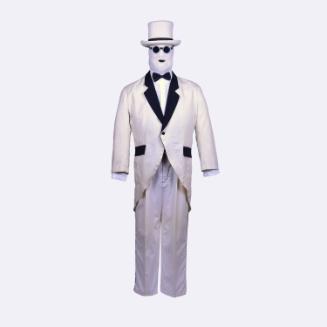
Photo credit: Hayley Robb, courtesy of the National Music Centre
c. 2010
On View: On exhibit
isVirtual:
Back