
EN / FR
Skip to main content

Delta Music Research Modular

Available for use in Recording Studios
Not currently on exhibit
Artifact TypeSynthesizer
Datec. 1980

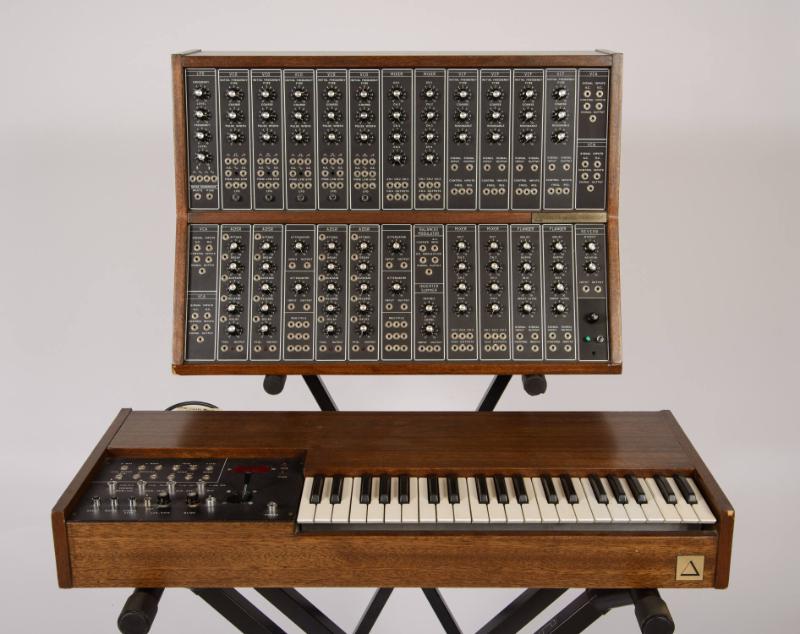
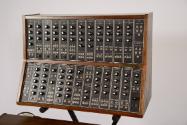
The computer-based polyphonic synthesizer seen here was manufactured by Delta Music Research Limited (DMR), which was founded by the late Calgary composer Tim J. Lawrence. Though not a commercial success, the Model 1100 was introduced during a period of time between the modular analog synthesizers of the 1970s and the digital-analog hybrids of the 1980s, and contained several innovative features. Unlike earlier monophonic systems such as Moog and Buchla, the Model 1100’s keyboard was polyphonic, meaning that multiple notes could be played together, giving users more freedom to explore creatively.

Donated by T.J. Lawrence

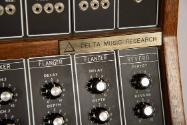
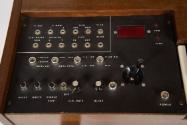
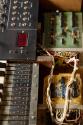
Operation/FunctionThis particular artifact contains the following components and modules: 8-bit micro computer/musical keyboard/synthesizer interface (x1), 1101 Dual Attenuator/Multiple (x2), 1110 Voltage Controlled Oscillator (x4), 1120 Voltage Controlled Filter (x2), 1130 Dual Voltage Controlled Amplifier (x2); 1140 Voltage Controlled Envelope Generator (x4), 1150 Dual 4 to 1 Mixer (x1), 1160 Balanced Modulator/Inverter Summer (x1), 1170 Flanger (x1), 1180 Reverb/Power Amplifier (x1), and 1190 Dual Low Frequency Oscillator/Noise Source (x1). The cabinet of the Model 1100 features two rows of ten modules each (twenty modules total) stacked above the keyboard. All modules are constructed into finished enclosures, and the cabinet is made from a combination of Canadian maple hardwood and mahogany.Cultural SignificanceModular synthesis has left an indelible mark on the way in which current trends in synthesizer design are informed. In the 1960s, these instruments offered a way forward for composers and musicians who felt stifled by the rigour of early electronic music techniques, such as those practiced in Germany and France throughout the 1950s. They promised new timbres and uninhibited methods of control and ultimately set into motion the foundations of synthesis practices that would follow throughout the 1970s and 1980s. Although these bulky and cumbersome analog machines did not survive the technological and commercial advances of the late 1970s, the modular spirit was revived at the turn of the century and, today, this flexible design still proves to be a desirable and fruitful approach to music making.Technological SignificanceThe voltage-controlled synthesizer is arguably one of, if not the most technologically significant contributions to the course of electronic music. Although earlier electronic instruments such as the Theremin and Ondes Martenot offered new and unique ways of articulating sound, their sonic template was, for the most part, quite limited, capable of producing only a few distinct timbres. The voltage-controlled synthesizer, on the other hand, was viewed as an integrated electronic orchestra, as it were, allowing the user to sculpt a wide and varied array of tones and gestures. What’s more, it allowed the user to modify their sounds in real time, seemingly without the sorts of physical limitations imposed on acoustic instruments. Of course, each instrument did come with its own characteristic tonal qualities and control limitations, however the wealth of opportunity inherent in the ability to manipulate and define nearly every parameter of sound structure solidified the synthesizer’s place as one of the most powerful musical innovations of the twentieth century. The concept of modular design was initially quite desirable to professional and studio musicians in that it allowed one to more or less completely customize their instrument and modify its functions as desired; for instance, if an extra oscillator was required, an extraneous module was simply removed and the additional oscillator module was inserted into the integrated cabinet. The modular nature of early synthesizers also meant that an array of patches, or defined sounds that could be altered in real time, were possible, offering the musician a high degree of flexibility and the opportunity to develop their own performance technique and signature tone. Analog modular synthesis was quite prevalent as a music-making practice in academic institutions and private studios throughout the late 1960s and into the early 1980s, both in Europe and throughout North America. Although modular-type systems are still in production today ¬– the Buchla 200e, for instance, is based on the modular design of the Buchla 200 analog system – the advent of affordable microprocessors in the mid 1970s and the rise of programmable polyphonic instruments in the late 1970s resulted in the relative obsolescence of the transistor-based systems of “classic” studios. The earliest dedicated studios that arose in the 1950s and 1960s consisted of discrete components such as sine, sawtooth, and square wave generators, filters, noise generators, mixers, and units for reverberation and ring modulation. The modular systems of the late 1960s and 1970s were differentiated from their “primitive” counterparts in that they could be made to interact with one another under the governance of voltage control. The concept of voltage control is based on the principle by which the function of electrical components relates to voltage, or the flow of electrical current: in order for an oscillator to maintain a frequency, it requires a constant applied voltage; in order for the oscillator to increase in frequency, it requires a proportional increase in voltage. The most unique aspect of the concept of voltage control, which modular synthesizers took full advantage of, suggests that a voltage produced by one component or module can be used to control some function of another module via connection by patch cords or related means. For instance, envelopes and low frequency oscillators may be used specifically to affect the voltage of another module in some regular and repeatable way. These techniques enabled a very rich and highly interactive approach to the idiom of electronic music composition. The term ‘modular’ simply implies that various dedicated modules for sound production, manipulation, and amplification are integrated within a single cabinet, so as to operate as one system. The modular systems of the 1960s and 1970s were more compact than earlier synthesizers such as the RCA Mark II of the Columbia-Princeton Electronic Music Center, however their overwhelming size and hefty price tag often meant that they were accessible, for the most part, only to professionals, with a number of systems having initially been installed in recording studios and educational institutions. In response to this, most of the major companies of the era also released smaller, more portable systems (both modular and non-modular) throughout the 1970s that were also suitable for live performance, such as the Minimoog, ARP 2600 and Odyssey, EMS VCS3 and Synthi, and the Buchla Music Easel and 101. Although most of these instruments borrowed elements from their modular ancestors, they were not in themselves modular by nature, but rather featured set configurations that were internally affixed. With the advent of microprocessors in the mid 1970s, synthesizers increasingly began to adopt the smaller, more compact aesthetic exhibited in these performance-oriented instruments, especially that of the revered Minimoog. The once popular modular approach gave way to more streamlined designs that, while still offering users the ability to control numerous aspects of the instrument’s tone and gesture, limited the way in which the instrument could be operated. Although the modular synthesizer was highly regarded for its flexibility, it was also criticized for being largely unintuitive and cumbersome; the smaller digital-analog hybrids of the late 1970s, such as the Sequential Circuits Prophet 5, though still not relatively inexpensive, responded more readily to the technological demands of an increasingly burgeoning consumer market. Moreover, the synthesizers of the microprocessor era were, to varying extents, programmable, meaning that various parameters could be stored within the instrument’s internal memory. The analog modular instruments of the 1960s and early 1970s lacked this ability, and required the user to make note of specific patch settings in order to recreate them later. Throughout the 1980s and 1990s, synthesizers continued to develop following the compact, user-friendly model established in the mid 1970s. Interestingly, modular design resurfaced in the late twentieth century with the introduction of the Rack system. The Rack system – the most popular of which is referred to as Eurorack – encompasses a generalized design approach that is standardized in module size and power distribution, allowing any module that’s produced under its specifications to be operable with any other. This was certainly not the case with the earliest modular instruments, as each employed different patching methods, power distribution, and panel size; Buchla panels were shorter in height than those produced by Moog and ARP, and Moog was the only manufacturer to rely solely on the use of quarter-inch patch cables with Buchla employing both banana and mini cables, EMS employing pins, and ARP employing sliders. As such, it was difficult, if not impossible, to combine modules belonging to different manufacturers within the same system. There are a multitude of Rack system manufacturers currently in business, including New York’s Make Noise and Vancouver’s Intellijel, and thanks to a decrease in production costs and an increase in the stability of electronic components, this industry is still thriving into the twenty-first century. The flexibility of these systems allows users to purchase modules from any manufacturer and mount them into the same cabinet with any other Rack system module. The apparent renewed desires for the flexibility and physicality of the modular approach illustrate a very potent example of just one of the ways in which earlier technologies have overshadowed contemporary synthesizer design. Modular design has even resurfaced in the realm of computer music, with programming environments such as max/MSP borrowing from the concept of patching. The Delta Music Research Model 1100 came at a time when popular interest in modular synthesizers was already in decline. These instruments were unique among their fully analog predecessors in that the keyboard employed elements of computer control, making them more akin to the analog-digital hybrids of the late 1970s. Moreover, the keyboard of the Model 1100 was polyphonic, meaning that multiple notes could be played together – the keyboards of the classic modular systems of Moog, Buchla, and ARP were, by and large, monophonic, meaning that only a single note could be produced at one time. One advantage (or, perhaps, disadvantage) the Delta Music Research instruments held over earlier modular instruments is that the modules were not in fact self-contained, but were rather subsumed under the same printed circuit board, or PCB. Although this meant that the systems were not quite as flexible or customizable as those that came before, they were somewhat more accessible to the average user in that certain decisions about module type were already put into place, eliminating the time-consuming decision-making process. Moreover, the Model 1100 also employed Curtis (Curtis Electromusic, or CEM) chips, as opposed to the SSM chips used throughout much of the 1970s; as a result, the sound of these modular instruments was much more closely aligned with synthesizers of the early 1980s, such as those produced by Oberheim. Their somewhat awkward placement between the modulars of the 1970s and the hybrids of the early 1980s meant that these instruments were not successful in a commercial market increasingly geared toward smaller, more integrated systems. Sometime following the release of the Models 1000 and 1100, as well as an instrument dubbed the PCM, Delta Music Research rebranded itself as Lawrence Polysystems, or LPS, producing the Lawrence Polyphonic Computer Synthesizer. Though still operating under the tenants of voltage control, both the Lawrence Polyphonic Computer Synthesizer and the Delta Music Research PCM employed a wider range of digital elements beyond the company’s earlier modular systems, including digital waveform generators, sampled waveforms, software-controlled modulation, and programmable memory of approximately 1 KB.Users/PerformersThe only notable user of Delta Music Research systems is the late composer and founder of DMR, Tim Lawrence. Lawrence’s exact dates of birth and death are unknown, however it is known that he was based in Calgary, Alberta, Canada for the majority of his life. He released the only documented usage of a DMR system, the album Illuminations from approximately 1985. According to an October 2008 phone correspondence between NMC Collections Manager, Jesse Moffatt, and Bonnie Lawrence, the sister of Tim Lawrence, Lawrence suffered from schizophrenia and had recently passed away from a brain aneurism.
Object number2002.01.01.1-2
Photo credit: Don Kennedy
R.A. Moog Inc./ Moog Music Inc. (division of Norlin Music Instruments, Ltd.)
c. 1973
Available for use in Recording Studios
On View: Not currently on exhibit
isVirtual:
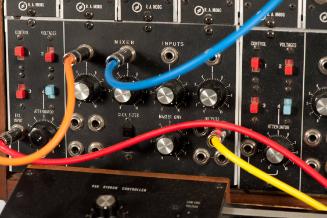
Photo credit: Don Kennedy
Moog Music, Inc.
1969
Not available for use in Recording Studios
On View: On exhibit
isVirtual:
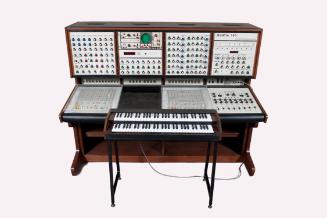
Photo credit: Don Kennedy
Electronic Music Studios (London) Limited
1972
Available for use in Recording Studios
On View: Not currently on exhibit
isVirtual:
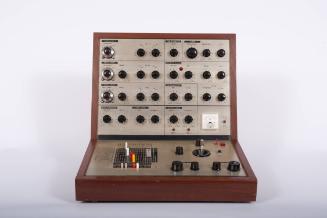
Photo credit: Don Kennedy
Electronic Music Studios (London) Limited
1969
Not available for use in Recording Studios
On View: Not currently on exhibit
isVirtual:
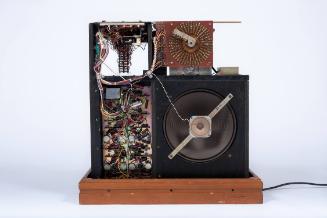
Photo credit: Don Kennedy
The Wurlitzer Company
c. 1959
Not available for use in Recording Studios
On View: On exhibit
isVirtual:
Photo credit: Don Kennedy
Buchla & Associates
2006
Available for use in Recording Studios
On View: Not currently on exhibit
isVirtual:
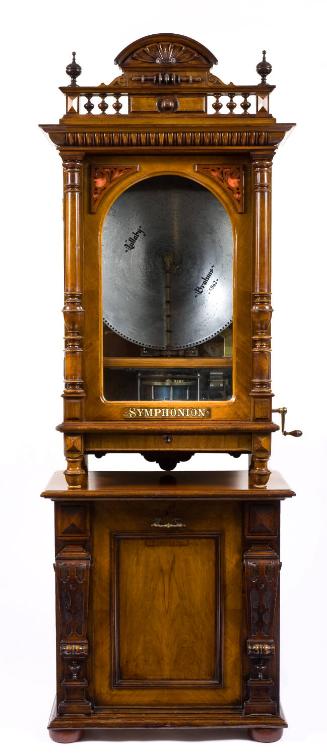
Photo credit: Don Kennedy
Symphonion Company
c. 1890
Not available for use in Recording Studios
On View: On exhibit
isVirtual:
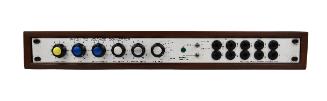
Photo credit: Don Kennedy
Electronic Music Studios (London) Limited
1971
Available for use in Recording Studios
On View: Not currently on exhibit
isVirtual:
Photo credit: Don Kennedy
Sébastien Érard
1820
Not available for use in Recording Studios
On View: On exhibit
isVirtual:
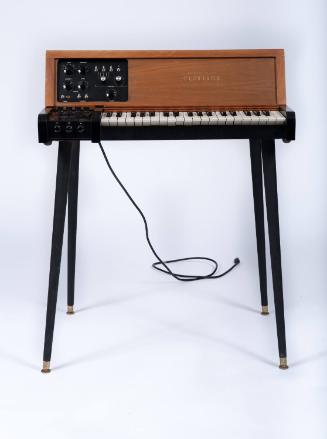
Photo credit: Don Kennedy
Raymond Scott Enterprises/Manhattan Research
1957
Not available for use in Recording Studios
On View: Not currently on exhibit
isVirtual:
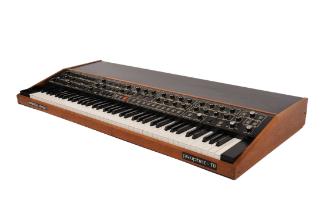
Photo credit: Don Kennedy
Sequential Circuits Inc.
1983
Available for use in Recording Studios
On View: Not currently on exhibit
isVirtual:
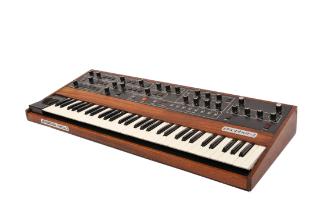
Photo credit: Don Kennedy
Sequential Circuits Inc.
c. 1978
Available for use in Recording Studios
On View: Not currently on exhibit
isVirtual:
Back