EN / FR
Skip to main content

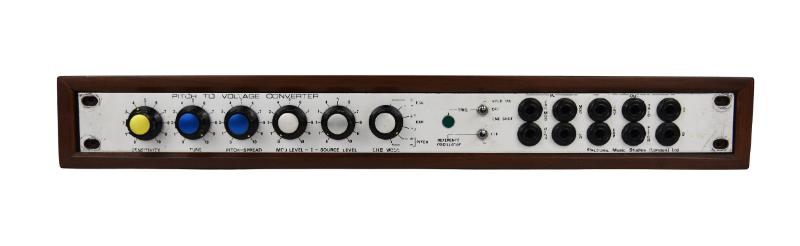
Pitch-to-Voltage Converter

Available for use in Recording Studios
Not currently on exhibit
Artifact TypeSynthesizer, Accessory
Date1971

The EMS pitch-to-voltage converter is a stand-alone, self-contained module. It doesn’t generate sound itself, instead converting an incoming, live audio source into a proportional DC voltage which can then be used to control a synthesizer in unison with the audio source or at any desired interval. Often referred to as an Ancillary Studio Module and integrated into EMS’ Synthi-100, EMS technologies were popular in England and continental Europe, and some notable users of EMS instruments were Pink Floyd and Tangerine Dream.

Operation/FunctionThis artifact is a self-contained module of the EMS Synthi 100 synthesizer and serves to convert an audio input into a proportional DC voltage. It employs a 240/115 VAC 50/60 Hz power supply for use in both North America and Europe, and produces a maximum signal output of 18 V. It includes inputs and outputs for trigger/control and audio signals. Connections may be established via the 1/4” jacks on the front panel or the multi-way socket on the back.Cultural SignificanceWhile Moog and ARP largely dominated the American market throughout the 1970s, EMS products were used extensively throughout Europe, and especially in their home turf of the United Kingdom. The Synthi 100 in particular was Europe’s response to the larger modular systems of the American competitors, and was used by many high-profile studios, including the BBC Radiophonic Workshop and the Nordwestdeutscher Radiofunk (NWDR) in Cologne, Germany.Technological SignificanceThe pitch-to-voltage converter was among the Synthi 100’s most unique and innovative features, alongside components such as the envelope followers, send and receive effects lines, the oscilloscope, and the six-track, 256-step monophonic sequencer. As a standalone unit, this device helped offer a further function that was largely missing from synthesis techniques of the time; this being the ability to directly affect voltage controlled equipment and their parameters via a live musical input. Of course, external signals were present in various early voltage-controlled synthesizers, especially modular systems, in the form of inputs for signals from a tape recorder or a microphone, however the sophistication employed by the pitch and envelope following functions of EMS’s pitch-to-voltage converter were largely unseen at the time. In effect, the pitch-to-voltage converter was born of the same necessity for controls that are alternative to the traditional keyboard, as similarly seen in devices such as the ondes Martenot of 1928 and the Steiner EVI of 1972. Although not necessarily among the most well known of the major synthesizer manufacturers, Electronic Music Studios (London) was certainly among the most sophisticated, ambitious, innovative, and pioneering. It is widely regarded that Peter Zinovieff’s MUSYS system, which was designed collaboratively by David Cockerell and Peter Grogono in the late 1960s, incorporating two DEC PDP8 minicomputers, was the first instance in which a computer was installed in a private home. Of course, by modern standards, these computers were incredibly primitive, containing at most just 12 kB of RAM. In the 1960s, however, consumer access to this kind of digital technology was unheard of, with most computers of the time existing only in universities or government facilities, and certainly not being employed for the sake of musical exploration. This, combined with the fact that MUSYS was programmed via a video monitor rather than punch card was truly astonishing. Despite being literally decades ahead of their time, EMS was unable to adapt and refine most of their innovative ideas into successful commercial ventures, succumbing to the fate of most of the major analog manufacturers in the 1980s and 1990s.Users/PerformersThere is little documented usage with regard to the pitch-to-voltage converter as a standalone unit in either popular or academic music. Notable users of related EMS equipment throughout the 1970s especially include renowned German composer Karlheinz Stockhausen (1928 – 2007) and prog rock groups such as Pink Floyd and Tangerine Dream.
Object number2002.05.11
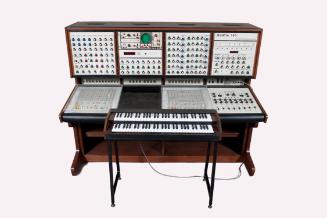
Photo credit: Don Kennedy
Electronic Music Studios (London) Limited
1972
Available for use in Recording Studios
On View: Not currently on exhibit
isVirtual:
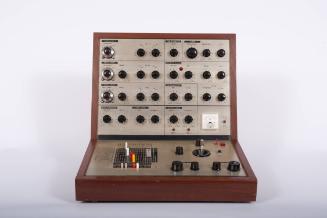
Photo credit: Don Kennedy
Electronic Music Studios (London) Limited
1969
Not available for use in Recording Studios
On View: Not currently on exhibit
isVirtual:
Photo credit: Don Kennedy
Moog Music, Inc.
1973
Available for use in Recording Studios
On View: Not currently on exhibit
isVirtual:
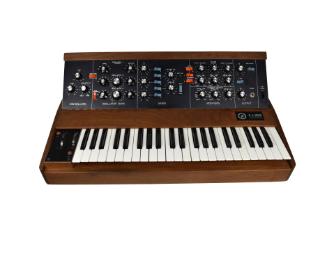
Photo credit: Meghan MacKrous, courtesy of the National Music Centre
R.A. Moog, Inc.
1970
Available for use in Recording Studios
On View: Not currently on exhibit
isVirtual:
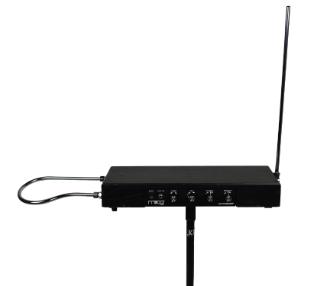
Photo credit: Meghan MacKrous, courtesy of the National Music Centre
Moog Music, Inc.
2001
Available for use in Recording Studios
On View: Not currently on exhibit
isVirtual:
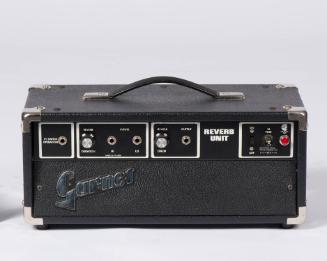
Photo credit: Don Kennedy
Garnet "Gar" Gillies
Available for use in Recording Studios
On View: Not currently on exhibit
isVirtual:
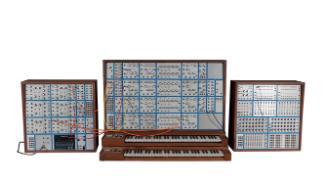
Photo credit: Don Kennedy
E-mu Systems, Inc.
About 1973
Available for use in Recording Studios
On View: Not currently on exhibit
isVirtual:
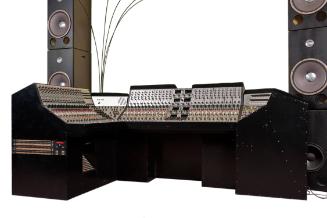
Photo Credit: Don Kennedy
Olympic Studios
1976
Available for use in Recording Studios
On View: Not currently on exhibit
isVirtual:
Bösendorfer Klavierfabrik GmbH
1855
Not available for use in Recording Studios
On View: Not currently on exhibit
isVirtual:
Photo credit: Meghan MacKrous, courtesy of the National Music Centre
Bode Sound Company
1977
Available for use in Recording Studios
On View: Not currently on exhibit
isVirtual:
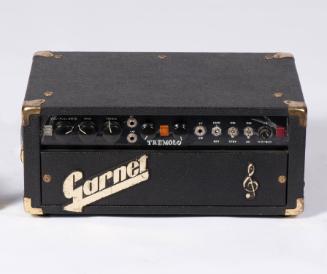
Photo credit: Don Kennedy
Garnet "Gar" Gillies
Available for use in Recording Studios
On View: Not currently on exhibit
isVirtual:
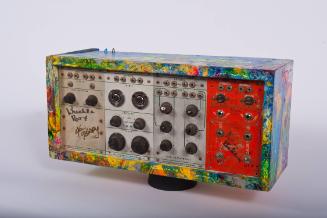
Photo credit: Don Kennedy
Donald Buchla
c. 1966
Not available for use in Recording Studios
On View: On exhibit
isVirtual:
Back