
EN / FR
Skip to main content

ARP 2500

Available for use in Recording Studios
Not currently on exhibit
Artifact TypeSynthesizer
Manufacturer ARP Instruments, Inc. electronic instruments manufacturer | founded 1969
Manufacturer LocationUSA
Date1976
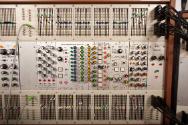
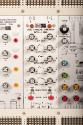
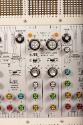
In the 1977 sci-fi classic Close Encounters of the Third Kind, five electronic-sounding notes allow humanity to communicate with aliens. The source of those notes likely came from the ARP 2500—a modular, analog synthesizer.  Designed by former NASA electrical engineer Alan R. Pearlman, the instrument’s most significant innovation is its matrix of patchable sliders. These sliders stand in stark contrast to the loose patch cables found on the more conventional Moog and Buchla systems of the time. The company’s first instrument was not a commercial success however—only selling about 100 units.
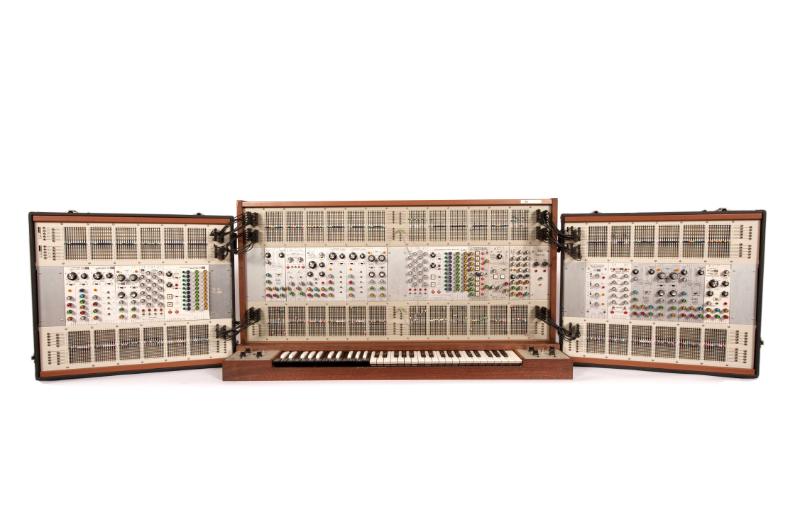
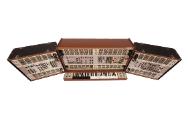
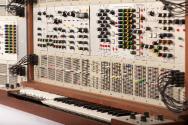
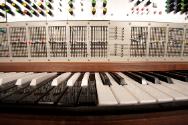
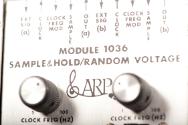
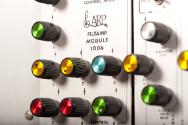
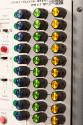
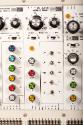
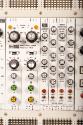
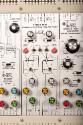
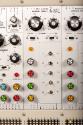
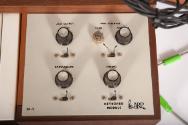
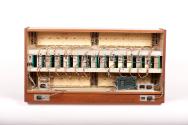
Operation/FunctionThis particular artifact is a monophonic analog modular synthesizer system, with one main cabinet, two wings, and a keyboard. The instruments were sold in various configurations. This particular unit contains three (3) 1004t Voltage-controlled Oscillators, one (1) 1004p Voltage-controlled Oscillator, three (3) 1023 Dual Voltage-controlled Oscillators, one (1) 1016 Dual Noise/Random Voltage Generator, one (1) 1005 Modamp Low Frequency Oscillators, two (2) 1047 Multimode Filters/Resonators, three (3) Filtamps, one (1) 1003 Dual Exponential Envelope Generator/ADSR, two (2) 1046 Quad Envelopes/ADSR, one (1) 1050 Mix/sequencer, two (2) Ten-position Sequencers, one (1) 1045 Voice module, one (1) 1036 Dual Sample & Hold/Random Voltage, one (1) 1002 Power Supply, and a two-manual, 61-note keyboard with one (1) SP-2 Mono Keyboard module and one (1) SP-4 Duophonic Keyboard module. This particular keyboard spans five octaves (62 notes).Cultural SignificanceModular synthesis has left an indelible mark on the way in which current trends in synthesizer design are informed. In the 1960s, these instruments offered a way forward for composers and musicians who felt stifled by the rigour of early electronic music techniques, such as those practiced in Germany and France throughout the 1950s. They promised new timbres and uninhibited methods of control and ultimately set into motion the foundations of synthesis practices that would follow throughout the 1970s and 1980s. Although these bulky and cumbersome analog machines did not survive the technological and commercial advances of the late 1970s, the modular spirit was revived at the turn of the century and, today, this flexible design still proves to be a desirable and fruitful approach to music making. The ARP 2500 certainly stood as one of the most technologically advanced synthesizers of the era. The vast range of possible patches meant that new sounds were continually becoming available to the user with each subsequent use. Despite its reliability and flexibility, however, its interface proved to be too unintuitive for the average user, and its cost of production too great for the manufacturer to bear, and it failed in the commercial market. That being said, the instrument did enjoy some brief success as an educational tool used in secondary institutions, and as a unique addition to the sonic landscapes of popular and film music, having been used by several prominent screen composers. Of course, the ARP 2500 did make a notable appearance in the 1977 science fiction classic, Close Encounters of the Third Kind as the machine with which humans are able to communicate with extraterrestrials.Technological SignificanceThe synthesizer is arguably one of, if not the most technologically significant contributions to the course of electronic music. Although earlier electronic instruments such as the Theremin, Clavivox, and Ondes Martenot offered new and unique ways of articulating sound, their sonic template was, for the most part, quite limited, capable of producing only a few distinct timbres. The modern synthesizer, on the other hand, was viewed as an integrated electronic orchestra, as it were, allowing the user to sculpt a wide and varied array of tones and gestures. What’s more, it allowed the user to modify their sounds in real time, seemingly without the sorts of physical limitations imposed on acoustic instruments. Of course, each instrument did come with its own characteristic tonal qualities and control limitations, however the wealth of opportunity inherent in the ability to manipulate and define nearly every parameter of sound structure solidified the synthesizer’s place as one of the most powerful musical innovations of the twentieth century. The concept of modular design was initially quite desirable to professional and studio musicians in that it allowed one to more or less completely customize their instrument and modify its functions as desired; for instance, if an extra oscillator was required, an extraneous module was simply removed and the additional oscillator module was inserted into the integrated cabinet. The modular nature of early synthesizers also meant that an array of patches, or defined sounds that could be altered in real time, were possible, offering the musician a high degree of flexibility and the opportunity to develop their own performance technique and signature tone. Analog modular synthesis was quite prevalent as a music-making practice in academic institutions and private studios throughout the late 1960s and into the early 1980s, both in Europe and throughout North America. Electronic instruments of this era were entirely transistor-based, with solid-state devices such as the transistor representing the next generation in technology following the vacuum tube, which was used extensively throughout the first half of the twentieth century. Solid-state technology was far smaller, lighter, more reliable, more durable, and less expensive than vacuum tube technology. This technology developed even further in around 1970 into the form of integrated circuits (ICs), which house the many discrete components of transistor-based circuits within a single silicon chip, as they are often called. Integrated circuits were significantly smaller and less expensive to manufacture than the circuits from which they derived. Although not all analog synthesizers designed in the very early 1970s employed integrated circuits, their use was mostly standardized by the late 1970s with the inclusion of the first affordable eight-bit microprocessors, such as the Zilog Z80, that emerged mid-decade. As a result, integrated circuits adapted to incorporate more sophisticated digital components. Although modular-type systems are still in production today ¬– the Buchla 200e, for instance, is based on the modular design of the Buchla 200 analog system – the advent of affordable microprocessor chips in the mid 1970s and the rise of programmable polyphonic instruments in the late 1970s resulted in the relative obsolescence of the discrete transistor-based systems of the early 1970s. The earliest dedicated studios that arose in the 1950s and 1960s consisted of discrete components such as sine, sawtooth, and square wave generators, filters, noise generators, mixers, and units for reverberation and ring modulation. The modular systems of the late 1960s and 1970s were differentiated from their “primitive” counterparts in that they could be made to interact with one another under the governance of voltage control. The concept of voltage control, which was implemented into early electronic instruments such as Hugh Le Caine’s Electronic Sackbut, is based on the principle by which the function of electrical components relates to voltage, or the flow of electrical current: in order for an oscillator to maintain a frequency, it requires a constant applied voltage; in order for the oscillator to increase in frequency, it requires a proportional increase in voltage. The most unique aspect of the concept of voltage control, which modular synthesizers took full advantage of, suggests that a voltage produced by one component or module can be used to control some function of another module via connection by patch cords or related means. For instance, envelopes and low frequency oscillators may be used specifically to affect the voltage of another module in some regular and repeatable way. These techniques enabled a very rich and highly interactive approach to the idiom of electronic music composition. The term ‘modular’ simply implies that various dedicated modules for sound production, manipulation, and amplification are integrated within a single cabinet, so as to operate as one system. The modular systems of the 1960s and 1970s were more compact than earlier synthesizers such as the RCA Mark II of the Columbia-Princeton Electronic Music Center, however their overwhelming size and hefty price tag often meant that they were accessible, for the most part, only to professionals, with a number of systems having initially been installed in recording studios and educational institutions. In response to this, most of the major companies of the era also released smaller, more portable systems (both modular and non-modular) throughout the 1970s that were also suitable for live performance, such as the Minimoog, ARP 2600 and Odyssey, EMS VCS3 and Synthi, and the Buchla Music Easel and 101. Although most of these instruments borrowed elements from their modular ancestors, they were not in themselves modular by nature, but rather featured set configurations that were internally affixed. With the advent of microprocessors in the mid 1970s, synthesizers increasingly began to adopt the smaller, more compact aesthetic exhibited in these performance-oriented instruments, especially that of the revered Minimoog. The once popular modular approach gave way to more streamlined designs that, while still offering users the ability to control numerous aspects of the instrument’s tone and gesture, limited the way in which the instrument could be operated. Although the modular synthesizer was highly regarded for its flexibility, it was also criticized for being largely unintuitive and cumbersome; the smaller, integrated digital-analog hybrids of the late 1970s, such as the Sequential Circuits Prophet 5, though still not relatively inexpensive, responded more readily to the technological demands of an increasingly burgeoning consumer market. The synthesizers of the microprocessor era were, to varying extents, programmable, meaning that various parameters could be stored within the instrument’s internal memory. The analog modular instruments of the 1960s and early 1970s lacked this ability, and required the user to make note of specific patch settings in order to recreate them later. Throughout the 1980s and 1990s, synthesizers continued to develop following the compact, user-friendly model established in the mid 1970s. Interestingly, modular design resurfaced in the late twentieth century with the introduction of the Rack system. The Rack system – the most popular of which is referred to as Eurorack – encompasses a generalized design approach that is standardized in module size and power distribution, allowing any module that’s produced under its specifications to be operable with any other. This was certainly not the case with the earliest modular instruments, as each employed different patching methods, power distribution, and panel size; Buchla panels were shorter in height than those produced by Moog and ARP, and Moog was the only manufacturer to rely solely on the use of quarter-inch patch cables with Buchla employing both banana and mini cables, EMS employing pins, and ARP employing sliders. As such, it was difficult, if not impossible, to combine modules belonging to different manufacturers within the same system. There are a multitude of Rack system manufacturers currently in business, including New York’s Make Noise and Vancouver’s Intellijel, and thanks to a decrease in production costs and an increase in the stability of electronic components, this industry is still thriving into the twenty-first century. The flexibility of these systems allows users to purchase modules from any manufacturer and mount them into the same cabinet with any other Rack system module. The apparent renewed desires for the flexibility and physicality of the modular approach illustrate a very potent example of just one of the ways in which earlier technologies have overshadowed contemporary synthesizer design. Modular design has even resurfaced in the realm of computer music, with programming environments such as max/MSP borrowing from the concept of patching. The ARP 2500 was the company’s first attempt to enter the modular synthesizer market that had been established in the mid 1960s by Americans Robert Moog and Donald Buchla; indeed, the ARP 2500 was made to compete directly with the first Moog modulars. Other companies, such as the UK-based Electronic Music Studios (EMS), emerged in the late 1960s with products of comparable interest, however ARP and Moog dominated the commercial market throughout the early 1970s. Although the functions intended for specific modules were maintained, the design approaches of the major companies differed in some crucial ways: many Buchla instruments used a tunable pressure-sensitive touch-plate instead of a keyboard, while instruments such as the EMS Synthi AKS offered a combination keyboard-sequencer; unlike Moog, Buchla separated control and audio signals; certain early Moog systems featured a ribbon controller, which sat above the keyboard; frequency control on Moog oscillators was not as variable as on single-sweep Buchla oscillators, and resembled the system of ranking used on pipe organs; Buchla 100 series oscillators were not capable of producing frequencies below 5 Hz, while Moog low-frequency oscillators were able to reach below 1 Hz; unlike the patch cords used by Moog and Buchla, most EMS instruments instead used matrix-boards that enabled “circular” signal routing. While each company strived to offer its own characteristic method of operation, ARP felt the particular need to deviate from the idiomatic designs of the early Moog systems. One of ARP’s most unique designs was in opposition to the use of patch cords, which are directed on both Moog and Buchla systems between output and input jacks located on the modules themselves. Instead, ARP opted for the use of sliding switches, which are aligned on a matrix panel and can be moved vertically in order to connect signals. One advantage this design had over the conventional patch cable method is that it allows the user to produce connections between every possible parameter, and with relative ease. On the main 2500 cabinet, which features a series of 10x10 matrices both above and below the modules, there are approximately 9600 possible connections that can be made – a number far greater than any other instrument available at the time. Although innovative and generally cleaner than the conventional patch cable approach, ARP’s matrix design was, however, significantly flawed in that it was susceptible to “cross-talk” or bleeding occurring between independent horizontal signal paths. Nonetheless, ARP instruments were quite technologically sophisticated on account of founder Alan R. Pearlman’s previous experience working with analog test equipment. While oscillator modules on the early Moog and Buchla modular systems were quite prone to frequency drift – a result of overheating – ARP oscillators were notably much more stable and resilient to temperature changes. Thus, unlike the earliest Moog and Buchla modular systems, the ARP 2500 did not require constant tuning prior to use. Although Pearlman’s penchant for precision lead to his oscillators taking on a distinctly clearer tone, his modules have been criticized for being somewhat too technical and difficult to navigate for the average user. Despite being highly reliable, the ARP 2500 was not a commercial success. In order to accommodate, ARP selected several of the most popular modules of the 2500 series and compounded them into a hardwired system that eventually became the much more accessible ARP 2600. In addition to the removal of the modular design, the ARP 2600 also lacks patching matrices and a number of parameter controls.Users/PerformersThe most notable user of the ARP 2500 is the French composer, Éliane Radigue. Radigue was born on 24 January 1932 in Paris, France, and was educated in both piano and harp as a child. She was married in the mid 1950s to the French-American artist, Arman, however, following the dissolution of the marriage, subsequently relocated to Nice, France, where she spent nearly a decade raising the couple’s three children. In 1967, she returned to Paris, which has since remained her home base. Radigue’s first experiments in electronic music began at the studios of the Radiodiffusion-Télévision Française (RTF) in Paris, where she worked under Pierre Schaeffer and Pierre Henry, first from 1957 until 1958 and then again from 1967 until 1968. Her earliest attempts focused on the use of extended tape loops and occasional feedback, and, as such, did not especially reflect the musique concrète aesthetic that was widely adhered to at the time. Radigue undertook a work-study position at New York University in 1970, where she worked alongside American experimental composers Laurie Spiegel (born 1945) and Rhys Chatham (born 1952). Here, she was given the opportunity to experiment on a Buchla 100 modular synthesizer that had been installed by American composer and electronic music pioneer Morton Subotnick (born 1933), who had recently relocated from California to join faculty in the department of music composition. Radigue remained in the United States for several years, undertaking residencies at the University of Iowa and the California Institute of the Arts until 1973. Shortly thereafter, however, she returned to Paris and began a multi-decade practice in which she would produce a series of compositions that made exclusive use of the ARP 2500 modular synthesizer, which she had come across shortly after beginning her training on the Buchla 100 system. In 1974, Radigue was invited by American maverick composer Robert Ashley (1930 – 2014) to premier her electronic piece, Adnos I, at Mills College in Oakland, California. Upon the recommendation of several attendees, who felt her music exhibited a strong meditative quality, Radigue subsequently suspended her compositional practice in order to dedicate herself to the study of Tibetan Buddhism. She returned to composition three years later with the piece Triptych, which was commissioned by American postmodern dancer and choreographer, Douglas Dunn, and premiered at the Ballet Théâtre de Nancy in 1978. The works Adnos II (1979), Adnos III (1980), Songs of Milarepa (1984), Jetsun Mila (1986), and Trilogie de la Mort (1985 – 1993) all followed in the continuation of the practice she had established in 1970, which consisted in producing minimal, long-form compositions on the 2500. In 2000, Radigue completed her final piece with the ARP 2500, I’lle re-sonant, which earned her the 2006 Golden Nica Award at the annual Ars Electronica festival held in Linz, Austria. From 2001, Radigue abandoned the 2500 and turned her attention exclusively toward acoustic composition. She collaborates quite closely with a select few performers, including, most notably, famed American cellist Charles Curtis, for whom she produced the piece Naldjorlak in 2005. To this day, she continues to maintain an entirely acoustic compositional practice. In both her electronic music with the 2500 and her acoustic music, a very rigorous approach to concentrated listening is demonstrated; her compositions, which often extend to over an hour in length, unravel with a marvelous subtlety, allowing the listener to focus on the intricacies of the internal sound world.
Object number2008.01.01
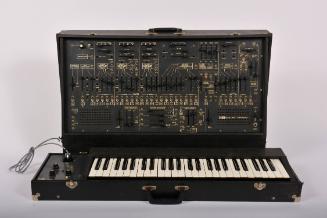
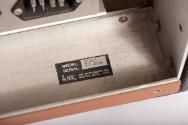
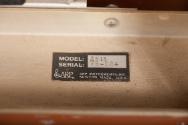
Photo credit: Don Kennedy
ARP Instruments, Inc.
c. 1972
Not available for use in Recording Studios
On View: On exhibit
isVirtual:
Photo credit: Don Kennedy
ARP Instruments, Inc.
1972
Available for use in Recording Studios
On View: Not currently on exhibit
isVirtual:
Photo credit: Don Kennedy
ARP Instruments, Inc.
c. 1978
Available for use in Recording Studios
On View: Not currently on exhibit
isVirtual:
Photo credit: Don Kennedy
Buchla & Associates
c. 1968
Available for use in Recording Studios
On View: Not currently on exhibit
isVirtual:
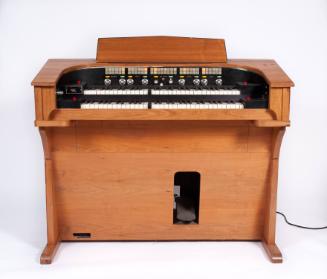
Photo credit: Don Kennedy
Chamberlin Instruments Company, Inc.
1970
Not available for use in Recording Studios
On View: On exhibit
isVirtual:
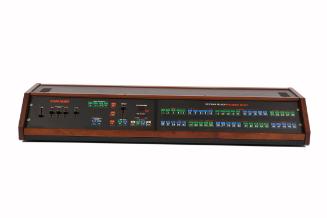
Photo credit: Don Kennedy
CBS Musical Instruments
c. 1982
Available for use in Recording Studios
On View: Not currently on exhibit
isVirtual:
Photo credit: Don Kennedy
CBS Musical Instruments
1966
Available for use in Recording Studios
On View: Not currently on exhibit
isVirtual:
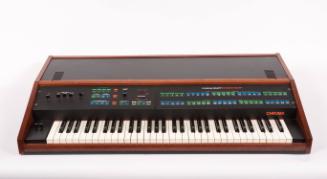
Photo credit: Don Kennedy
CBS Musical Instruments/Rhodes
c. 1982
Available for use in Recording Studios
On View: Not currently on exhibit
isVirtual:
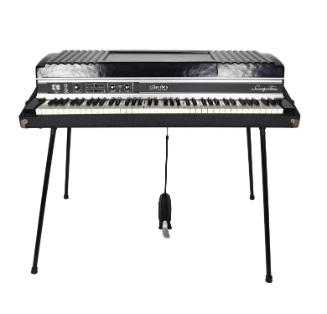
Photo credit: Meghan MacKrous, courtesy of the National Music Centre
CBS Musical Instruments
c. 1980
Available for use in Recording Studios
On View: Not currently on exhibit
isVirtual:
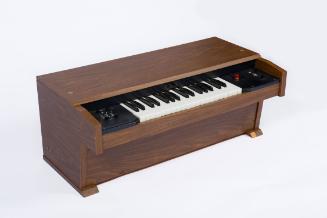
Photo credit: Don Kennedy
Chamberlin Instruments Company, Inc.
1979
Available for use in Recording Studios
On View: Not currently on exhibit
isVirtual:
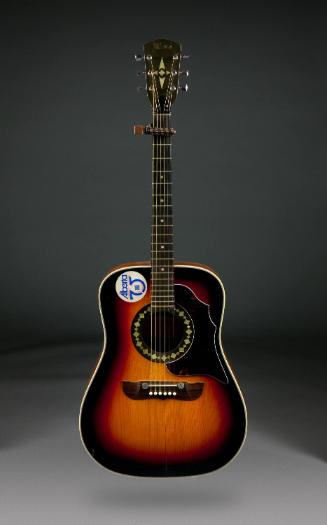
Photo credit: Don Kennedy
Framus (Franconian Musical Instruments Manufacture)
20th Century
Not available for use in Recording Studios
On View: Not currently on exhibit
isVirtual:
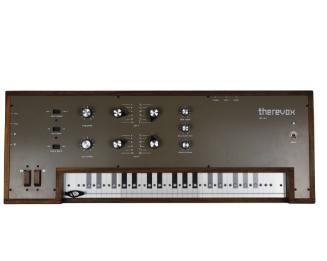
Photo credit: Meghan MacKrous, courtesy of the National Music Centre
Therevox Custom Musical Instruments
2014
Available for use in Recording Studios
On View: Not currently on exhibit
isVirtual:
Back