EN / FR
Skip to main content

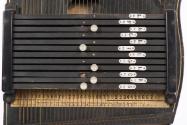
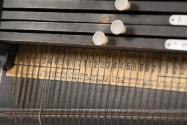
Sylvia Tyson Autoharp

Not available for use in Recording Studios
Not currently on exhibit
Artifact TypeAutoharp
Manufacturer LocationUSA, North America
DateUnknown

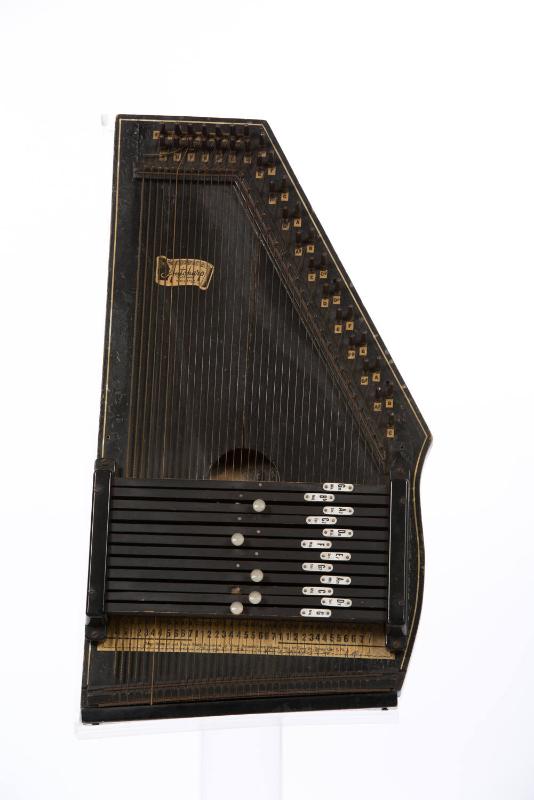
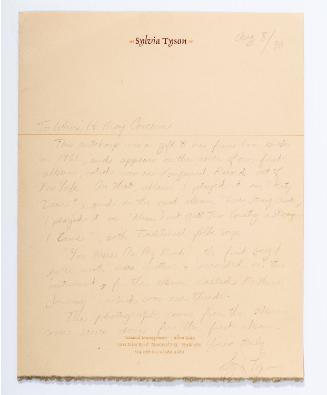
This Autoharp was formerly owned by Sylvia Fricker Tyson, one half of the folk superstar duo Ian and Sylvia. Ian gave the instrument to Sylvia as a gift in 1961 and it appears on the cover of their self-titled first album. She played it on their renditions of the traditional folk songs “Katy Dear” and “When First Unto This Country A Stranger I Came.” Sylvia also used the instrument to write her first song, “You Were On My Mind,” which appeared on the duo’s third album, Northern Journey.

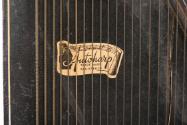
Inscription reads: ‘Manufactured and Trade Mark Registered by Oscar Schmidt International, Inc.  87 Ferry St., Jersey City 7, N.J.’.  Soundboard inscription reads: ‘the Autoharp: Trademark Registered'.

Operation/FunctionThis particular Autoharp is constructed primarily of wood, including the case, damper buttons, and soundboard. It contains 36 steel strings and is capable of producing twelve different chords: C major, A minor, G major, F major, D minor, B-flat major, G minor, and the dominant seventh chords of C, A, G, E, and D. The strings are arranged chromatically, beginning on the third lowest string, which sounds at a C pitch. The first two strings preceding this C are tuned to F and G.Cultural SignificanceUsage of the Autoharp is extensive, though it features prominently in the folk, bluegrass, and country music that arose from within the more rural areas of the United States. Its ease of operation initially resulted in its strong association within the community of non-professional musicians, who were easily able to learn and exploit the instrument as a harmonic and rhythmic accompaniment, and this association remains very much present today. The most notable players of the Autoharp are often considered to be the Carter Family, who both popularized the instrument and also demonstrated its potential as a more serious musical instrument.Technological SignificanceThe Autoharp is generally considered to have followed in the same lineage as instruments such as the zither, hammered dulcimer, piano, and guitar in that it borrows certain characteristics from each. Like these instruments, the strings of the Autoharp are strung across its soundboard. Unlike the piano and hammered dulcimer, however, vibrations in the strings of the Autoharp are activated by means of strumming or plucking, and not by striking. The Autoharp is most closely related to the zither, and is often referred to as a type of “chorded” zither in that it includes a series of damper or chord bars that, when depressed, mute those strings that are not included in the key to which the damper bar corresponds. One major advantage of this mechanism is that the user is not required to significantly adjust the placement of their right hand in order to play in different keys. As a result, the Autoharp has often been considered a highly accessible and relatively undemanding instrument to operate, and has remained popular among non-professional musicians. That being said, skilled Autoharp players can perform intricate melodic phrases if desired. Other instruments that can be included in this family of instruments include the Marxophone, which is a type of zither that is capable of producing both melodic and harmonic movement. Unlike the Autoharp, the Marxophone can only play in a set number of keys, which are accessed via a series of strings that are tuned to the pitches of the tonic chords for each key. The player strums these strings with their left hand while the right hand operates another set of strings to produce melodic lines. The melodic strings are not strummed or plucked, but are rather activated by a metal, hammer-like mechanism that strikes the string. The melodic strings of the Marxophone are doubled (two strings per pitch), which results in a sort of bounced or delayed effect when the hammer mechanism is activated, producing a tone similar to that of the mandolin. In 1981, an electronic version of the Autoharp, called the Omnichord, was produced by the Suzuki Musical Instrument Corporation. Although the Omnichord does not feature any actual strings, it is operated in the same way as the Autoharp, with the left hand pushing chord buttons, and the right hand “strumming” above a sensor touch-plate. The Omnichord is still in production by Suzuki Musical Instruments, however it has been rebranded as the Q-chord.Users/PerformersSylvia Tyson was born Sylvia Fricker on 19 September 1940 in Chatham, Ontario, Canada, a rural municipality not far from the American border. Tyson cites that her musical interests were present as a child and were nurtured by her parents, who themselves were musical and educated. She received her first guitar from her parents in the early 1950s and relocated to Toronto in 1959 to begin her performing career. It was in Toronto that Sylvia met Ian Tyson (born 25 September 1933 in Victoria, British Columbia, Canada) and the two soon began singing and performing together, primarily within the United States. Throughout her illustrious career, Sylvia Tyson has been active as a performer, songwriter, and broadcaster, but is perhaps most well known for her involvement alongside Ian in the group Ian & Sylvia, which was active between 1959 and 1974 and featured Sylvia on vocals, autoharp, and guitar, and Ian on vocals and guitar. Their initial efforts included some original songwriting, but consisted largely of their interpretations of traditional repertoire, including Scottish laments, country blues and French-Canadian sing-alongs. The group, who were considered Canada’s first folk superstar duo, born of the same lineage that produced Bob Dylan and Joan Baez, released thirteen studio albums, including Ian & Sylvia, Four Strong Winds, and Northern Journey, all from 1963, and The Great Speckled Bird from 1969, which was produced by Todd Rundgren and featured musicians who had performing associations with Neil Young and Gram Parsons. Their most well known songs include “You Were On My Mind”, written in 1964 by Sylvia and “Four Strong Winds”, written by Ian. During the 1960s, Ian and Sylvia also formed a more rock-oriented group called The Great Speckled Bird, which helped develop the burgeoning genre of country rock. The pair were married in 1964 and divorced in 1975 following the amicable dismantling of their musical partnership. Tyson subsequently released a series of solo recordings, including Woman’s World (1975), which was produced by Ian Tyson and featured Al Cherny on fiddle, and Cool Wind from the North (1976), both on Capitol Records, and went on to host the CBC radio show, Touch the Earth, and the CBC television show, Country in My Soul. Tyson was made a member of the Order of Canada in 1995, and has been nominated for seven Juno awards beginning in 1987. She established her own record label, Salt Records, in the 1980s and has released several of her own albums on that label. Ian & Sylvia were inducted into the Canadian Music Hall of Fame in 1992, and in 2003 Sylvia Tyson was inducted into the Canadian Country Music Hall of Fame. Tyson continues to write songs, and has recently begun exploring the realm of fiction and stories, currently working on her first novel, Joyner’s Dream with an accompanying soundtrack. In 2011, Canadian publishers McClelland and Stewart released John Einarson’s Four Strong Winds: Ian & Sylvia, the first authorized biography of the folk duo.
Object numberT.2016.18.01
Photo credit: Don Kennedy
Vido Trasuntino
1591
Available for use in Recording Studios
On View: Not currently on exhibit
isVirtual:
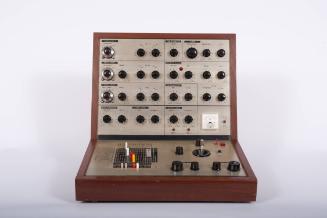
Photo credit: Don Kennedy
Electronic Music Studios (London) Limited
1969
Not available for use in Recording Studios
On View: Not currently on exhibit
isVirtual:
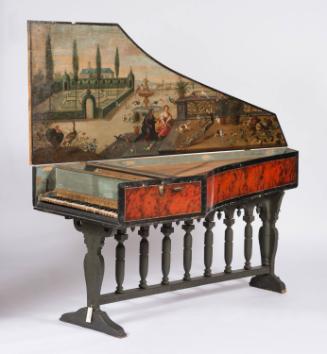
Photo credit: Don Kennedy
Joseph Johannes Couchet
1679
Not available for use in Recording Studios
On View: On exhibit
isVirtual:
Bösendorfer Klavierfabrik GmbH
1855
Not available for use in Recording Studios
On View: Not currently on exhibit
isVirtual:
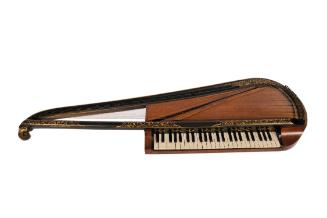
Photo credit: Don Kennedy
Carl (Karl) Leopold Röllig
c. 1800
Not available for use in Recording Studios
On View: Not currently on exhibit
isVirtual:
Photo credit: Don Kennedy
Sébastien Érard
1820
Not available for use in Recording Studios
On View: On exhibit
isVirtual:
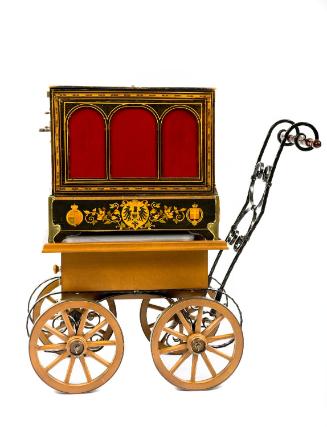
Photo credit: Don Kennedy
Bacigalupo-Söhne, Orgelfabrik
c. 1880
Not available for use in Recording Studios
On View: Not currently on exhibit
isVirtual:
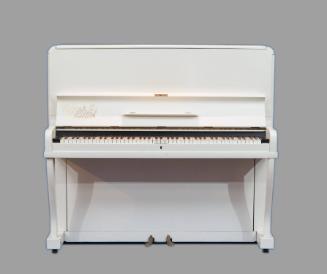
Photo credit: Don Kennedy
A. Day
c. 1910
Not available for use in Recording Studios
On View: On exhibit
isVirtual:
Photo credit: Don Kennedy
Buchla & Associates
1999
Available for use in Recording Studios
On View: Not currently on exhibit
isVirtual:
Photo credit: Don Kennedy
Maurice Louis Eugène Martenot
1975
Available for use in Recording Studios
On View: Not currently on exhibit
isVirtual:
Photograph by Don Kennedy.
Not available for use in Recording Studios
On View: On exhibit
isVirtual:
Photo credit: Don Kennedy
20th Century
On View: Not currently on exhibit
isVirtual:
Back