
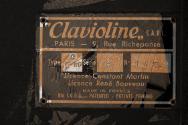
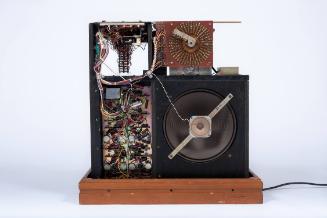
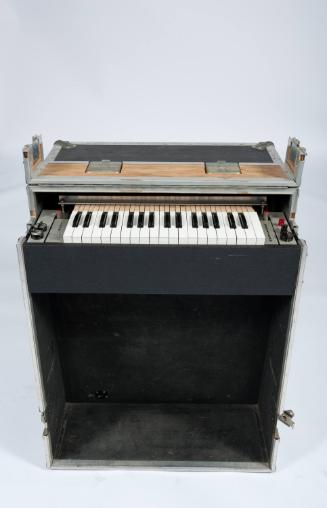
Selmer Clavioline (CM 8)
Available for use in Recording Studios
Not currently on exhibit
Not currently on exhibit
Artifact TypeSynthesizer
Manufacturer
Selmer (UK)
Inventor
Constant Martin
Date1957
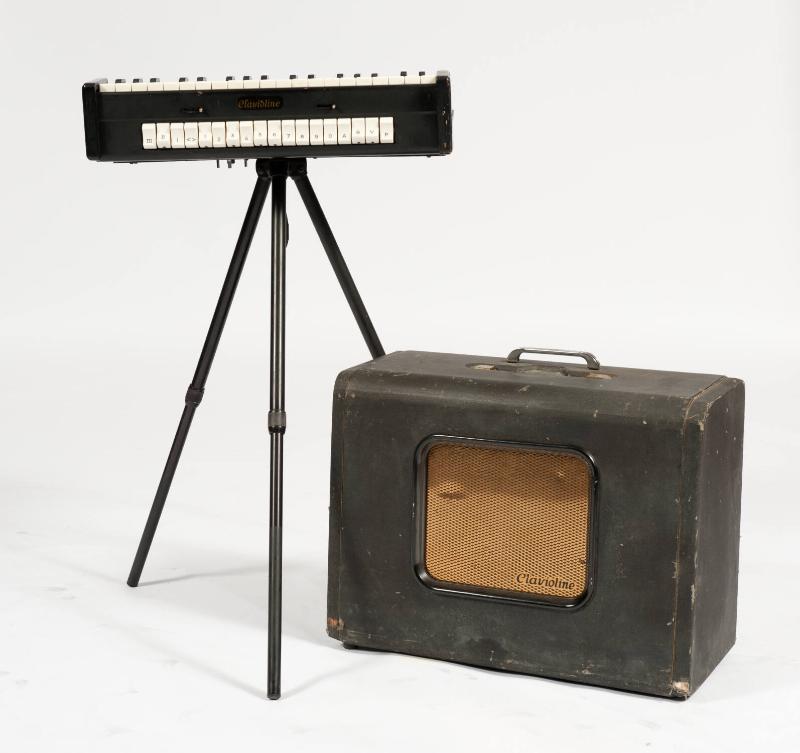
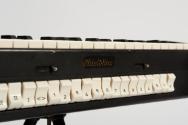
Operation/FunctionThis instrument is split into two components: a keyboard and sound generating unit with attached controls, and a combined amplifier/loudspeaker. The power supply, which is battery operated, is housed within the amplification unit. This particular model offers 22 plastic rocker switches, octave shifting levers, and an expression (volume and articulation) lever. Its compass spans three octaves (F through E).Cultural SignificanceAlthough it is primarily lauded for its unique timbre and innovative features of the time, the Clavioline was also significant in that It was effectively the first electronic musical instrument to successfully reach a mass commercial market, primarily on account of its affordable price and compact, portable nature. Despite its initial intended use as an accompanying instrument, the Clavioline also serves as an important instrument in the history of popular music, with its first and arguably most influential usage by famed British producer, Joe Meek (1929 – 1967).Technological SignificanceThe Clavioline stands as among the most unique electronic musical instruments of the early twentieth century, alongside oddities such as the ondes Martenot, Theremin, Wurlitzer Sideman drum machine, Hammond Novachord, and Mellotron. Along with the Novachord, the Clavioline is often considered to be a precursor to the voltage-controlled synthesizers that would follow in the 1960s on account of its sound generating and modifying process, which entailed taking a base oscillator tone and varying its shape and texture via a set of filters. As an early electronic musical instrument, the Clavioline was quite radical, offering features that were not common for the time such as octave transposition and variable dynamic and envelope control. It also stands as one of the first fully affordable, portable, and commercially viable electronic musical instruments. Similar designs that closely preceded the Clavioline include the Hammond Solovox of 1940, which also uses a single vacuum tube square waveform oscillator, octave dividing, and controls to modify the tone. The Solovox is considerably larger and heavier than the Clavioline, however, and is more limited in its octave range. The Ondioline, an invention of French designer Georges Jenny, emerged in 1941 with a three-octave keyboard that could be expanded to a whopping eight octaves, and a unique wire controller that allowed the player to manually shape the instrument’s envelope. The instrument’s keyboard also featured a vibrato effect that could be obtained by pushing slightly harder into the keys past their maximum depression point. The Ondioline was often viewed as a less portable, more professional unit and was widely used by the French composer Jean-Jacques Perrey (born 1929), who featured it on 1957’s Prelude au Sommeil, which served as a therapeutic aid for hospitals and psychiatric institutions.Users/PerformersArguably the most influential usage of the Clavioline came with the 1962 hit “Telstar” as performed by the five-piece English group, The Tornados. This song, which features the instrument as a lead melodic instrument, was written and produced by famed English musician Joe Meek (1929 – 1967), who would become known and revered for his groundbreaking and oftentimes idiosyncratic practices in the studio. His treatment of the instrument incorporated a significant amount of compression and echo as well as triple-track recording to achieve the highly unique sonic quality that permeates the song. Perhaps the best known usage of the instrument, however, came slightly later with The Beatles’ “Baby, You’re a Rich Man”, which was eventually released on 1967’s somewhat experimental Magical Mystery Tour. The Clavioline emerges near the beginning of the song with an unusual wail of sorts; as the story goes, John Lennon performed the passage by rolling an orange up and down the instrument’s keyboard. Unlike most of The Beatles’ work, which was carried out at the famed Abbey Road Studios, this particular track was recorded at London’s Olympic Sound Studios. The track also features The Rolling Stones’ Mick Jagger on backing vocals. Other notable usage includes The Magic City and The Heliocentric Worlds of Sun Ra, Volume Two, both of 1966, by revered jazz musician and cosmic guru, Sun Ra, as well as Van Phillips’ soundtrack to the 1953 science fiction BBC radio program, Journey into Space.Collection
Object number2002.05.52

Moog Music, Inc.
1973
Available for use in Recording Studios
On View: Not currently on exhibit
isVirtual:

R.A. Moog, Inc.
1970
Available for use in Recording Studios
On View: Not currently on exhibit
isVirtual:
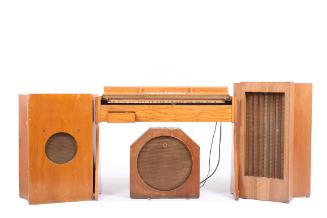
Maurice Louis Eugène Martenot
1975
Available for use in Recording Studios
On View: Not currently on exhibit
isVirtual:

Optigan Corporation (of Mattel) / Opsonar (of Miner Industries)
c. 1973
Available for use in Recording Studios
On View: Not currently on exhibit
isVirtual:
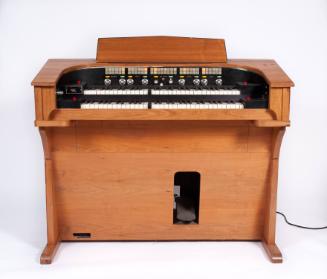
Chamberlin Instruments Company, Inc.
1970
Not available for use in Recording Studios
On View: On exhibit
isVirtual:

Hohner Musikinstrumente GmbH & Co. KG
c. 1966
Available for use in Recording Studios
On View: Not currently on exhibit
isVirtual:

Hammond Organ Company
1957
Not available for use in Recording Studios
On View: Not currently on exhibit
isVirtual:

Moog Music, Inc.
1976
Available for use in Recording Studios
On View: Not currently on exhibit
isVirtual:

Kurzweil Music Systems
1985
Available for use in Recording Studios
On View: Not currently on exhibit
isVirtual:
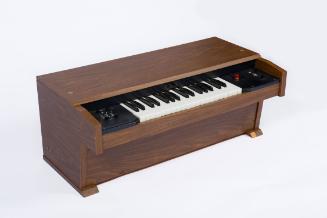
Chamberlin Instruments Company, Inc.
1979
Available for use in Recording Studios
On View: Not currently on exhibit
isVirtual:
The Wurlitzer Company
c. 1959
Not available for use in Recording Studios
On View: On exhibit
isVirtual:
Novatron
c. 1981
Available for use in Recording Studios
On View: Not currently on exhibit
isVirtual: