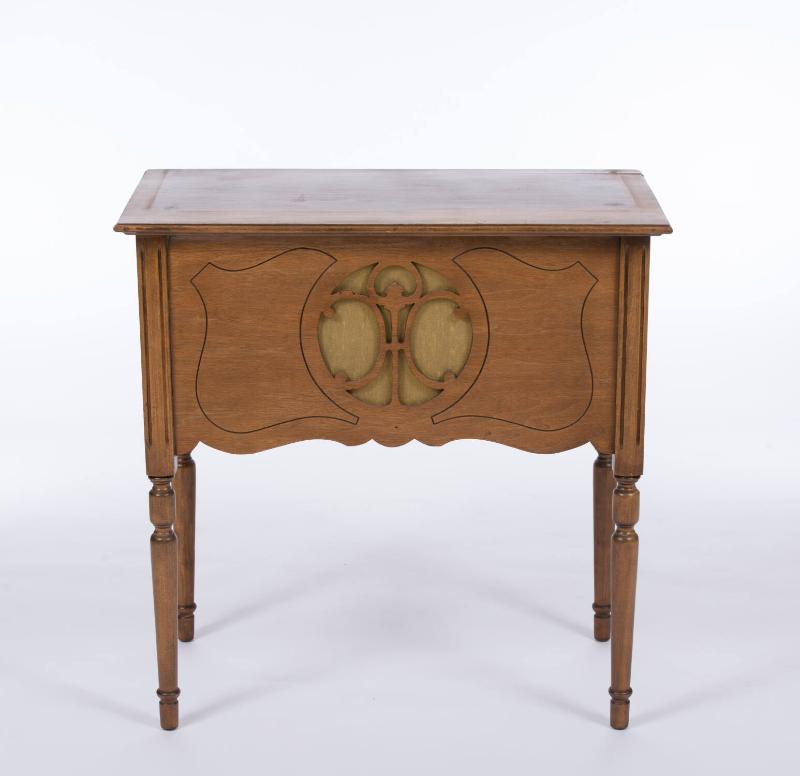
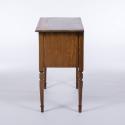
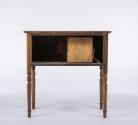
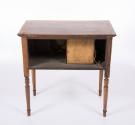
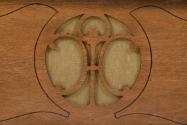
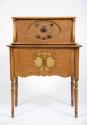
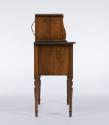
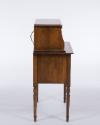
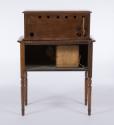
Rogers Speaker
Not available for use in Recording Studios
Not currently on exhibit
Not currently on exhibit
Artifact TypeSound Equipment, Speaker/Amplifier
Manufacturer
Edward "Ted" Rogers Sr.
inventor, radio pioneer | 1900 - 1939
Datec. 1920
Operation/FunctionSpeaker cabinet containing vacuum-tube circuitry and associated power amplifier and drivers, intended for use with Rogers radio receivers.Cultural SignificanceDespite several mergers with American companies throughout the late 1920s, Rogers sought to maintain Canadian ownership and manufacturing, and it is these early efforts that have helped Canada retain its claim as the founding country of modern radio technology. In addition to their convenience and clarity of sound, Rogers radios were also known for their aesthetic design, consisting of modern walnut cabinets that were available in a variety of models and sizes in order to accommodate a range of household styles. Throughout what is considered the “Golden Age” of radio in the 1930s, Rogers radios were in particularly high demand, with the company receiving over 2500 orders in just one month and remaining relatively unhampered by the economic pressures of the Great Depression. Rogers, Sr. has been memorialized throughout the country, with his name given to various institutions, schools, museums, and professional associations, the location of the first Rogers factory in Toronto has been made a Provincial Historic Site, and Canada Post offering a commemorative “Millennium Edition” postage stamp in 2000, 100 years after Rogers’ birth. In 1982, Edward Rogers, Sr. was inducted into the Canadian Association of Broadcasters Hall of Fame.
Technological SignificanceLoudspeakers are an essential component in the amplification system. Depending on the function of the speaker, some, such as those used with stereo equipment, are designed to be as faithful as possible to the input sound, while others, such as the iconic Leslie 122 rotary tone cabinet, serve the purpose of modifying the output sound. Many later loudspeaker units of the 1960s and 1970s incorporated various effects such as reverb and distortion, giving the musician another tool with which to specialize their sound. Unlike the majority of electronics, a good number of amplifiers and preamplifiers did not make the switch from earlier vacuum tube, or valve as they were commonly called, technology to solid-state transistorized technology. Vacuum tubes were the primary electronic components used throughout the first half of the twentieth century and were largely replaced in most electronic devices throughout the late 1950s and early 1960s by solid-state technology and, later, by transistorized and digital integrated circuits. With respect to amplifiers, vacuum tubes offer a high tolerance to distortion or overdrive, which serves to give the output sound characteristic warmth that is often desired among musicians. As such, many prefer to use vintage tube-based amplifiers and speakers over more modern transistorized units. The earliest loudspeakers were developed during the telephone era of the late nineteenth century, but were made far more feasible with the introduction of the vacuum tube in the early twentieth century. The dynamic speaker is the most common type used in amplification systems, designed in 1925 by Edward Kellogg and Chester Rice.
In August of 1924, Edward Rogers, Sr. invented the world’s first alternating current radio tube, initially known as the 15S prototype and later as the AC Type 32 tube, which allowed for radios to be powered by the fixed current of an electrical outlet, rendering them as what he referred to as “batteryless”. The first commercial versions of these tubes were manufactured by Standard Radio Manufacturing. Although battery-operated radios were in common use, they presented a number of difficulties, including cost and frequency of replacement, constant hum and occasional distortion when in use, acid leaks, and occasional shorts in the connecting circuitry. Rogers’ batteryless alternative did away with these issues, in turn helping to greatly increase and popularize common and household usage of radio receivers around the world. In order to accommodate the new tubes, Rogers also fashioned a new series of modified chassis; the completed all-electric radio was christened the ‘Rogers Batteryless Radio’. Rogers also designed a series of tubes intended to be used with radio transmitters, and in February 1927 established the world’s first all-electric radio broadcasting station, CFRB (Canada’s First Rogers Batteryless).Users/PerformersThe exact provenance of this particular artifact is unknown, and it is not clear who the various owners have been throughout its history. The National Music Centre acquired it from Peter Campbell of Toronto, who had been housing the radio in Reid and Campbell, a retail store on Toronto’s Yonge Street that was founded by Campbell’s father and uncle in 1933. It is likely that prior to its arrival at Reid and Campbell, it was in use in the Toronto area.Object number2016.08.02.2
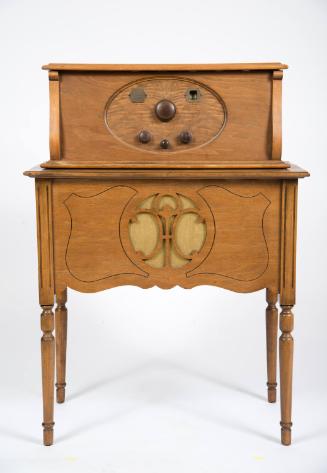
Edward "Ted" Rogers Sr.
1928
Not available for use in Recording Studios
On View: Not currently on exhibit
isVirtual:

Edward "Ted" Rogers Sr.
1935
Not available for use in Recording Studios
On View: Not currently on exhibit
isVirtual:
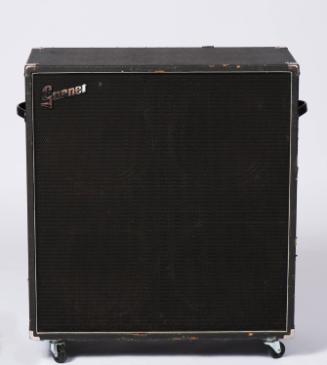
Garnet "Gar" Gillies
1965 through 1980
Not available for use in Recording Studios
On View: On exhibit
isVirtual:

Electro Music / Donald Leslie
c.1972
Available for use in Recording Studios
On View: Not currently on exhibit
isVirtual:
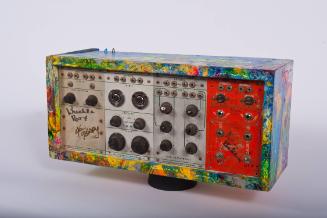
Donald Buchla
c. 1966
Not available for use in Recording Studios
On View: On exhibit
isVirtual:
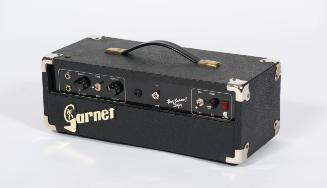
Garnet "Gar" Gillies
c. 1960
Not available for use in Recording Studios
On View: On exhibit
isVirtual:
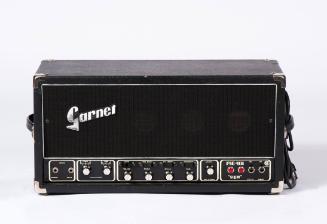
Garnet "Gar" Gillies
Available for use in Recording Studios
On View: Not currently on exhibit
isVirtual:
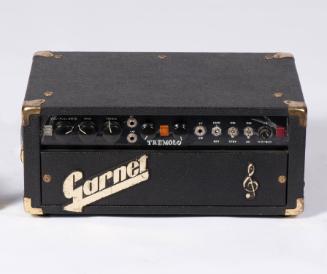
Garnet "Gar" Gillies
Available for use in Recording Studios
On View: Not currently on exhibit
isVirtual:
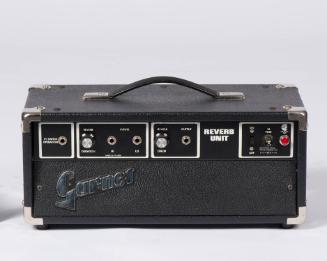
Garnet "Gar" Gillies
Available for use in Recording Studios
On View: Not currently on exhibit
isVirtual:
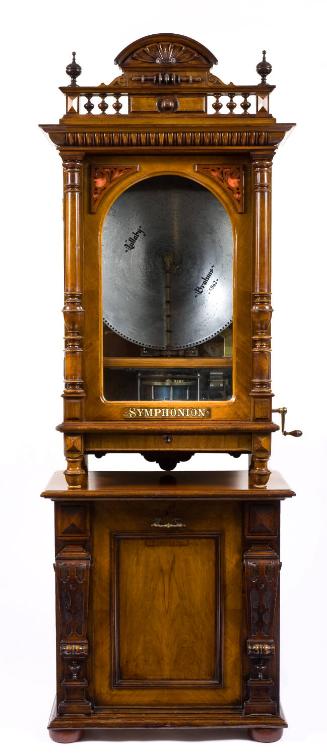
Symphonion Company
c. 1890
Not available for use in Recording Studios
On View: On exhibit
isVirtual:
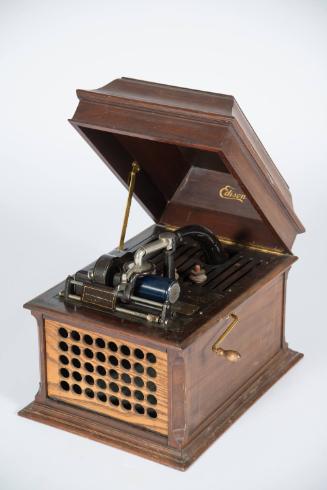
Thomas Alva Edison
1904
Not available for use in Recording Studios
On View: On exhibit
isVirtual:

CBS Musical Instruments
1966
Available for use in Recording Studios
On View: Not currently on exhibit
isVirtual:
Used with/Used with