EN / FR
Skip to main content

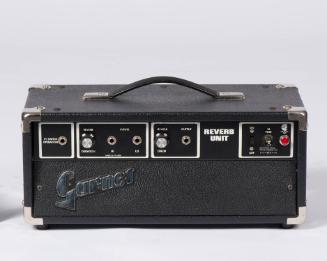
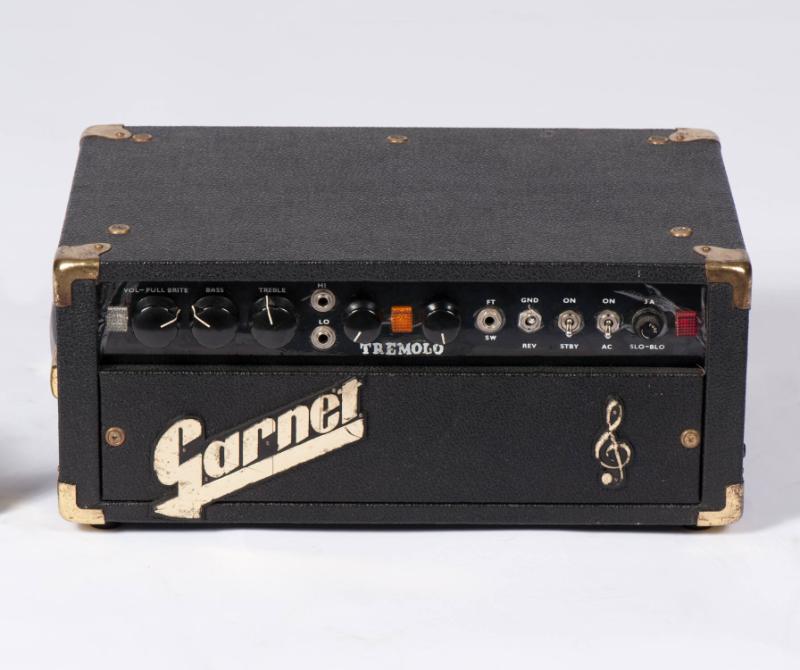
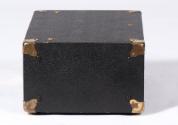
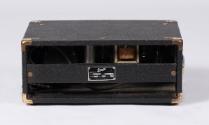
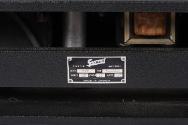
Garnet Rebel

Available for use in Recording Studios
Not currently on exhibit
Artifact TypeAmplifier Head
Manufacturer Garnet "Gar" Gillies amplifier-maker, electronic engineer, musician | 1921 - 2006
Manufacturer LocationManitoba, Canada, North America

This tube amplifier was designed and developed by Thomas “Gar” Gillies, a Winnipeg-based musician. Gillies knew that his amps were more than pieces of gear—he viewed the amp as another instrument, capable of producing distinctive tones and contributing to the quality of a guitarist’s overall sound. In the end, Gillies’ commitment to good sound—and tube based technology—may have led to the eventual demise of his Garnet Amplifier Company, which ceased operations in 1989. Of course, that only cemented Garnet’s reputation for producing some of the most sought-after vintage guitar gear available.


Donated by Brian Mills

Operation/FunctionAmplifier head with four input channels and built-in reverb. Channels 1 and 4 provide clean (normal and vocal, respectively) signals, while channel 2 produces overdrive (crunch) and channel 3 corresponds to tone stack.Cultural SignificanceToday, Garnet amplifiers and preamplifiers are some of the most sought-after vintage gear, known for their sonic quality, reliability, and innovative characteristics, and often sell for far more than they were originally worth. They are especially important to the context of Canadian music in that they helped define a particular sound within the country. They maintained this association even while garnering greater popularity in the United States.Technological SignificanceThe pickup is a pivotal aspect in the development of the amplification system. The first pickup was designed by Hawaiian steel-guitar player, George Beauchamp, in collaboration with Adolph Rickenbacker in the early 1930s. In their pickup, two horseshoe magnets, which produce a magnetic field, as well as a coil were placed near the strings of the instrument. When the strings vibrated, they caused a disturbance in the field, which in turn induced a voltage in the coil. The first electric guitar to employ this technology was a Hawaiian lap steel, dubbed the “Frying Pan”. The amplifier followed shortly after as a means to enable usage of the pickup, and was initially used with acoustic guitars as the first solid body electric guitar would not appear until 1940. As one would expect, the first dedicated guitar amplifiers were not capable of drawing sufficient power, which resulted in an overall poor sound quality. That being said, even the first amplifiers incorporated some basic effects, including tremolo and reverb. The earliest and most influential amplifiers were built by Rickenbacker. As the solid body electric guitar garnered increasing popularity throughout the 1940s, the demand for higher quality and higher powered amplifiers and loudspeakers followed. In 1949, California-based guitar manufacturer, Leo Fender, in collaboration with Don Randall, produced the first amplifier designed for intended use with a solid body electric guitar, such as his own Telecaster and Stratocaster models. With the introduction of the highly influential Gibson Les Paul in 1952, a standard of 50 watts was set for amplifiers, along with the 12” driver diameter that is still common in modern speaker cabinets. The first guitar amplifiers were also designed in combination, or combo, style; that is, incorporating both the amplifier and speakers into a single unit. The decision to split the two into separate units known as the ‘head’ and the ‘cab’ or ‘stack’ came about in the 1960s, and allowed players to mix and match, so to speak, devices from different manufacturers, so as to specify a unique tone and achieve much greater volumes. The standard specifications used in modern amplification systems for guitars was set by British engineer Jim Marshall, who designed the first 100-watt amplifier paired with a speaker cabinet containing four 12” drivers, which became colloquially known as a ‘412’. The tone and sound quality of Garnet amplifiers and preamplifiers have been compared to similar units made by Marshall (founded 1960 in London, UK), Traynor (formed 1963 in Ontario, Canada by Pete Traynor, founder of Yorkville Sound), and Fender (founded as a musical instrument manufacturer in 1946 in Arizona, USA, later based in California, USA). Though Garnet systems were not regarded as having a particularly wide range of tone – at least not to the same extent as their competitors – they have been hailed for their durability and reliable build. The Garnet Amplifier Company remained dedicated to producing tube-based equipment, with Gillies citing a warmth of tone that could not be imitated in modern technology. As a result, however, Garnet was not able to maintain as strong a presence in the market as technology adjusted toward transistor-based units, which were less expensive to manufacture and repair. Despite Garnet’s inability to keep up with the market and eventual closure of the company in 1989, however, Gillies’ point was not lost on the musical community: throughout the 1980s, even as constant developments and improvements were made to solid-state amplifiers, many musicians eventually returned to the tube-based units in search of the richer and more harmonically-lush tones that Gillies’ had believed would be lost in the transition. Vacuum tubes were the most widely used component in electronic devices until transistor-based technology took over amplifier circuits in the 1970s, nearly a decade after it was incorporated into synthesizers and related electronic instruments in the early 1960s. Amplifiers, and especially preamplifiers, are one of the only electronic devices that continued using tubes, as many attest to the superior sound quality they produce. Transistor-based amplifiers, though capable of producing a wider frequency range and generally cleaner sound, tended to exhibit a thinner tone. Tube-based amplifiers are capable of producing a multitude of sounds, but are high maintenance and require frequent replacement. Today, most high-end amplifiers employ tubes, while low-cost amplifiers tend to employ solid-state technology such as transistors; Roland’s Jazz Chorus is perhaps one of the only successful high-end solid-state amplifiers still in use. Some amplifiers, particularly those from the 1980s, employ a hybrid technology of a tube-based preamplifier, to achieve the desired tone, and a transistor-based power amplifier, to achieve the necessary power. Generally speaking, most guitar amplifiers are designed for electric guitars, with some manufacturers producing units intended specifically for acoustic guitars.Users/PerformersRandy Bachman (born 1943 in Winnipeg, Manitoba), guitarist, songwriter, and radio host, best known as the lead guitarist and one of the founding members of The Guess Who and Bachman-Turner Overdrive. Bachman began his musical career as a child, studying violin in the Royal Conservatory of Toronto system; he would later cite his affection for the sustain of string instruments as informative of his desired sound in the Garnet Herzog amplifier and distortion unit. In 1960, Bachman co-founded the group Al and The Silvertones with Chad Allan, changing the name in 1962 to Chad Allan and the Expressions, and again to The Guess Who. In 1966, Burton Cummings replaced Chad Allan as front man of the band. Bachman co-wrote many of the songs on the first three albums, all of which feature Garnet amplifiers: Wheatfield Soul (1968), Canned Wheat (1969), and American Woman (1970). The single “American Woman” reached number 1 on the U.S. charts in 1970, the first time this achievement had been earned by a Canadian group. Bachman left the group following the release of American Woman, citing irreconcilable differences in lifestyle. Bachman also recorded a solo album at this time, Axe, which was released in March 1970 on RCA Records. In 1971, he and Chad Allan formed the band Brave Belt, later changing the name to Bachman-Turner Overdrive, in reference to a Garnet amplifier, the Big Time Operator, or BTO. The group released their first album, Bachman-Turner Overdrive in 1973. Bachman eventually left BTO in 1977 to pursue a series of solo recordings and collaborations. Bachman was the recipient of an honorary doctorate from Brandon University (Brandon, Manitoba) in 2001, in 2005 he was awarded the Order of Manitoba, and in 2008 he was made an Officer of the Order of Canada. The Guess Who received The Governor General’s Performing Arts Award in 2002.
Object number2016.12.04
Photo credit: Don Kennedy
Garnet "Gar" Gillies
Available for use in Recording Studios
On View: Not currently on exhibit
isVirtual:
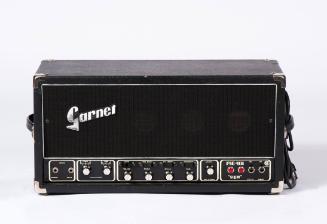
Photo credit: Don Kennedy
Garnet "Gar" Gillies
Available for use in Recording Studios
On View: Not currently on exhibit
isVirtual:
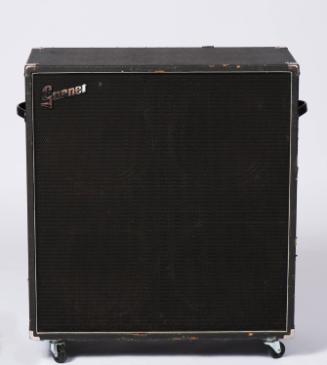
Photo credit: Don Kennedy
Garnet "Gar" Gillies
1965 through 1980
Not available for use in Recording Studios
On View: On exhibit
isVirtual:
Photo credit: Don Kennedy
Moog Music, Inc.
1973
Available for use in Recording Studios
On View: Not currently on exhibit
isVirtual:
Photo credit: Meghan MacKrous, courtesy of the National Music Centre
R.A. Moog, Inc.
1970
Available for use in Recording Studios
On View: Not currently on exhibit
isVirtual:
Photo credit: Don Kennedy
E-mu Systems, Inc.
About 1973
Available for use in Recording Studios
On View: Not currently on exhibit
isVirtual:
Photo credit: Meghan MacKrous, courtesy of the National Music Centre
Bode Sound Company
1977
Available for use in Recording Studios
On View: Not currently on exhibit
isVirtual:
Photo credit: Don Kennedy
Electronic Music Studios (London) Limited
1971
Available for use in Recording Studios
On View: Not currently on exhibit
isVirtual:
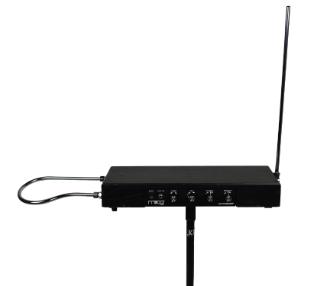
Photo credit: Meghan MacKrous, courtesy of the National Music Centre
Moog Music, Inc.
2001
Available for use in Recording Studios
On View: Not currently on exhibit
isVirtual:
Photo credit: Don Kennedy
Eric Herz
1976
Not available for use in Recording Studios
On View: Not currently on exhibit
isVirtual:
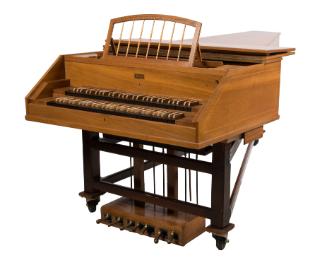
Photo credit: Don Kennedy
Kurt Wittmayer
1954
Not available for use in Recording Studios
On View: Not currently on exhibit
isVirtual:
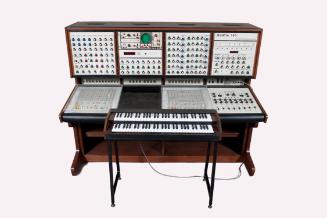
Photo credit: Don Kennedy
Electronic Music Studios (London) Limited
1972
Available for use in Recording Studios
On View: Not currently on exhibit
isVirtual:
Back