EN / FR
Skip to main content

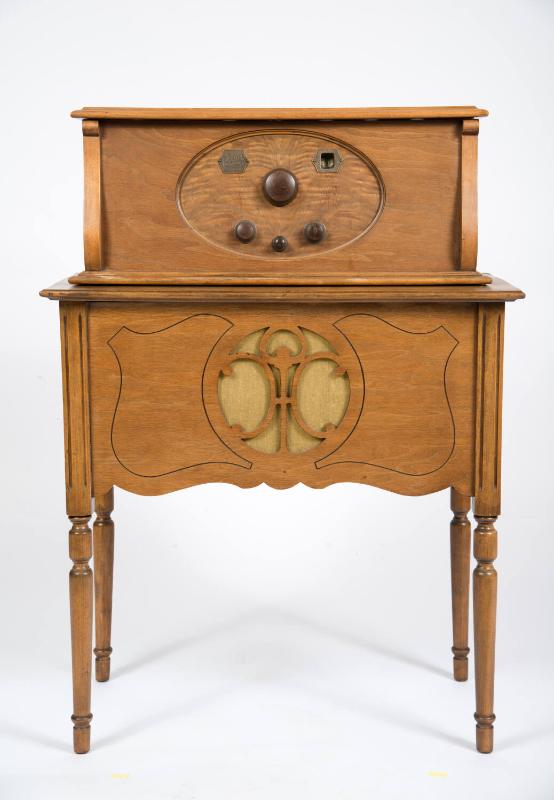
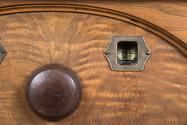
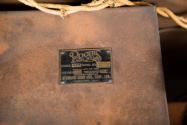
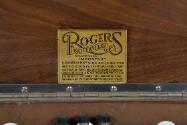
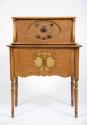
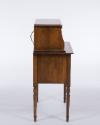
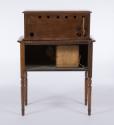
Rogers Radio

Not available for use in Recording Studios
Not currently on exhibit
Artifact TypeSound Equipment, Radio
Manufacturer Edward "Ted" Rogers Sr. inventor, radio pioneer | 1900 - 1939
Manufacturer LocationOntario, Canada, North America
Date1928
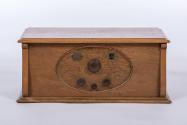
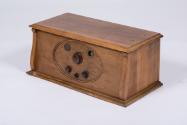
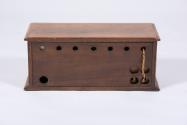
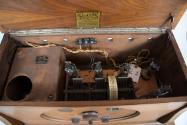
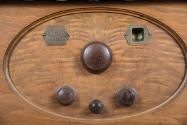
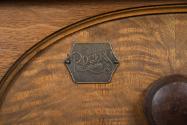
This model 420 radio receiver was designed by the father of modern radio, Edward S. Rogers (1900 – 1939). It features four of Rogers’ custom “batteryless” AC 32 vacuum radio tubes, which were invented in 1925 and were the first of their kind in the world. While previous radio receivers relied on costly batteries, these units only needed to be plugged into a fixed 110-volt A/C electrical socket. As a result of that new affordability, radio technology became widespread throughout the world.
Operation/FunctionThis particular artifact contains the same double-ended AC Type 32 vacuum radio tubes that were designed by Rogers for their model 400, 400c, 480, and 490 receivers of 1928 and 1929. The four AC 32 tubes are fitted into a standard chassis and are arranged in a TRF (tuned-radio-frequency or straight) circuit format. A Rogers 45 tube appears at the output stage, and the power supply for the unit employs a Raytheon rectifier tube, a key component in the radio’s ability to function without batteries, and a Rogers 80 tube. A Clarostat electrical ballast is also present to regulate voltage and current limits in the power supply. The model 420 offers medium wave (MW) broadcast radio bands, with three tuned AM circuits. Unlike its early predecessors, this radio is not powered by batteries, but rather by a fixed alternating current supply at the 110 volt North American standard. An external loudspeaker is required as an accompaniment to this radio.Cultural SignificanceAlthough household radio receivers were in use throughout the early 1920s, it was not until Rogers released his “batteryless” alternative in 1924 that the item became a well-used and easily accessible commercial commodity, revolutionizing the communications industry. Rogers had the foresight to appreciate the value of and potential for radio technology as a widespread means of communication, and sought in the mid 1920s to eliminate the difficulties associated with battery-operated units, which he felt were hindering the technology’s true commercial potential. Following the release of the first units in 1924, the Rogers Batteryless Radio receiving sets became commonplace in homes and parlours throughout Canada. They were acclaimed for their reliability, convenience, and ease of use, needing only to be plugged into a direct AC electrical outlet. Without batteries, these units were cheaper and more practical to operate as well. They lacked the significant hum that was present in battery-operated models, produced a higher quality and clearer tone both in speech and in music, and were free of the burdens associated with replacing and maintaining batteries. The increased popularity of batteryless technology in turn spread throughout the world with all-electric sets emerging in the United States in 1926 and Europe in 1927, which significantly helped proliferate the acceptance of radio communication to its current state. By the late 1920s, the batteryless alternative had replaced battery-operated units in terms of numbers of units manufactured, sold, and operated. Today, radio technology is extremely commonplace, and has significant applications in a number of different fields, including communication, aviation, and television. Despite several mergers with American companies throughout the late 1920s, Rogers sought to maintain Canadian ownership and manufacturing, and it is these early efforts that have helped Canada retain its claim as the founding country of modern radio technology. In addition to their convenience and clarity of sound, Rogers radios were also known for their aesthetic design, consisting of modern walnut cabinets that were available in a variety of models and sizes in order to accommodate a range of household styles. Throughout what is considered the “Golden Age” of radio in the 1930s, Rogers radios were in particularly high demand, with the company receiving over 2500 orders in just one month and remaining relatively unhampered by the economic pressures of the Great Depression. Rogers, Sr. has been memorialized throughout the country, with his name given to various institutions, schools, museums, and professional associations, the location of the first Rogers factory in Toronto has been made a Provincial Historic Site, and Canada Post offering a commemorative “Millennium Edition” postage stamp in 2000, 100 years after Rogers’ birth. In 1982, Edward Rogers, Sr. was inducted into the Canadian Association of Broadcasters Hall of Fame.Technological SignificanceThe technological impact of units such as the model 420 has had significant import in relation to the proliferation and commoditization of broadcasting radio technology. In August of 1924, Edward Rogers, Sr. invented the world’s first alternating current radio tube, initially known as the 15S prototype and later as the AC Type 32 tube, which allowed for radios to be powered by the fixed current of an electrical outlet, rendering them as what he referred to as “batteryless”. The first commercial versions of these tubes were manufactured by Standard Radio Manufacturing. Although battery-operated radios were in common use, they presented a number of difficulties, including cost and frequency of replacement, constant hum and occasional distortion when in use, acid leaks, and occasional shorts in the connecting circuitry. Rogers’ batteryless alternative did away with these issues, in turn helping to greatly increase and popularize common and household usage of radio receivers around the world. In order to accommodate the new tubes, Rogers also fashioned a new series of modified chassis. The completed all-electric radio was christened the ‘Rogers Batteryless Radio’, and several examples of the inaugural model 100 series were revealed at the Canadian National Exhibition that same year. Rogers also designed a series of tubes intended to be used with radio transmitters, and in February 1927 established the world’s first all-electric radio broadcasting station, CFRB (Canada’s First Rogers Batteryless). Prior to Rogers’ invention in the mid 1920s, radio receivers employed battery-operated tubes and usually required at least two or three large batteries – usually a low voltage A battery and a high voltage B battery – in order to function. Although the battery-operated tubes of the time were technically capable of heating via AC power, the cathodes of the tubes were not designed for such indirect heating and a significant hum would result. Rogers’ approach to designing the first AC radio tubes was based on extensive research he had conducted into previously existing technology and experiments. His research took him on travels throughout the United States in 1924, though one encounter in Pittsburgh, Pennsylvania would prove to be particularly fruitful: while visiting the Westinghouse factory in Pittsburgh, Rogers met with radio technician Frederick McCullough who had been experimenting with his own AC tubes but to little avail. McCullough’s tubes were not able to overcome the issue of considerable hum produced when using AC power, which resulted from poor insulation in the filament of the tube’s heater. Rogers purchased the Canadian licensing permissions to McCullough’s tubes and returned to Toronto to produce a more improved and stable cathode tube capable of handling indirect heating. In fact, a number of technicians had been working to develop tubes that were indirectly heated from an AC power line, beginning with Western Electric in 1914 and Westinghouse in 1916, however it was not until 1924 when Rogers was able to produce a better insulator that isolated the heated filament from the cathode of the tube that the design became a feasible option for common usage. In addition, however, Rogers had to redesign the internal circuitry of the radio to include a high voltage rectifier tube, for which he received a patent in April 1925. Released on 8 April 1925, the Rogers 100 was the world’s first table model radio receiver to employ this design, with subsequent models 120, 220, 240, and 420 featuring a set TRF (tuned-radio-frequency) five-tube circuit. The batteryless radios were recognized for having significantly less hum than their battery-operated counterparts, and were capable of producing a much clearer sound quality.Users/PerformersThe exact provenance of this particular artifact is unknown, and it is not clear who the various owners have been throughout its history. The National Music Centre acquired it from Peter Campbell of Toronto, who had been housing the radio in Reid and Campbell, a retail store on Toronto’s Yonge Street that was founded by Campbell’s father and uncle in 1933. It is likely that prior to its arrival at Reid and Campbell, it was in use in the Toronto area.
Object number2016.08.02.1
Photo credit: Don Kennedy
Edward "Ted" Rogers Sr.
1935
Not available for use in Recording Studios
On View: Not currently on exhibit
isVirtual:
Photo credit: Don Kennedy
Edward "Ted" Rogers Sr.
c. 1920
Not available for use in Recording Studios
On View: Not currently on exhibit
isVirtual:
Photo credit: Don Kennedy
Garnet "Gar" Gillies
1965 through 1980
Not available for use in Recording Studios
On View: On exhibit
isVirtual:
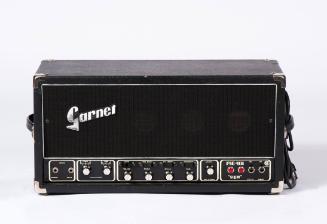
Photo credit: Don Kennedy
Garnet "Gar" Gillies
Available for use in Recording Studios
On View: Not currently on exhibit
isVirtual:
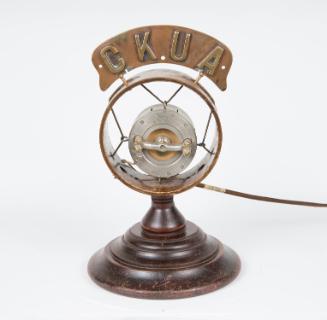
Photo credit: Don Kennedy
Western Electric Company, Inc.
c. 1920
Not available for use in Recording Studios
On View: On exhibit
isVirtual:
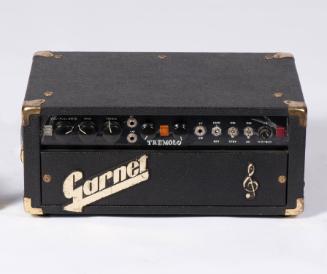
Photo credit: Don Kennedy
Garnet "Gar" Gillies
Available for use in Recording Studios
On View: Not currently on exhibit
isVirtual:
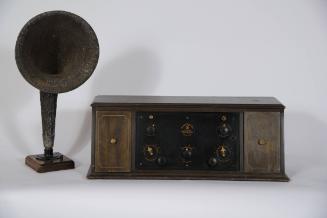
Photo credit: Don Kennedy
c.1920
Not available for use in Recording Studios
On View: On exhibit
isVirtual:
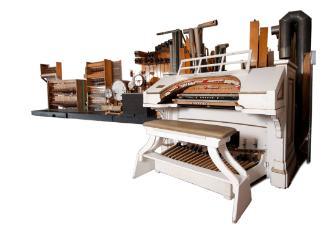
Photo credit: Don Kennedy
Kimball Piano and Organ Company
1924
Not available for use in Recording Studios
On View: On exhibit
isVirtual:
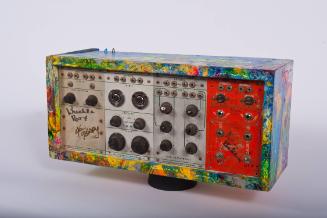
Photo credit: Don Kennedy
Donald Buchla
c. 1966
Not available for use in Recording Studios
On View: On exhibit
isVirtual:
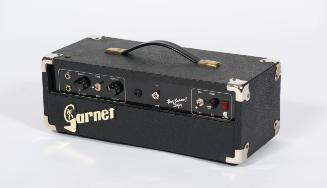
Photo credit: Don Kennedy
Garnet "Gar" Gillies
c. 1960
Not available for use in Recording Studios
On View: On exhibit
isVirtual:
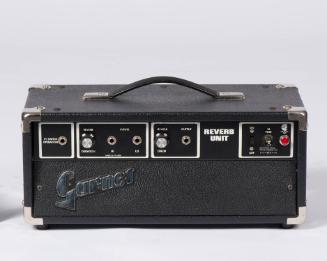
Photo credit: Don Kennedy
Garnet "Gar" Gillies
Available for use in Recording Studios
On View: Not currently on exhibit
isVirtual:
Photo credit: Don Kennedy
Electro Music / Donald Leslie
c.1972
Available for use in Recording Studios
On View: Not currently on exhibit
isVirtual:
Back