

EN / FR
Skip to main content

Opsonar Optigan

Available for use in Recording Studios
Not currently on exhibit
Artifact TypeSample Playback, Optical Replay
Manufacturer LocationUSA, North America
Datec. 1973
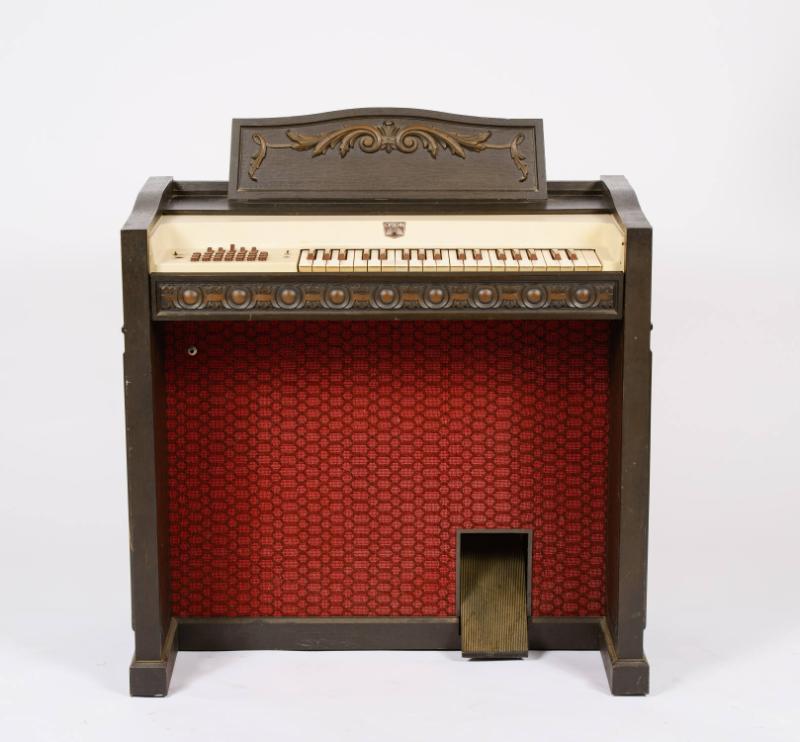
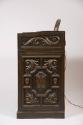
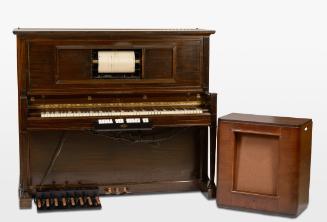
Marketed as a scaled-down electric organ, the Optigan was the first musical instrument to be mass advertised on television in the early 1970s. An optical sampling device that employs a light-based technology similar to that used in motion picture sound rather than relying on sounds pre-recorded onto magnetic tape, the Optigan was aimed at amateur users. Nevertheless, its kitchsy, lo-fi tonal qualities also attracted a variety of notable users, including Tom Waits, PJ Harvey and Devo’s Mark Mothersbaugh.
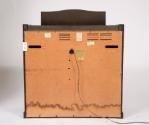
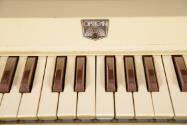
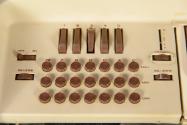
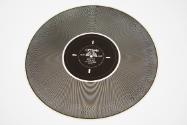
Operation/FunctionThis instrument contains a 37-note (three-octaves plus one note, F through to F) chromatic keyboard on the right side and three rows of seven accordion-style buttons for major, minor, and diminished seventh chords (L to R: B-flat, F, C, G, D, A, E) in a control panel on the left side. Above the chord buttons are five rocker switches, used to initiate various rhythmic patterns and special effects. From left to right, the switches produced repeatable percussion, sound effects, vamps (short, simple musical passages that are often repeated behind a soloist), introductions, and endings. When the switches are pushed downward (away from the number label), they remain only momentarily before returning back to their resting position, only sounding a single instantiation of the effect or pattern. The percussion, sound effect, and vamp switches could also be pushed upward (toward the number label), to lock it into place, allowing the pattern to continue looping until manually disengaged and returned to a neutral position. This portion of the instrument also includes three variable controls for adjusting the stereo balance between treble and bass, the instrument’s tempo, and the amount of reverb applied to the overall sound. Also includes an ‘on/off’ master switch. The Optigan is accompanied by a series of thin, celluloid (plastic) optical sample discs (12” diameter), most corresponding to a particular genre or style of music and incorporating the corresponding rhythmic idioms and instrumental timbres. The speaker cabinet of the instrument also includes a volume pedal, which increases in volume the farther down it is depressed. The instrument may be played through its own internal stereo amplification system, or through an external unit.Cultural SignificanceThe sampler has left an indelible mark on the course of popular music, allowing practitioners to incorporate into compositions a plethora of sounds that were previously unavailable in such a manner. With extensive usage of early samplers such as the Mellotron in the 1960s and 1970s, the instrument became known both for its convenience in offering musicians access to a wealth of different timbres, as well as for its unique tonal characteristics, which were the result of what were temperamental and sometimes flawed electromechanical designs. The Optigan was one of the first instruments to be designed specifically for the home market and succeed in that capacity. That being said, although the instrument was never intended for the professional realm, its remaining legacy is most strongly reflected in its continued sporadic use by notable contemporary musicians who are keen to exploit its kitsch and lo-fidelity tone. The instrument’s domesticated approach, so to speak, served to influence the advent of other sophisticated musical machines that were meant to cater specifically to amateurs rather than professionals, including the popular Korg workstation series that emerged in the early 1990s.Technological SignificanceThe concept of electronic audio sampling is one of the most pervasive in contemporary music, and was extensively practiced throughout the 1960s and 1970s on instruments such as the Optigan, as well as by its few predecessors and numerous successors. Perhaps the most notable predecessor of the Optigan was the Mellotron. The Mellotron was an extremely innovative and groundbreaking instrument when it emerged in the early 1960s, and effectively pioneered the concept of the sampler. Interestingly, although instruments produced under the Mellotron brand are the most well known of the analog samplers, the invention of the instrument is in fact accredited to American designer Harry Chamberlin. Throughout the 1940s, Chamberlin conceived of an instrument that could play back sound pre-recorded onto magnetic tape via a keyboard. The instruments he produced in the late 1940s and throughout the 1950s were the first to employ such a mechanism. They were, however, fairly unreliable, partly on account of the fact that components crucial to sound production, such as the tape heads used, were not standardized. After a somewhat awkward exchange of technological ownership, a British company called Streetly Electronics began producing Chamberlin’s designs under the Mellotron name in 1963. The Mellotron was revered for its accessibility, allowing musicians to obtain any number of sounds, typically derived from orchestral instruments, at the touch of a button, so to speak. Prior to the instruments produced by both Chamberlin and Mellotron, no such technology had existed. The concept of the sampler – that is, an instrument that produces sounds that were recorded in the real world, usually from its keyboard – was born of Chamberlin’s designs and, through the Mellotron, the technology became widespread and highly popular. Of course, sampling would not have been as feasible without the advent of magnetic tape and its associated recording technology. Magnetic tape revolutionized the recording industry in several ways. It had the advantage of being relatively small and easy to work with, and was also malleable in ways that preceding recording technologies such as the wax cylinder were not. A well-used tape music technique consisted in removing the pick up tape reel and attaching the end of a piece of tape back to the beginning of the tape, thus producing an infinite tape loop. Early experimental practices with tape helped foster the development of musique concrète, which was one of the first established genres of electronic music. Composers working in this field, who were primarily based in France throughout the 1940s and 1950s, exploited the ability they now had to bring real world sounds into their music, and to manipulate the sounds in ways that were simply not possible before. The advent of magnetic tape also brought with it the advent of multi-track recording. Despite the fact that the Mellotron was highly innovative for its time, the technology did not come without its drawbacks. Although the instrument is revered for the quirks of its distinctive tone and for the charm of its limitations, it was precisely these characteristics that led to the instrument’s eventual demise in the 1980s. One of the main difficulties with the technology employed in all models of the Mellotron, as well as those employed in Chamberlin instruments, is the infamous eight-second lifespan of the recorded sound. The mechanism featured in the instrument would not be capable of operating if the tapes were looped to provide a continuous tone, and thus a definitive length of time that the samples could sound had to be enforced. Although somewhat authentic acoustic attacks can be imitated on the instrument, the abrupt manner with which the sound ceases once the tape has run its course was not generally considered to be a desirable side effect of the mechanism. And, although many Mellotron models were designed to be portable, they were not necessarily built for excessive movement. The instruments were highly temperamental and required regular servicing. One advantage the Mellotron retained throughout the 1970s with the advent of commercial synthesizers was its polyphony; the majority of the earliest synthesizers were monophonic, meaning only one note could be played at a time. Other notable early samplers include the Birotron, which was designed by American Dave Biro, and employs a technology similar to that used by the eight-track tape player. Although these instruments were also plagued with technical inconsistencies, the Birotron had the advantage of being able to produce continuous loops of sound. The Band Box Chordarama is an accompanying instrument that also employed eight track tapes, typically of chordal progressions or drum loops, and was operated by the user’s foot, similar to a stomp box. In 1947, Chamberlin produced the Rhythmate, a drum machine that plays back pre-recorded performances by a real percussionist of various popular rhythms and patterns. The Optigan represented the first commercial instantiation of what would become the next, albeit brief, generation of samplers. The Optigan, which was released in 1971, along with its successors – the Orchestron of 1976 and TalentMaker of 1973 – employed a light-based technology that is referred to as optical sound. Optical sound remained the preeminent technology used in the motion picture industry to incorporate sound directly onto film for many decades. Although originally designed for use in naval communications during the First World War, the use of optical sound in film began in the 1920s and continued until the advent of digital audio in the early 1980s. The technology consists in the waveform of a recorded sound – or two adjacent waveforms in the case of stereo sound – being imprinted onto the side of a filmstrip (usually the right side), so as to play while the film is projected. Along with the visual information, when light is directed through the strip, the audio information is picked up by a photoreceptor circuit contained in the projector and converted back to sound. In modern filmstrips, the audio is formatted somewhat like a photographic negative, with the audio-containing waveform component left transparent and the extraneous space on either side blacked out, allowing light to project through only the portion that is meant to sound. In colour filmstrips, this is in opposition to the visual information, which appears in the correctly correlating contrast. In the Optigan, pre-recorded samples are encoded onto a transparent celluloid disc as concentric, looped rings. As in film sound, the waveforms are left blank on the disc while the non-sounding portions are filled in. Although the Optigan was – being primarily geared toward the home market rather than the professional musician – not as influential as the Mellotron, its mechanism had some real advantages. Unlike the Mellotron, which can only sound its samples for a short length of time, the rings of the Optigan discs form a true loop, allowing the user to continue individual sounds or chords without having to release and repress a button or key every eight or nine seconds. Of course, one disadvantage that stems from this format is that Optigan samples, on account of forgoing a beginning and end, lack the envelope or shape (i.e. attack, decay, and release) of a natural sound source. Moreover, while the Mellotron was quite frequently used in live settings, it was not especially built to do so. Its internal mechanism, which consists in each key corresponding to its own dedicated tape player, became highly temperamental with movement. As a further result of having individual tapes per key, the Mellotron could also be quite cumbersome to operate, requiring a good deal of work to swap out the instrument’s three-sample banks. The Optigan was far more flexible in these regards: for one, most models were constructed of a lightweight plastic exterior; what’s more, however, is that the samples of the Optigan were all contained within a single celluloid disc, rather than being separated onto individual discs per key. Thus, to change the instrument’s sound, one needed simply remove one disc and insert another. Although the Optigan was more portable than the Mellotron, it was just as temperamental, with most of its internal structure comprised of high maintenance mechanical rather than electronic parts; this was the case likely on account of the fact that most of those who were employed by Mattel were mechanical, and not electrical, engineers. The Optigan was also unique in its incorporating various effects, patterns, and preset chord accompaniments in addition to the melody-generating keyboard. In both the case of the tape and the optical disc, one must take care to keep the replay mechanisms – including the tapes, tape heads, discs, and photocell and receptor – clean from dust, dirt, and excess unwanted materials such as skin grease or tape shed. Failing to remove these can result in a decrease in the quality of the sound, as the extraneous components are often picked up by the playback devices. Although the Optigan was marketed as a sort of scaled-down organ, it shares very little in common with the electric organs of the day, primarily in the fact that the former contains only mechanical components, and none of the usual vacuum tubes or transistors found in the majority of electronic devices of the day. Moreover, the sounds employed by the Optigan are, as mentioned, sampled, whereas most electric organs follow some additive or subtractive synthesis procedure to simulate various tones. Despite its perceived advantages, the Optigan was plagued with mechanical problems, mostly stemming from the fact that the instrument was constructed cheaply so as to be a low-cost product. The discs were prone to drifting out of tune and were often affected by cross talk (when the information in one track bleeds into another) due to the bandwidth limitations of the encoded medium. That being said, since the instruments were rather poorly constructed, an amateur can often easily repair them, as well. The Optigan was unique in its interface among most samplers in that it incorporates an accordion-style display of a melodic keyboard that is performed by the right hand and accompanying chord and effect buttons that are performed by the left hand. It was also designed with the amateur, domestic user in mind and, to that end, incorporated various features that would help those who were not trained in music, such as designating numbers to each of the keys. The instrument also was capable of maintaining a steady rhythm in its accompanying effects that was not altered if the player played a subsequent button too early or late. The Orchestron was designed in 1976 as a more sophisticated, professionally-minded version of the Optigan. That being said, however, it suffered the same inconsistencies and instabilities as the Optigan, with many users claiming that the fidelity of its sound is perhaps even worse than its predecessor. The TalentMaker was developed in 1973 with the hopes of offering a mechanism that is similar but more reliable than that of the Optigan. The optical sound technology has not been implemented into any current instruments in a substantial way, however many DIY musicians continue to merge light and sound with interesting results; most notable among these is American musician Quintron, who often performs with a self-built drum machine, dubbed the Drum Buddy, that makes use of a similar light-based technology. Perhaps the most famous photoelectric-based musical is the ANS (derived from the initials of the Russian composer Alexander Nikolayevich Scriabin) synthesizer, invented and manufactured in 1955 by Yevgeny Murzin. Unlike instruments such as the Optigan and Orchestron, the ANS synthesizer is just that–a synthesizer, not a sampler. It employs a unique photoelectric system of synthesis using a series of 720 optical sound generators. Murzin also founded the Experimental Studio of Electronic Music in Moscow, where the instrument was housed throughout the 1960s and 1970s.Users/PerformersNotable usage of the Optigan, either in terms of the original instrument or in the use of samples from the instrument, include: the track “Beautiful World” from Devo’s E-Z Listening Disc of 1987, performed by Mark Mothersbaugh; Tom Waits’ Frank’s Wild Years of 1987; PJ Harvey’s White Chalk of 2007, on which Eric Drew Feldman is featured as the instrument’s performer; Coil’s Musick to Play in the Dark Vol. 1 from 1999; Steve Adey’s All Things Real of 2006; Steve Fisk’s 448 Deathless Days of 1987; Steve Hackett’s Defector of 1980; and, in Brian Kehew and Roger Manning’s The Moog Cookbook project.
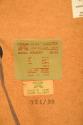
Object number2000.05.33
Photo credit: Don Kennedy
Hammond Organ Company
1957
Not available for use in Recording Studios
On View: Not currently on exhibit
isVirtual:
Photo credit: Don Kennedy
The Story & Clark Piano & Organ Company
1941
Not available for use in Recording Studios
On View: Not currently on exhibit
isVirtual:
Bösendorfer Klavierfabrik GmbH
1855
Not available for use in Recording Studios
On View: Not currently on exhibit
isVirtual:
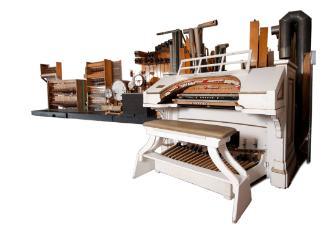
Photo credit: Don Kennedy
Kimball Piano and Organ Company
1924
Not available for use in Recording Studios
On View: On exhibit
isVirtual:
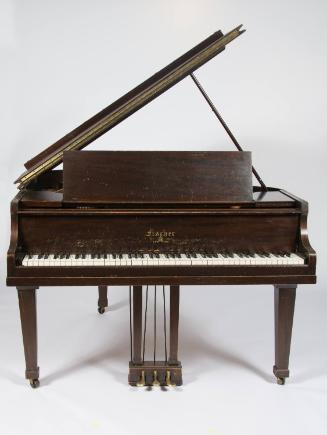
Photo credit: Don Kennedy
J. & C. Fischer Piano Company
1922
Not available for use in Recording Studios
On View: Not currently on exhibit
isVirtual:
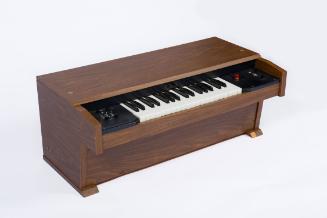
Photo credit: Don Kennedy
Chamberlin Instruments Company, Inc.
1979
Available for use in Recording Studios
On View: Not currently on exhibit
isVirtual:
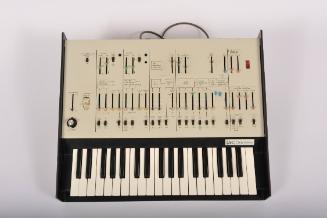
Photo credit: Don Kennedy
ARP Instruments, Inc.
1972
Available for use in Recording Studios
On View: Not currently on exhibit
isVirtual:
Photo credit: Don Kennedy
Harvey Krantz
20th Century
On View:
isVirtual:
Photo credit: Don Kennedy
Hendrik Anthonie Meijer
1785
Not available for use in Recording Studios
On View: Not currently on exhibit
isVirtual:
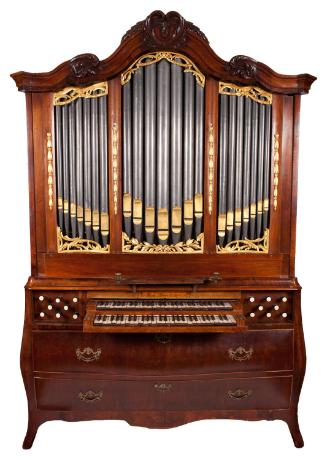
Photo credit: Don Kennedy
William Richmond Dowd
1972
Available for use in Recording Studios
On View: Not currently on exhibit
isVirtual:
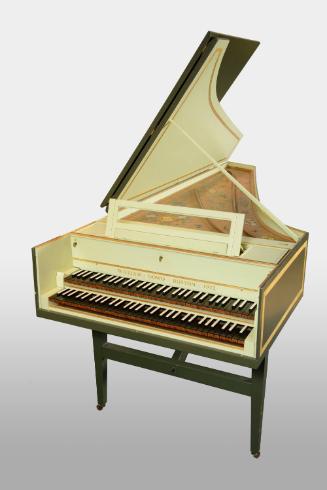
Photo credit: Don Kennedy
Vox Sound, Ltd.
c. 1967
Not available for use in Recording Studios
On View: Not currently on exhibit
isVirtual:
Photo credit: Don Kennedy
Willis & Company Ltd.
1924
Not available for use in Recording Studios
On View: Not currently on exhibit
isVirtual:
Back