EN / FR
Skip to main content

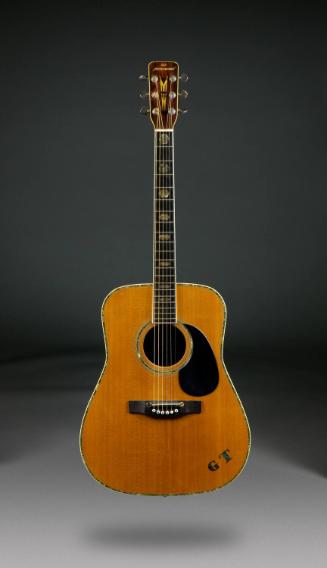
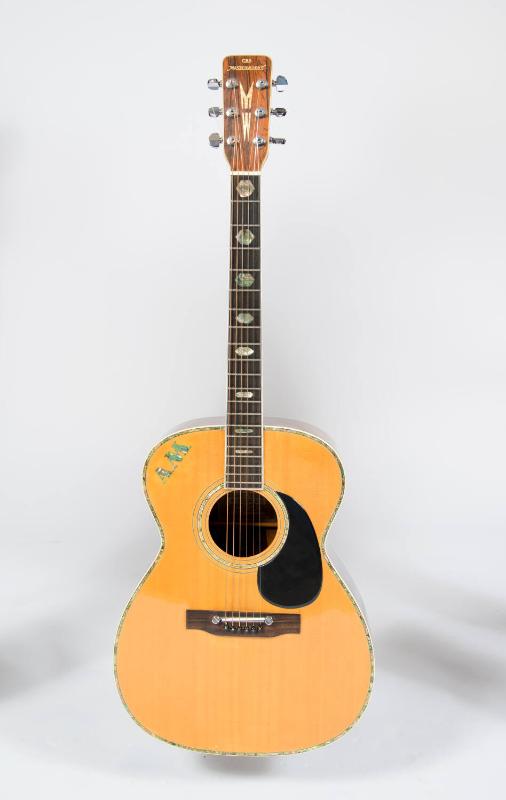
Anne Murray Guitar

Available for use in Recording Studios
Not currently on exhibit
Artifact TypeGuitar, Acoustic
Manufacturer LocationJapan
Date20th Century
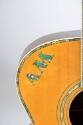
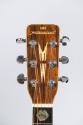
This custom acoustic guitar was built for Anne Murray, one of the country’s most successful singer-songwriters. A crossover sensation, she enjoyed airplay on country, pop and adult radio, soaring on the strength of songs like “Snowbird” and “You Needed Me.” While Murray became an international superstar, her stage presentation remained simple and unaffected, qualities reflected in the low-key decoration CBS placed on the instrument—Murray’s initials.
Operation/FunctionThis particular artifact is an example of a steel-string, flat-top acoustic guitar. It consists of a hollow wooden body, which is itself comprised of a soundboard, box, and sound hole for amplification, as well as six steel strings and accompanying machine heads and metal fingerboard. This instrument employs standard tuning, with open string pitches beginning at the bottom with the highest pitch, the E a major third above middle C, and moving downwards in pitch by a fourth to B, downwards by a major third to G, downwards by a fourth to D, downwards by a fourth to A, and downwards by a fourth to E, spanning two octaves in total. The instrument is referred to as being ‘standard-handed’, meaning it is to be strummed with the right hand while the left hand controls the frets.Cultural SignificanceThe cultural significance of both the acoustic and electric guitar cannot be overstated. Although the acoustic guitar is perhaps not used quite as commonly as the electric guitar, both have remained throughout the course of the twentieth century one of, if not the most, exploited instruments in popular music. The steel-stringed flat-top has served as the most popular form of acoustic guitar, with its usage spanning a multitude of genres.Technological SignificanceBoth acoustic and electric guitars have undergone a number of technological advances that have improved their tone and construction quality, however it is the mere advent of the latter that has had the most lasting technological impact. Les Paul (1915 – 2009) helped pioneer both the design and popularity of the electric guitar, and is considered one of the founders of solid-body technology, having produced a prototype called “The Log” in 1940. Additionally, Paul also conducted a number of experiments in guitar design and recording technology, essentially establishing the revolutionary practices of multi-track recording and overdubbing, as well as delay and phasing effects. Fender was the first company to produce a commercial solid-body electric guitar in 1950 with the release of the Telecaster, and Gibson responded in 1952 with the Les Paul, named in recognition of the fact that Paul helped design the instrument with Gibson’s president of the time, Ted McCarty. Although the acoustic guitar is not recognized as having made as significant a contribution in instrument technology, it has seen many important changes throughout its history. The instrument finds it origins in the lute, which featured a varying number of gut strings and was most popular throughout the Renaissance, and the Baroque guitar, which featured five sets or courses of gut strings and eclipsed the popularity of the lute in the early eighteenth century. The majority of usage of such instruments took place in Europe, however a number of variants of these instruments, such as the Middle Eastern oud, were equally as prevalent. The modern guitar shares the same basic construction approach as its predecessors, consisting of a curved wooden sound box and soundboard, designed to optimize amplification and tone quality, as well as a neck and fretboard across which a series of tuned strings are strung. Although performance techniques and tuning systems have been considerably adapted over the years, the same basic approach of plucking or strumming with one hand and coordinating frets with the other has also been maintained. The modern acoustic guitar was pioneered by the American C.F. Martin & Company, which was founded in 1833 by the German craftsman Christian Frederick Martin. Martin established the body shape and size still used in modern acoustic guitars, which employed a larger lower bout, smaller upper bout, and deeper box than its Classical predecessors so as to produce a louder volume and accentuate bass frequencies. Martin’s design was known as the “dreadnought”, and quickly became the most common body style on account of its ability to project the guitar above other instruments in an ensemble. Martin was also pivotal in introducing steel strings to replace the nylon strings used in Classical guitars. Steel strings significantly altered the structural requirements of the instrument and, along with Martin’s inclusion of a series of bracing pieces in the box and the truss rod in the headstock, further enhanced the tone quality and volume.Users/PerformersAnne Murray was born Morna Anne Murray on 20 June 1945 in Springhill, Nova Scotia, a small coal-mining town just south of Sackville, New Brunswick. Murray was raised, along with five brothers, in a singing family, and developed a keen sense for musical appreciation at an early age. She was trained in piano as a child, and at age 15, began lessons in classical voice, for which she had to commute two hours to Tatamagouche, Nova Scotia. Murray continued her studies at Mount Saint Vincent University, a small Catholic women’s college in Halifax, but transferred to the University of New Brunswick after one year to pursue studies in physical education. In 1966, following an audition she had given two years prior, Murray was offered a singing position with the CBC’s Singalong Jubilee television series, and released two albums, Singalong Jubliee Vol. III and Our Family Album – The Singalong Jubilee Cast, with the cast of the show in 1968 on Arc Records, one of Canada’s first record labels. It was upon prompts from the show’s musical director, Brian Ahern, that Murray agreed to record her first solo album, What About Me, in 1968, recorded in Toronto and released by Arc. In the following year, Murray signed with Capitol Records and released her second album, This Way Is My Way, that fall, featuring the track “Songbird”, written by Canadian songwriter Gene MacLellan, which became Murray’s first hit single, making her the first Canadian female to reach No. 1 on U.S. charts. “Songbird” also received a gold record, and marked the first time than an American gold record was awarded to a Canadian female artist. Following her success with this album, Murray’s popularity significantly increased throughout North America. She relocated to Toronto in 1970 and, in 1971, formed a management company, Balmur Ltd., with Leonard Rambeau, a friend from Nova Scotia. In 1977, Rambeau became Murray’s exclusive manager and remained so until his passing in 1995. Murray continued recording and performing throughout the 1970s and 80s, producing twenty-four studio albums and accompanying hit songs, including 1978’s “You Needed Me”. To date, Murray’s albums have sold 54 million copies worldwide. During this time, she also appeared on a number of popular television shows including The Bobby Vinton Show, Johnny Cash’s Christmas Special, The Dolly Parton Show, The Midnight Special, The Mike Douglas Show, Saturday Night Live, The Perry Como Show, and Solid Gold, in addition to hosting several of her own television specials. She enjoyed her greatest commercial success in the decade following 1978, which saw the release of numerous hit songs, including “I Just Fall in Love Again” (1979), “Shadows in the Moonlight” (1979), “Broken Hearted Me” (1979), “Could I Have This Dance” (1980), “Blessed Are the Believers” (1981), “A Little Good News” (1983), “Just Another Woman in Love” (1984), “Nobody Loves Me Like You Do” (1984), and “Now and Forever (You and Me)” (1986). Murray is the recipient of numerous awards and honours, including four Grammy awards, three American Music awards, three Country Music Association awards, and an astounding twenty-four Juno awards. She was inducted into the Canadian Music Hall of Fame in 1993 and the Canadian Country Music Hall of Fame in 2002, is a Companion of the Order of Canada and a member of the Order of Nova Scotia, and was the first official inductee into the Canadian Association of Broadcasters’ Hall of Fame. Murray has also received stars on both the Hollywood Walk of Fame in Los Angeles and the Canadian Walk of Fame in Toronto. She has remained a staple in Canadian culture while concurrently developing a highly successful international career, and continued to perform and record new material until the early 2000s. In 1989, Murray contributed her name to the opening of the Anne Murray Centre, a non-profit organization located in Springhill that celebrates Murray’s musical accomplishments and foster awareness of musical education and appreciation. Her most recent project is the completion of a memoir entitled All of Me, which was released by Knopf publishing in 2009.
Object numberT.2016.06.01
Photo by Don Kennedy
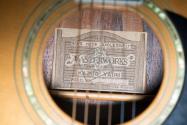
CBS Masterworks
20th Century
Not available for use in Recording Studios
On View: Not currently on exhibit
isVirtual:
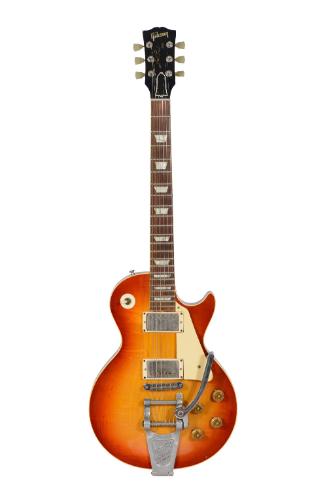
Photo credit: Don Kennedy
Gibson Guitar Corporation
1959
Not available for use in Recording Studios
On View: Not currently on exhibit
isVirtual:
Photo credit: Don Kennedy
Oscar Schmidt Company
Unknown
Not available for use in Recording Studios
On View: Not currently on exhibit
isVirtual:
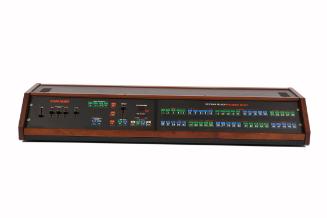
Photo credit: Don Kennedy
CBS Musical Instruments
c. 1982
Available for use in Recording Studios
On View: Not currently on exhibit
isVirtual:
Photo credit: Don Kennedy
CBS Musical Instruments
1966
Available for use in Recording Studios
On View: Not currently on exhibit
isVirtual:
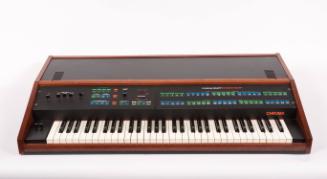
Photo credit: Don Kennedy
CBS Musical Instruments/Rhodes
c. 1982
Available for use in Recording Studios
On View: Not currently on exhibit
isVirtual:
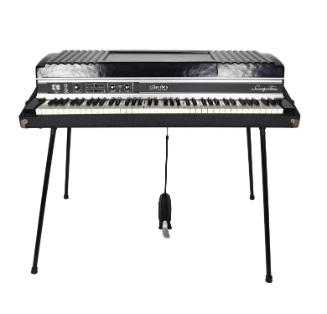
Photo credit: Meghan MacKrous, courtesy of the National Music Centre
CBS Musical Instruments
c. 1980
Available for use in Recording Studios
On View: Not currently on exhibit
isVirtual:
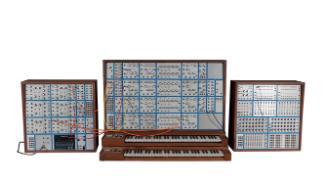
Photo credit: Don Kennedy
E-mu Systems, Inc.
About 1973
Available for use in Recording Studios
On View: Not currently on exhibit
isVirtual:
Photo credit: Don Kennedy
John Broadwood & Son
1899
Not available for use in Recording Studios
On View: On exhibit
isVirtual:
Photo credit: Don Kennedy
Gibson Guitar Corporation
Not available for use in Recording Studios
On View: Not currently on exhibit
isVirtual:
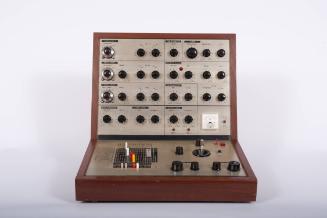
Photo credit: Don Kennedy
Electronic Music Studios (London) Limited
1969
Not available for use in Recording Studios
On View: Not currently on exhibit
isVirtual:
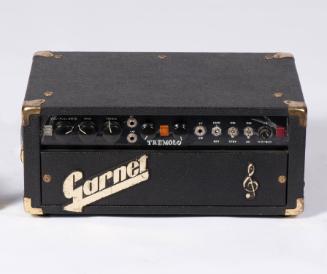
Photo credit: Don Kennedy
Garnet "Gar" Gillies
Available for use in Recording Studios
On View: Not currently on exhibit
isVirtual:
Back