EN / FR
Skip to main content

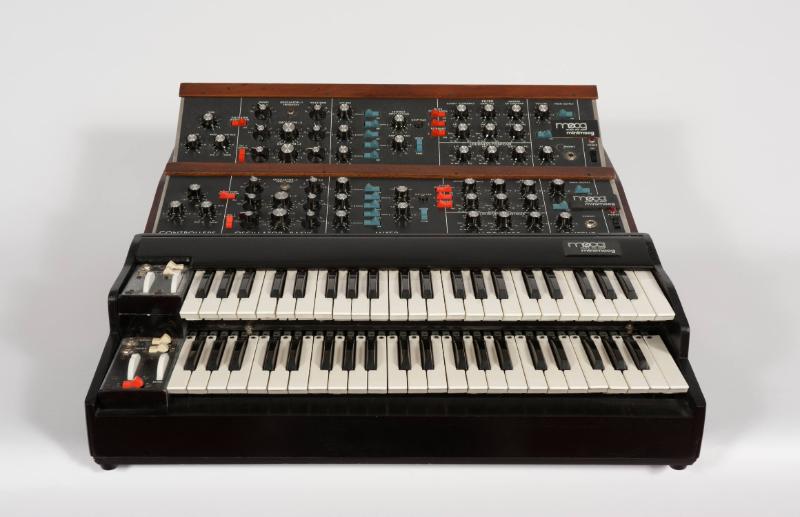
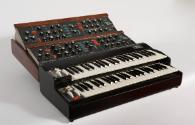
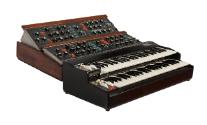
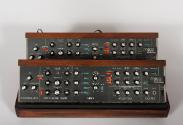
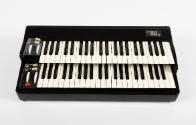
Patrick Moraz Double Minimoog

Available for use in Recording Studios
Not currently on exhibit
Artifact TypeSynthesizer
Manufacturer Moog Music, Inc. (division of Norlin Music Instruments, Ltd.)
Manufacturer LocationUSA, North America
Date1973
The technological and cultural impact of the Minimoog simply cannot be overstated. Released in 1970, it was effectively the first truly portable and integrated analog synthesizer, and it revolutionized popular music by moving the synth from high-profile studios into the public sphere. The Minimoog was used rampantly throughout the 1970s and 1980s, especially in the genres of progressive rock, disco and jazz. This particular double-unit model was custom-built for former Yes and The Moody Blues keyboardist Patrick Moraz.
Operation/FunctionThis particular artifact is an analog, monophonic synthesizer that contains three voltage-controlled oscillators (any one of which may function as a low frequency oscillator), a 24 dB/octave voltage-controlled low-pass filter, a noise generator, two voltage-controlled amplifiers, two envelope (contour) generators, an external CV/gate input, an external input with microphone preamplifier, and a 44-note (3.5 octaves) chromatic mechanical keyboard. The keyboard section also contains two wheels, one for pitch bend and another for modulation. This instrument employs analog subtractive synthesis. The front panel of the instrument is hinged; it can be folded down while in transport or propped up while in use.Cultural SignificanceModular synthesis has left an indelible mark on the way in which current trends in synthesizer design are informed. In the 1960s, these instruments offered a way forward for composers and musicians who felt stifled by the rigour of early electronic music techniques, such as those practiced in Germany and France throughout the 1950s. They promised new timbres and uninhibited methods of control and ultimately set into motion the foundations of synthesis practices that would follow throughout the 1970s and 1980s. The cultural impact of the Minimoog in popular music simply cannot be overstated. Although the Minimoog was preceded by one year by the release of the portable and integrated EMS VCS3, the latter was still semi-modular, requiring somewhat unintuitive patch connections to be made by the user. The Minimoog was effectively the first truly integrated synthesizer and revolutionized the use of synthesizers in popular music upon its release in 1970, bringing the instrument more directly into the public sphere. Its streamlined and user-friendly design, in combination with its significantly cheaper selling price, meant that the synthesizer was no longer reserved for high-end music professionals and technicians with access to the most state-of-the-art studios of the day. Perhaps the most long-lasting impact of instruments such as the Minimoog, however, was that they allowed the synthesizer to be more easily used in live contexts, as opposed to the studios and institutions where the larger modular systems were rather permanently installed. Still today, the synthesizer is one of the most commonly used instruments in live performance. The Minimoog in particular left a strong impression on several popular genres throughout the 1970s and 1980s, particularly progressive rock, disco, and jazz; in most cases, it was used primarily as a bass synthesizer, producing thick, underlying textures. Historically, Robert Moog is perhaps the most notable synthesizer manufacturer referenced in popular culture; so much so that the name ‘Moog’ is often used in layman vernacular to describe the term ‘synthesizer’, regardless of the actual manufacturer, not unlike brand names ‘Kleenex’ and ‘Q-Tip’. Although Moog instruments were not the choice of all musicians – with many experimentally-minded composers opting for the more flexible Buchla systems and most European composers relying on the readily-available EMS systems emerging out of London – they were by far the most commercially successful, permeating popular music in a manner that few other manufacturers experienced throughout the 1970s.Technological SignificanceThe synthesizer is arguably one of, if not the most technologically significant contributions to the course of electronic music. Although earlier electronic instruments such as the Theremin and Ondes Martenot offered new and unique ways of articulating sound, their sonic template was, for the most part, quite limited, capable of producing only a few distinct timbres. The modern synthesizer, on the other hand, was viewed as an integrated electronic orchestra, as it were, allowing the user to sculpt a wide and varied array of tones and gestures. What’s more, it allowed the user to modify their sounds in real time, seemingly without the sorts of physical limitations imposed on acoustic instruments. Of course, each instrument did come with its own characteristic tonal qualities and control limitations, however the wealth of opportunity inherent in the ability to manipulate and define nearly every parameter of sound structure solidified the synthesizer’s place as one of the most powerful musical innovations of the twentieth century. The concept of modular design was initially quite desirable to professional and studio musicians in that it allowed one to more or less completely customize their instrument and modify its functions as desired. The modular nature of early synthesizers also meant that an array of patches, or defined sounds that could be altered in real time, were possible, offering the musician a high degree of flexibility and the opportunity to develop their own performance technique and signature tone. Analog modular synthesis was quite prevalent as a music-making practice in academic institutions and private studios throughout the late 1960s and into the early 1980s, both in Europe and throughout North America. Electronic instruments of this era were entirely transistor-based, with solid-state devices such as the transistor representing the next generation in technology following the vacuum tube, which was used extensively throughout the first half of the twentieth century. Solid-state technology was far smaller, lighter, more reliable, more durable, and less expensive than vacuum tube technology. This technology developed even further in around 1970 into the form of integrated circuits (ICs), which house the many discrete components of transistor-based circuits within a single silicon chip, as they are often called. Integrated circuits were significantly smaller and less expensive to manufacture than the circuits from which they derived. Although not all analog synthesizers designed in the very early 1970s employed integrated circuitry, their use was mostly standardized by the late 1970s with the inclusion of the first affordable eight-bit microprocessors, such as the Zilog Z80, that emerged mid-decade. As a result, integrated circuits adapted to incorporate more sophisticated digital components. Although modular-type systems are still in production today ¬– the Buchla 200e, for instance, is based on the modular design of the Buchla 200 analog system – the advent of affordable microprocessor chips in the mid 1970s and the rise of programmable polyphonic instruments in the late 1970s resulted in the relative obsolescence of the discrete transistor-based systems of the early 1970s. The earliest dedicated studios that arose in the 1950s and 1960s consisted of discrete components such as sine, sawtooth, and square wave generators, filters, noise generators, mixers, and units for reverberation and ring modulation. The music making practice of the time was cumbersome, requiring the composer to record audio components onto magnetic tape, which would then undergo a series of splicing and manipulations. The modular systems of the late 1960s and 1970s were differentiated from their “primitive” counterparts in that they could be made to interact with one another under the governance of voltage control. The concept of voltage control, which was implemented into early electronic instruments such as Hugh Le Caine’s Electronic Sackbut, is based on the principle by which the function of electrical components relates to voltage, or the flow of electrical current. The most unique aspect of the concept of voltage control, which modular synthesizers took full advantage of, suggests that a voltage produced by one component or module can be used to control some function of another module via connection by patch cords or related means. These techniques enabled a very rich and highly interactive approach to the idiom of electronic music composition. The term ‘modular’ simply implies that various dedicated modules for sound production, manipulation, and amplification are integrated within a single cabinet, so as to operate as one system. The modular systems of the 1960s and 1970s were more compact than earlier synthesizers such as the RCA Mark II of the Columbia-Princeton Electronic Music Center, however their overwhelming size and hefty price tag often meant that they were accessible, for the most part, only to professionals, with a number of systems having initially been installed in recording studios and educational institutions. In response to this, most of the major companies of the era also released smaller, more portable systems (both modular and non-modular) throughout the 1970s that were also suitable for live performance, such as the Minimoog, EMS VCS3, ARP 2600 and Odyssey, and the Buchla Music Easel. Although most of these instruments borrowed elements from their modular ancestors, they were not in themselves modular by nature, but rather featured set configurations that were usually internally affixed. With the advent of integrated circuits, synthesizers increasingly began to adopt the smaller, more compact aesthetic exhibited in the performance-oriented instruments of the early 1970s, especially that of the revered Minimoog. The once popular modular approach gave way to more streamlined designs that, while still offering users the ability to control numerous aspects of the instrument’s tone and gesture, limited the way in which the instrument could be operated. Although the modular synthesizer was highly regarded for its flexibility, it was also criticized for being largely unintuitive and cumbersome in its patching schemes. The Minimoog in particular was a groundbreaking contribution in the evolution of synthesizer design when it was released in 1970 in that it was effectively the first truly integrated and portable hardwired synthesizer, standing in stark contrast to the large, cumbersome, and expensive modular systems of the late 1960s. Effectively, it contains the most popular and fundamental modules featured in a modular system, and was designed to function as a more feasible alternative that could be used in live settings. Unlike its modular predecessors, the various component modules – oscillators, filter, noise generator, amplifier, etc. – contained within the Minimoog are subsumed under a single front panel, and not separated per component as in true modular fashion. In this way, the functions of the Minimoog were pre-determined by the manufacturer and greatly limited in their number, allowing the instrument as a whole to be much smaller and far more portable than its modular counterparts. The modular components of this instrument are also hardwired internally, meaning that external electrical connections, obtained by patching between various modules, were not necessary. Although the Minimoog was predated by the portable and integrated EMS VCS3 of 1969, the VCS3 was only semi-modular, still requiring the user to make electrical connections in order to determine the path of a signal. There is often debate as to the merit of each approach: many users find the modular approach to be far more flexible in that the user can define signal paths, resulting in a multitude of possible timbres and textures; others, however, find the integrated approach more intuitive and user-friendly. Just as the Moog modular systems had done in the late 1960s with the introduction of certain parameter specifications, such as the ADSR envelope shape, that are now considered standard in most synthesizers, the streamlined and efficient VCO-VCF-VCA interface design implemented in the Minimoog was revolutionary in that it served to set the standard for nearly every synthesizer that followed. The instrument’s interface corresponds with a signal path architecture that begins with voltages triggered from the integrated keyboard, which initiate the voltage controlled oscillators. These signals are then sent to the voltage-controlled filter, and then to the voltage-controlled amplifier, where a final envelope, or contour shape is set. While several of the components of the Minimoog were based on the original modules of the modular system, some, including the oscillators, were based on more unique designs. An innovative feature first implemented into the Minimoog were the pitch bend and modulation wheels, which allowed for more nuanced ornamentations, so to speak, in the performance of a particular melodic line. Perhaps Robert Moog’s most significant contribution to synthesizer modules came in the form of his 24 dB/octave low-pass filter, the only design for which he sought a patent. This filter, which is often referred to as a “ladder” filter, came to define the Moog sound with its use in the first modular systems and was used in nearly every subsequent Moog product, including the Minimoog. Many have tried and failed to improve upon the filter’s design, which largely remained the industry standard for most synthesizer manufacturers throughout the 1970s and into the 1980s. Although the Minimoog employed a new design in its oscillators, it continued to borrow the tuning scheme set in the modular system, which divides the entire range of the oscillator into a footage ranking system, similar to that used in pipe organs. The user selects a certain range and then carries out fine tuning within the available frequencies via another knob. Another unique feature of Moog oscillators is that none were formatted as dedicated low frequency oscillators (LFO). Instead, the oscillator’s range was simply made to extend below 1 Hz, allowing regular oscillators to function either as an audible-range oscillator or a low-frequency oscillator. The oscillators used in the Minimoog were notably more stable than those featured in the modular system; the implementation of this combined expressivity in the filter and rich tone in the oscillators, all offered within a compact, integrated design was truly pioneering. Still today, the Minimoog is revered as having one of the highest quality analog sounds among synthesizers of its era. This particular customized double Minimoog unit is unique in that it can function either as two separate instruments, or it can be combined in various ways to produce an overall texture that is much more intricate than could be produced by either unit independently.Users/PerformersPatrick Moraz was born on 24 June 1948 in Villars-Sainte-Croix, Morgues, Switzerland and was classically trained in violin, piano, harmony, and counterpoint at the Conservatory of Lausanne, also in Switzerland, studying under the famed Nadia Boulanger. His introduction to professional performance first came in the form of a jazz quartet, which toured with notable musicians such as John Coltrane throughout Europe in the 1960s. In 1963, he became the youngest individual to have ever received the prestigious Best Soloist honour at the Zurich Jazz Festival. In 1968, he formed his first rock group, Mainhorse, with musician Jean Restori, began studying with famed avant-garde composers Karlheinz Stockhausen and Iannis Xenakis at the Studio de Musique Contemporaine in Geneva, and worked briefly on a series of film scores. In 1973, his score for Claude Goretta’s film L’invitation was awarded the Grand Prix du Jury at the Cannes Film Festival. After nearly a decade of travelling throughout Europe and Asia, both solo and with other musicians, Moraz relocated to London, and, in 1974, replaced Rick Wakeman as the keyboardist for the progressive rock group Yes, after a brief stint with a group called Refugee. Moraz contributed to the group’s seminal Relayer album of 1974, which was followed by an extensive world tour. His jazz background can be seen to have influenced the album’s sound, marking a departure from the group’s more rock- and classical-oriented works of the early 1970s. In 1975 he contributed to Yes bass player and vocalist, Chris Squire’s solo album, Fish Out of Water, and released his own first solo effort, Story of I, in 1976. Moraz departed from Yes in 1976 just prior to the recording of Going for the One, and continued to develop his own style, which had by that point become highly influenced by an interest in world (primarily Latin American) music, for the follow-up album, Out in the Sun. Moraz joined another notable British progressive rock group, The Moody Blues, for their Octave tour in 1978, replacing their original keyboardist, Mike Pinder. He became a permanent member in 1980 and remained with the group until 1991, continuing in the meantime to release acclaimed solo works and tour and record with other prominent musicians, including jazz musician Chick Corea and former Yes and King Crimson percussionist, Bill Bruford, with whom he recorded two collaborative albums. Moraz continued to release solo works and tour following his time with The Moody Blues, including his notable Coming Home America Tour or “CHAT” of 1995, and currently resides in Florida. Among his notable solo albums are Story of I and Out in the Sun of 1976 and 1977, respectively, Future Memories I of 1979 and Future Memories II of 1982, Timecode of 1984, Human Interface of 1987, Windows of Time of 1994, and Resonance of 2000.
Object number2002.05.42
Photo credit: Meghan MacKrous, courtesy of the National Music Centre
R.A. Moog, Inc.
1970
Available for use in Recording Studios
On View: Not currently on exhibit
isVirtual:
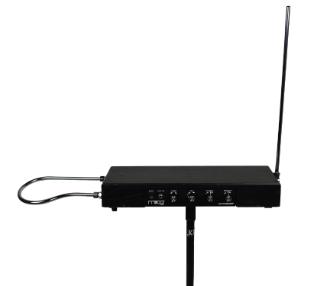
Photo credit: Meghan MacKrous, courtesy of the National Music Centre
Moog Music, Inc.
2001
Available for use in Recording Studios
On View: Not currently on exhibit
isVirtual:
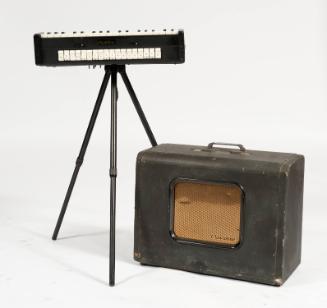
Photo credit: Don Kennedy
Selmer (UK)
1957
Available for use in Recording Studios
On View: Not currently on exhibit
isVirtual:
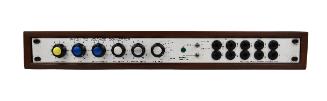
Photo credit: Don Kennedy
Electronic Music Studios (London) Limited
1971
Available for use in Recording Studios
On View: Not currently on exhibit
isVirtual:
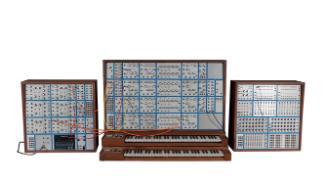
Photo credit: Don Kennedy
E-mu Systems, Inc.
About 1973
Available for use in Recording Studios
On View: Not currently on exhibit
isVirtual:
Photo credit: Meghan MacKrous, courtesy of the National Music Centre
Bode Sound Company
1977
Available for use in Recording Studios
On View: Not currently on exhibit
isVirtual:
Photo credit: Don Kennedy
Optigan Corporation (of Mattel) / Opsonar (of Miner Industries)
c. 1973
Available for use in Recording Studios
On View: Not currently on exhibit
isVirtual:
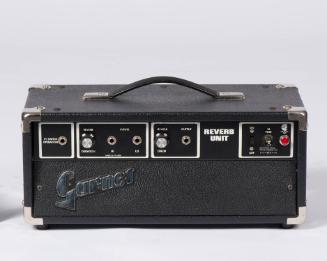
Photo credit: Don Kennedy
Garnet "Gar" Gillies
Available for use in Recording Studios
On View: Not currently on exhibit
isVirtual:
Photo credit: Don Kennedy
Hohner Musikinstrumente GmbH & Co. KG
c. 1950
Not available for use in Recording Studios
On View: Not currently on exhibit
isVirtual:
Photo credit: Don Kennedy
Sequential Circuits Inc.
c. 1981
Available for use in Recording Studios
On View: Not currently on exhibit
isVirtual:
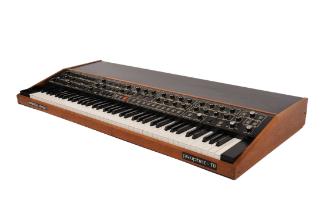
Photo credit: Don Kennedy
Sequential Circuits Inc.
1983
Available for use in Recording Studios
On View: Not currently on exhibit
isVirtual:
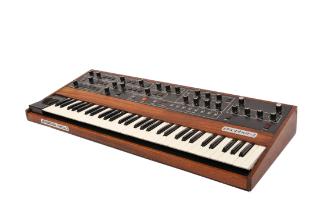
Photo credit: Don Kennedy
Sequential Circuits Inc.
c. 1978
Available for use in Recording Studios
On View: Not currently on exhibit
isVirtual:
Back