EN / FR
Skip to main content

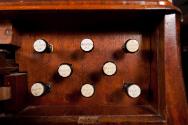
Meijer Pipe Organ

Not available for use in Recording Studios
Not currently on exhibit
Artifact TypeOrgan, Pipe
Manufacturer LocationThe Netherlands, Europe
Date1785
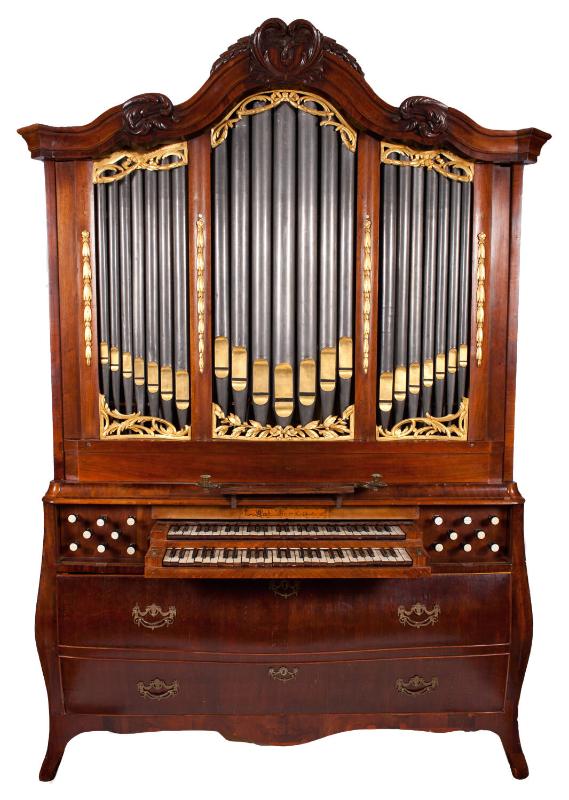
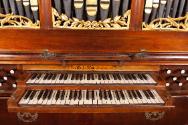
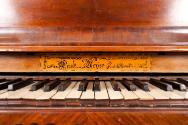
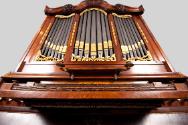
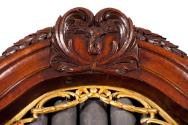
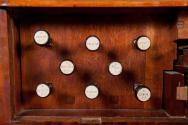
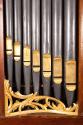
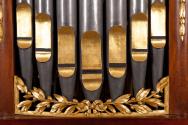
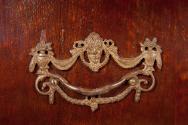
This rare Dutch cabinet organ was once part of the highly regarded Flentrop Collection of Antique Organs and used in the Roman Catholic church of Onderdijk, North Holland. One of only three in the world, this organ boasts a dark wooden exterior—likely repurposed from an armoire or dresser cabinet—as well as two keyboards. The two keyboards, called manuals, are a rare and unusual feature for an organ of this style and size.  The instrument was restored to working condition in 1989.
Operation/FunctionThis particular artifact is a two-manual pipe chamber organ, with sixteen stops and each manual spanning a range of 4.5 octaves (C-F). Stop names on this instrument are given in Dutch and include ‘fluit’, ‘prestant’, ‘holpyp’, ‘trambl’, ‘octaaf’, ‘quint’, and ‘bordon’. Its exterior is the former enclosure of an armoire or dresser cabinet.Cultural SignificanceThe demands of the domestic market has endured as one of the most prevalent forces in musical instrument design throughout the centuries, with cabinet and chamber organs such as this representing examples of instruments that were made to accommodate the interests of wealthy home owners of the time, typically during the eighteenth century. The pipe organ itself remains among the most revered acoustic instruments, primarily for its commanding presence and rich connection to social and spiritual history.Technological SignificanceThe pipe organ itself is one of the most technically intricate and impressive acoustic instruments, typically to the extent that each unit is often considered an integral architectural component of the space within which it is installed. Its sophisticated structure continues to dominate a dedicated branch of instrument building and restoration. The instrument has seen a massive shift in complexity from the earliest examples of water organs in the Byzantine era, to those housed within the largest European cathedrals during the seventeenth century. The general principles that guide construction of the instrument, including the use of pressurized air within a wind chest and a valve system to control the connection between the keyboard and pipe channels, has remained relatively standardized, however significant improvements to the design, especially during the early music revival of the mid twentieth century, have resulted in restored and modernized units that produce relatively fuller and cleaner textures. Among the most innovative improvements that have emerged over the centuries came with the advent of the electrical age of the late nineteenth century, and include the shift from pumped bellows to an electrical blower, and the shift from pipe channels that are directly connected to the key valves themselves to the implementation of an electro-pneumatic relay system, which allows for the console of the instrument to sit at a distance from the pipes. Chamber and similar positive organs such as this particular artifact, which were meant to cater to the physical restrictions of smaller spaces and private residences, were usually self-contained and, in this sense, somewhat portable with respect to most pipe organs. In terms of construction, positive organs are generally more compact than the types of pipe organs that were meant to accompany cathedrals and larger churches or concert halls. They contain fewer pipes, manuals, and stops, and occasionally still make use of a self-pumped bellows. The advent of the electric organ in the early twentieth century effectively served a similar function throughout the 1950s and 1960s, serving primarily as a domestic version of the traditional pipe organ.Users/PerformersThere is little documented information about specific users of this particular artifact. It is known, however, that it was formerly a part of the renowned Flentrop Collection of Dutch chamber organs before it was purchased in 1984 by The House of Hope Presbyterian Church in St. Paul, Minnesota, USA. Johann Sebastian Bach (1685 – 1750) is regarded as the most prolific composer for the pipe organ, and stands as the preeminent musical figure of the Baroque era. Bach was born in Eisenach, Germany to a musical family, and was active throughout his youth in sacred life, performing on organ and harpsichord and singing regularly in Lutheran services. He was primarily raised by his older brother, following the passing of both his parents in 1694. Following brief periods in Ohrdruf and Lüneburg, Bach settled in Weimar, Germany in 1703 where he first gained employment as a violinist in a small chamber orchestra. Four years later he accepted a post as an organist in the town of Arnstadt, returning to Weimar only a year later to continue work as a performer in the chamber orchestra and to serve as the Court Organist. He relocated once again in 1717 to Anhalt-Cöthen where he held the position of Capellmeister, and in 1723 he obtained the coveted position of Cantor and Director of Music in Leipzig, Germany. From 1729, he took over directorship of the Collegium Musicum, also in Leipzig. Throughout his life, he composed numerous orchestral, chamber, choral, keyboard, and other solo instrumental works, including the well-known St Matthew Passion, Mass in B minor, The Well-Tempered Clavier collection of 48 preludes and fugues, the English and French Suites, The Goldberg Variations, the cello suites, The Art of the Fugue, and the Brandenburg Concertos. His works are catalogued according to the Bach-Werke-Verzeichnis (BWV) system compiled by Wolfgang Schmieder.
Object number2002.20.01
Photo credit: Don Kennedy
Everett Piano Company
1935
Not available for use in Recording Studios
On View: Not currently on exhibit
isVirtual:
Bösendorfer Klavierfabrik GmbH
1855
Not available for use in Recording Studios
On View: Not currently on exhibit
isVirtual:
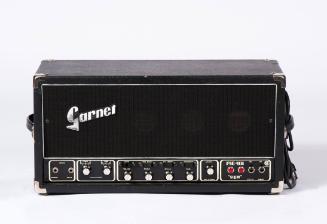
Photo credit: Don Kennedy
Garnet "Gar" Gillies
Available for use in Recording Studios
On View: Not currently on exhibit
isVirtual:
Photo credit: Don Kennedy
Electro Music / Donald Leslie
c.1972
Available for use in Recording Studios
On View: Not currently on exhibit
isVirtual:
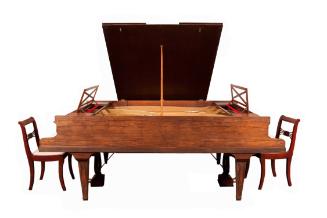
Photo credit: Don Kennedy
Pleyel et Cie
1913
Not available for use in Recording Studios
On View: Not currently on exhibit
isVirtual:
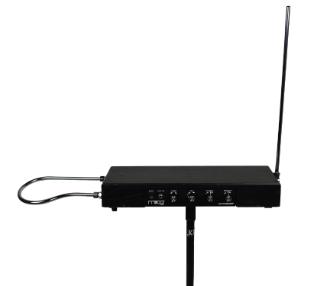
Photo credit: Meghan MacKrous, courtesy of the National Music Centre
Moog Music, Inc.
2001
Available for use in Recording Studios
On View: Not currently on exhibit
isVirtual:
Photo credit: Don Kennedy
Eric Herz
1976
Not available for use in Recording Studios
On View: Not currently on exhibit
isVirtual:
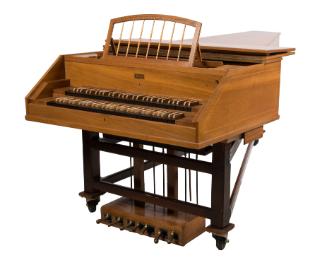
Photo credit: Don Kennedy
Kurt Wittmayer
1954
Not available for use in Recording Studios
On View: Not currently on exhibit
isVirtual:
Photo credit: Don Kennedy
Streetly Electronics/ Mellotronics/ Mellotron
1971
Not available for use in Recording Studios
On View: On exhibit
isVirtual:
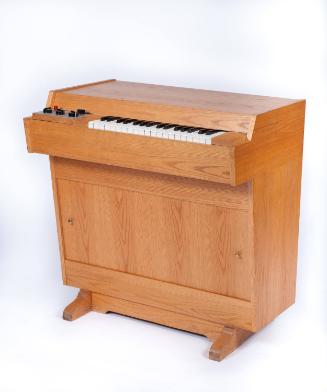
Photo credit: Don Kennedy
Mellotron (Mellotronics Manufacturing)
1973
Not available for use in Recording Studios
On View: Not currently on exhibit
isVirtual:
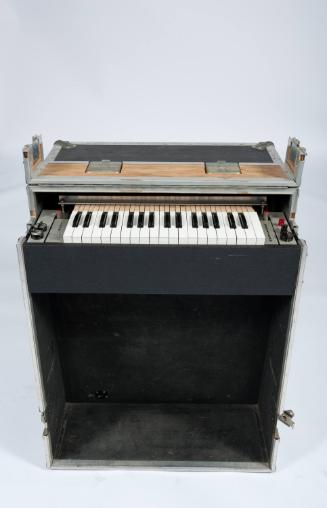
Photo credit: Don Kennedy
Novatron
c. 1981
Available for use in Recording Studios
On View: Not currently on exhibit
isVirtual:
Photo credit: Don Kennedy
Paolo Guerrini
20th Century
Not available for use in Recording Studios
On View: On exhibit
isVirtual:
Back