
EN / FR
Skip to main content

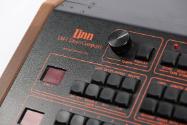
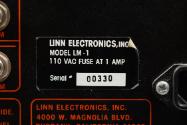
Linn LM-1 Drum Computer

Available for use in Recording Studios
Not currently on exhibit
Artifact TypeDrum Machine, Electronic
Manufacturer LocationUSA
Datec. 1982
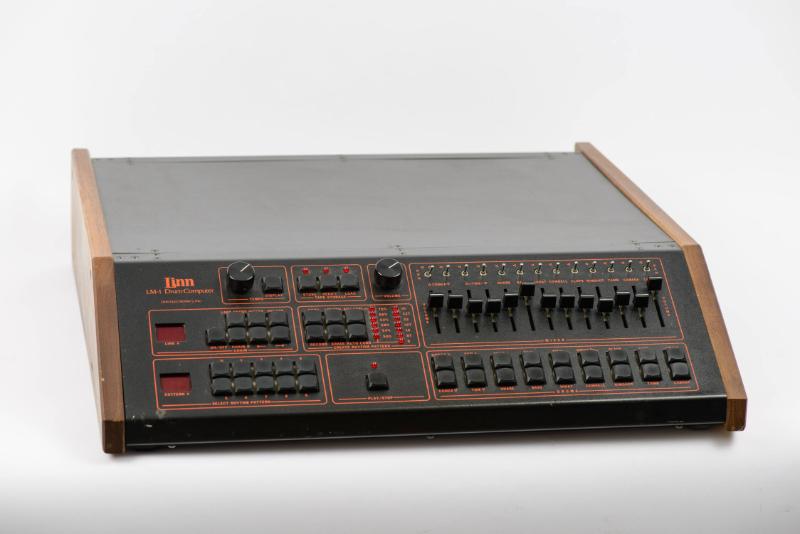
The Linn LM-1 was the drum machine used by Hall & Oates on “Maneater,” Michael Jackson on “Thriller” and Peter Gabriel on “Shock the Monkey”—among others. While earlier drum machines electronically synthesized their less-than-authentic sounds, the LM-1 was the first to use digital samples taken from acoustic drum kit recordings. One of the first programmable units—the sophisticated, editing controls, and unique “shuffle” function helped convince musicians that drum machines were legitimate instruments.
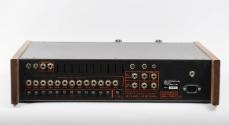
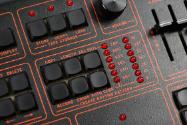
Operation/FunctionAccording to brochures produced by the manufacturer, the LM-1 Drum Computer uses “real drums”, meaning that it features digital recordings of acoustic drums, stored in computer memory, each recorded at a sampling rate of 28 kHz and a bit depth of 8-bits. There are twelve distinct sounds available to the user: bass, snare, hi hat, cabasa, tambourine, two toms, two congas, cowbell, clave, and hand claps; every drum sound is tunable in pitch. The instrument can hold 100 different drumbeat loops, all of which are programmable in real time with any combination of the drum sounds. Also featured are a 13-input stereo mixer, an automatic error correction function for programming, and programmable dynamics. Programmed data may be stored on cassette tape and recalled later. The front panel of the instrument offers several different functions: ‘Tempo Control’, controlled via a knob, also includes a button that, when pressed, displays the tempo in beats per minute; ‘Volume’, a knob that controls the master stereo output; ‘Drums’, with associated buttons that, when pressed, allow a specific drum to sound as well as two volume knobs for controlling the dynamics of the bass, snare, hi hat, cabasa, and tambourine; ‘Mixer’, with independent volume sliders and rotary pan switches for each of the twelve drums; ‘Play/Stop’, which is pressed alternately to start or stop the machine; ‘Select Drumbeat’, with the 100 drumbeats labeled 00 through 99; ‘Chain’, which enables drumbeats to be linked together so as to build up to eight distinct songs by typing in the list of drumbeat numbers as they are meant to occur, also incorporating editing features such as fast forward, rewind, insert, delete, and change; and, ‘Tape Storage’, which controls the storage of programmed data onto a cassette tape. The core of the front panel is the ‘Record Drumbeat’ function, itself containing several sub-functions: ‘record’, which is to be pressed and held before pressing the play button so as to put the instrument into record mode and start a click track; ‘auto-correct’, which essentially quantizes the beat, allowing the user to correct any timing errors made during the recording by shifting certain sounds, though it can also be employed to make the beat less accurate so as to give it a more “human” feel; ‘adjust shuffle’, which allows the user to specify the amount of shift performed by the auto-correct function; ‘length’, which alters the duration of a looped drum beat, and also allows the user to modify time signatures; ‘erase’, which allows the user to remove either a single drum attack from the loop, an entire drum sound from the loop, the entire loop, or all data in the instrument; and, ‘copy’, which allows the user to copy one drumbeat to another. The rear panel of the instrument features stereo ‘hi’ and ‘lo’ level outputs, along with separate outputs for each drum sound, pitch adjust for each drum sound, hi hat decay adjustment, an internal clock output that allows the user to interface with an external synthesizer or sequencer, an external clock input that allows the instrument to be controlled by another timed source, a safe switch that can be enabled to prevent accidental removal of stored data, a tape sync function that allows the user to record and overdub to tape, a remote start/stop input that allows the user to control recording from a foot switch, and the tape storage input.Cultural SignificanceToday, the drum machine is a commonplace and highly flexible musical tool that permeates nearly every popular music practice. Of course, there were those during the time of the instrument’s inception – and it should be noted that there are many who still hold this belief today – that opposed the introduction of devices such as the drum machine, contending that its usage would eliminate the need for human performers. Although their fears were not without merit, it is generally regarded today that both the drum machine and the live percussionist offer vastly differing sonic experiences, allowing musicians to choose one or the other – or in some cases, both – based on the style and aesthetic they wish to achieve. Thanks to its use of digital samples of acoustic drum sources and its implementation of a sophisticated programmable structure, the LM-1 also helped shift the public perception of the instrument; prior to 1980, drum machines were, by and large, not regarded as “serious” musical instruments worthy of use by professional musicians. Earlier drum machines were also less desirable because they lacked a certain genuine character on account of employing simulation rather than sampling methods. Despite the instrument employing samples, the drum sounds produced by the instrument were not, of course, completely authentic, suffering certain imperfections in the associated circuitry that gave the samples a unique sonic quality. With its rampant usage in various genres of popular music throughout the 1980s, the LM-1 came to define much of the popular music of the decade. Today, both sample-based and simulation-based drum machines are widely used, with each offering certain characteristics that cater to a range of varied users.Technological SignificanceThe drum machine has asserted itself as one of the most prevalent forces in modern music, with the usage of particular models even characterizing that which defines certain genres and styles. With each exhibiting its own unique sonic qualities, the device has moved far beyond its initial position as a stand-in for live percussion, and has become its own instrument. The first drum machines included instruments such as the Rhythmicon, from 1932, the Chamberlin Rhythmate, from 1949, and the Wurlitzer Sideman, from 1959. The Rhythmicon was produced by Russian inventor Leon Theremin (1896 – 1993), who is credited with designing one of the first and most unique electronic instruments, the Theremin, which employs an interface that does not require the player to physically touch the instrument. The Rhythmicon, which was theorized and commissioned by American experimental composer Henry Cowell (1897 – 1965), never progressed past the prototyping phase, but allowed the user to produce intricate polyphonic rhythms of up to sixteen voices that are based on the intervallic relationships of the harmonic series, while also incorporating a mechanism that would enable it to interact with live dancers. This instrument is entirely vacuum tube-based and was also occasionally referred to as the Polyrhythmophone. The Rhythmate was designed by Californian inventor Harry Chamberlin, who is credited with designing the first tape-replay samplers and the mechanism later employed in the hugely successful Mellotron series of analog samplers in England in the 1960s. The Rhythmate, which was technically referred to as the model 100, was itself an early tape-replay sampler that contained fourteen independent loops of distinct percussive patterns, derived primarily from an acoustic jazz kit, each prerecorded onto a separate 1/4” magnetic tape. The tape head in the instrument could be moved horizontally, allowing individual tapes to be isolated, or even blended (between adjacent tapes) if desired. Approximately only ten of these instruments were ever produced. The Wurlitzer Sideman, which was first introduced in 1959, was essentially the first commercial drum machine, and was also the first to employ entirely electronic generation via vacuum tubes rather than through sample playback. The Sideman offered the user the option either to select one of twelve preset rhythmic patterns, or to bypass the preset rhythms and manually create original patterns with a series of single-instrument push buttons. The instrument also included a moveable rod connected to a motor, which controlled the triggering of rhythms and individual instrument sounds. Although the Sideman was highly revered by its users, its sophisticated electro-mechanical mechanism proved too advanced for the market, hindering any serious usage of the instrument. Contemporaneous with the Sideman were two other instruments produced by American engineer and inventor of the famed Clavivox, Raymond Scott (1908 – 1994). In 1960, Scott produced the Rhythm Synthesizer, and in 1963, an instrument he referred to as ‘Bandito the Bongo Artist’. These instruments were likely the first drum machines to be used on a commercial recording, namely Scott’s Soothing Sounds for Baby series of 1964. Despite its relatively scant popular usage, the Sideman remained the most successful drum machine on the market until the first transistorized units emerged in the 1960s. Up until 1980, these instruments tended to follow the Sideman’s cue, aiming to synthesize new tones instead of simply replicating already existing tones through tape sampling as the Rhythmate had done several decades prior. Typically this was done by employing basic functions such as white noise generators and sine tone oscillators, and then sculpting and filtering them so as to resemble their acoustic counterparts. The first transistor-based drum machines included instruments such as the Rhythm Prince and Select-a-Rhythm of 1964, both of which were manufactured by Seeburg and Gulbransen, the latter of which was later incorporated into Fender Musical Instruments. In 1967, Ace Electronics, which would later become known as Ace Tone, released the Rhythm Ace, which also employed electronic generation. The founder of Ace Electronics, Ikutaro Kakehashi, later established the Roland Corporation, one of the most successful manufacturers of electronic instruments, including the hugely successful TR-808 and TR-909 – TR being an acronym for ‘transistor rhythm’ – drum machines. Roland introduced one of the first programmable drum machines, the CR-78, in 1978. The LM-1 was revolutionary when it was introduced in 1980 in that it did not employ electronic generation as its predecessors had done, but rather, much as Chamberlin had done decades prior, made use of acoustically-derived samples. The main difference, of course, was that Chamberlin recorded his samples onto analog magnetic tape, while Linn converted his samples to digital signals using a very crude analog-to-digital converter. Since the LM-1 employs digital samples rather than those recorded onto magnetic tape, its presets are not limited to any particular time length and can play indefinitely; although the magnetic tapes of instruments such as the Rhythmate and Mellotron were looped, they were only capable of sounding for approximately eight or nine seconds before needing to release from the tape head and rewind. A built-in microprocessor integrated circuit, or chip, served as the instrument’s digital-to-analog converter, taking the digital information embedded in the samples and transferring them back into analog signals that could be sent to an amplifier. Numerous other companies responded to the success of the LM-1 and its successor, the LinnDrum of 1982, with the release of similar units also employing digital samples, including Oberheim Electronics’ DMX, Sequential Circuits’ Drum-Traks, and E-mu Systems’ Drumulator. Roland released the TR-808 in 1980, which employed electronic generation of its tones, and the TR-909 in 1983, which employed digital samples; though sounding substantially different from one another, both instruments stand as among the most widely used drum machines in modern music. Vacuum tubes were commonplace in electronic devices of the first half of the twentieth century until they were replaced by smaller, more reliable, and less expensive solid-state technologies, such as transistors, throughout the 1950s and 1960s. This technology was further updated in around 1970 with the creation of integrated circuits (ICs), which house the many discrete components of transistorized circuitry within a single silicon chip, as they are often called. Integrated circuits remained analog until the inclusion of the microprocessor in the late 1970s. In addition to being the first drum machine to implement digital sampling, the LM-1 was also – along with the PAiA Programmable Drum Set of 1975 and the Roland CR78 of 1978 – among the first programmable drum machines. By today’s standards, its 28 kHz sampling rate and 8-bit depth were relatively primitive, however the instrument offered a number of innovative features for the time. The LM-1 allowed the user to program their own drumbeats and patterns, which marked a departure from the majority of preceding drum machines, which typically only offered preset rhythms informed by some of the popular dances of the time such as the Samba and Tango. With the LM-1 users could not only program independent patterns, but could also string them together into completed songs. The instrument’s programmable nature meant that these patterns could be stored and recalled later, even if the instrument had been turned off and then back on again. Such features were still in their infancy in synthesizers, with the first programmable instruments only arriving on the market in the late 1970s. Moreover, the LM-1 also featured basic editing features, a built-in click track, and functions that allow for storage and sync of preset patterns onto cassette tape. The user could perform and record drumbeats in real time, and control the volume, panning, and tuning of each of the instrument’s twelve samples individually. Perhaps the most innovative feature of the LM-1 was its shuffle, or auto-correct function, which allowed the user to shift notes by certain timed intervals (as small as one thirty-second note triplet and as large as one eighth note). This function could be used either to correct timing errors, or to insert a “swing” effect that served to imitate the motions and instabilities of a human performer. This feature was Roger Linn’s trademark of sorts, and was implemented into every subsequent device he designed, including the MPC series he developed for Akai. Linn has cited that his motivation to design the instrument came from his work as a session guitar player in the late 1970s, and the desire to have a reliable accompaniment tool for use in the studio. According to Linn, the idea of working with digital samples instead of tape samples came from musician Steve Porcaro of Toto. Although the instrument was hailed for its innovation, it was not without its drawbacks. Several key samples, namely those of the crash and ride cymbals, were omitted due to the fact that Linn Electronics could not afford to manufacture such lengthy sounds. Several of the samples that are included on the instrument come equipped with dynamic controls, however they are limited in nature, only allowing the user to switch between loud and soft volumes with no variance in between. Moreover, a flaw in the circuitry design allowed extraneous high frequencies, which many other manufacturers would have sought to avoid, pass through. The LM-1 was succeeded in 1982 by the LinnDrum, which incorporated expanded sound samples and more flexible programming functions. Unlike the LM-1, the LinnDrum was not capable of individual tuning for each of its samples. In effect, the LinnDrum was the instrument that became more accessible to the amateur market with its lower cost.Users/PerformersNotable examples of the LM-1’s usage in the 1980s include The Human League’s Dare of 1981, The Alan Parsons Project’s Eye in the Sky of 1982, Billy Idol’s self-titled album of 1982, Prince’s Purple Rain of 1984, Hall & Oates “Maneater” from the H20 album of 1982, Peter Gabriel’s “Shock the Monkey” from the album Security of 1982, Roxy Music’s Avalon of 1982, The Cars’ Heartbeat City of 1984, Def Leppard’s hugely successful Pyromania of 1983, Devo’s Oh, No! It’s Devo of 1982, Genesis’ self-titled album of 1983, Giorgio Morodor’s Metropolis of 1984, Neil Young’s Trans of 1982, and, of course, Michael Jackson’s seminal Thriller or 1982, with usage of the instrument on the famous title track. Other users to have used the LM-1 include Orchestral Maneuvers in the Dark, Naked Eyes, Mike Oldfield, Jean-Michel Jarre, Vangelis, and Todd Rundgren. The instrument was also featured in the opening theme music to the popular children’s television show, Reading Rainbow, in 1983.
Object number2010.01.01
Photo credit: Don Kennedy
Linn Electronics, Inc.
1982
Not available for use in Recording Studios
On View: On exhibit
isVirtual:
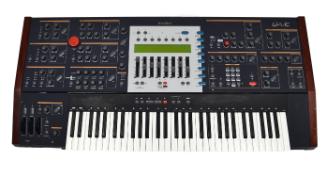
Photo credit: Meghan MacKrous, courtesy of the National Music Centre
Waldorf Electronics GmbH
1993
Available for use in Recording Studios
On View: Not currently on exhibit
isVirtual:
Photo credit: Don Kennedy
Streetly Electronics/ Mellotronics/ Mellotron
1971
Not available for use in Recording Studios
On View: On exhibit
isVirtual:
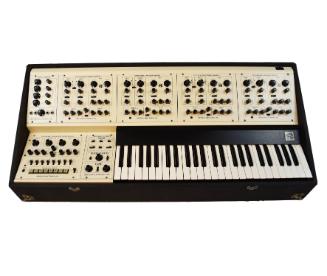
Photo credit: Meghan MacKrous, courtesy of the National Music Centre
Oberheim Electronics, Inc.
1976
Available for use in Recording Studios
On View: Not currently on exhibit
isVirtual:
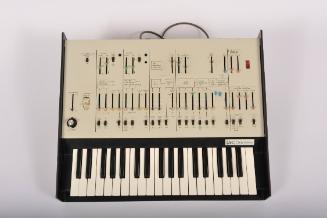
Photo credit: Don Kennedy
ARP Instruments, Inc.
1972
Available for use in Recording Studios
On View: Not currently on exhibit
isVirtual:
Photo credit: Meghan MacKrous, courtesy of the National Music Centre
Bode Sound Company
1977
Available for use in Recording Studios
On View: Not currently on exhibit
isVirtual:
Bösendorfer Klavierfabrik GmbH
1855
Not available for use in Recording Studios
On View: Not currently on exhibit
isVirtual:
Photo credit: Don Kennedy
Hammond Organ Company
1957
Not available for use in Recording Studios
On View: Not currently on exhibit
isVirtual:
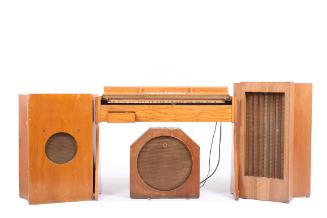
Photo credit: Don Kennedy
Maurice Louis Eugène Martenot
1975
Available for use in Recording Studios
On View: Not currently on exhibit
isVirtual:
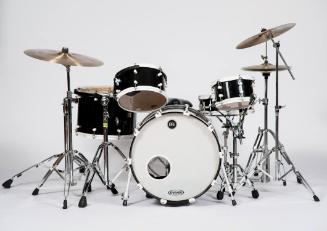
Photo credit: Don Kennedy
Obelisk
Unknown
Available for use in Recording Studios
On View: Not currently on exhibit
isVirtual:
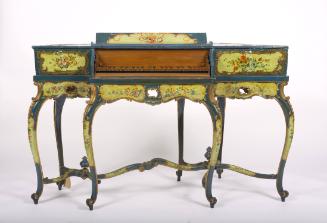
Photo credit: Don Kennedy
Francesco Bonafinis
c. 1560
Not available for use in Recording Studios
On View: On exhibit
isVirtual:
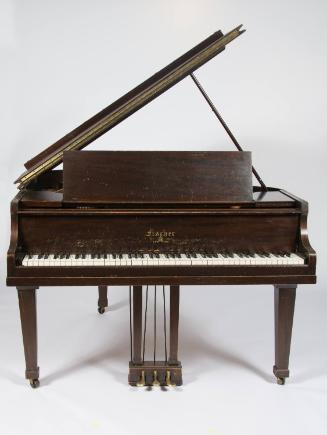
Photo credit: Don Kennedy
J. & C. Fischer Piano Company
1922
Not available for use in Recording Studios
On View: Not currently on exhibit
isVirtual:
Back