EN / FR
Skip to main content

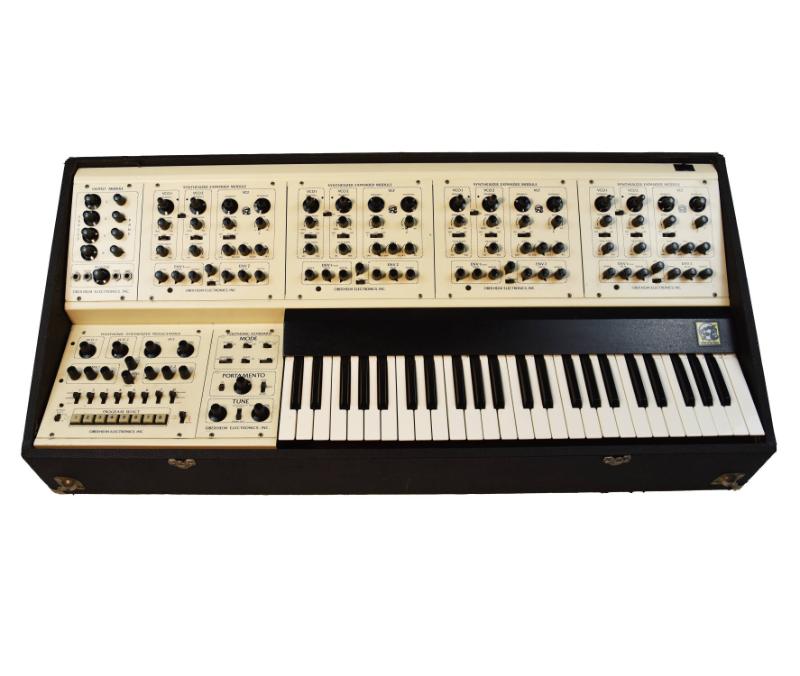
Oberheim Four-Voice

Available for use in Recording Studios
Not currently on exhibit
Artifact TypeSynthesizer
Manufacturer LocationLos Angeles, California, USA, North America
Date1976

A major improvement from its monophonic and Two Voice predecessors, the Oberheim Four Voice combined four synthesizers with a four-octave keyboard to produce four voices or notes simultaneously, and some very diverse and complex sounds. It was used through the late 70s and early 80s by artists such as Depeche Mode, Pink Floyd, John Carpenter, Herbie Hancock, Rush, Patrick Moraz, and Tangerine Dream. Despite its technological achievements, which also included programmable memory, the Four Voice was completely eclipsed in 1978 by the massively successful Sequential Circuits Prophet 5, which boasted more sophisticated features and a relatively more affordable price.


Operation/FunctionThis particular artifact is an analog, semi-polyphonic synthesizer that contains four Synthesizer Expander Modules (SEMs), each with two voltage-controlled oscillators, giving the instrument a total of eight oscillators and four independent voices across its four-octave (49 notes, C-C) chromatic keyboard. Available waveforms include sawtooth and variable pulse. Each SEM also contains a low-frequency oscillator (LFO) function, capable of producing triangle waveforms, a 12 dB/octave resonant filter capable of low-pass, high-pass, notch, and band-reject shapes, with an associated ADR (attack-decay-release) envelope generator, and a second, global ADR envelope generator. The instrument also contains a dedicated mixer module with individual outputs and volume and pan control for each of the four voices, portamento, CV/gate control, a tuning function, and a Polyphonic Synthesizer Programmer module with 16 programs and corresponding switches for moving between ‘memory’, ‘manual’, and ‘write’ modes. The oscillators’ frequency controls feature dual-concentric knobs, with both fine and coarse tuning.Cultural SignificanceThe Four-Voice, as well as its contemporaries – the SEM, Two-Voice, and Eight-Voice – remain among the most iconic synthesizers of the 1970s, primarily on account of their groundbreaking “building block” design. Unfortunately, these early polyphonic systems were overtaken by the massively successful Sequential Circuits Prophet 5 in 1978, which offered far more sophisticated features as well as true polyphony and a comparatively more affordable price tag.Technological SignificanceThe synthesizer is arguably one of, if not the most technologically significant contributions to the course of electronic music. Although earlier electronic instruments such as the Theremin, Clavivox, and Ondes Martenot offered new and unique ways of articulating sound, their sonic template was, for the most part, quite limited, capable of producing only a few distinct timbres. The modern synthesizer, on the other hand, was viewed as an integrated electronic orchestra, as it were, allowing the user to sculpt a wide and varied array of tones and gestures. What’s more, it allowed the user to modify their sounds in real time, seemingly without the sorts of physical limitations imposed on acoustic instruments. Of course, each instrument did come with its own characteristic tonal qualities and control limitations, however the wealth of opportunity inherent in the ability to manipulate and define nearly every parameter of sound structure solidified the synthesizer’s place as one of the most powerful musical innovations of the twentieth century. The concept of modular design was initially quite desirable to professional and studio musicians in that it allowed one to more or less completely customize their instrument and modify its functions as desired. Although modular-type systems are still in production today – the Buchla 200e, for instance, is based on the modular design of the Buchla 200 analog system – the advent of affordable eight-bit microprocessor-based integrated circuitry in the mid 1970s and the rise of programmable polyphonic instruments in the late 1970s resulted in the relative obsolescence of the discrete transistor-based systems of the early 1970s. Synthesizers increasingly began to adopt the smaller, more compact aesthetic exhibited in these performance-oriented instruments, especially that of the revered Minimoog. The once popular modular approach gave way to more streamlined designs that, while still offering users the ability to control numerous aspects of the instrument’s tone and gesture, limited the way in which the instrument could be operated. Although the modular synthesizer was highly regarded for its flexibility, it was also criticized for being largely unintuitive and cumbersome in its patching schemes; the smaller, integrated digital-analog hybrids of the late 1970s, such as the Sequential Circuits Prophet 5, though still not relatively inexpensive, responded more readily to the technological demands of an increasingly burgeoning consumer market. In the early 1970s, integrated circuits emerged in synthesizers, housing the many discrete components of transistor-based circuits within a single silicon chip, as they are often called. Integrated circuits were significantly smaller and less expensive to manufacture than the circuits from which they derived. With the introduction of the first affordable eight-bit microprocessors in the mid 1970s, such as the Zilog Z80, integrated circuits adapted to incorporate more sophisticated digital components. The Oberheim Four-Voice effectively straddles two eras in that it is primarily analog – only incorporating basic digital technologies within its keyboard – but also in that it offers elements of the sort of polyphonic and programmable capabilities that were made standard by later microprocessor-controlled hybrids, such as the Prophet 5. Throughout the 1980s and 1990s, synthesizers continued to develop following the compact, user-friendly model established in the mid 1970s. These instruments, however, generally moved away from the hybrid internal architecture to incorporate full digital control, computer-based tone generation, and digital signal processing, such as in the iconic Yamaha DX7 of 1983. Although shrouded in the success of the Prophet 5, instruments such as the Four- and Eight-Voice were technologically groundbreaking for the time, implementing early formats of polyphony and programmability, as well as additional innovative features such as sequencing and multi-timbrality. As in the Prophet 5, the Four- and Eight-Voice employed an innovative polyphonic function that was made possible through the use of a digital scanning keyboard that was designed by Dave Rossum and Scott Wedge of E-mu Systems in the early 1970s; similar voice allocation technologies were independently developed by the Allen Organ Company and Yamaha in the early 1970s. Yamaha employed their technology in the GX-1, while Rossum licensed E-mu’s version to both Oberheim and Sequential Circuits in the mid 1970s, in addition to incorporating it into a series of polyphonic keyboards for the company’s own modular system. Oberheim released the Four-Voice and Eight-Voice synthesizers in 1975 and 1977, respectively, with the Prophet 5 following in 1978. The polyphonic technology featured in these instruments was the popular choice in most synthesizers that followed, with exceptions such as the Polymoog, which attempted to assign independent sound generation circuitry per key in the form of divide-down architecture, similar to electric organs such as the Hammond Novachord. True polyphony, as seen in instruments such as the Korg PS-3100 of 1977, with independent oscillators, filters, and envelope generators for every single key on the instrument's keyboard, was neither financially nor technically feasible for most manufacturers to sustain at the time. The concept of the Synthesizer Expander Module, or SEM, was quite innovative for the time, offering a compact, self-contained, rackmount-style alternative to the popular monophonic synthesizers of the time such as the Minimoog and ARP Odyssey. The unit was revered independently for its lush and creamy tonal quality. The subsequent “building block” approach, so to speak, which saw the formation of the Two-, Four-, and Eight-Voice polyphonic systems was also groundbreaking for the time, merging the flexibility of the modular mindset with the aesthetic of integrated monophonic design, while also foreshadowing the innovative aspects of a burgeoning polyphonic architecture. The minute differences between each SEM unit lent these instruments a unique thickness in their tones; as a result, Oberheim instruments employing these units remain the most revered from the manufacturer. Moreover, the filters found in these early polyphonic systems were also quite unique, often serving to define the overall sound: although they featured only a two-pole (12 dB/octave) slope and not the more common four-pole (24 dB/octave) design found in the Minimoog and ARP 2600, they offered unusual shapes such as notch and band-reject. Perhaps the most sophisticated feature of Oberheim’s early polyphonic systems was their ability to function as multi-timbral instruments, meaning that each of the voices could produce distinct timbres that could be triggered to sound independently. Each SEM also had its own output and volume and pan control, which served as both a pro and a con depending on desired usage. Oberheim products continued to develop with increasing implementation of integrated circuits into the 1980s, as seen in the Polyphonic Synthesizer Programmer module, which became a hardwired component of the OB1 monophonic synthesizer of 1977, and the successful OB series of 1979 through 1985. Tom Oberheim is recognized as having pioneered many new projects in the development of polyphonic and analog-digital hybrid synthesizers, falling into the same category historically as Sequential Circuits designer Dave Smith and E-Mu Systems designers Dave Rossum and Scott Wedge.Users/PerformersNotable users of the Four-Voice – as well as its independent SEM and Eight-Voice counterparts – throughout the late 1970s and early 1980s included artists such as British new wave quartet Depeche Mode, French new-age pioneer Jean Michel Jarre, British progressive rock group Pink Floyd, American songwriter Gary Wright, acclaimed horror director and film composer John Carpenter, famed American jazz and avant-garde musicians Chick Corea and Herbie Hancock, popular music giant Prince, Canadian progressive rock group Rush, British art rock group Supertramp, former Yes and Moody Blues keyboardist and synthesizer aficionado Patrick Moraz (who had a customized Eight-Voice unit built for him in addition to customized Vako Orchestron and Moog Minimoog units), American pop singer and multi-instrumentalist Stevie Wonder, German electronic legends Tangerine Dream, and Greek film composer Vangelis.
Object number2000.02.06
Photo credit: Meghan MacKrous, courtesy of the National Music Centre
Waldorf Electronics GmbH
1993
Available for use in Recording Studios
On View: Not currently on exhibit
isVirtual:
Photo credit: Don Kennedy
Linn Electronics, Inc.
1982
Not available for use in Recording Studios
On View: On exhibit
isVirtual:
Photo credit: Don Kennedy
Ken Freeman
c. 1975
Available for use in Recording Studios
On View: Not currently on exhibit
isVirtual:
Photo credit: Don Kennedy
ARP Instruments, Inc.
1972
Available for use in Recording Studios
On View: Not currently on exhibit
isVirtual:
Photo credit: Meghan MacKrous, courtesy of the National Music Centre
Kurzweil Music Systems
1985
Available for use in Recording Studios
On View: Not currently on exhibit
isVirtual:
Photo credit: Don Kennedy
Electronic Music Studios (London) Limited
1972
Available for use in Recording Studios
On View: Not currently on exhibit
isVirtual:
Photo credit: Don Kennedy
Streetly Electronics/ Mellotronics/ Mellotron
1971
Not available for use in Recording Studios
On View: On exhibit
isVirtual:
Photo credit: Don Kennedy
Linn Electronics, Inc.
c. 1982
Available for use in Recording Studios
On View: Not currently on exhibit
isVirtual:
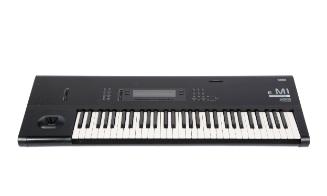
Photo credit: Don Kennedy
Korg, Inc.
c. 1988
Not available for use in Recording Studios
On View: Not currently on exhibit
isVirtual:
Photo credit: Don Kennedy
Sequential Circuits Inc.
c. 1981
Available for use in Recording Studios
On View: Not currently on exhibit
isVirtual:
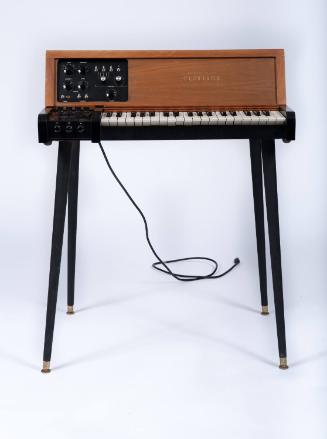
Photo credit: Don Kennedy
Raymond Scott Enterprises/Manhattan Research
1957
Not available for use in Recording Studios
On View: Not currently on exhibit
isVirtual:
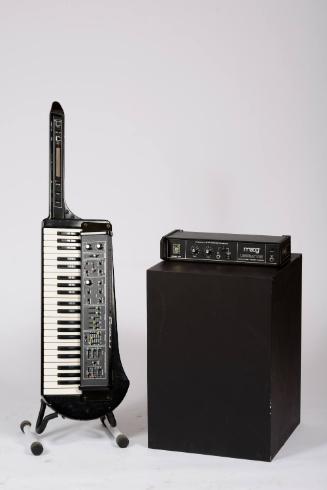
Photo credit: Don Kennedy
Moog Music, Inc.
1980
Not available for use in Recording Studios
On View: On exhibit
isVirtual:
Back