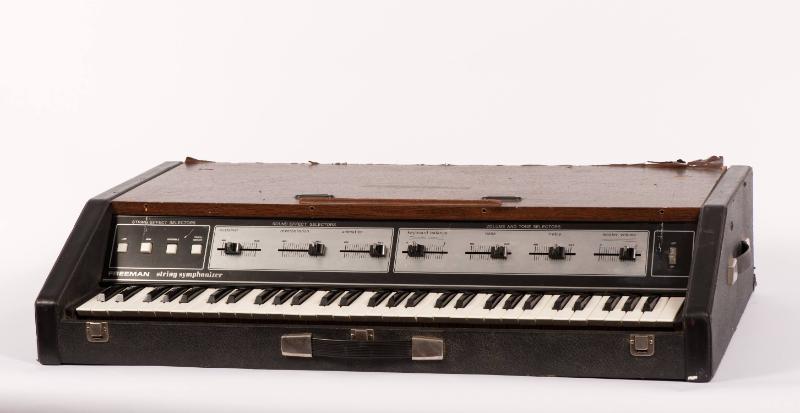
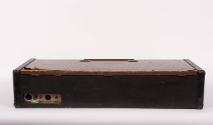
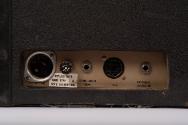
Freeman String Symphonizer
Available for use in Recording Studios
Not currently on exhibit
Not currently on exhibit
Artifact TypeSynthesizer
Designer
Ken Freeman
born 1947
Manufacturer
Chicago Musical Instruments Co. (CMI)
founded 1920
Manufacturer
Lowrey Organ Company
Datec. 1975
Operation/FunctionThis instrument contains two sets of oscillator banks, each with twelve independent oscillator circuits. Additional vibrato circuits – a variable unit ranging in depth of up to 4.5 Hz, and a continuous unit maintaining a held modulation of 2 Hz on the second oscillator bank – as well as circuits for implementing sustain, spring reverberation, equalization (attenuating higher and lower frequencies), keyboard balance, and volume are also built in. The first oscillator bank is effectively split into 8’ and 4’ ranges. Both oscillator banks contain divide-down circuitry for spanning the full five-octave (61 notes) keyboard. A power switch is located on the front panel, and a 1/4” audio output and expression pedal input are located on the rear panel.Cultural SignificanceThe string machine, though short-lived with the advent of far more powerful and flexible polyphonic synthesizers in the late 1970s, held an important place in the history of electronic instruments throughout the decade. Just as combo organs were intended to offer a cheaper and smaller alternative to the massively popular Hammond B-3 electronic organ, the string machine was devised as an alternative to the tape-machine samplers of the late 1960s and 1970s, especially those produced under the Mellotron brand. Mellotrons were used ubiquitously in a variety of popular genres, though perhaps most prominently in the burgeoning psychedelic and progressive rock styles of the era. Their orchestral string samples in particular came to define many influential recordings, including those from groups such as The Beatles, Genesis, Yes, Gentle Giant, Tangerine Dream, The Moody Blues, and countless others. Their design was flawed in several respects, however, with pre-recorded samples capable of playing for only eight seconds, and high-maintenance interior tape components prone to severe regulation issues. In response to this, the string machine employed a combination of technologies featured in electronic organs and analog synthesizers of the time – namely, divide-down oscillator circuitry to achieve full polyphony in the case of the former, and a series of oscillators, rather than pre-recorded samples, in conjunction with filters and frequency modulation effects in the case of the latter – to offer a realistic simulation of the revered acoustic string ensemble. These instruments – including the Freeman String Symphonizer, the ARP Solina, and the Elka Rhapsody – were used extensively throughout the mid 1970s, both in seminal prog recordings, such as Pink Floyd’s Wish You Were Here of 1975, and in the burgeoning disco genre.Technological SignificanceThe string machine was a highly innovative concept, both commercially and technologically, in that it merged the most useful technologies of several different instruments. Although it was initially designed to compete directly with tape-machine samplers such as those produced under the Mellotron brand, the idea was conceived in light of inventor Ken Freeman’s first interaction with a Selmer Clavioline. The Clavioline, similar in function to the Hammond Solovox, is a small-range electronic keyboard instrument from the late 1940s that was meant to accompany the performer of an electronic organ, providing distinct monophonic melodies in imitation of various other orchestral instruments; its synthesis capabilities were made possible through basic oscillator and filter combinations. The instrument’s most famous usage is arguably found at the introduction of The Beatles’ “Baby, You’re a Rich Man” from Magical Mystery Tour of 1967, which, as the story goes, was played by John Lennon rolling an orange up and down the keyboard. Freeman, a practicing London-based musician, ran his Clavioline through a delay unit during a 1966 experimentation with his band, The Unsquare Men, and discovered that chorus and vibrato effects emerged from the two signals being out of phase. When shifted to very slow and subtle movements, the result closely imitated the sound of an acoustic string ensemble. From this, Freeman sought to build an instrument that could do this across an entire keyboard, employing the divide-down circuitry of an electronic organ as his basis on account of its ability to produce full polyphony, a feature that synthesizers of the era were still well over a decade from achieving.
Through basic self-training in electronics, Freeman was able to produce three prototypes, the third of which became the production model manufactured by CMI in 1974. The first prototype was quite basic, employing only a single oscillator per voice. The second prototype, which remains his most famous, was far more sophisticated, implementing three oscillators per voice and a series of vibrato effects. The third prototype sat somewhere in between, with two oscillators per voice. A fourth prototype was modified out of the second in 1976. The built-in vibrato functions were vital to the instrument’s tone, allowing its independent oscillator units to drift in and out of tune so as to produce the requisite beating patterns that would serve to imitate acoustic behaviour. The instrument also offered other innovative features, including a spring reverb unit, and basic equalization between upper and lower frequency ranges. The string machine responded quite readily to the market of the mid 1970s: it offered a cheaper, smaller, and more reliable alternative to the tape-machine samplers of the late 1960s and early 1970s, especially those produced under the Mellotron brand; moreover, it also influenced the design of the burgeoning polyphonic synthesizer, putting added pressure on the latter’s ability to produce convincing string timbres. Despite the first prototype emerging just before 1970, the production model of the Freeman String Symphonizer did not appear until 1974 due to a delay in Freeman’s ability to secure an investor and professional manufacturer. In between this time, the Eminent 310 Unique emerged in 1972 as the first commercial string machine. It is likely that Freeman’s concept, for which he regrettably did not attempt to obtain any patents, was picked up by numerous European manufacturers – including the Netherlands-based Eminent and the Italy-based Logan Electronics – while he toured his prototypes in the early 1970s looking for funding. Other competing machines came in the form of the ARP String Ensemble, or Solina, which is regarded as the most well known and revered, the Elka Rhapsody, the Cruman Stringman, and the Roland RS202. The Solina was initially released as a stand-alone component of the Eminent 310 Unique, which was fashioned more as an organ with a string machine accompaniment; American synthesizer manufacturer ARP Instruments, Inc., made an agreement with Eminent to incorporate the Solina into their design, dubbed the String Ensemble, and sell it under their own moniker, hence the common interchange between the ‘Solina’ and ‘String Ensemble’ model names.Users/PerformersNotable users of the Freeman String Symphonizer throughout the 1970s include artists such as The Who, film composer Jan Hammer, Chick Corea, Camel, and Caravan. Users of competing string machines include Pink Floyd, who employed a Solina at the opening of 1975’s massively successful Wish You Were Here, and Jean Michel Jarre, who employed an Eminent 310 Unique in conjunction with a phaser effect on his 1976 new age masterpiece, Oxygène.Collection
Object number2007.01.13
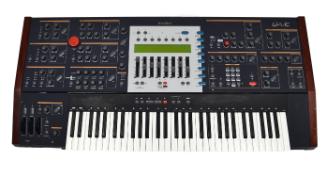
Waldorf Electronics GmbH
1993
Available for use in Recording Studios
On View: Not currently on exhibit
isVirtual:
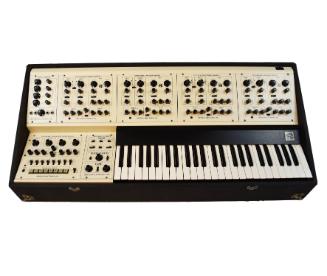
Oberheim Electronics, Inc.
1976
Available for use in Recording Studios
On View: Not currently on exhibit
isVirtual:

Kurzweil Music Systems
1985
Available for use in Recording Studios
On View: Not currently on exhibit
isVirtual:
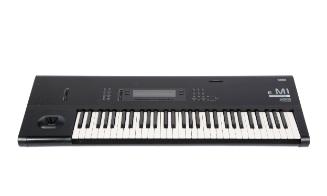
Korg, Inc.
c. 1988
Not available for use in Recording Studios
On View: Not currently on exhibit
isVirtual:
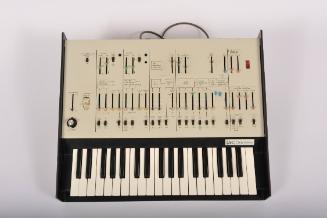
ARP Instruments, Inc.
1972
Available for use in Recording Studios
On View: Not currently on exhibit
isVirtual:

Hohner Musikinstrumente GmbH & Co. KG
c. 1967
Available for use in Recording Studios
On View: Not currently on exhibit
isVirtual:
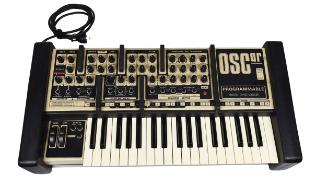
Oxford Synthesizer Company
c. 1984
Available for use in Recording Studios
On View: Not currently on exhibit
isVirtual:
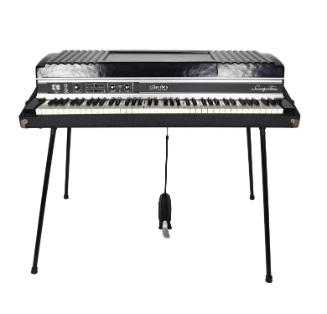
CBS Musical Instruments
c. 1980
Available for use in Recording Studios
On View: Not currently on exhibit
isVirtual:

Bode Sound Company
1977
Available for use in Recording Studios
On View: Not currently on exhibit
isVirtual:

CBS Musical Instruments
1966
Available for use in Recording Studios
On View: Not currently on exhibit
isVirtual:
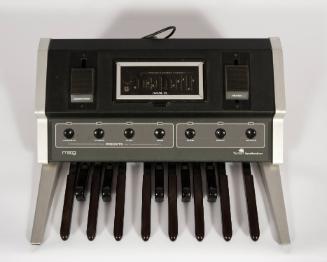
Moog Music, Inc.
c. 1978
Not available for use in Recording Studios
On View: On exhibit
isVirtual:

Linn Electronics, Inc.
1982
Not available for use in Recording Studios
On View: On exhibit
isVirtual: