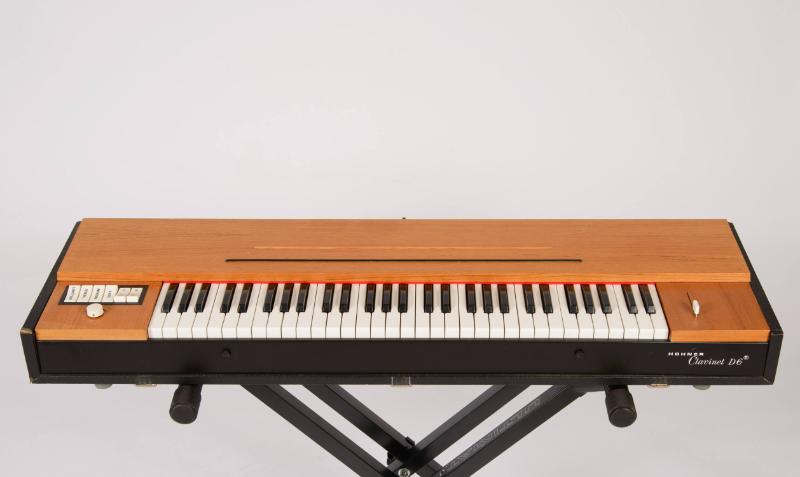
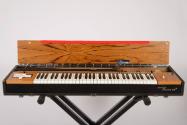
Hohner Clavinet D6
Available for use in Recording Studios
Not currently on exhibit
Not currently on exhibit
Artifact TypeClavichord, Electromechanical
Manufacturer
Hohner Musikinstrumente GmbH & Co. KG
Date1971
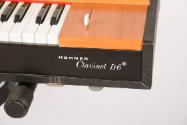
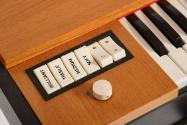
Operation/FunctionThis instrument has a five-octave (60 notes) compass, spanning F to E. The keys themselves are comprised of injection-molded plastic attached to metal frames. The instrument’s exterior is made of satin timber veneer front panel with black leather-cloth cover that reads ‘Hohner Clavinet D6’ at bottom right. Box ends are fitted at either side of the keyboard, with six tone controls associated with various combinations and filters of the pickups, and a volume knob located on left-hand side. There is also a dampening slider, which allows the user to vary the amount of resonance in the instrument. Tone controls read: ‘Brilliant’, ‘Treble’, ‘Medium’, ‘Soft’, ‘C/D’, and ‘A/B’. Includes four detachable wooden legs and a clear, acrylic music stand. Strings are constructed of steel, and tangents are metal covered with rubber tips. Contains two sets of single-coil electromagnetic pickups, and a mono 1/4" output jack. Also comes with a grey vinyl instrument cover. Powered by a 9 V battery.Cultural SignificanceThe Hohner Clavinet is among the most widely used electronic instruments in popular music, featuring what is perhaps one of the most recognizable and distinctive sounds among electric pianos. The model D6 of 1971 was the most successful of all Clavinet models offered between 1964 and 1982. In addition to instruments such as the Wurlitzer 200, the Fender Rhodes electric piano, and the Hammond B-3, the Clavinet is part of a group that is often referred to as the “classic” keyboard instruments of the 1960s and 1970s. Thanks to the combination of a portable and lightweight design and a unique sound, it remained among the most revered instruments of the era, employed by numerous musicians both in live and studio contexts. Despite a brief lull in the 1980s, its popularity has not waned significantly since the 1960s, with many musicians still desiring its highly unique tone and percussive nature. Although the electric piano has perhaps not had as groundbreaking an impact on the development of music as the electric guitar did in the 1950s, its use has spanned multiple genres, with the most prevalent examples of the Clavinet occurring in rock-, funk-, disco-, and jazz-based compositions. Just as the electric guitar had been originally developed for use with jazz combos – amplification emerging as a technical rather than aesthetic necessity so that the instrument could be heard among a large group of instruments – the electric piano was first popularized in the jazz scene of the late 1950s, with musicians as varied as Ray Charles and Sun Ra featuring early instantiations of the instrument in recordings and performances. The Clavinet was a key player in the revival of early music instruments that occurred in the twentieth century, allowing the clavichord to expand its role from a domestic instrument to one that can, for the first time, hold its own within a live setting as well. In so doing, the sound and functionality of the instrument was also redefined.Technological SignificanceWhen solid body electric guitars such as the Fender Telecaster and Gibson Les Paul emerged in the early 1950s, they revolutionized use of the instrument in popular music. Although iconic electric pianos such as the Wurlitzer 200, Fender Rhodes Mk I, and Clavinet D6, which were produced in the mid 1960s and early 1970s, were not quite as transformative, they certainly solidified a position as one of the most widely used keyboard instruments in popular music. The first electric pianos were designed in the 1920s, with one of the earliest examples emerging from the Berlin-based C. Bechstein piano manufacturers. Their Neo-Bechstein grand piano, which was developed in the late 1920s and produced into the early 1930s, removed the instrument’s soundboard and implemented a series of magnetic coils, essentially an early version of the pickup. Interestingly, the instrument also featured a built-in radio receiver and an external loudspeaker cabinet with an integrated record player; as such, the unit was meant to appeal to the commercial market as a sort of all-in-one home entertainment product. In the 1930s, inventor Benjamin Meissner developed an amplified vertical piano, patenting the pickup mechanism that was later used in most of the electric pianos of the 1960s and 1970s. Other early electric pianos include the Story & Clark Storytone of 1939, which weighed in at nearly half a ton.
The Clavinet is unique among electric pianos in that it is in fact an electrically amplified clavichord, and not, technically speaking, a piano. The clavichord is an early keyboard instrument that is considered to be the first predecessor to the piano in its use of a striking action. It first emerged during the late Middle Ages, and continued in popular use throughout the Renaissance and Baroque eras. Although its innovative percussive mechanism, which consists in a metal tangent fretting a string to simultaneously initiate vibrations and determine pitch, allowed for dynamic variations that were not readily available in contemporaneous keyboard instruments such as the harpsichord and portative organ, the simplicity of its hammer design meant that the instrument could not produce substantial volume levels. As such, the clavichord was designated primarily for composition and practice, and remained so until the arrival of the Clavinet in the early 1960s. The early twentieth century saw resurgent interest in early musical instruments as a reaction to the dominance of the piano in the nineteenth century. Instrument builders such as Arnold Dolmetsch (1858 – 1940, English) pioneered the popular authenticist movement that supported a return to the creation of historically accurate instruments, basing design principles and materials of construction on those historical models and writings still in existence. By mid century, two schools of thought regarding early instrument building – especially with respect to the reconstruction of harpsichords – had emerged: there were those, such as Dolmetsch, who advocated the historical approach, as well as those who sought to produce modernized versions of early instruments so as to offer new sonic possibilities while keeping intact historical methodologies and aesthetics. The latter were typically referred to as “revival” instruments. The harpsichord enjoyed a period of revival reconstruction starting in the late nineteenth and early twentieth centuries with reputed French piano manufacturers Érard and Pleyel merging the tone generation mechanism of the harpsichord with the construction techniques of the modern piano. While “authentic” instruments found extensive usage in the historically informed performance techniques of early and Baroque music, revival instruments found a particular niche with contemporary composers who were curious about exploring the new potentials and timbres of this reinvented instrument. The advent of electric amplification via pickups in the 1930s signaled a new approach to instrument design, calling into reconsideration the need for structures that were required to support fully acoustic amplification. Many instruments, including the guitar, piano, and harpsichord, were re-conceptualized according to this new model, resulting in an array of electric instruments that each offers a unique tone, function, and identity. The Clavinet, which was first introduced in 1964, can be seen as an extension of these early efforts. The instrument was designed by Hohner’s Ernst Zacharias, who had previously designed the Cembalet, an electrically amplified harpsichord, and the Pianet, an electric instrument that merges the design of the harpsichord and piano. In the Pianet, a hammer with an adhesive foam pad on its free end strikes and attaches itself to the free tip of a metal reed from below. As gravity pulls the hammer downward to release, the reed is also pulled down until the adhesion is broken, causing it to vibrate in rebound motion; later models of the Pianet used a suction mechanism to produce the same effect. The Clavinet employs what is essentially the same action as the clavichord, perhaps the main difference being that in the former, the tangent is located directly underneath the key, instead of at its far end, and strikes the string from above instead of below. As aforementioned, the clavichord was not suitable for live use precisely because its tone is far too soft, even at its loudest. With the inclusion of electromagnetic pickups, the Clavinet was poised for expanded usage, despite being also initially designed for home use. The Clavinet, and especially the model D6, became hugely sought after by popular musicians who desired its unique percussive tone, which bore little resemblance to that of its acoustic predecessor. One particularly unique feature of the Clavinet as compared with similar electric pianos of the era, such as the Wurlitzer 200 and Fender Rhodes Mk I, is that the former employs two sets of pickups, much like an electric guitar, instead of only one. Just as in an electric guitar, the user can select either one or both of the pickups to produce slightly different tones. A pickup, which is a type of transducer similar to a microphone, consists in a permanent magnet (a single magnet that achieves the same effect of two polarized magnets) that maintains a constant electromagnetic field, and a coil of copper wire that is wrapped around the magnet. The tone-generating component of the electric musical instrument is placed near the magnet. When the tone generator vibrates, a disturbance is created in the electromagnetic field, which in turn induces a voltage in the coil. This electrical signal is then sent to an amplification system, generally consisting in a preamplifier, amplifier, and loudspeaker. Most modern pickups come in the form of the humbucker pickup, which employs two coils in inverse phase so as to reduce the amount of extraneous noise or AC hum included in the signal. The first dedicated pickup was designed by Hawaiian steel-guitar player, George Beauchamp, in collaboration with Adolph Rickenbacker in the early 1930s. The use of pickups rendered any need for a hollow wooden soundboard or resonating structure obsolete in associated instruments, as reflected in the design of the solid-body electric guitar. Of course, the use of pickups also meant that the conventional tone of the acoustic instruments to which they were applied, such as guitars, pianos, and harpsichords, could be modified through the use of external effects pedals and amplification systems. Due to its guitar-like quality, this was often the case with the Clavinet.
Throughout the Clavinet’s nearly twenty-year production period, the instrument underwent seven different revisions, each model adapting and improving both the technological and cosmetic aspects of its predecessor. The first two models, the model I and II, released in the mid 1960s, were intended specifically for home use. As such, the model I incorporated a built-in mono loudspeaker and amplifier. The tone controls of the model I were quite limited, essentially only offering the user to choose between one or both of the two sets of pickups. Like most later models of the Clavinet, the model I employed single-coil pickups; single-coil pickups, which were often noisy, were replaced by double-coil humbucker pickups in most modern electric instruments. The model L emerged in 1968 with primarily cosmetic alterations, including a triangular, spinet-like body, and reverse-coloured keys (black naturals, white accidentals). This instrument was replaced by the model C, with its red vinyl exterior, and the model D6 of 1971, which was arguably the most popular model of Clavinet, incorporating four basic tone controls as well as a much cleaner six-core pickup. In addition to its expanded filtering controls, the D6 also implemented a slider that lets the user vary the amount of resonance in the instrument, ranging from dull to full. The last two models, the E7 and Duo of 1978 through to 1982, were designed specifically for use in live contexts and with increasingly more powerful amplification systems, with the latter instrument combining both the Pianet and Clavinet into a single enclosure. The polymer rubber tips that were employed in all models proved to be something of a problem in that they would eventually begin to disintegrate, becoming sticky and, eventually, unusable; it was not until 1999 that Hohner was able to offer more reliable replacement tips to the commercial market. Moreover, the strings that are employed in the lower register of most Clavinets are slightly longer than guitar strings; thus, despite being similar in material and gauge, the guitar string was not available as an easily accessible replacement option. Generally speaking, the instrument’s main drawback is that replacement parts were, by and large, made available neither then nor now, making a full service of the instrument something of a cumbersome task. Another frustrating aspect of most Clavinet models is their use of battery power instead of direct AC power. The direct feel of the Clavinet, which results from the tangents being located beneath the player’s fingers, gave the user a more immediate action that was well suited to rhythmic playing, but less so to expressive articulation. That being said, the Clavinet was certainly an improvement upon the clavichord, thanks in no small part to the inclusion of pickups that allowed the instrument to be used in more varying contexts. Most Clavinets are small and portable, often featuring detachable legs and durable Tolex covering, though perhaps not being as lightweight as instruments such as the Wurlitzer 200.
In addition to those employing strings, electric pianos were also designed in a more experimental manner, integrating metal reeds and tines as in the Wurlitzer 200 and Fender Rhodes electric piano, respectively. In the late 1960s, Hohner also produced the Electra-Piano (not to be confused with the RMI Electrapiano), which features a similar reed-based tone generator to that used in the Wurlitzer 200 and hammer action to that used in the Fender Rhodes electric piano. Perhaps the most notable user of this instrument was John Paul Jones of Led Zeppelin, who employed the instrument on tracks such as “Stairway to Heaven” and “Misty Mountain Hop” from IV (1971) and “No Quarter” from Houses of the Holy (1973), the latter of which featured the instrument being processed by an EMS VCS3 synthesizer to produce the warbling tremolo effect characteristic of the Fender Rhodes electric piano. Other string-based electric pianos, such as the Yamaha CP-70, feature a more conventional design with the inclusion of a basic piano frame. Instruments such as the Pianet and Baldwin electric harpsichord are often referred to as electric pianos, however, strictly speaking, they ought not be classified with such instruments as they employ a plucked mechanism, similar to that of the harpsichord, rather than the striking mechanism that defines the piano. One unique aspect of the electric guitar is that its tone can be significantly altered through the use of multiple pickups and effects, making it in some cases unrecognizable from its acoustic predecessor. Although the same processing can be applied to electric pianos, instruments such as the Clavinet are recognized as already inherently offering an alternative sound to that of the traditional string-based piano. As such, when considered specifically in terms of sound, they are often viewed not primarily as a variation of the electric piano, but as an independent instrument with a distinct identity. The implementation of pickups into these instruments was vital not only in defining their sound, but also the nature of their external construction. With the necessity for a resonating soundboard and bulky supporting frame eliminated, electric pianos could be constructed to be much more compact and light weight.Users/PerformersIconic usage of the Clavinet throughout the 1960s and 1970s includes: The Band’s “Up On Cripple Creek” from their self-titled album of 1969, which was the first time the instrument had been used with an external effects pedal, namely a wah pedal; Pink Floyd’s “Have a Cigar” from 1975’s Wish You Were Here; Led Zeppelin’s “Trampled Under Foot” and “Custard Pie” from Physical Graffiti of 1975; The Trammps’ “Disco Inferno” from Disco Inferno of 1976; Fleetwood Mac’s “You Make Loving Fun” from Rumours of 1977; and, The Rolling Stones’ “100 Years Ago” from Goats Head Soup of 1973, which was performed by Billy Preston. Perhaps the most notable user of the Clavinet was Stevie Wonder; the instrument defines the sound of many of his seminal recordings, including “Superstition” from Talking Book of 1972 and “Higher Ground” from Innervisions of 1973, the latter of which featured the instrument processed through a Mu-Tron III envelope filter pedal.Collection
Object number2002.05.20

Hohner Musikinstrumente GmbH & Co. KG
c. 1966
Available for use in Recording Studios
On View: Not currently on exhibit
isVirtual:

Hohner Musikinstrumente GmbH & Co. KG
c. 1950
Not available for use in Recording Studios
On View: Not currently on exhibit
isVirtual:

Hohner Musikinstrumente GmbH & Co. KG
c. 1967
Available for use in Recording Studios
On View: Not currently on exhibit
isVirtual:
Hohner Musikinstrumente GmbH & Co. KG
Not available for use in Recording Studios
On View: Not currently on exhibit
isVirtual:

Hohner Musikinstrumente GmbH & Co. KG
Not available for use in Recording Studios
On View: On exhibit
isVirtual:

Höfner GmbH & Co. KG
20th Century
Not available for use in Recording Studios
On View: Not currently on exhibit
isVirtual:

Eric Herz
1976
Not available for use in Recording Studios
On View: Not currently on exhibit
isVirtual:
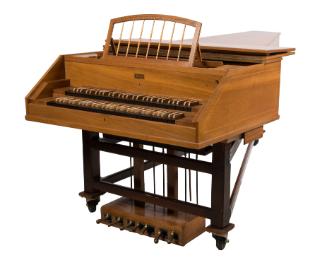
Kurt Wittmayer
1954
Not available for use in Recording Studios
On View: Not currently on exhibit
isVirtual:
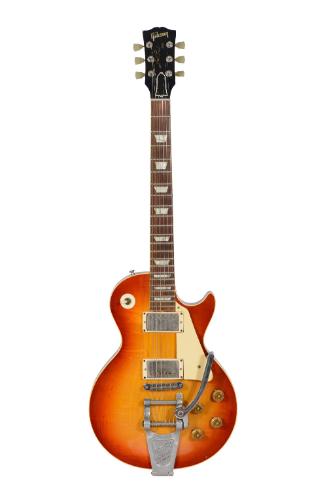
Gibson Guitar Corporation
1959
Not available for use in Recording Studios
On View: Not currently on exhibit
isVirtual:
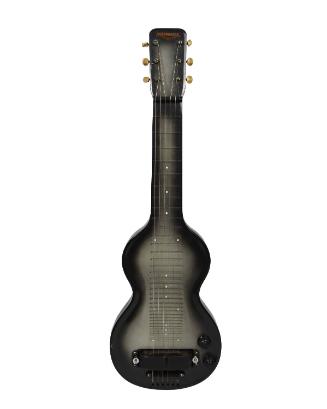
Rickenbacker International Corporation
c. 1941
Available for use in Recording Studios
On View: Not currently on exhibit
isVirtual:
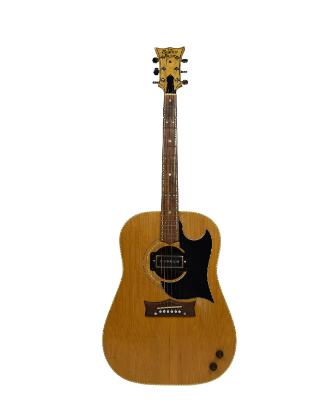
Grammer Guitar Inc (Ampeg Corporation)
1971
Available for use in Recording Studios
On View: Not currently on exhibit
isVirtual:
2009
Available for use in Recording Studios
On View: Not currently on exhibit
isVirtual: