EN / FR
Skip to main content

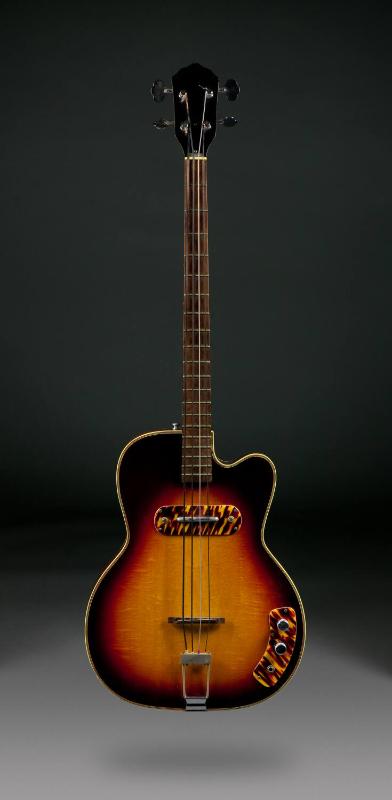
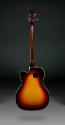
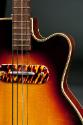
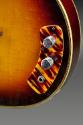
Gary Buck Bass Guitar

Not available for use in Recording Studios
On exhibit
On exhibit
Artifact TypeGuitar, Electric
Manufacturer LocationUSA
Date20th Century

Kay guitars were played by Paul McCartney, Eric Clapton and Bob Dylan, but this particular electric bass guitar was owned by Canadian country superstar Gary Buck. He was a country Renaissance man: a singer-songwriter, producer and record exec, the co-founder of the Canadian Country Music Association and the founder of the Canadian Country Music Hall of Fame, into which he was inducted in 2001.


Donated by Deb Buck

Operation/FunctionThis particular artifact consists of a solid wooden body, four steel strings, a wooden neck, and accompanying machine heads and metal fingerboard.Cultural SignificanceThe cultural significance of both the acoustic and electric guitar cannot be overstated. Although the acoustic guitar is perhaps not used quite as commonly as the electric guitar, both have remained throughout the course of the twentieth century one of, if not the most, exploited instruments in popular music.Technological SignificanceBoth acoustic and electric guitars have undergone a number of technological advances that have improved their tone and construction quality, however it is the mere advent of the latter that has had the most lasting technological impact. Les Paul (1915 – 2009) helped pioneer both the design and popularity of the electric guitar, and is considered one of the founders of solid-body technology, having produced a prototype called “The Log” in 1940. Additionally, Paul also conducted a number of experiments in guitar design and recording technology, essentially establishing the revolutionary practices of multi-track recording and overdubbing, as well as delay and phasing effects. Fender was the first company to produce a commercial solid-body electric guitar in 1950 with the release of the Telecaster, and Gibson responded in 1952 with the Les Paul, named in recognition of the fact that Paul helped design the instrument with Gibson’s president of the time, Ted McCarty. Fender followed in 1951 with the release of the first commercial solid-body electric bass guitar, the Precision Bass. Gibson contributed several innovations throughout its history, including the Tune-o-matic bridge, which first featured on the Les Paul and remains the standard bridge of Gibson electric guitars, as well as the first semi-hollow-body electric guitar in 1958. Gibson also produced the first commercial humbucker pickup, designed in 1955 and patented in 1959, which eliminated the hum of single-coil pickups without compromising the tone quality. Although the acoustic guitar is not recognized as having made as significant a contribution in instrument technology, it has also seen many important changes throughout its history. The instrument finds it origins in the lute, which featured a varying number of gut strings and was most popular throughout the Renaissance, and the Baroque guitar, which featured five sets or courses of gut strings and eclipsed the popularity of the lute in the early eighteenth century. The majority of usage of such instruments took place in Europe, however a number of variants of these instruments, such as the Middle Eastern oud, were equally as prevalent. The modern guitar shares the same basic construction approach as its predecessors, consisting of a curved wooden sound box and soundboard, designed to optimize amplification and tone quality, as well as a neck and fretboard across which a series of tuned strings are strung. Although performance techniques and tuning systems have been considerably adapted over the years, the same basic approach of plucking or strumming with one hand and coordinating frets with the other has also been maintained. Most modern pickups come in the form of the humbucker pickup, which employs two coils in inverse phase so as to reduce the amount of extraneous noise or AC hum included in the signal. The first dedicated pickup was designed by Hawaiian steel-guitar player, George Beauchamp, in collaboration with Adolph Rickenbacker in the early 1930s. The use of pickups rendered any need for a hollow wooden soundboard or resonating structure obsolete in associated instruments. Of course, the use of pickups also meant that the conventional tone of the acoustic instruments to which they were applied, such as guitars, pianos, and harpsichords, could be modified through the use of external effects pedals and amplification systems.Users/PerformersGary Ralph Buck was born 21 March 1940 in Thessalon, Ontario. Buck is regarded as having been one of the most prolific and accomplished personalities in Canadian country music, having worked throughout his nearly half-century career as a singer, songwriter, record producer, and recording executive, founding his own hugely successful recording and publishing label that worked with both Canadian and American artists. Professionally, he has been associated with the Country Music Association in Nashville, Tennessee, for which he served five terms as international director and the Canadian Country Music Association (CCMA, formerly known as the Academy of Country Music Entertainment), which he co-founded with Hank Smith. Perhaps his greatest contribution in this respect, however, is the Canadian Country Music Hall of Fame, which he founded and was inducted into both in artist and builder categories in 2001. He was raised in Sault Sainte Marie, Ontario, having played guitar and bass as a child. He established his early singing career on CKCY radio with The Country Caravan, headed by Ray Kovisto, while also pursuing a semi-pro baseball practice. His first professional recordings were released by Toronto’s Canatal outfit in 1959, with his first international hit, “Happy to be Unhappy”, emerging on the American Petal label in 1963; a Top 40 hit, “The Wheel Song”, was released shortly thereafter. At the time, he was only the third Canadian to register on the Billboard Magazine country charts, after Hank Snow and Myrna Lorrie. In the mid 1960s, Buck relocated to Kitchener, Ontario, heading his own show, The Gary Buck Show, on CKCO television, which ran from 1967 through to 1969. Starting in the late 1960s, Buck also began performing sporadically at Nashville’s famed Grand Ole Opry. As a producer, Buck worked with artists such as Dallas Harms, Gene Watson, Al Cherny, Tommy Hunter, and the Mercey Brothers, and was highly sought after throughout the 1970s. In 1970, Buck began working as the general manager of Capitol Records’ publishing subsidiary, Beechwood Music. Within only a year of holding this position, he helped organize the recording of numerous successful covers, including Anne Murray’s version of Gene MacLellan’s “Snowbird”. In the same year, he began his first two-year term as the international director of the Country Music Association in Nashville. In 1971, Buck left Capitol Records and founded his own publishing and recording company, Broadlands Music. This company saw various shifts in control throughout the late 1970s and early 1980s, until being renewed as Broadlands International Records in 1990, based in Nashville. Buck continued to work as a record producer throughout the remainder of his life. The Canadian Country Music Association (CCMA) and Canadian Country Music Hall of Fame were founded in 1976 and 1989, respectively, though the latter began inducting individuals as early as 1984. While initially having been established in Kitchener, the Canadian Country Music Hall of Fame was relocated to Calgary in 1999, where it was based on the Stampede Grounds until 2009. Among his notable accolades are the Newcomer of the Year award from Cashbox magazine in 1963, Top Male Singer from the Big Country Awards in 1975, and Top Producer from the Big Country Awards in 1975. Buck died of cancer in Didsbury, Alberta on 14 October 2003.
Object numberCCMHF.2009.01.385
Photo credit: Don Kennedy
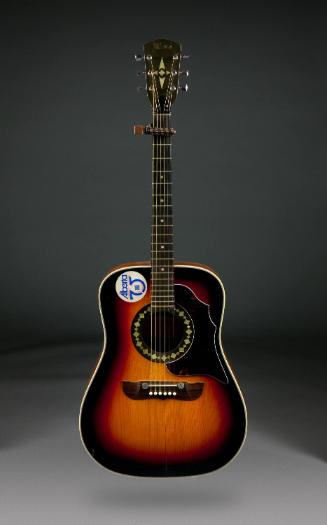
Framus (Franconian Musical Instruments Manufacture)
20th Century
Not available for use in Recording Studios
On View: Not currently on exhibit
isVirtual:
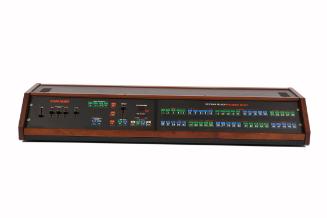
Photo credit: Don Kennedy
CBS Musical Instruments
c. 1982
Available for use in Recording Studios
On View: Not currently on exhibit
isVirtual:
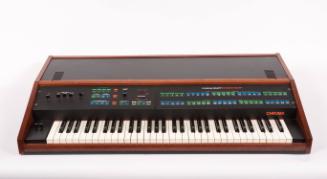
Photo credit: Don Kennedy
CBS Musical Instruments/Rhodes
c. 1982
Available for use in Recording Studios
On View: Not currently on exhibit
isVirtual:
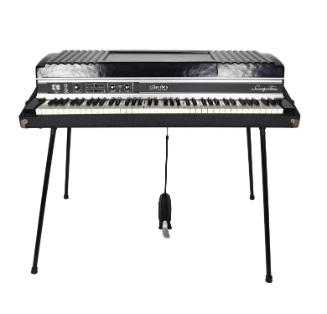
Photo credit: Meghan MacKrous, courtesy of the National Music Centre
CBS Musical Instruments
c. 1980
Available for use in Recording Studios
On View: Not currently on exhibit
isVirtual:
Photo credit: Don Kennedy
CBS Musical Instruments
1966
Available for use in Recording Studios
On View: Not currently on exhibit
isVirtual:
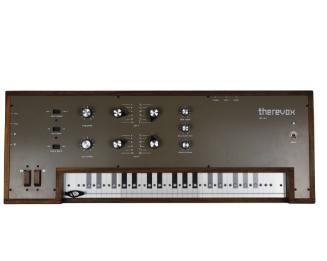
Photo credit: Meghan MacKrous, courtesy of the National Music Centre
Therevox Custom Musical Instruments
2014
Available for use in Recording Studios
On View: Not currently on exhibit
isVirtual:
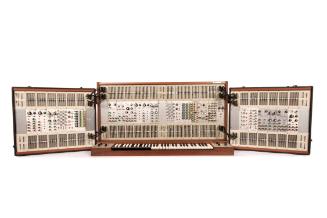
Photo credit: Don Kennedy
ARP Instruments, Inc.
1976
Available for use in Recording Studios
On View: Not currently on exhibit
isVirtual:
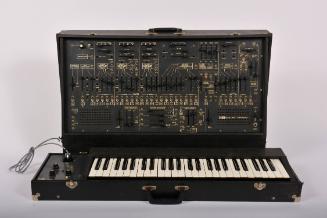
Photo credit: Don Kennedy
ARP Instruments, Inc.
c. 1972
Not available for use in Recording Studios
On View: On exhibit
isVirtual:
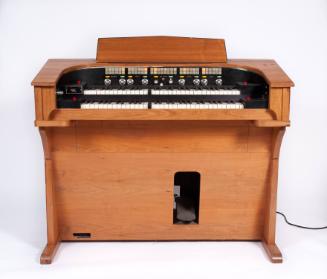
Photo credit: Don Kennedy
Chamberlin Instruments Company, Inc.
1970
Not available for use in Recording Studios
On View: On exhibit
isVirtual:
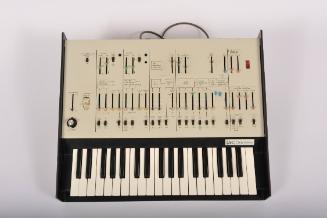
Photo credit: Don Kennedy
ARP Instruments, Inc.
1972
Available for use in Recording Studios
On View: Not currently on exhibit
isVirtual:
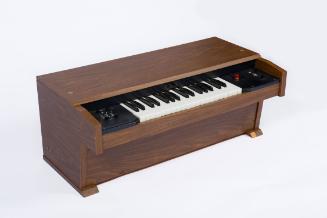
Photo credit: Don Kennedy
Chamberlin Instruments Company, Inc.
1979
Available for use in Recording Studios
On View: Not currently on exhibit
isVirtual:
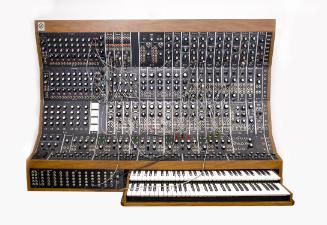
Photo credit: Don Kennedy
R.A. Moog Inc./ Moog Music Inc. (division of Norlin Music Instruments, Ltd.)
c. 1973
Available for use in Recording Studios
On View: Not currently on exhibit
isVirtual:
Back