Ken Elton Kesey
1935 - 2001
BornLa Junta, Colorado, USA
DiedPleasant Hill, Oregon, USA
BiographyIt goes without saying that the most well known member of the Merry Pranksters troupe is its founder, author Ken Elton Kesey. Kesey was born 17 September 1935 in La Junta, Colorado, relocating in 1946 with his parents to a dairy farm in Springfield, Oregon. Despite his later reputation, Kesey led a relatively normal early life as an amateur wrestling star, marrying his high school sweetheart, Norma Faye Haxby, in 1956, with whom he fathered three children, and joining the Beta Theta Pi fraternity chapter at the University of Oregon, where he graduated with a degree in journalism in 1957. Upon receiving the prestigious Woodrow Wilson National Fellowship in early 1958, Kesey relocated to Palo Alto, California to pursue graduate studies in creative writing at Stanford University. In the following year, he was encouraged by a neighbor and graduate student in the university’s psychology department to volunteer in a classified, government-sponsored study of the effects of psychoactive drugs – then still legal – taking place at the nearby Menlo Park Veterans Hospital. Kesey was later employed by the hospital as an attendant in the psychiatric ward and this, combined with the detailed documentation he kept of his drug trip experiences, would serve as the inspiration for a manuscript that would become One Flew Over the Cuckoo’s Nest. The novel was met with critical acclaim upon its release in 1962, allowing Kesey and his family to relocate to a new home in the secluded forested hills of La Honda, California. Soon after, this house became the site of the infamous Acid Tests, a series of parties Kesey held for others to try LSD and related hallucinogenic drugs such as psilocybin and mescaline, the space often outfitted with lighting and sound meant to enhance the experience. As the story goes, even the trees in the surrounding area were painted in DayGlo, or blacklight-reactive ink. A newly formed local band called The Warlocks frequently performed at the house; this band, fronted by folk guitarist Jerry Garcia, and featuring members Bill Kreutzmann, Phil Lesh, Bob Weir, and Ron McKernan, would become known from 1966 as The Grateful Dead.
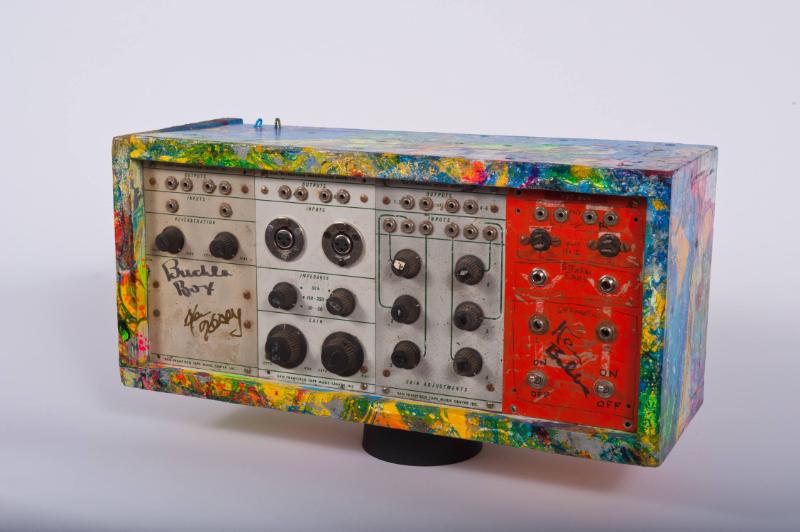
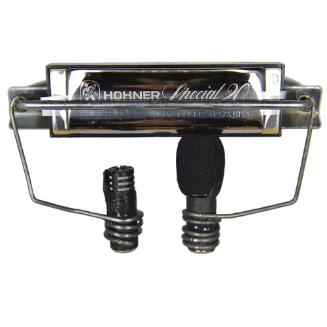
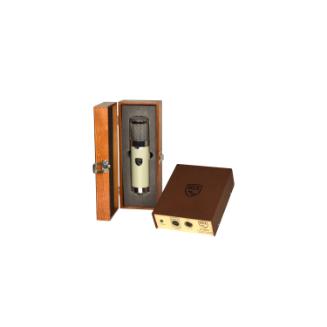
Following the success of One Flew Over The Cuckoo’s Nest, a stage play adaptation was developed, premiering in New York City in 1963. Kesey took his family on a road trip across the country to attend the premiere and, upon returning, felt that it would be a meaningful experience to repeat and document on film, this time with members of the Acid Tests in tow. Kesey’s next novel, Sometimes a Great Notion, was published in early 1964 and, on June 17 of that year, Kesey and his troupe of Acid Test attendees, now christened the Merry Pranksters, embarked on their first cross-country trip, headed for the World’s Fair in New York. Their vehicle of choice was a 1939 International Harvester school bus that had been converted into a camper, complete with bunk beds and a small kitchen, purchased from a San Francisco advert. The destination marquee read ‘Furthur’, and the exterior was painted by troupe members in freely formed Technicolor strokes of bright blues, yellows, and reds. A basic sound system – though not the one that makes up this particular artifact – was also outfitted on the bus to project crude musical performances and rambling vocal commentaries. Throughout their travels, the Merry Pranksters got stuck in a bog in the Arizona River, lost a member to a bad LSD trip in Texas, and met the famed beatnik poet, Alan Ginsberg, who took the group to Millbrook, New York to meet Dr. Timothy Leary, a former professor of psychology at Harvard University and staunch advocate of psychedelic drugs, who famously advised the newly emerging psychedelic generation to, “Turn on, tune in, and drop out.” Furthur was driven by Prankster Neal Cassady, who was depicted as the character Dean Moriarty in Jack Kerouac’s seminal On the Road of 1957. Although this first bus trip was a few years too early to have initiated the counterculture movement that exploded in San Francisco in the late 1960s, it is often regarded as having single-handedly defined the psychedelic scene that informed much of the 1960s, including the counterculture. Indeed, Kesey famously cited that the Merry Pranksters were, “too young to be beats, and too old to be hippies.” The audio and video collected while on the bus trip were recorded separately and reproduced at different speeds, making it difficult to be synchronized with the means of the time; it would not be another thirty years until the appropriate digital technology emerged to enable some form of coordination. That being said, the rough documentation the group was able to gather provided fellow American author Tom Wolfe (born 2 March 1931 in Richmond, Virginia) with the material required to form the events of the novel The Electric Kool-Aid Acid Test of 1968. Several other road trips followed in subsequent years, including another cross-country trip that took place in the summer of 1969, with a new bus, Furthur II, featuring this particular artifact, designed by fellow Prankster, Donald Buchla, as its basic sound system. This time, the bus was headed to the Woodstock Festival in Bethel, New York.
Kesey lived out his later life with his family on a farm in Pleasant Hill, Oregon, teaching at the University of Oregon, and succumbed to complications due to liver cancer on 10 November 2001. His coffin, which was painted in a manner similar to the Furthur busses, was transported to a gravesite on his farm in a replication of the original bus. He was buried next to his son, Jed, who passed away in 1984 following a car accident. One Flew Over the Cuckoo’s Nest was adapted into a major motion picture in 1975, starring Jack Nicholson, and earning five academy awards including Best Picture, Best Actor, and Best Director. In addition to Kesey, Cassady, and Buchla, other notable Pranksters included Kesey’s closest friend, Ken Babbs, Carolyn “Mountain Girl” Garcia, former wife of Jerry Garcia and mother of a fourth child had by Kesey, Jane Burton, Del Close, Paul Krassner, and Stewart Brand. The Merry Pranksters were also known to have had relations with the notorious Hell’s Angels motorcycle gang, whom they had met through freelance journalist Hunter S. Thompson, with many having attended the original Acid Test parties despite having never previously taken the drug. In 2011, Magic Trip, a documentary featuring much of the original footage from the first trip, synchronized as much as is possible, was released. The original Furthur bus still resides in Kesey’s family farm in Oregon.
Following the success of One Flew Over The Cuckoo’s Nest, a stage play adaptation was developed, premiering in New York City in 1963. Kesey took his family on a road trip across the country to attend the premiere and, upon returning, felt that it would be a meaningful experience to repeat and document on film, this time with members of the Acid Tests in tow. Kesey’s next novel, Sometimes a Great Notion, was published in early 1964 and, on June 17 of that year, Kesey and his troupe of Acid Test attendees, now christened the Merry Pranksters, embarked on their first cross-country trip, headed for the World’s Fair in New York. Their vehicle of choice was a 1939 International Harvester school bus that had been converted into a camper, complete with bunk beds and a small kitchen, purchased from a San Francisco advert. The destination marquee read ‘Furthur’, and the exterior was painted by troupe members in freely formed Technicolor strokes of bright blues, yellows, and reds. A basic sound system – though not the one that makes up this particular artifact – was also outfitted on the bus to project crude musical performances and rambling vocal commentaries. Throughout their travels, the Merry Pranksters got stuck in a bog in the Arizona River, lost a member to a bad LSD trip in Texas, and met the famed beatnik poet, Alan Ginsberg, who took the group to Millbrook, New York to meet Dr. Timothy Leary, a former professor of psychology at Harvard University and staunch advocate of psychedelic drugs, who famously advised the newly emerging psychedelic generation to, “Turn on, tune in, and drop out.” Furthur was driven by Prankster Neal Cassady, who was depicted as the character Dean Moriarty in Jack Kerouac’s seminal On the Road of 1957. Although this first bus trip was a few years too early to have initiated the counterculture movement that exploded in San Francisco in the late 1960s, it is often regarded as having single-handedly defined the psychedelic scene that informed much of the 1960s, including the counterculture. Indeed, Kesey famously cited that the Merry Pranksters were, “too young to be beats, and too old to be hippies.” The audio and video collected while on the bus trip were recorded separately and reproduced at different speeds, making it difficult to be synchronized with the means of the time; it would not be another thirty years until the appropriate digital technology emerged to enable some form of coordination. That being said, the rough documentation the group was able to gather provided fellow American author Tom Wolfe (born 2 March 1931 in Richmond, Virginia) with the material required to form the events of the novel The Electric Kool-Aid Acid Test of 1968. Several other road trips followed in subsequent years, including another cross-country trip that took place in the summer of 1969, with a new bus, Furthur II, featuring this particular artifact, designed by fellow Prankster, Donald Buchla, as its basic sound system. This time, the bus was headed to the Woodstock Festival in Bethel, New York.
Kesey lived out his later life with his family on a farm in Pleasant Hill, Oregon, teaching at the University of Oregon, and succumbed to complications due to liver cancer on 10 November 2001. His coffin, which was painted in a manner similar to the Furthur busses, was transported to a gravesite on his farm in a replication of the original bus. He was buried next to his son, Jed, who passed away in 1984 following a car accident. One Flew Over the Cuckoo’s Nest was adapted into a major motion picture in 1975, starring Jack Nicholson, and earning five academy awards including Best Picture, Best Actor, and Best Director. In addition to Kesey, Cassady, and Buchla, other notable Pranksters included Kesey’s closest friend, Ken Babbs, Carolyn “Mountain Girl” Garcia, former wife of Jerry Garcia and mother of a fourth child had by Kesey, Jane Burton, Del Close, Paul Krassner, and Stewart Brand. The Merry Pranksters were also known to have had relations with the notorious Hell’s Angels motorcycle gang, whom they had met through freelance journalist Hunter S. Thompson, with many having attended the original Acid Test parties despite having never previously taken the drug. In 2011, Magic Trip, a documentary featuring much of the original footage from the first trip, synchronized as much as is possible, was released. The original Furthur bus still resides in Kesey’s family farm in Oregon.




inventor, radio pioneer | 1900 - 1939