Stompin’ Tom Connors
singer-songwriter, guitarist | 1936 - 2013
BornCharles Thomas Connors on February 9, 1936 in Saint John, New Brunswick, Canada
DiedMarch 6, 2013 in Ballinafad, Ontario, Canada
Biographyby Jason Anderson
As patriotic as any man who ever took the stage, Stompin’ Tom Connors never failed to put Canada front and centre in his music. A guitar slinger and natural-born entertainer, he lionized the people and places of this country in tunes full of humour, affection and Maritimer gusto. So familiar are “The Hockey Song,” “Bud the Spud” and “Sudbury Saturday Night” that any one of them could double as a national anthem, should “O Canada” ever wear out its welcome.
IN DEPTH
As iconic as he became in his later years—the man even got his own postage stamp—Stompin’ Tom Connors spent much of his life on a humbler path. Born in what he called the “poorest and most rundown” part of Saint John, he had the kind of childhood that people say builds character. It wasn’t much fun to live through, though.
He wrote his first song, “Reversing Falls Darling,” at the age of 11. The fact that it was named after rapids on the Saint John River was an early indication of his nationalistic bent. (Over time, Saskatchewan, Montreal, Peterborough and “The Bars of Vancouver” would all get their due, too.) At the age of 15, Connors hit the road and spent the next 13 years making his way however he could, whether that meant living on the street, riding in boxcars, working in mines or playing his songs to whoever would listen.
“The Hockey Song,” “Bud the Spud” and “Sudbury Saturday Night” were raucous numbers whose apparent simplicity, folksy humour and immediacy belied their craftmanship.
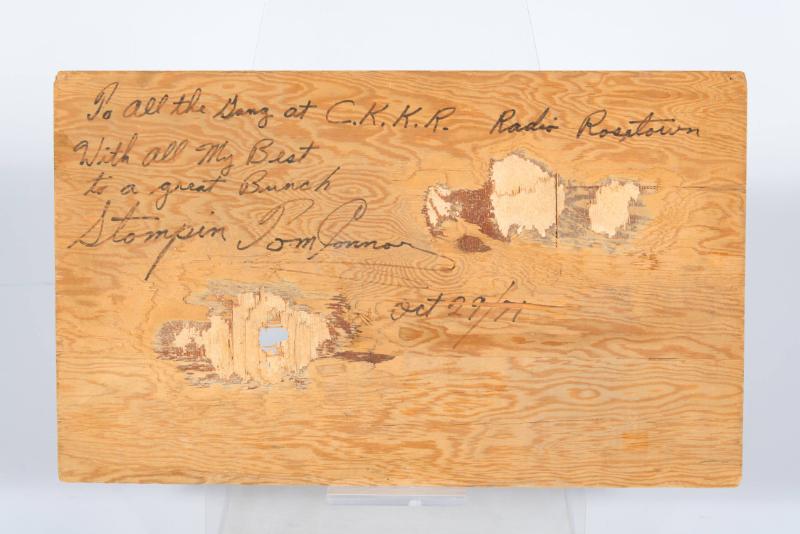
An encounter with a friendly bartender in Timmins in 1964 led to his first professional engagement. Less than a decade later, Connors was well on his way to national-hero status. He had his own CBC show and a body of songs that already included “The Hockey Song,” “Bud the Spud,” “Big Joe Mufferaw” and “Sudbury Saturday Night”—raucous numbers whose apparent simplicity, folksy humour and immediacy belied their craftmanship. Connors delivered these tunes in his signature East Coast drawl, making good on his nickname as he pounded out strong, steady beats on a plank of wood.
Still, Connors saw himself as outside the establishment—in 1978, he even returned his JUNOS to protest the nomination of “turncoat Canadians” who made their living in the U.S. At that point, he’d largely retired to his farm in Ballinafad, Ont., and might’ve become a musical footnote if not for the efforts of younger admirers (like the Rheostatics’ Dave Bidini) to get him stomping again. In 1988, Connors released Fiddle and Song, his first new album in 11 years. Before long, “The Hockey Song” regained its place in arenas across the land. While Connors’s death in 2013 robbed Canada of its honky-tonk hero, his songs had already settled deep into the soil.
As patriotic as any man who ever took the stage, Stompin’ Tom Connors never failed to put Canada front and centre in his music. A guitar slinger and natural-born entertainer, he lionized the people and places of this country in tunes full of humour, affection and Maritimer gusto. So familiar are “The Hockey Song,” “Bud the Spud” and “Sudbury Saturday Night” that any one of them could double as a national anthem, should “O Canada” ever wear out its welcome.
IN DEPTH
As iconic as he became in his later years—the man even got his own postage stamp—Stompin’ Tom Connors spent much of his life on a humbler path. Born in what he called the “poorest and most rundown” part of Saint John, he had the kind of childhood that people say builds character. It wasn’t much fun to live through, though.
He wrote his first song, “Reversing Falls Darling,” at the age of 11. The fact that it was named after rapids on the Saint John River was an early indication of his nationalistic bent. (Over time, Saskatchewan, Montreal, Peterborough and “The Bars of Vancouver” would all get their due, too.) At the age of 15, Connors hit the road and spent the next 13 years making his way however he could, whether that meant living on the street, riding in boxcars, working in mines or playing his songs to whoever would listen.
“The Hockey Song,” “Bud the Spud” and “Sudbury Saturday Night” were raucous numbers whose apparent simplicity, folksy humour and immediacy belied their craftmanship.
An encounter with a friendly bartender in Timmins in 1964 led to his first professional engagement. Less than a decade later, Connors was well on his way to national-hero status. He had his own CBC show and a body of songs that already included “The Hockey Song,” “Bud the Spud,” “Big Joe Mufferaw” and “Sudbury Saturday Night”—raucous numbers whose apparent simplicity, folksy humour and immediacy belied their craftmanship. Connors delivered these tunes in his signature East Coast drawl, making good on his nickname as he pounded out strong, steady beats on a plank of wood.
Still, Connors saw himself as outside the establishment—in 1978, he even returned his JUNOS to protest the nomination of “turncoat Canadians” who made their living in the U.S. At that point, he’d largely retired to his farm in Ballinafad, Ont., and might’ve become a musical footnote if not for the efforts of younger admirers (like the Rheostatics’ Dave Bidini) to get him stomping again. In 1988, Connors released Fiddle and Song, his first new album in 11 years. Before long, “The Hockey Song” regained its place in arenas across the land. While Connors’s death in 2013 robbed Canada of its honky-tonk hero, his songs had already settled deep into the soil.

Contemporary Country Singer-Songwriter | born 1961

inventor, radio pioneer | 1900 - 1939





Singer-Songwriter and TV Personality | born 1962