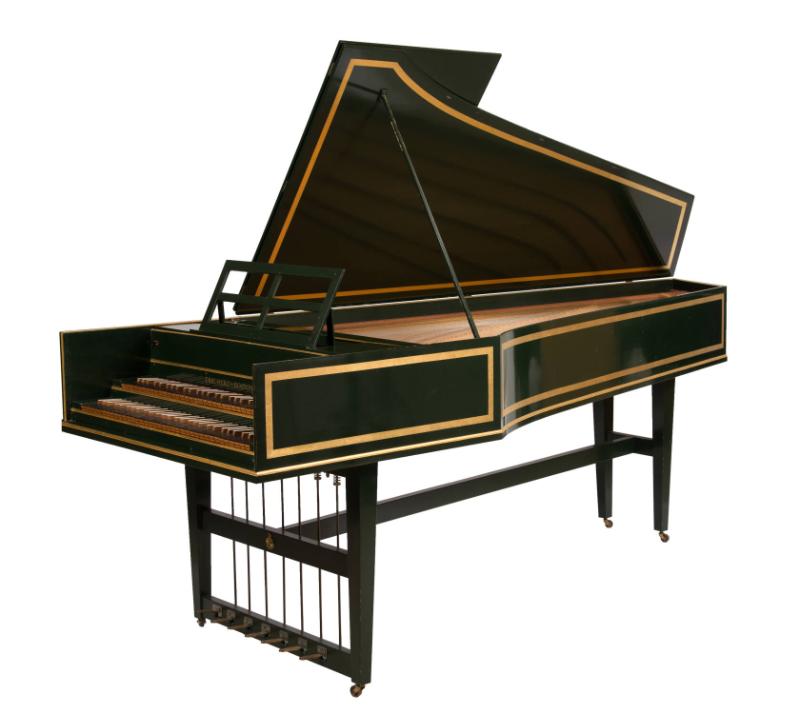
Greta Kraus
Austrian-Canadian, 1907 - 1998
DiedToronto, Ontario, Canada
BornVienna, Austria
SchoolAustrian-Canadian
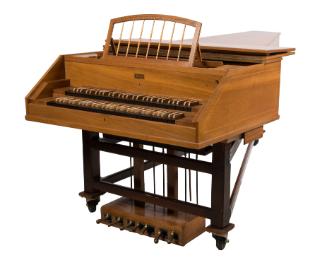
BiographyGreta Kraus was born in Vienna, Austria on 3 August 1907 and relocated to Canada in 1938, becoming a naturalized citizen in 1944. Kraus studied at the Vienna Academy of Music from 1923 until 1930, receiving a Music Teacher’s Diploma upon completion of her studies. Between 1924 and 1931, Kraus studied analysis, history, and piano performance with Hans Weisse and, between 1931 and 1934, she studied analysis with the famed music theorist, Heinrich Schenker, contributing to his Five Graphic Music Analyses her analysis of Chopin’s Étude in F major, Op. 10, No. 8, as well as several other graphs that appeared in his New York seminars prior to 1934. She gave her first solo concert as a harpsichordist in 1935 at a lecture and recital for the Bach Society of Vienna, and made her debut as an ensemble player in 1936, performing in an eight-instrument version of Bach’s Musical Offering (BWV 1079), which was conducted by Hermann Scherchen. She also performed with the Boyd Neel Orchestra in London in 1937, which was broadcast by the BBC. Upon her arrival to Canada in 1938, Kraus initially settled in Hawkesbury, Ontario and then relocated in 1939 to Toronto after receiving an offer to teach at Havergal College. Shortly after arriving in Toronto, Kraus asserted her position as a leading soloist, chamber musician, accompanist, and teacher, specializing in Baroque harpsichord performance and German lieder. She performed in duo with the harpsichordist Arnold Walter, and was broadcast both in concert and in recordings by the CBC. One of Kraus’ most notable collaborations was with the Canadian flutist and composer Robert Aitken, with whom she performed in the Aitken-Kraus Duo between 1964 and 1986, who also composed works with her specific instruments in mind. Kraus taught harpsichord, piano, accompanying, and Baroque performance practice at the Royal Conservatory of Music between 1943 and 1969, the University of Toronto between 1963 and 1976, and privately since 1939, with pupils including composer R. Murray Schafer, soprano Teresa Stratas, harpsichordist Douglas Bodle, bass-baritone Ingemar Korjus, vocal teacher Mary Morrison, and pianist Jane Coop. Additionally, she also served as the director of the Collegium Musicum for the schooling of advanced faculty students in the performance style of the Baroque, and offered master classes at the Banff Centre for the Arts, the Shawnigan Summer School of the Arts, and at several universities. Kraus also founded the Toronto Baroque Ensemble, which consisted of Elizabeth Benson Guy (soprano), Nicholas Fiore (flute), Donald Witton (cello), and Corol McCartney (violin). The ensemble was active from 1958 until 1963 and greatly helped pioneer the development of an early music community in the city. Between 1942 and 1956, Kraus performed the continuo for Bach’s Messiah, St. Matthew Passion (BWV 244), St. John Passion (BWV 245), and Mass in B Minor (BWV 232) under the direction of Sir Ernest MacMillan at Massey Hall. Although initially trained as a pianist and then later as a harpsichordist, Kraus focused much of her career on the performance techniques of the latter, though she still occasionally appeared as a pianist in chamber ensembles. She was a prominent advocate of revival harpsichords, and helped to promote their significance as an instrument capable of catering to both historical performance methods and the creation of new music. As such, Kraus was a skilled performer of both Baroque music and contemporary harpsichord music. Kraus was revered for her ability to reinterpret Baroque music through her instruments, and had most of the revival harpsichords she performed on custom built to her specifications. Her instruments were particularly known for offering a warmth and resonant depth of tone that is not typically present in most historical harpsichords on account of inherently “thinner”, so to speak, construction. Kraus was the recipient of numerous awards, including a citation in 1973 from the Ontario Confederation of University Faculty Association for outstanding contributions to university teaching, a Toronto Arts Award in 1990, the Order of Ontario in 1991, and the Order of Canada in 1992. Kraus passed away in Toronto on 30 March 1998.


(division of Norlin Music Instruments, Ltd.)

artist, singer-songwriter | 1950 - 1996