EN / FR
Skip to main content

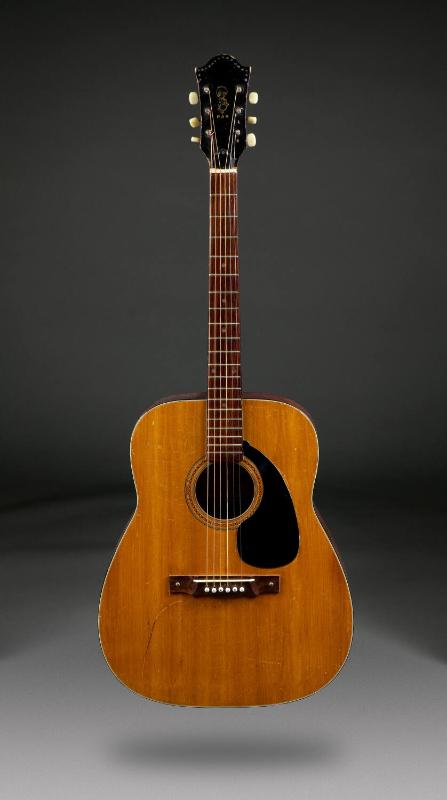
Carroll Baker Guitar

Not available for use in Recording Studios
On exhibit
On exhibit
Artifact TypeGuitar, Acoustic
Manufacturer George Petralia
Date1969
Carroll Baker's first public performance took place at a bar in Oakville, Ontario, where a friend suggested to the band that she accompany them for a song. That initial encounter progressed into a weekly affair and, before long, a tour across the province and a performance at Markham, Ontario's Hayloft Jamboree where she met musician and luthier George Petralia, the maker of this guitar. Baker is the recipient of three JUNO awards, numerous CCMA awards, and became a member of the Order of Canada in 2010.
Operation/FunctionThis particular artifact is an example of a steel-string, flat-top acoustic guitar. It consists of a hollow wooden body, which is itself comprised of a soundboard, box, and sound hole for amplification, as well as six steel strings and accompanying machine heads and metal fingerboard. This instrument employs standard tuning, with open string pitches beginning at the bottom with the highest pitch, the E a major third above middle C, and moving downwards in pitch by a fourth to B, downwards by a major third to G, downwards by a fourth to D, downwards by a fourth to A, and downwards by a fourth to E, spanning two octaves in total. The instrument is referred to as being ‘standard-handed’, meaning it is to be strummed with the right hand while the left hand controls the frets.Cultural SignificanceThe cultural significance of both the acoustic and electric guitar cannot be overstated. Although the acoustic guitar is perhaps not used quite as commonly as the electric guitar, both have remained throughout the course of the twentieth century one of, if not the most, exploited instruments in popular music. The steel-stringed flat-top has served as the most popular form of acoustic guitar, with its usage spanning a multitude of genres.Technological SignificanceBoth acoustic and electric guitars have undergone a number of technological advances that have improved their tone and construction quality, however it is the mere advent of the latter that has had the most lasting technological impact. Les Paul (1915 – 2009) helped pioneer both the design and popularity of the electric guitar, and is considered one of the founders of solid-body technology, having produced a prototype called “The Log” in 1940. Additionally, Paul also conducted a number of experiments in guitar design and recording technology, essentially establishing the revolutionary practices of multi-track recording and overdubbing, as well as delay and phasing effects. Fender was the first company to produce a commercial solid-body electric guitar in 1950 with the release of the Telecaster, and Gibson responded in 1952 with the Les Paul, named in recognition of the fact that Paul helped design the instrument with Gibson’s president of the time, Ted McCarty. Gibson also contributed several other innovations throughout its history, including the Tune-o-matic bridge, which first featured on the Les Paul and remains the standard bridge of Gibson electric guitars, as well as the first semi-hollow-body electric guitar in 1958. Gibson also produced the first commercial humbucker pickup, designed in 1955 and patented in 1959, which eliminated the hum of single-coil pickups without compromising the tone quality. In the late 1950s and early 1960s, Gibson also premiered several series of electric guitars that featured futuristic body shapes, including the Flying V, Explorer, and Firebird. Although the acoustic guitar is not recognized as having made as significant a contribution in instrument technology, it has seen many important changes throughout its history. The instrument finds it origins in the lute, which featured a varying number of gut strings and was most popular throughout the Renaissance, and the Baroque guitar, which featured five sets or courses of gut strings and eclipsed the popularity of the lute in the early eighteenth century. The majority of usage of such instruments took place in Europe, however a number of variants of these instruments, such as the Middle Eastern oud, were equally as prevalent. The modern guitar shares the same basic construction approach as its predecessors, consisting of a curved wooden sound box and soundboard, designed to optimize amplification and tone quality, as well as a neck and fretboard across which a series of tuned strings are strung. Although performance techniques and tuning systems have been considerably adapted over the years, the same basic approach of plucking or strumming with one hand and coordinating frets with the other has also been maintained. The modern acoustic guitar was pioneered by the American C.F. Martin & Company, which was founded in 1833 by the German craftsman Christian Frederick Martin. Martin established the body shape and size still used in modern acoustic guitars, which employed a larger lower bout, smaller upper bout, and deeper box than its Classical predecessors so as to produce a louder volume and accentuate bass frequencies. Martin’s design was known as the “dreadnought”, and quickly became the most common body style on account of its ability to project the guitar above other instruments in an ensemble. Martin was also pivotal in introducing steel strings to replace the nylon strings used in Classical guitars. Steel strings significantly altered the structural requirements of the instrument and, along with Martin’s inclusion of a series of bracing pieces in the box and the truss rod in the headstock, further enhanced the tone quality and volume.Users/PerformersCaroll Ann Baker was born 4 March 1949 in Bridgewater, Nova Scotia but spent much of her childhood in a small fishing village called Port Medway. At the age of 16, Baker and her parents relocated to Toronto, Ontario with the prospect of better work opportunities and to be nearer her older siblings. As the story goes, her first public performance took place at a bar in Oakville, Ontario, where a friend suggested to the band that she accompany them for a song. This initial encounter progressed into a weekly affair and, before long, a tour across southern Ontario. During the tour, Baker was approached by musician Roger Burke to sing at The Hayloft Jamboree near Markham, Ontario; a meeting with musician George Petralia during this performance led to a relocation in 1970 to Thunder Bay, Ontario for the purposes of making a record with producer Don Grashey on his Gaiety Records label. Grashey continued to manage Baker until 1984 and co-composed many of her early songs. In 1975, her career catapulted to relative stardom with the release of a version of Conway Twitty’s “I’ve Never Been This Far Before” and an appearance on the CBC’s 1976 Juno Awards television broadcast. From 1976 onward, Baker’s records were primarily completed in Nashville with the RCA label. Despite having released numerous recordings throughout the 1970s and 1980s, several of which exceeded sales of 100 000 nationally, Baker was particularly known for her live television presence. She appeared on a string of CBC specials and series in the late 1970s and early 1980s and frequented the The Tommy Hunter Show. She was nominated for Juno Awards for 16 consecutive years, receiving the honour three times. She is also the recipient of numerous Big Country Awards and CCMA awards, and became a Member of the Order of Canada in 2010.
Object numberT.2016.26.01
Photo credit: Don Kennedy
Kazuo Yairi for CBS Masterworks
20th Century
Available for use in Recording Studios
On View: Not currently on exhibit
isVirtual:
Photo credit: Don Kennedy
Höfner GmbH & Co. KG
20th Century
Not available for use in Recording Studios
On View: Not currently on exhibit
isVirtual:
Photo credit: Don Kennedy
Gibson Guitar Corporation
Not available for use in Recording Studios
On View: Not currently on exhibit
isVirtual:
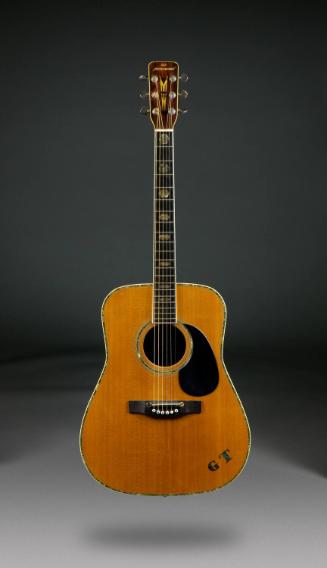
Photo by Don Kennedy
CBS Masterworks
20th Century
Not available for use in Recording Studios
On View: Not currently on exhibit
isVirtual:
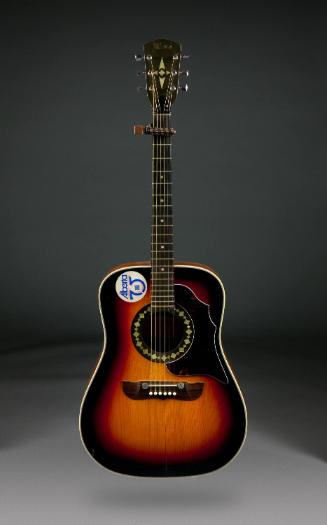
Photo credit: Don Kennedy
Framus (Franconian Musical Instruments Manufacture)
20th Century
Not available for use in Recording Studios
On View: Not currently on exhibit
isVirtual:
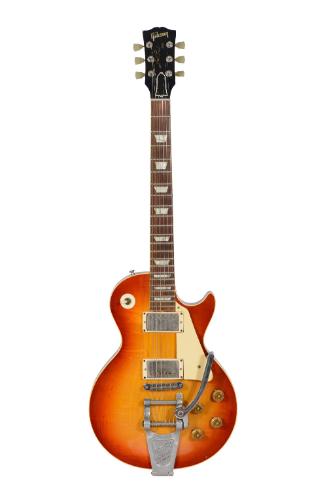
Photo credit: Don Kennedy
Gibson Guitar Corporation
1959
Not available for use in Recording Studios
On View: Not currently on exhibit
isVirtual:
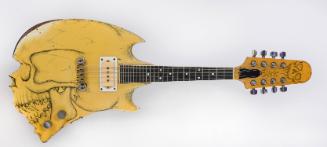
Photo credit: Don Kennedy
Vladimir Bosnar
1979
Not available for use in Recording Studios
On View: On exhibit
isVirtual:
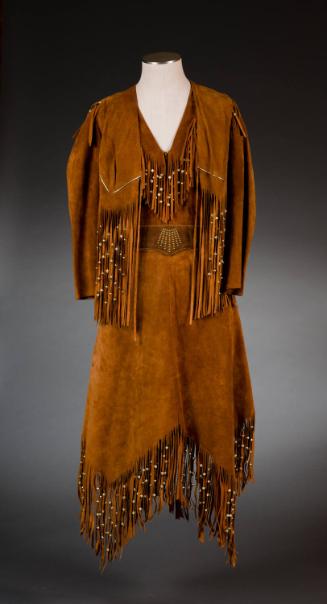
Photo credit: Don Kennedy
c. 1970
Not available for use in Recording Studios
On View: On exhibit
isVirtual:
Photo credit: Don Kennedy
Unknown
Not available for use in Recording Studios
On View: Not currently on exhibit
isVirtual:
Photo credit: Don Kennedy
Joleph Rlok
1886
Not available for use in Recording Studios
On View: On exhibit
isVirtual:
Photo credit: Don Kennedy
Venczel József Schunda
c. 1905
Not available for use in Recording Studios
On View: Not currently on exhibit
isVirtual:
Photo credit: Don Kennedy
Oscar Schmidt Company
Unknown
Not available for use in Recording Studios
On View: Not currently on exhibit
isVirtual:
Back