EN / FR
Skip to main content

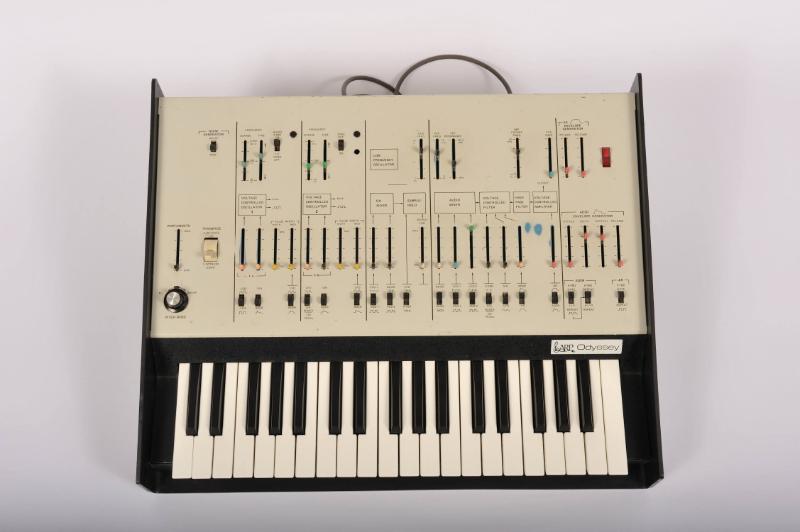
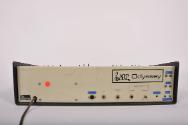
ARP Odyssey

Available for use in Recording Studios
Not currently on exhibit
Artifact TypeSynthesizer
Manufacturer ARP Instruments, Inc. electronic instruments manufacturer | founded 1969
Date1972
The Odyssey was manufactured by ARP Instruments, Inc. in 1972.  Still today, it remains one of the most sought after pieces of vintage gear among studio professionals and collectors.  The instrument was designed as a more compacted and user-friendly alternative to its semi-modular predecessor, the ARP 2600, both of which held a place in direct competition to the revered Minimoog throughout the 1970s.  ARP is recognized as being one of the most innovative synthesizer manufacturers, pioneering new interface designs such as the matrices of the 2500 modular system, and their instruments are lauded for their technical sophistication and stability.
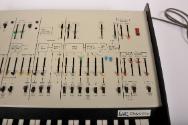
Operation/FunctionThis particular artifact is an analog, duophonic synthesizer that contains two voltage-controlled oscillators capable of sawtooth and square waveforms as well as pulse-width modulation and oscillator sync, a resonant low-pass filter, two ADSR envelope generators, a voltage-controlled amplifier, a mixer section, a sample-and-hold function, a high-pass filter, a low-frequency oscillator function, and portamento. It is duophonic across its 37-note/three-octave keyboard. It employs analog subtractive synthesis.Cultural SignificanceThe ARP Odyssey stands as ARP’s best selling product and, still today, remains one of the most sought after pieces of vintage gear among studio professionals and collectors. Although ARP ceased operations in 1981, they are recognized as one of the most influential synthesizer manufacturers, along with fellow Americans Moog and Buchla.Technological SignificanceThe synthesizer is arguably one of, if not the most technologically significant contributions to the course of electronic music. Although earlier electronic instruments such as the Theremin and Ondes Martenot offered new and unique ways of articulating sound, their sonic template was, for the most part, quite limited, capable of producing only a few distinct timbres. The synthesizer, on the other hand, was viewed as an integrated electronic orchestra, as it were, allowing the user to sculpt a wide and varied array of tones and gestures. What’s more, it allowed the user to modify their sounds in real time, seemingly without the sorts of physical limitations imposed on acoustic instruments. Of course, each instrument did come with its own characteristic tonal qualities and control limitations, however the wealth of opportunity inherent in the ability to manipulate and define nearly every parameter of sound structure solidified the synthesizer’s place as one of the most powerful musical innovations of the twentieth century. The concept of modular design was initially quite desirable to professional and studio musicians in that it allowed one to more or less completely customize their instrument and modify its functions as desired. However, this somewhat cumbersome approach gave way to more streamlined designs that, while still offering users the ability to control numerous aspects of the instrument’s tone and gesture, limited the way in which the instrument could be operated. Synthesizers increasingly began to adopt the smaller, more compact aesthetic exhibited in the performance-oriented instruments of the early 1970s, especially that of the revered Minimoog. The ARP Odyssey was designed in 1972 as a more compact version of the sophisticated model 2600, itself a truncation of the fully modular model 2500 system. As with most ARP products, it functioned as a direct competitor to the rival Minimoog throughout much of the 1970s. It offered a simpler, more compact, user-friendly, and streamlined design and interface, appealing more readily to the burgeoning amateur market. Among its unique features, however, was the inclusion of a duophonic keyboard, which was quite unusual among instruments of the time, which were largely monophonic until the mid to late 1970s. Despite their success throughout the 1970s and early 1980s, instruments such as the ARP 2600 and Odyssey were eclipsed in the late 1970s by the first digital-analog hybrid instruments, which offered polyphonic keyboards and programmability, allowing the user to store function parameters and recall them via switches on the instrument’s front panel. The Odyssey underwent three revisions, which are demarcated according to a ‘Mark’ number, each altering some aspect of either the internal or cosmetic structure of the instrument. ARP instruments were quite technologically sophisticated on account of founder Alan R. Pearlman’s previous experience working with analog test equipment. While oscillator modules on the early Moog and Buchla modular systems were quite prone to frequency drift – a result of overheating – ARP oscillators were notably much more stable and resilient to temperature changes. In addition to Pearlman’s contributing a series of highly stable instruments, ARP is also known for its innovative approach to patching and interface design. Its engineers and designers pioneered the matrix switch system employed in the 2500 modular system, which comprises a series of coloured switches that can be moved vertically to create electrical connections with anything to which they align horizontally. This system eliminated the need for bulky patch cables, such as those used on systems by Moog and Buchla, but was susceptible to “cross talk” or signal bleed between independent paths.Users/PerformersNotable usage of the ARP Odyssey spans from the early 1970s into the current day, and includes more electronic-influenced artists such as ABBA, Ultravox, Gary Numan, Air, Tangerine Dream, Nine Inch Nails, DEVO, Vangelis, and Herbie Hancock, as well as numerous artists from other genres including Chick Corea, Jethro Tull, Elton John, Kansas, and R.E.M.
Object number2002.05.05
Photo credit: Don Kennedy
Sequential Circuits Inc.
c. 1981
Available for use in Recording Studios
On View: Not currently on exhibit
isVirtual:
Photo credit: Don Kennedy
Moog Music, Inc.
1973
Available for use in Recording Studios
On View: Not currently on exhibit
isVirtual:
Photo credit: Meghan MacKrous, courtesy of the National Music Centre
R.A. Moog, Inc.
1970
Available for use in Recording Studios
On View: Not currently on exhibit
isVirtual:
Photo credit: Don Kennedy
Optigan Corporation (of Mattel) / Opsonar (of Miner Industries)
c. 1973
Available for use in Recording Studios
On View: Not currently on exhibit
isVirtual:
Photo credit: Meghan MacKrous, courtesy of the National Music Centre
Kurzweil Music Systems
1985
Available for use in Recording Studios
On View: Not currently on exhibit
isVirtual:
Photo credit: Don Kennedy
Garnet "Gar" Gillies
Available for use in Recording Studios
On View: Not currently on exhibit
isVirtual:
Photo credit: Don Kennedy
Raymond Scott Enterprises/Manhattan Research
1957
Not available for use in Recording Studios
On View: Not currently on exhibit
isVirtual:
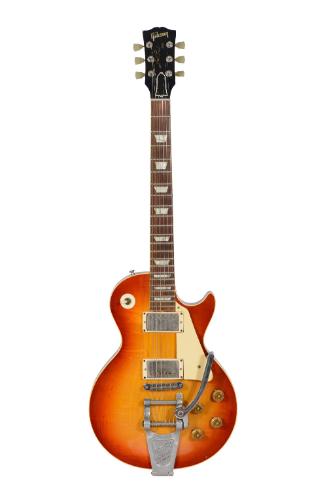
Photo credit: Don Kennedy
Gibson Guitar Corporation
1959
Not available for use in Recording Studios
On View: Not currently on exhibit
isVirtual:
Photo credit: Meghan MacKrous, courtesy of the National Music Centre
Moog Music, Inc.
1976
Available for use in Recording Studios
On View: Not currently on exhibit
isVirtual:
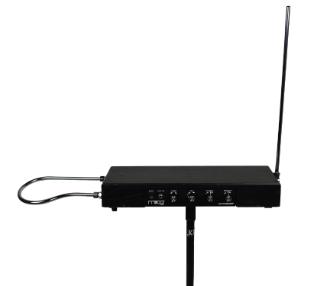
Photo credit: Meghan MacKrous, courtesy of the National Music Centre
Moog Music, Inc.
2001
Available for use in Recording Studios
On View: Not currently on exhibit
isVirtual:
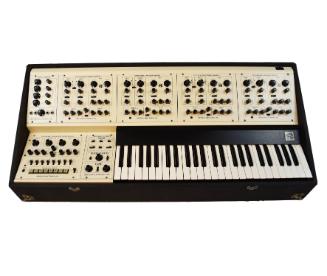
Photo credit: Meghan MacKrous, courtesy of the National Music Centre
Oberheim Electronics, Inc.
1976
Available for use in Recording Studios
On View: Not currently on exhibit
isVirtual:
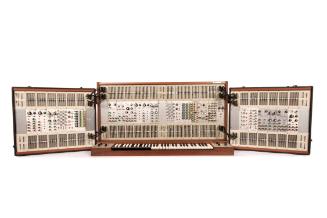
Photo credit: Don Kennedy
ARP Instruments, Inc.
1976
Available for use in Recording Studios
On View: Not currently on exhibit
isVirtual:
Back