EN / FR
Skip to main content

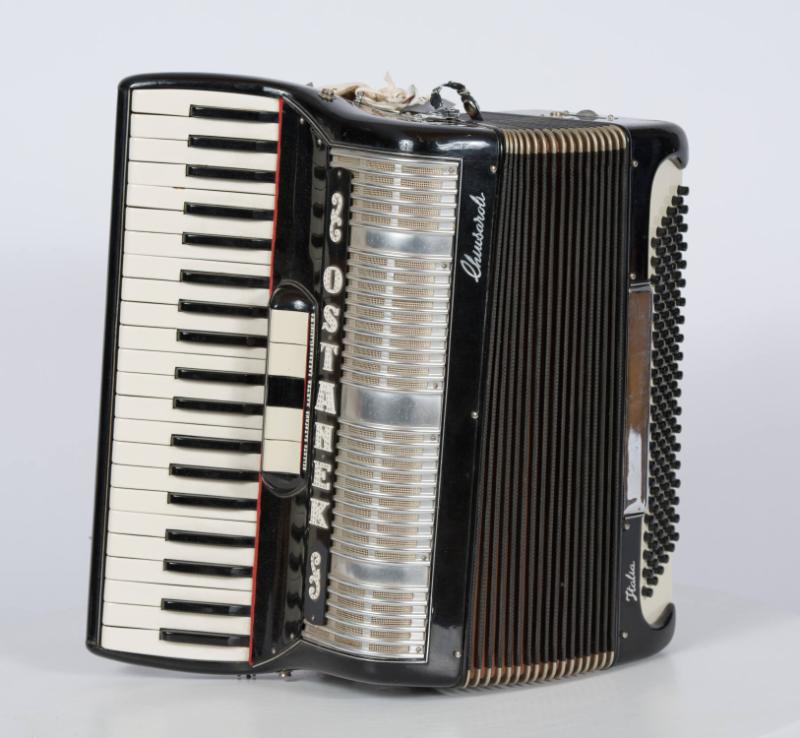
Walter Ostanek Accordion

Not available for use in Recording Studios
On exhibit
On exhibit
Artifact TypeAccordion
Manufacturer Paolo Guerrini
Manufacturer LocationUSA
Date20th Century
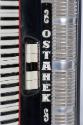
In the span of his career as Canada’s “Polka King”, Walter Ostanek released a whopping 97 studio albums and 24 singles, and won three Grammy Awards. A versatile performer who was introduced to the instrument at age five through polka music, Ostanek hosted several television and radio shows exploring accordion playing in Cleveland—and Slovenian-style polka. This accordion was custom-made for Ostanek by Italian accordion builder Paolo Guerrini, and features the Canadian performer’s name on the box/treble casing.
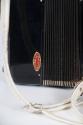
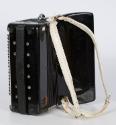
Operation/FunctionThis particular artifact is a chromatic, unisonoric piano accordion featuring 41 piano keys and a series of chord button rows. It is believed to be a Champion model Geurrini accordion that was custom-made for Walter Ostanek, featuring the performer’s name on the box/treble casing.Cultural SignificanceAlthough the accordion originates in Austria and its initial usage was largely in German and Austrian folk music, its reputation as an affordable instrument capable of producing a large sound spread to the cultural hubs of Paris and London and, during the Industrial Revolution, its mass production greatly increased throughout the European centres. When the piano accordion was developed in 1852, its potential as a more accessible instrument for the middle class was acknowledged, however it was not until the mid twentieth century that the piano accordion became more widespread and popular than the button accordion it had succeeded. Throughout the nineteenth century, the Italian town of Castelfidardo represented the core of all accordion manufacture, and when the second wave of immigrants left Italy for the United States in 1880, the accordion was poised as the perfectly portable and self-contained instrument for migration. Many accordion manufacturers settled in San Francisco, California, a city that would also be recognized as nurturing accordion performers, many of whom were players in the popular Vaudeville scene. Two performers in particular, brothers Pietro Diero (1888-1954) and Guido Diero (1886-1950), are often thought to be the first dedicated performers of piano accordions, and they are credited with helping popularize the instrument throughout North America.Technological SignificanceThe first accordions were diatonic button accordions, following a patent obtained in 1829 by Cyrill Demian (1772-1847), an American-born organ and piano builder residing in Vienna, Austria. These instruments remained the standard even after the chromatic piano accordion, which features piano keys instead of buttons on the right-hand side of the instrument, were developed in Paris in 1852. The piano accordion is also much more versatile for performance: whereas the diatonic accordion can only play in the select few keys it has been built to accommodate, chromatic accordions can operate in any key the player desires. The accordion in general was initially developed as an alternative to pipe organs, given that they were portable and small enough to play and carry around on one’s own while still being capable of producing a commanding sound at a price that was relatively affordable for the burgeoning middle class. Diatonic button accordions are notoriously complicated to use for those who have not been trained in the instrument, thus piano accordions were designed to be more flexible and accessible to musicians already familiar with the keyboard interface. Interestingly, this trend can also be traced throughout the development of electronic musical instruments: the earliest electronic instruments incorporated a keyboard primarily because it is an intuitive interface for selecting pitches, and not necessarily because it was a crucial or convenient mechanism for sound production. Diatonic button accordions are similar to instruments such as the concertina and bandoneon, however the latter two instruments employ a different orientation of the position of the reeds in relation to the bellows. On account of the fact that the accordion can produce both bass progressions and a melody, it is often referred to as a sort of “one man band”.Users/PerformersWalter Ostanek was born 30 April 1935 as Ladislav John Ostanek in Duparquet, a small town in northwestern Québec, but relocated to St. Catharines, Ontario with his family in 1939. He was introduced to the accordion at age five, receiving his first button accordion at age nine and his first piano accordion at age twelve. By 1951, Ostanek had formed his first band, Walter Ostanek Band, giving their first performance in Niagara Falls in 1957 and recording their debut album, Gay Continental Dance Party, in 1963. Throughout the 1960s, Ostanek remained a frequent performer in southern Ontario, focusing primarily on Cleveland- and Slovenian-style polkas and waltzes. Throughout his prolific career, Ostanek recorded 97 albums and 24 singles, both solo and with his bands Walter Ostanek Band, Walter Ostanek and His Polka Kings, and Walter Ostanek and His Polka Band. He has earned 21 Grammy award nominations, and was the recipient of three Grammy awards in 1992, 1993, and 1994 for Best Polka Album. He has hosted numerous television and radio shows, including the well known It’s Polka Time and Polka Party, has appeared on shows such as The Tonight Show with Johnny Carson, The Tommy Hunter Show, and has performed with the Grand Ole Opry in Nashville, Tennessee. Notable recordings include Accordionally Yours, for which he won the Grammy award in 1993, and I Like Frankie Yankovic, a reference to the late Cleveland-based accordionist, also known as ‘America’s Polka King’, whom Ostanek was often compared to. Ostanek was made a member of the Order of Canada in 1999 and was inducted into Canada’s Walk of Fame in 2001. Additionally, he is the only Canadian to have been inducted into the Polka Hall of Fame in Cleveland and the International Polka Association in Chicago in 1988 and 1989, respectively. He also holds an honorary doctorate from Brock University, and numerous other awards, including the Gold Record Award from ARC Recording Co. in Toronto. There have been and still are today a multitude of performers who use piano accordions, however the first serious usage of the instrument is associated with accordionist brothers Pietro Diero (1888-1954) and Guido Diero (1886-1950), who were born in Italy and immigrated in 1907 to San Francisco, California.
Object numberT.2016.07.01
Photo credit: Don Kennedy
Hohner Musikinstrumente GmbH & Co. KG
c. 1950
Not available for use in Recording Studios
On View: Not currently on exhibit
isVirtual:
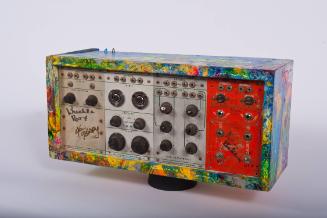
Photo credit: Don Kennedy
Donald Buchla
c. 1966
Not available for use in Recording Studios
On View: On exhibit
isVirtual:
Tom Cochrane Harmonica
1990
Not available for use in Recording Studios
On View: On exhibit
isVirtual:
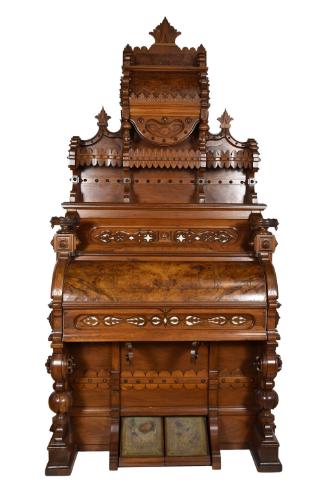
Photo credit: Meghan MacKrous, courtesy of the National Music Centre
1887
Not available for use in Recording Studios
On View: Not currently on exhibit
isVirtual:
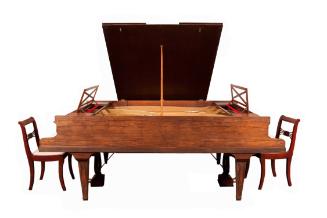
Photo credit: Don Kennedy
Pleyel et Cie
1913
Not available for use in Recording Studios
On View: Not currently on exhibit
isVirtual:
Photo credit: Don Kennedy
20th Century
On View: Not currently on exhibit
isVirtual:
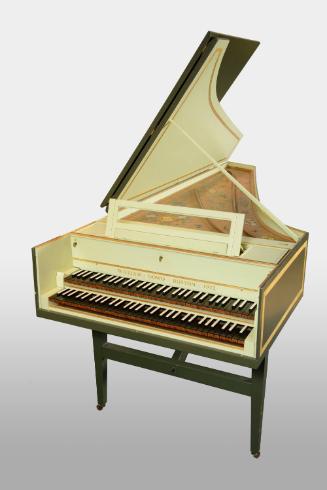
Photo credit: Don Kennedy
William Richmond Dowd
1972
Available for use in Recording Studios
On View: Not currently on exhibit
isVirtual:
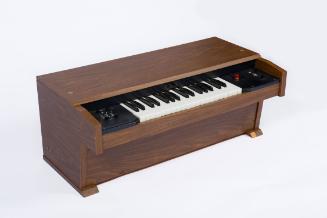
Photo credit: Don Kennedy
Chamberlin Instruments Company, Inc.
1979
Available for use in Recording Studios
On View: Not currently on exhibit
isVirtual:
Photo credit: Don Kennedy
Everett Piano Company
1935
Not available for use in Recording Studios
On View: Not currently on exhibit
isVirtual:
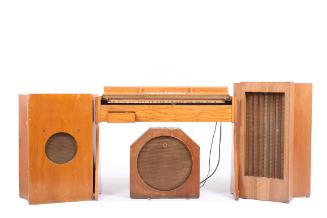
Photo credit: Don Kennedy
Maurice Louis Eugène Martenot
1975
Available for use in Recording Studios
On View: Not currently on exhibit
isVirtual:
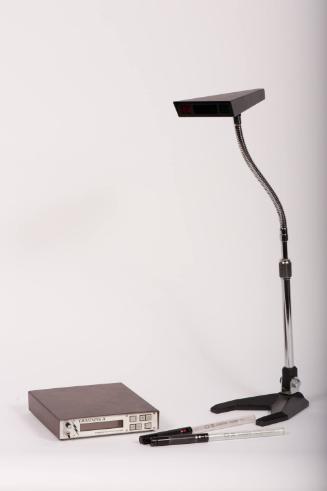
Photo credit: Don Kennedy
Buchla & Associates
1999
Not available for use in Recording Studios
On View: On exhibit
isVirtual:
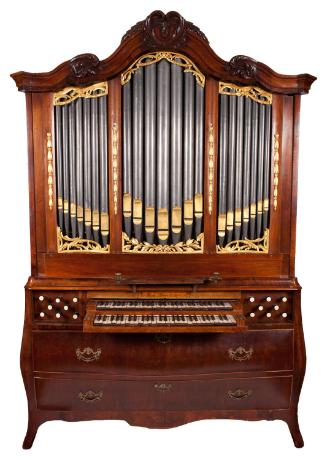
Photo credit: Don Kennedy
Hendrik Anthonie Meijer
1785
Not available for use in Recording Studios
On View: Not currently on exhibit
isVirtual:
Back