EN / FR
Skip to main content

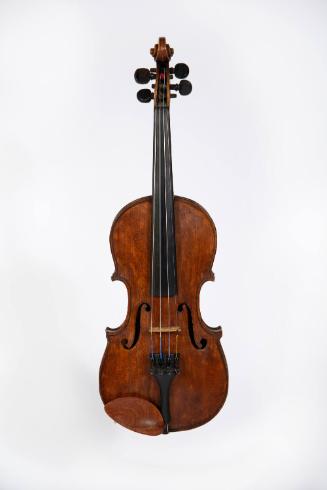
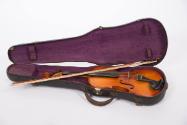
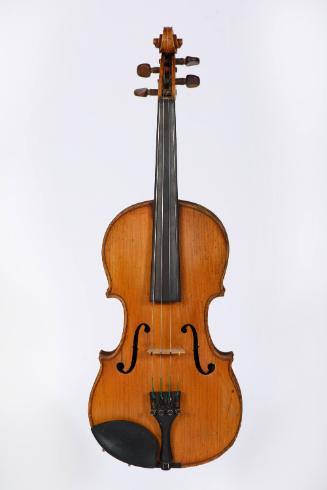
Ned Landry Fiddle

Not available for use in Recording Studios
Not currently on exhibit
Artifact TypeFiddle
Manufacturer LocationChina
DateUnknown
This fiddle was owned and played by the great Canadian fiddler Ned Landry. A New Brunswick native, Landry’s playing explores a variety of Canadian styles, many of which he’s published in folios such as Ned Landry Favorite Fiddle Tunes (Empire, 1952). He’s released a number of albums of fiddle music—some on his own label, Prime Time—and has appeared on numerous television and radio shows since the 1950s. Landry was made a Member of the Order of Canada in 1991.
Operation/FunctionThis particular artifact consists of a hollow wooden body with wooden fingerboard and bridge and steel strings. It is accompanied by a case and horsehair bow.Cultural SignificanceThe fiddle holds a particular sense of cultural significance with respect to its initial inception occurring almost exclusively in folk and traditional music, especially of that associated with early modern European music. Violins have often been associated with more formal genres of classical and jazz music, which are often performed in large concert halls, while fiddles are associated with folk and related traditions, including country and bluegrass, which were often performed in considerably smaller spaces that supported a related dance culture. Fiddles were used primarily in folk music, country, and bluegrass and their origins as being lesser quality instruments in contrast to the high-end versions that were recognized as violins garnered certain stereotypes between the two instruments. Although this is diminishing today, the history of the distinction still stands in the manner in which fiddles appealed to less wealthy people, while violins were reserved for professional performers. Fiddlers, historically speaking, were not formally trained, could not read music, did not typically have the financial means to acquire high-quality violins, and learned to play through an aural tradition. The fiddle has also stood as an important instrument in a number of cultures, including many eastern and northern European and Scandinavian traditions, as well as in the descendants of American styles such as Appalachian, Cajun, etc. Fiddles were initially intended to accompany dance music, while the violin was not. This influenced the way the instruments continued to be played: violins used smoother movements, while fiddles employed more rhythmic and active passages.Technological SignificanceAlthough fiddles and violins are used in different musical contexts, they are essentially identical in terms of sound-producing technology. The fiddle is a member of the chordophone classification of instruments, which comprises stringed instruments, and sound is activated primarily with the aid of a bow. The instrument was first developed in the early sixteenth century, however throughout the following centuries both the violin and fiddle continued to develop as independent instruments. The gamba, an early predecessor to the cello, also developed from the initial design of the violin. Fiddles and violins are considered relatives to the cello, double bass, and viola, as well as to their early and non-Western music counterparts, the rebec, sarangi, rebab, and kontra. Their design is also considered to have been influenced by instruments such as the lyra and hurdy gurdy. Several of the technological differences that have distinguished violins from fiddles, such as the shape of the bridge and the strings used, are less common today, though throughout the instruments’ history they have played an important part in defining how the instruments were used. The use of fine tuners on fiddles, required to overcome the steel strings’ instability in relation to tuning pegs, has become standard on violins as well.Users/PerformersNed Landry was born Frederick Lawrence on 2 February 1921 in Saint John, New Brunswick. Although self taught as a violinist, Landry made his first public appearance on Don Messer’s CHSJ radio show “Backwoods Breakdown” in 1934 playing the harmonica. His career as a fiddler began in 1939, when he placed second with his group, the New Brunswick Lumberjacks, in CBS radio’s “Major Bowes’ Amateur Hour” in New York City. His recording practice began in 1955 and, throughout his career Landry released eight albums with the RCA Victor label, as well as additional recordings with Arc, MMC, and his own label, Prime Time. He appeared on numerous television and radio shows throughout the 1950s, including CFBC radio, and “Don Messer’s Jubliee”. His own compositions explore various Canadian styles, many of which are published in the folios ‘Ned Landry Favorite Fiddle Tunes’ (Empire 1952) and ‘Bowing the Strings with Ned Landry’ (Thompson 1959). Landry was made a Member of the Order of Canada in 1991, and was the recipient of the Dr. Helen Creighton Lifetime Achievement Award in 2002 at the East Coast Music Association Awards. He was also honored with a lifetime contribution award and commemorative trophy in his name from the Canadian Grand Masters Fiddling Championship. He has been inducted into the North American Fiddlers Hall of Fame and the Nova Scotia Country Music Hall of Fame.
Object numberT.2016.03.01
Photo credit: Don Kennedy
Joleph Rlok
1886
Not available for use in Recording Studios
On View: On exhibit
isVirtual:
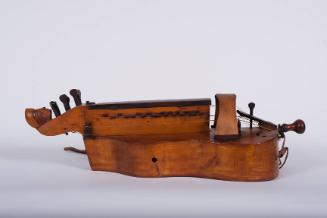
Photo credit: Don Kennedy
c. 1800
Not available for use in Recording Studios
On View: Not currently on exhibit
isVirtual:
Photo credit: Don Kennedy
Sébastien Érard
1820
Not available for use in Recording Studios
On View: On exhibit
isVirtual:
Photo credit: Don Kennedy
Hammond Organ Company
1957
Not available for use in Recording Studios
On View: Not currently on exhibit
isVirtual:
Photo credit: Don Kennedy
Linn Electronics, Inc.
c. 1982
Available for use in Recording Studios
On View: Not currently on exhibit
isVirtual:
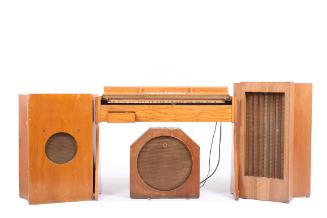
Photo credit: Don Kennedy
Maurice Louis Eugène Martenot
1975
Available for use in Recording Studios
On View: Not currently on exhibit
isVirtual:
Photo credit: Don Kennedy
Optigan Corporation (of Mattel) / Opsonar (of Miner Industries)
c. 1973
Available for use in Recording Studios
On View: Not currently on exhibit
isVirtual:
Photo credit: Meghan MacKrous, courtesy of the National Music Centre
Bode Sound Company
1977
Available for use in Recording Studios
On View: Not currently on exhibit
isVirtual:
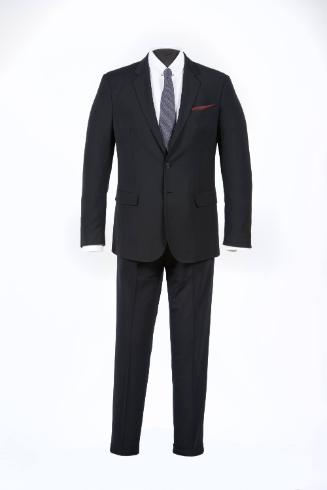
Photo credit: Don Kennedy
Dsquared2
2013
On View: On exhibit
isVirtual:
Photo credit: Don Kennedy
1926
Not available for use in Recording Studios
On View: On exhibit
isVirtual:
Photo credit: Don Kennedy
c. 1900
Not available for use in Recording Studios
On View: On exhibit
isVirtual:
Photo credit: Don Kennedy
Nudie’s Rodeo Tailors
c. 1950
On View: Not currently on exhibit
isVirtual:
Back