EN / FR
Skip to main content

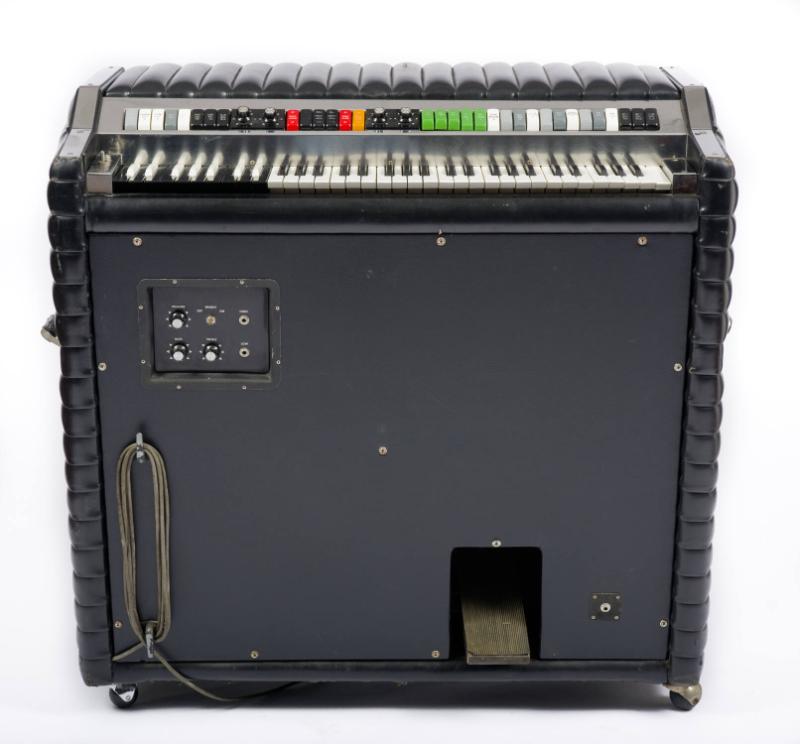
Kustom Kombo Organ

Available for use in Recording Studios
Not currently on exhibit
Artifact TypeOrgan, Electronic
Manufacturer Kustom
Manufacturer LocationUSA, North America
Date1969
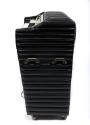
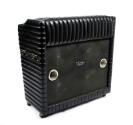
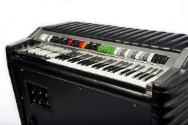
Designed as a cheaper, lightweight alternative to the Hammond B-3 electric organ, the combo organ was beloved in the 1960s by bands like the Animals and the Beatles—and enjoyed a brief revival in the late ’70s and early ’80s new wave scene. While Kustom, which was more famous for its guitar amps, wasn’t as popular as competitors like Vox or Yamaha—the Kombo was made famous by its bright, reedy sound and iconic “tuck and roll” padded covers.
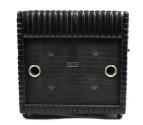
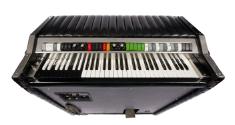
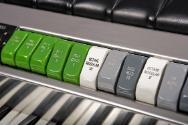
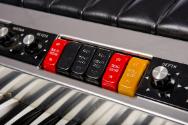
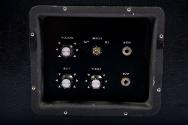
Operation/FunctionThe Kustom Kombo combo organ contains twelve oscillator circuits as its primary tone generating component as well as four sets of octave dividers to correspond with the instrument’s single-manual, five-octave range. The instrument also features a series of tab switches and knobs, a built-in preamplifier and amplifier unit, a set of dual 15” JBL D130F bass-driver speakers and dual police horn treble-driver speakers, and a volume pedal. Tabs include Electric Bass 16’, Thunder Bass 16’, String Bass 8’, Buzz Bass 4’, Third Bass 2-2/3’, Audio Level Two, Audio Level Three, and Audio Level Four (all with corresponding Sustain and Reverb knobs), Bass 16’ Sustain On/Off, Vibrato Accent On/Off, Vibrato Depth Heavy/Preset, Vibrato Speed Slow/Fast, Treble Reverb On/Off, Treble Boost On/Off (all with corresponding Depth and Speed knobs), Poly Combo A, Poly Combo B, Poly Combo C, Poly Combo D, Poly Combo E, Octave Modular 16’, Vox Aurex 16’, Buzz Reed 16’, Octave Modular 8’, Vox Aurex 8’, Buzz Reed 8’, Octave Modular 4’, Mini Quad 4’, Voo Doo 2-2/3’, Mini Duad 2’, Audio Level Two, Audio Level Three, and Audio Level Four. The preamplifier unit incorporates volume, bass, treble, bright on/off, and hi/lo inputs.Cultural SignificanceWith its introduction in the early 1960s, the combo organ quickly asserted itself as one of the most iconic instruments of the decade, used extensively by many of the psychedelic bands of the era. Its highly stylish design, often featuring brightly colored coverings, featured prominently in the visual identity of various rock-inspired genres. Although its popularity has waned considerably since the early 1970s, these instruments remain revered for their clean aesthetic and characteristic tone. Kustom organs and amplifiers are particularly known for their iconic exterior, which features a padded “tuck and roll” covering. The Kombo was the most high-end of the models Kustom produced.Technological SignificanceCombo organs hold a unique place within the development of electronic musical instruments. Although often classified as a type of organ, they share little with their electromechanical predecessors – instruments such as the tone-wheel-based Hammond B-3 – in that they generate their tones entirely by solid-state (i.e. transistor-based) electronic means, as with the earliest voltage-controlled synthesizers of the late 1960s. Unlike synthesizers, however, which are capable of producing a large and varied range of timbres and articulations, combo organs are relatively limited in their scope and idiom, capable of producing only a select few sounds, typically in imitation of popular orchestral instruments. Also unlike most early synthesizers, combo organs were usually fully polyphonic, employing a similar form of divide-down architecture seen in earlier electronic organs such as the Hammond Novachord of 1939. Nonetheless, the combo organ was designed as a response to the popularity of the electromechanical organ in the domestic market throughout the 1950s and early 1960s. Although professional musicians regularly used instruments such as the Hammond B-3, their large size and commanding weight rendered them largely inconvenient for continued live use. Thus, the combo organ emerged as a smaller, cheaper, more lightweight alternative geared specifically for the stage. As with electromechanical organs, both single and double manual versions of combo organs were developed, with the latter typically allowing the performer to produce two different timbres between their hands. The majority of combo organs that were produced by various manufacturers – primarily in Italy, the United Kingdom, Japan, and the United States – throughout the 1960s and 1970s followed a similar format, incorporating a portable design and exhibiting a thin, bright, reedy sound. Most employed transistorized circuitry, with those emerging in the early 1970s also transitioning to integrated circuitry. Although the combo organ became ubiquitous throughout the 1960s especially, it did not by any means replace usage of its larger electromechanical counterparts. With the introduction of the first portable voltage-controlled synthesizers, which were far more flexible and powerful in their design, in the early 1970s, combo organs fell considerably out of favour, experiencing only a brief resurgence toward the late 1970s and into the early 1980s. Although the circuitry behind the Kustom Kombo is relatively simplistic, it incorporated several features that were quite unique. While most combo organs featured some combination of drawbars, knobs, and tabs, the Kombo employed only tabs. Moreover, it also featured a built-in preamplifier and power amplifier unit, as well as four speakers – two 15” JBLs and two treble-drivers. While the power amplifier was meant to drive the output of the organ itself, eliminating the need for an external amplification system, the preamplifier component was included so as to allow the user to run external instruments, such as an electric guitar, into the instrument. As such, multiple sources could be projected through the same speaker system. Its external design was also somewhat unorthodox in its use of a padded covering and bottom wheels, however, as with most combo organs, the Kombo was available in various colours including blue, red, black, silver, yellow, cascade, and gold.Users/PerformersAlthough Kustom combo organs such as the Kombo enjoyed a brief period of usage in the late 1960s, there is no documented usage of any units in recorded music of the era. More popular combo organs, such as those produced by Vox, were used extensively throughout the 1960s by groups such as The Doors, The Animals, Iron Butterfly, and The Beatles.
Object number2000.05.23
Photo credit: Don Kennedy
Donald Buchla
c. 1966
Not available for use in Recording Studios
On View: On exhibit
isVirtual:
Photo credit: Don Kennedy
Electro Music / Donald Leslie
c.1972
Available for use in Recording Studios
On View: Not currently on exhibit
isVirtual:
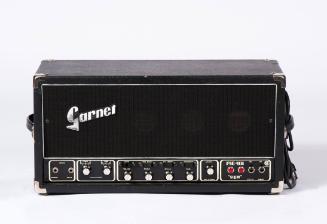
Photo credit: Don Kennedy
Garnet "Gar" Gillies
Available for use in Recording Studios
On View: Not currently on exhibit
isVirtual:
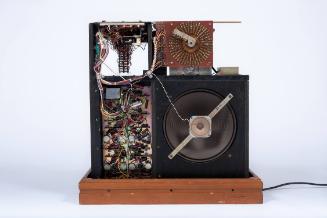
Photo credit: Don Kennedy
The Wurlitzer Company
c. 1959
Not available for use in Recording Studios
On View: On exhibit
isVirtual:
Photo credit: Don Kennedy
E-mu Systems, Inc.
About 1973
Available for use in Recording Studios
On View: Not currently on exhibit
isVirtual:
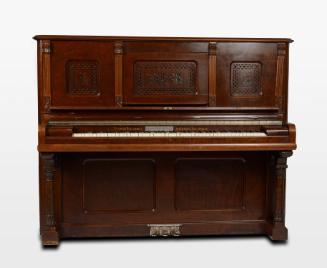
Photo credit: Don Kennedy
Heintzman & Co.
1908
Not available for use in Recording Studios
On View: On exhibit
isVirtual:
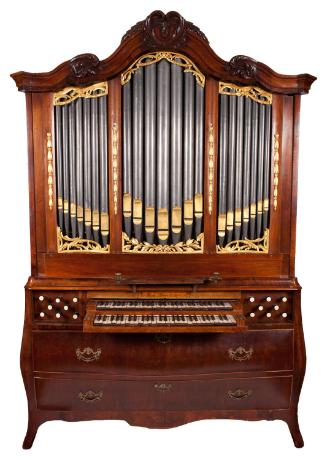
Photo credit: Don Kennedy
Hendrik Anthonie Meijer
1785
Not available for use in Recording Studios
On View: Not currently on exhibit
isVirtual:
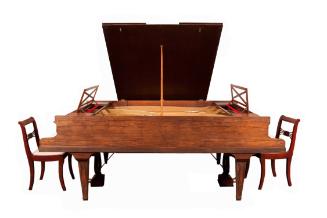
Photo credit: Don Kennedy
Pleyel et Cie
1913
Not available for use in Recording Studios
On View: Not currently on exhibit
isVirtual:
Bösendorfer Klavierfabrik GmbH
1855
Not available for use in Recording Studios
On View: Not currently on exhibit
isVirtual:
Photo credit: Don Kennedy
Everett Piano Company
1935
Not available for use in Recording Studios
On View: Not currently on exhibit
isVirtual:
Photo credit: Don Kennedy
CBS Musical Instruments
1966
Available for use in Recording Studios
On View: Not currently on exhibit
isVirtual:
Photo credit: Don Kennedy
Hammond Organ Company
1957
Not available for use in Recording Studios
On View: Not currently on exhibit
isVirtual:
Back