EN / FR
Skip to main content

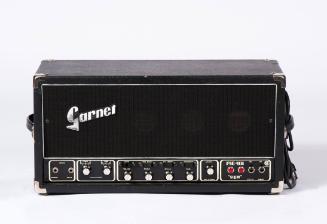
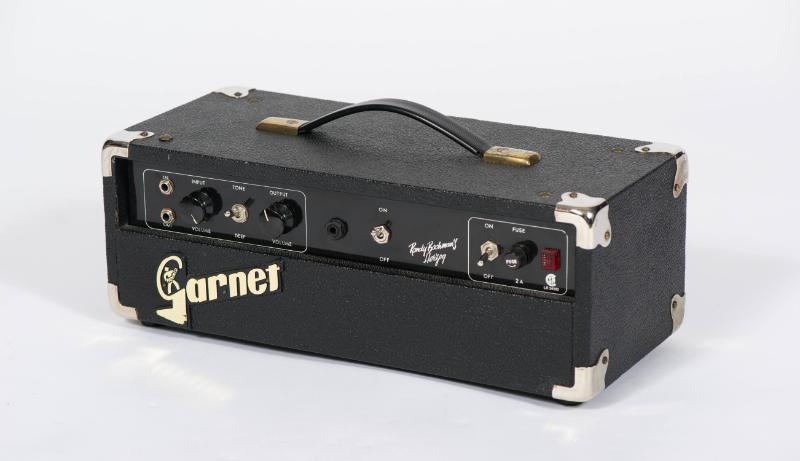
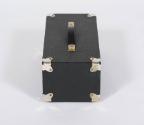
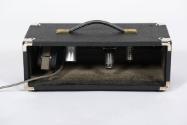
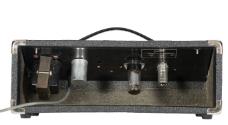
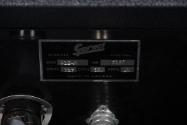
Garnet Herzog Overdrive Unit

Not available for use in Recording Studios
On exhibit
On exhibit
Artifact TypeGuitar Processor, Distortion
Manufacturer Garnet "Gar" Gillies amplifier-maker, electronic engineer, musician | 1921 - 2006
Manufacturer LocationManitoba, Canada, North America
Datec. 1960

Developed by Thomas “Gar” Gillies—founder of the Garnet Amplifier Company—the Herzog was built in collaboration with The Guess Who and Bachman-Turner Overdrive guitarist, Randy Bachman.  A former violin player, Bachman loved the effect of a sustained hum sound, and often tried to mimic it on his guitar by plugging a small amp into a bigger amp—and cranking the volume.  After repairing countless blown amps for Bachman, Gillies built him the tube pre-amp seen here. The creamy overdrive and sustained guitar tone produced by the Garnet Herzog went on to become the signature “Winnipeg sound” heard on tracks such as “American Woman” and “No Time”. 


Donated by Brian Mills


Operation/FunctionThe Herzog circuit was influenced by the Fender Champ, a Class A tube amplifier with a simple circuit that was introduced in 1948, however the Herzog features a much higher preamplifier gain, greater signal coupling, and higher bias levels. It consists of four distinct dynamic range zones that can be altered by the user, with the unit’s maximum output reaching approximately 4-6 Watts. The Herzog is capable of various different effects, including controlled feedback, deep fuzz, and long sustain.Cultural SignificanceThe Herzog distortion unit, which was originally referred to as ‘Randy Bachman’s Herzog’, with its creamy distortion and long sustain, was the key piece of sound equipment used in developing and defining what came to be known as “the Winnipeg Sound”, with Bachman’s exclusive usage of Garnet PA systems in bands such as The Guess Who and Bachman-Turner Overdrive. It is this sound that separated bands such as The Guess Who from their English counterparts, groups like the Yardbirds and Cream. It was a unique collaboration between Bachman and designer Gar Gillies, and signaled the beginning of Gillies’ work in designing and manufacturing high quality, durable, and unique-sounding amplifiers and related sound equipment. Gillies had not in fact intended to begin a company for developing his amplifiers, however the success of the Herzog prompted him to keep developing units and systems. Today, Garnet amplifiers are some of the most sought-after vintage gear, known for their sonic quality, reliability, and innovative characteristics, and often sell for far more than they were originally worth.Technological SignificanceThe Garnet Herzog is known for its powerful and rich overdrive and its long sustain, which, like many other Garnet units, enables it to produce a rather unique tone quality. The concept for the Herzog was born of experiments Randy Bachman began conducting in which he would plug a small amplifier, which would normally have gone straight into a speaker, into the input of a larger one in order to overdrive and distort the combined sound and obtain a long sustain that imitated the envelope of a bowed string instrument. As a result, Bachman often burned and destroyed his amplifiers and would enlist Gar Gillies for repairs hoping that, as a musician, he might be sympathetic to his pursuits. Gillies was able to theorize a concept that would refine and stabilize the technique: he devised the concept of using a preamplifier that, when plugged into another amplifier, would be capable of replicating the distorted tone in a safe and reliable manner. Being a tube-based preamplifier, the Herzog was unique in that it was introduced at a time before solid-state (transistor-based) fuzz and distortion effects and pedals were in common use. That being said, Bachman was not the first to explore this technique: in the 1950s and early 1960s, a number of guitarists, including Ike Turner, Chuck Berry, and Dick Dale, experimented with overdriving their amplifiers so as to produce a distortion effect. Perhaps the most famous proponent of this practice was Dave Davies, guitarist for The Kinks. Thanks to the early efforts of Bachman and many others, distortion has since become a common built-in effect of many preamplifiers. The tone and sound quality of Garnet amplifiers and effects have been compared to similar units made by Marshall (founded 1960 in London, UK), Traynor (formed 1963 in Ontario, Canada by Pete Traynor, founder of Yorkville Sound), and Fender (founded as a musical instrument manufacturer in 1946 in Arizona, USA). Though Garnet systems were not regarded as having a particularly wide range of tone – at least not to the same extent as their competitors – they have been hailed for their durability and reliable build. The Garnet Amplifier Company remained dedicated to producing tube-based equipment, with Gillies citing a warmth of tone that could not be imitated in modern technology. As a result, however, Garnet was not able to maintain as strong a presence in the market as technology adjusted toward transistor-based units, which were less expensive to manufacture and repair. Despite Garnet’s inability to keep up with the market and eventual closure of the company in 1989, however, Gillies’ point was not lost on the musical community: throughout the 1980s, even as constant developments and improvements were made to solid-state amplifiers, many musicians eventually returned to the tube-based units in search of the richer and more harmonically-lush tones that Gillies’ had believed would be lost in the transition. Since its inception, a number of manufacturers – including SansAmp and John Johnson of Johnson Amps, Digitech, and DOD – have attempted (and largely failed) to replicate the unique tone of the Herzog.Users/PerformersRandy Bachman (born 1943 in Winnipeg, Manitoba), guitarist, songwriter, and radio host, best known as the lead guitarist and one of the founding members of The Guess Who and Bachman-Turner Overdrive. Bachman began his musical career as a child, studying violin in the Royal Conservatory of Toronto system; he would later cite his affection for the sustain of string instruments as informative of his desired sound in the Herzog. In 1960, Bachman co-founded the group Al and The Silvertones with Chad Allan, changing the name in 1962 to Chad Allan and the Expressions, and again to The Guess Who. In 1966, Burton Cummings replaced Chad Allan as front man of the band. Bachman co-wrote many of the songs on the first three albums, all of which also feature the Garnet Herzog and amplifiers: Wheatfield Soul (1968), Canned Wheat (1969), and American Woman (1970). The single “American Woman” reached number 1 on the U.S. charts in 1970, the first time this achievement had been earned by a Canadian group. Bachman left the group following the release of American Woman, citing irreconcilable differences in lifestyle. Bachman also recorded a solo album at this time, Axe, which was released in March 1970 on RCA Records. In 1971, he and Chad Allan formed the band Brave Belt, later changing the name to Bachman-Turner Overdrive, in reference to another Garnet amplifier, the Big Time Operator, or BTO. The group released their first album, Bachman-Turner Overdrive in 1973. Bachman eventually left BTO in 1977 to pursue a series of solo recordings and collaborations. Bachman was the recipient of an honorary doctorate from Brandon University (Brandon, Manitoba) in 2001, in 2005 he was awarded the Order of Manitoba, and in 2008 he was made an Officer of the Order of Canada. The Guess Who received The Governor General’s Performing Arts Award in 2002.
Object number2016.12.02
Photo credit: Don Kennedy
Garnet "Gar" Gillies
Available for use in Recording Studios
On View: Not currently on exhibit
isVirtual:
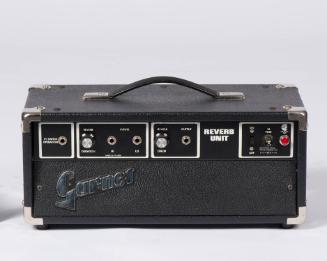
Photo credit: Don Kennedy
Garnet "Gar" Gillies
Available for use in Recording Studios
On View: Not currently on exhibit
isVirtual:
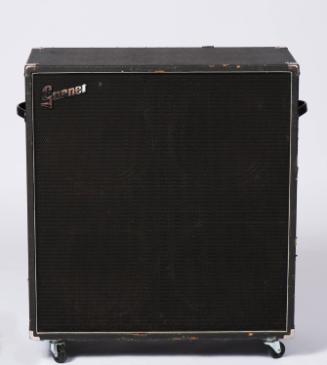
Photo credit: Don Kennedy
Garnet "Gar" Gillies
1965 through 1980
Not available for use in Recording Studios
On View: On exhibit
isVirtual:
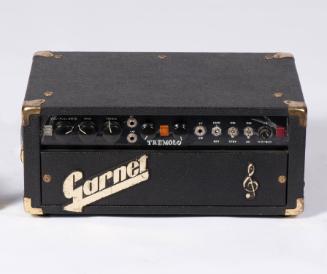
Photo credit: Don Kennedy
Garnet "Gar" Gillies
Available for use in Recording Studios
On View: Not currently on exhibit
isVirtual:
Photo credit: Don Kennedy
Electro Music / Donald Leslie
c.1972
Available for use in Recording Studios
On View: Not currently on exhibit
isVirtual:
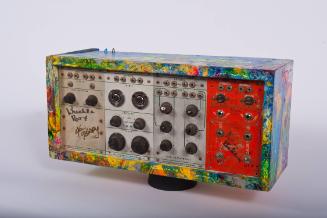
Photo credit: Don Kennedy
Donald Buchla
c. 1966
Not available for use in Recording Studios
On View: On exhibit
isVirtual:
Photo credit: Don Kennedy
Edward "Ted" Rogers Sr.
1935
Not available for use in Recording Studios
On View: Not currently on exhibit
isVirtual:
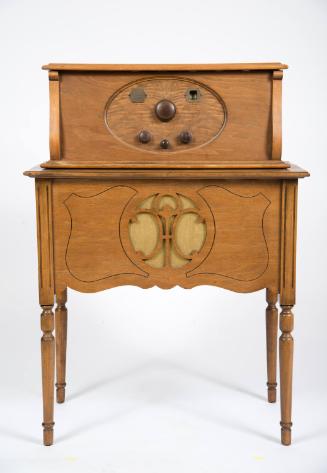
Photo credit: Don Kennedy
Edward "Ted" Rogers Sr.
1928
Not available for use in Recording Studios
On View: Not currently on exhibit
isVirtual:
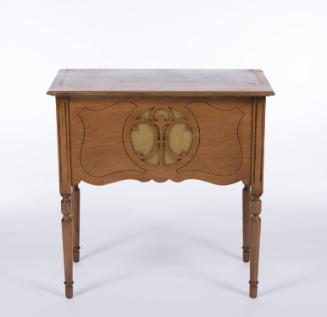
Photo credit: Don Kennedy
Edward "Ted" Rogers Sr.
c. 1920
Not available for use in Recording Studios
On View: Not currently on exhibit
isVirtual:
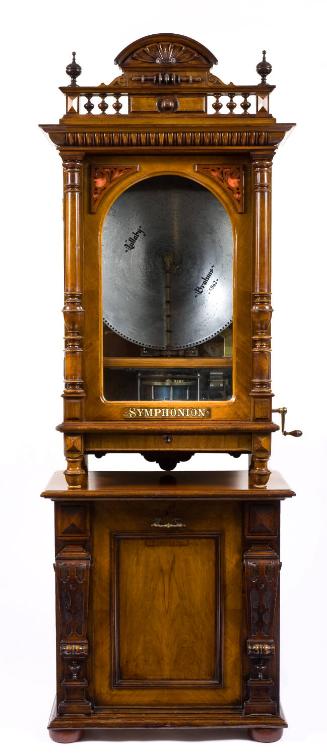
Photo credit: Don Kennedy
Symphonion Company
c. 1890
Not available for use in Recording Studios
On View: On exhibit
isVirtual:
Photo credit: Don Kennedy
1969
Available for use in Recording Studios
On View: On exhibit
isVirtual:
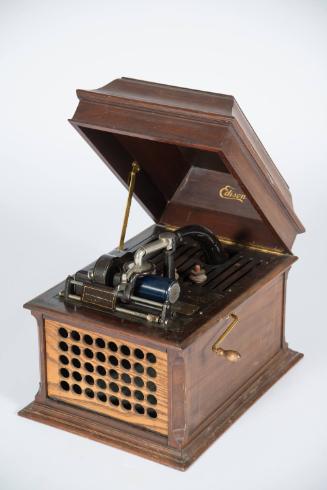
Photo credit: Don Kennedy
Thomas Alva Edison
1904
Not available for use in Recording Studios
On View: On exhibit
isVirtual:
Back