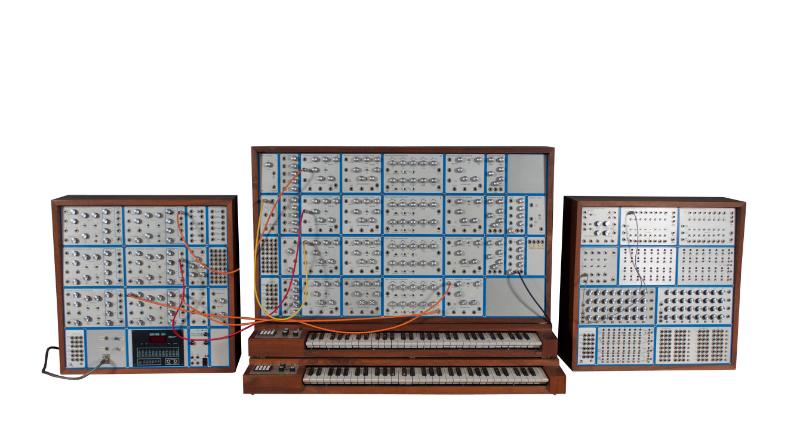
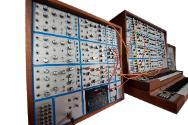
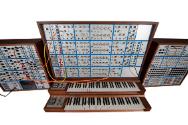
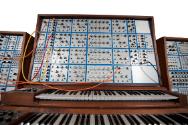
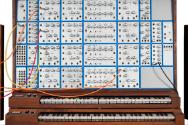

E-mu 2000
Available for use in Recording Studios
Not currently on exhibit
Not currently on exhibit
Artifact TypeSynthesizer
Manufacturer
E-mu Systems, Inc.
DateAbout 1973
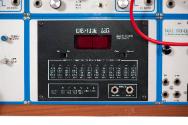
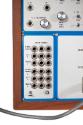
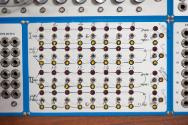
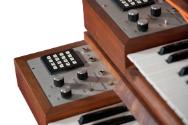
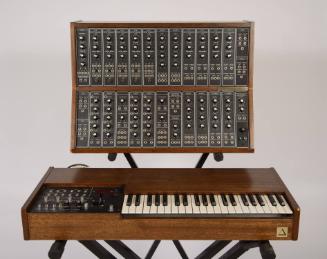
Operation/FunctionThis particular artifact is an analog modular synthesizer system, with one main cabinet, two wings, and a keyboard. The instruments were sold in various configurations, customizable to each user. This particular unit contains: model 1201 Voltage Controlled Oscillator (x6); model 2906 Multiple Jack (x2); model 2551 Triple OR Gate (x3); three modified blank panels in left wing, one in three inches width for the Nyle Steiner EVI interface, one in six inches width for controllers with additional XLR input, one in nine inches width for a Digi-Tune 220 digital tuner; model 2552 Triple Latch; model 2340 Voltage Controlled Lag Generator; model 2450 Quad Inverter; model 2550 Hex Inverter; model 2430 Ring Modulator; model 2355 Voltage-Controlled Transient Generator Input Unit (x3); model 2553 Dual One Shot; model 2400 Noise Source; model 2110 Voltage Controlled Highpass Filter (x4); model 2100 Voltage Controlled Lowpass Filter (x4); model 2350 Dual Transient Generator (x4); model 2000 Voltage Controlled Amplifier (x4); model 2140 Resonant Filter (x3); model 2455 Mixer (x2); model 2410 Sample & Hold; two modified blank panel in main cabinet, one in three inches width for further noise control, one in three inches width for four additional VSOU outputs; model 2500 Voltage Controlled Clock; model 2530 Quad Analog Switch; model 2510 8 Position Address Generator (x2); model 2520 Voltage Source Output Unit (x2), which forms a sequencer with module 2510; four modified blank panels in right wing, three in nine inches width for sequencer switches, one in twelve inches width with both Triples and Gates; model 4060 Polyphonic Keyboard with Sequencer (x2). Each keyboard spans 61 notes. Modules are 6” in height and come in multiples of 3” width, typically 3” (1), 6” (2), 9” (3), or 12” (4). These modules employ 1/4", or phone jacks for patching.Cultural SignificanceModular synthesis has left an indelible mark on the way in which current trends in synthesizer design are informed. In the 1960s, these instruments offered a way forward for composers and musicians who felt stifled by the rigour of early electronic music techniques, such as those practiced in Germany and France throughout the 1950s. They promised new timbres and uninhibited methods of control and ultimately set into motion the foundations of synthesis practices that would follow throughout the 1970s and 1980s. Although these bulky and cumbersome analog machines did not survive the technological and commercial advances of the late 1970s, the modular spirit was revived at the turn of the century and, today, this flexible design still proves to be a desirable and fruitful approach to music making.
As it happens, the story of E-mu in the 1970s is not very well known. Although the company is regarded for their contributions in digital sampling, the fact that they effectively revolutionized the course of synthesizer design prior to this is not commonly discussed. That being said, the impact of E-mu’s contributions are still widely felt today. Polyphony and programmability are still among the most important features in modern synthesizers. Moreover, the hybrid digital-analog architecture E-mu pioneered still today seems to represent what is often considered to have been a golden era in synthesis, one in which the best of both the analog and digital worlds were harmoniously in functional balance. As such, many modern designers still return to this model of analog sound generation and digital control. Of course, the cultural impact of the Sequential Circuits Prophet 5, which would not have existed without E-mu, cannot be overstated as it has remained one of the most successful and widely used synthesizers of all time. Just as Harald Bode had advocated the importance of solid-state technology in the early 1960s, so too was E-mu the main proponent for early digital technologies such as the microprocessor.Technological SignificanceThe synthesizer is arguably one of, if not the most technologically significant contributions to the course of electronic music. Although earlier electronic instruments such as the Theremin, Clavivox, and Ondes Martenot offered new and unique ways of articulating sound, their sonic template was, for the most part, quite limited, capable of producing only a few distinct timbres. The modern synthesizer, on the other hand, was viewed as an integrated electronic orchestra, as it were, allowing the user to sculpt a wide and varied array of tones and gestures. What’s more, it allowed the user to modify their sounds in real time, seemingly without the sorts of physical limitations imposed on acoustic instruments. Of course, each instrument did come with its own characteristic tonal qualities and control limitations, however the wealth of opportunity inherent in the ability to manipulate and define nearly every parameter of sound structure solidified the synthesizer’s place as one of the most powerful musical innovations of the twentieth century. The concept of modular design was initially quite desirable to professional and studio musicians in that it allowed one to more or less completely customize their instrument and modify its functions as desired; for instance, if an extra oscillator was required, an extraneous module was simply removed and the additional oscillator module was inserted into the integrated cabinet. The modular nature of early synthesizers also meant that an array of patches, or defined sounds that could be altered in real time, were possible, offering the musician a high degree of flexibility and the opportunity to develop their own performance technique and signature tone. Analog modular synthesis was quite prevalent as a music-making practice in academic institutions and private studios throughout the late 1960s and into the early 1980s, both in Europe and throughout North America. Electronic instruments of this era were entirely transistor-based, with solid-state devices such as the transistor representing the next generation in technology following the vacuum tube, which was used extensively throughout the first half of the twentieth century. Solid-state technology was far smaller, lighter, more reliable, more durable, and less expensive than vacuum tube technology. This technology developed even further in around 1970 into the form of integrated circuits (ICs), which house the many discrete components of transistor-based circuits within a single silicon chip, as they are often called. Integrated circuits were significantly smaller and less expensive to manufacture than the circuits from which they derived. Although not all analog synthesizers designed in the very early 1970s employed integrated circuitry, their use was mostly standardized by the late 1970s with the inclusion of the first affordable eight-bit microprocessors, such as the Zilog Z80, that emerged mid-decade. As a result, integrated circuits adapted to incorporate more sophisticated digital components.
Although modular-type systems are still in production today ¬– the Buchla 200e, for instance, is based on the modular design of the Buchla 200 analog system – the advent of affordable microprocessor chips in the mid 1970s and the rise of programmable polyphonic instruments in the late 1970s resulted in the relative obsolescence of the discrete transistor-based systems of the early 1970s. The earliest dedicated studios that arose in the 1950s and 1960s consisted of discrete components such as sine, sawtooth, and square wave generators, filters, noise generators, mixers, and units for reverberation and ring modulation. The music making practice of the time was cumbersome, requiring the composer to record audio components onto magnetic tape, which would then undergo a series of splicing and manipulations. The modular systems of the late 1960s and 1970s were differentiated from their “primitive” counterparts in that they could be made to interact with one another under the governance of voltage control. The concept of voltage control, which was implemented into early electronic instruments such as Hugh Le Caine’s Electronic Sackbut, is based on the principle by which the function of electrical components relates to voltage, or the flow of electrical current: in order for an oscillator to maintain a frequency, it requires a constant applied voltage; in order for the oscillator to increase in frequency, it requires a proportional increase in voltage. The most unique aspect of the concept of voltage control, which modular synthesizers took full advantage of, suggests that a voltage produced by one component or module can be used to control some function of another module via connection by patch cords or related means. For instance, envelopes and low frequency oscillators may be used specifically to affect the voltage of another module in some regular and repeatable way. These techniques enabled a very rich and highly interactive approach to the idiom of electronic music composition. The term ‘modular’ simply implies that various dedicated modules for sound production, manipulation, and amplification are integrated within a single cabinet, so as to operate as one system. Although the functions intended for specific modules were maintained, the design approaches of the major companies differed in some crucial ways: many Buchla instruments used a tunable pressure-sensitive touch-plate instead of a keyboard, while instruments such as the EMS Synthi AKS offered a combination keyboard-sequencer; unlike Moog, Buchla and Serge separated control and audio signals; certain early Moog systems featured a ribbon controller, which sat above the keyboard; frequency control on Moog oscillators was not as variable as on single-sweep Buchla oscillators, and resembled the system of ranking used on pipe organs; Buchla 100 series oscillators were not capable of producing frequencies below 5 Hz, while Moog low-frequency oscillators were able to reach below 1 Hz; unlike the patch cords used by Moog and Buchla, most EMS instruments instead used matrix-boards that enabled “circular” signal routing.
The modular systems of the 1960s and 1970s were more compact than earlier synthesizers such as the RCA Mark II of the Columbia-Princeton Electronic Music Center, however their overwhelming size and hefty price tag often meant that they were accessible, for the most part, only to professionals, with a number of systems having initially been installed in recording studios and educational institutions. In response to this, most of the major companies of the era also released smaller, more portable systems (both modular and non-modular) throughout the 1970s that were also suitable for live performance, such as the Minimoog, ARP 2600 and Odyssey, EMS VCS3 and Synthi, and the Buchla Music Easel and 101. Although most of these instruments borrowed elements from their modular ancestors, they were not in themselves modular by nature, but rather featured set configurations that were usually internally affixed. With the advent of integrated circuits, synthesizers increasingly began to adopt the smaller, more compact aesthetic exhibited in these performance-oriented instruments, especially that of the revered Minimoog. The once popular modular approach gave way to more streamlined designs that, while still offering users the ability to control numerous aspects of the instrument’s tone and gesture, limited the way in which the instrument could be operated. Although the modular synthesizer was highly regarded for its flexibility, it was also criticized for being largely unintuitive and cumbersome; the smaller, integrated digital-analog hybrids of the late 1970s, such as the Sequential Circuits Prophet 5, though still not relatively inexpensive, responded more readily to the technological demands of an increasingly burgeoning consumer market. The synthesizers of the microprocessor era were, to varying extents, programmable, meaning that various parameters could be stored within the instrument’s internal memory. The analog modular instruments of the 1960s and early 1970s lacked this ability, and required the user to make note of specific patch settings in order to recreate them later. Throughout the 1980s and 1990s, synthesizers continued to develop following the compact, user-friendly model established in the mid 1970s. Interestingly, modular design resurfaced in the late twentieth century with the introduction of the Rack system. The Rack system – the most popular of which is referred to as Eurorack – encompasses a generalized design approach that is standardized in module size and power distribution, allowing any module that’s produced under its specifications to be operable with any other. This was certainly not the case with the earliest modular instruments, as each employed different patching methods, power distribution, and panel size; Buchla panels were shorter in height than those produced by Moog and ARP, and Moog was the only manufacturer to rely solely on the use of quarter-inch patch cables with Buchla employing both banana and mini cables, EMS employing pins, and ARP employing sliders. As such, it was difficult, if not impossible, to combine modules belonging to different manufacturers within the same system. There are a multitude of Rack system manufacturers currently in business, including New York’s Make Noise and Vancouver’s Intellijel, and thanks to a decrease in production costs and an increase in the stability of electronic components, this industry is still thriving into the twenty-first century. The flexibility of these systems allows users to purchase modules from any manufacturer and mount them into the same cabinet with any other Rack system module. The apparent renewed desires for the flexibility and physicality of the modular approach illustrate a very potent example of just one of the ways in which earlier technologies have overshadowed contemporary synthesizer design. Modular design has even resurfaced in the realm of computer music, with programming environments such as max/MSP borrowing from the concept of patching.
The customized modular systems produced by E-mu were the company’s first and only true attempt to enter the synthesizer market, remaining their only product until their first digital sampler, the Emulator I, emerged in 1981. Visually, E-mu modular systems borrowed much of their interface and design from earlier Moog modular systems, incorporating exclusive use of 1/4" jacks as well as individual waveform outputs on oscillator modules. That being said, the aesthetic reflected was markedly different from Moog, featuring brushed aluminum front panels with royal blue text and outlines along the border of each module. As a company, E-mu Systems, though not often recognized for their contributions, were among the most forward thinking and sophisticated in their technological advancements. At the beginning of the 1970s, they were among the first to pioneer the use of early digital technologies, producing the first polyphonic digital scanning keyboards – with later models also incorporating a digital sequencer – that were licensed to companies such as Sequential Circuits and Oberheim Electronics in the mid and late 1970s. The keyboards were produced in various configurations and incorporated portamento, transpose, hold, unison, and split features. The collaboration E-mu fostered in the mid 1970s with Solid State Music (SSM) on the creation of a new series of microprocessor-based analog voice cards revolutionized the design of integrated synthesizers in the late 1970s, allowing them to incorporate polyphony as well as programmability; many of the later E-mu modular systems incorporated these SSM chips. While the oscillators of most early modular systems were often quite unstable – drifting considerably out of tune under various temperature changes, for instance – E-mu’s oscillators were noticeably more reliable on account of unique circuitry and the use of potted resin on the components. The filters used in E-mu modular systems were also noticeably cleaner in quality than those of Moog and ARP modulars; that being said, however, many users preferred the somewhat “gritty” quality of other filters. E-mu’s digital sequencers, apart from being among the earliest, were astoundingly complex for the time, capable of producing up to 512 steps and extendable to 6000 steps. Their sequencers also came equipped with various microprocessor-based programming controllers, including a memory address generator, a memory module, and a memory programmer. The instrument’s oscillators offered both linear and exponential inputs for frequency control, as opposed to just exponential, allowing them to function both as a reliable low frequency oscillator as well as producing frequency modulated sounds that feature harmonics and sidebands that are generally in tune. Their filters, based on Moog’s 24 dB/octave design, were equally precise, enabling specific frequencies to be isolated as the filter is swept. Although only a single mixer module – equipped with only four inputs – was produced, a unique feature of the E-mu modular is that most modules already feature built-in mixer components, with each input associated with an attenuating knob. For greater summing capabilities, a series of basic multiple modules were offered. The noise source features a sweeping knob between pink and white noise, quite unlike most manufacturers, who offered individual outputs for each source. The envelope generator module incorporated the standard ADSR (attack, decay, sustain, release) shape as well as an additional initial decay that allows the user to delay the start of the envelope shape once triggered. In similarity to most modules offered by Buchla & Associates, several E-mu modules were configured in a dual setup, such as the Dual Preamp and Dual Reverb. Perhaps the most unique aspect of E-mu’s modular design was the double circuitry featured on each module, corresponding both to the front panel and the back of the panel. As per usual, the front panel is the main source of patching, however E-mu configured their modules with what they referred to as a “firm-wire” feature, which allows users to mirror front panel patching on the back of each module. As such, special sounds and frequently used patches could be saved, so to speak, for later use. These patches remain until another cable is plugged into the front panel, which bypasses the firm-wire. The firm-wire patching is similar to the front panel patching, using small jumper cables that can be adjusted or removed as desired; any patch that can be set on the front panel can also be set as firm-wire. This feature offered the closest instantiation of programmability in analog, modular synthesizers. For their part, E-mu often referred to themselves as “craftsmen”, individually constructing each system with the highest quality components and care.Users/PerformersPatrick Gleeson is a notable composer, producer, and professional sound designer, born on 9 November 1934 in San Francisco, California. His interest in electronic music blossomed in the mid 1960s while working at the famed San Francisco Tape Music Center, the organization that funded and fostered the development of Donald Buchla’s first line of modular synthesizers in the late 1960s. In 1968, along with recording engineer John Vieira, Gleeson founded the Different Fur recording studio, which still operates out of San Francisco’s Mission district. The name of the studio was initially The Different Fur Trading Company, reportedly inspired by the fashion aesthetic of poet Michael McClure, a key member of the Beat Generation in San Francisco. The studio’s first formal acoustic design was conceived in the early 1970s by John Storyk, an architect and acoustician whose previous projects included the famed Electric Lady Studios in New York’s Greenwich Village, designed in 1970 to the specifications of owner Jimi Hendrix. Having previously employed Moog and ARP synthesizers, Gleeson purchased a customized E-mu modular synthesizer system in early 1973, citing the importance of the instrument’s polyphonic digital scanning keyboard in his performance approach. In the first few years of the 1970s, the studio’s most high-profile client was composer Herbie Hancock, who realized the albums Sextant and Head Hunters, both of 1973, with Gleeson performing on his E-mu modular. These albums, as well as Crossings of 1972, were engineered by Fred Catero. Gleeson also toured the instrument with Hancock and was among the first to do so, with most modular synthesizers residing in studios rather than on the live stage. From the mid 1970s, Gleeson began producing his own solo electronic works, beginning with the Grammy-nominated album Beyond The Sun: An Electronic Portrait of Holst’s “The Planets” of 1976 on Mercury Records, which was performed both by Gleeson on the E-mu modular and by jazz trombonist Julian Priester (born 1935 in Chicago, Illinois), featuring liner notes by synthesist Wendy Carlos. In 1977, he released his follow-up, Patrick Gleeson’s Star Wars, which consisted in him performing the music of John Williams on a variety of his synthesizers. A similar album, Computer Realization of Vivaldi: The Four Seasons, was released in 1982, performed on a Synclavier II. His sound design and film and television scoring began in the late 1970s, as well, with projects such as Apocalypse Now of 1979, and continued into the early 1990s, with work on the Knots Landing series realized within the first few years of the decade. Gleeson sold the studio to clients Howard Johnston and Susan Skaggs in 1985, after having produced albums such as Paul Kantner and Grace Slick’s Sunfighter of 1971, Coke Escovedo’s Comin’ at Ya! of 1976, and a small portion of Devo’s Q: Are We Not Men? A: We Are Devo! of 1978, which was primarily produced by Brian Eno at a studio in Cologne, Germany. Other notable artists to have recorded at Different Fur over the decades include Neil Young, Van Morrison, Stevie Wonder, Phil Collins, Jonathan Richman, and the Kronos Quartet. In 2004, Johnston and Skaggs sold the studio to record label-owner Jeremy Smith, who upgraded recording services to include the now-standard Pro Tools HD. The studio is currently owned by Patrick Smith, a former intern.Collection
Object number2002.05.14.1-5

E-mu Systems, Inc.
1979
Not available for use in Recording Studios
On View: Not currently on exhibit
isVirtual:

Kurzweil Music Systems
1985
Available for use in Recording Studios
On View: Not currently on exhibit
isVirtual:

Buchla & Associates
2006
Available for use in Recording Studios
On View: Not currently on exhibit
isVirtual:
Delta Music Research Limited
c. 1980
Available for use in Recording Studios
On View: Not currently on exhibit
isVirtual:
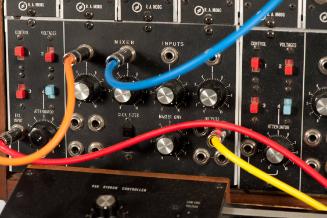
Moog Music, Inc.
1969
Not available for use in Recording Studios
On View: On exhibit
isVirtual:
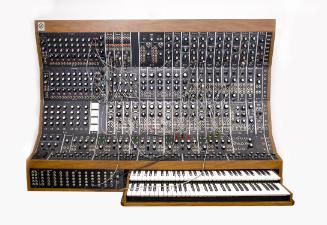
R.A. Moog Inc./ Moog Music Inc. (division of Norlin Music Instruments, Ltd.)
c. 1973
Available for use in Recording Studios
On View: Not currently on exhibit
isVirtual:
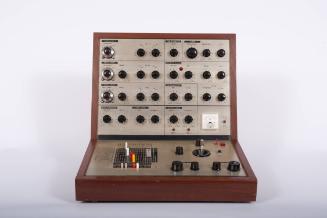
Electronic Music Studios (London) Limited
1969
Not available for use in Recording Studios
On View: Not currently on exhibit
isVirtual:
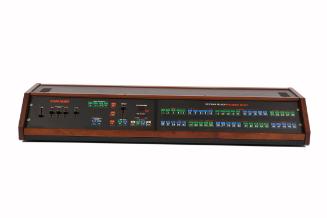
CBS Musical Instruments
c. 1982
Available for use in Recording Studios
On View: Not currently on exhibit
isVirtual:
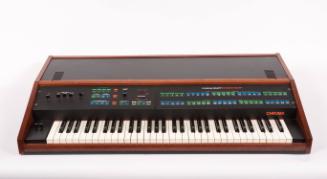
CBS Musical Instruments/Rhodes
c. 1982
Available for use in Recording Studios
On View: Not currently on exhibit
isVirtual:

Moog Music, Inc.
1973
Available for use in Recording Studios
On View: Not currently on exhibit
isVirtual:
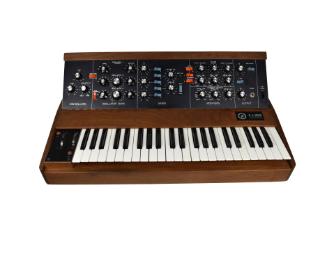
R.A. Moog, Inc.
1970
Available for use in Recording Studios
On View: Not currently on exhibit
isVirtual:
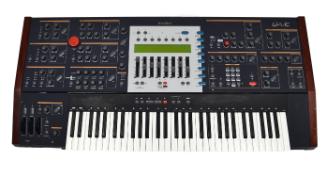
Waldorf Electronics GmbH
1993
Available for use in Recording Studios
On View: Not currently on exhibit
isVirtual: