
EN / FR
Skip to main content

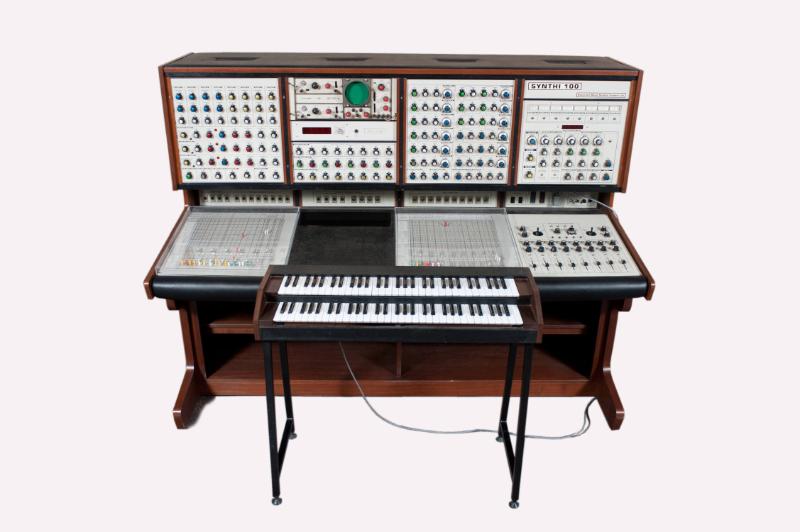
EMS Synthi 100

Available for use in Recording Studios
Not currently on exhibit
Artifact TypeSynthesizer
Manufacturer LocationUnited Kingdom, Europe
Date1972
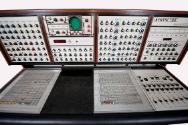
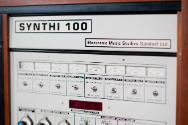
If you’ve ever watched ’70s-era Doctor Who or tuned into The Hitchhiker’s Guide to the Galaxy on BBC Radio, you’ve probably heard the Synthi 100. Designed by hardware engineer David Cockerell, this instrument helped define the sound of ’70s sci-fi. Produced by London’s Electronic Music Studios, the EMS company was to the European synthesizer market what Moog and ARP were to the American market. This particular Synthi 100 was housed within the Soviet Union’s Radio Melodiya, and was most famously featured in the score to Andrei Tarkovsky’s 1979 film Stalker.
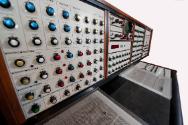
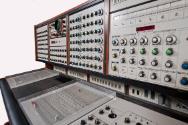
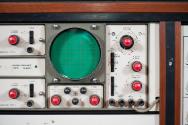
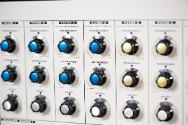
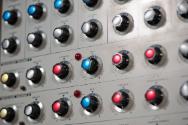
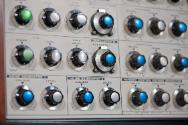
Operation/FunctionThis particular artifact is an analog, semi-modular synthesizer that contains twelve voltage-controlled oscillators (six in the normal audio range with sine and ramp waveforms, three in the normal audio range with variable pulse/square and triangle waveforms, and three in the low frequency range with variable pulse/square and triangle waveforms), four high-pass to resonating voltage-controlled filters, four low-pass to resonating voltage-controlled filters, three trapezoidal envelope shapers, two noise generators, a three ring modulators, two voltage-controlled spring reverberators, an eight-octave filter bank, eight input amplifiers, eight input channels, eight individual channel outputs, two envelope followers, an oscilloscope, a digital frequency meter, four treatment send and return lines, pitch/frequency to voltage converter, eight meters, a sequencer with clock display, keyboard output controls, sequencer output controls, a random voltage generator, three voltage-controlled slew limiters, two X-Y joystick controllers, two 60x60 matrix panels, and eight voltage-controlled output amplifiers with corresponding fader, filter, mute, and panner. Also comes equipped with a monophonic, dual-manual mechanical keyboard, each manual with five-octave compass.Cultural SignificanceModular synthesis has left an indelible mark on the way in which current trends in synthesizer design are informed. In the 1960s, these instruments offered a way forward for composers and musicians who felt stifled by the rigour of early electronic music techniques, such as those practiced in Germany and France throughout the 1950s. They promised new timbres and uninhibited methods of control and ultimately set into motion the foundations of synthesis practices that would follow throughout the 1970s and 1980s. In 1969, the instrument upon which the design of the Synthi 100 is based, the VCS3, effectively pioneered the first instantiation of what would become the fully integrated, compact analog synthesizer in the early 1970s. This approach, which was made more famous by instruments such as the Minimoog and ARP 2600 of 1970 and 1971, respectively, was not only technologically revolutionary, but had the added benefit of helping the synthesizer become more accessible to the public sphere in that they were more intuitive to program, far more portable, and significantly less expensive than their modular predecessors. The Synthi 100 did not have the same effect on account of its unwieldy size, and was reserved for the professional, commercial, and academic realms, appealing particularly to more experimental practices reflective of soundscape composition and ambient sound design. While Moog and ARP largely dominated the American market throughout the 1970s, EMS products, were used extensively throughout Europe, and especially in their home turf of the United Kingdom. The Synthi 100 in particular was Europe’s response to the larger modular systems of the American competitors, and was used by many high-profile studios, including the BBC Radiophonic Workshop and the Nordwestdeutscher Radiofunk (NWDR) in Cologne, Germany. While at these and other institutions, the Synthi 100 was used by numerous notable composers, including the famed avant-garde German composer Karlheinz Stockhausen (1928 – 2007). Despite its rather boutique usage, the Synthi 100 came to define the sound of many popular commercial recordings of the 1970s, having been used by the BBC on several episodes of Doctor Who and in the original Hitchhiker’s Guide to the Galaxy radio series.Technological SignificanceThe synthesizer is arguably one of, if not the most technologically significant contributions to the course of electronic music. Although earlier electronic instruments such as the Theremin and Ondes Martenot offered new and unique ways of articulating sound, their sonic template was, for the most part, quite limited, capable of producing only a few distinct timbres. The modern synthesizer, on the other hand, was viewed as an integrated electronic orchestra, as it were, allowing the user to sculpt a wide and varied array of tones and gestures. What’s more, it allowed the user to modify their sounds in real time, seemingly without the sorts of physical limitations imposed on acoustic instruments. Of course, each instrument did come with its own characteristic tonal qualities and control limitations, however the wealth of opportunity inherent in the ability to manipulate and define nearly every parameter of sound structure solidified the synthesizer’s place as one of the most powerful musical innovations of the twentieth century. The concept of modular design was initially quite desirable to professional and studio musicians in that it allowed one to more or less completely customize their instrument and modify its functions as desired. The modular nature of early synthesizers also meant that an array of patches, or defined sounds that could be altered in real time, were possible, offering the musician a high degree of flexibility and the opportunity to develop their own performance technique and signature tone. Analog modular synthesis was quite prevalent as a music-making practice in academic institutions and private studios throughout the late 1960s and into the early 1980s, both in Europe and throughout North America. Electronic instruments of this era were entirely transistor-based, with solid-state devices such as the transistor representing the next generation in technology following the vacuum tube, which was used extensively throughout the first half of the twentieth century. Solid-state technology was far smaller, lighter, more reliable, more durable, and less expensive than vacuum tube technology. This technology developed even further in around 1970 into the form of integrated circuits (ICs), which house the many discrete components of transistor-based circuits within a single silicon chip, as they are often called. Integrated circuits were significantly smaller and less expensive to manufacture than the circuits from which they derived. Although not all analog synthesizers designed in the very early 1970s employed integrated circuitry, their use was mostly standardized by the late 1970s with the inclusion of the first affordable eight-bit microprocessors, such as the Zilog Z80, that emerged mid-decade. As a result, integrated circuits adapted to incorporate more sophisticated digital components. Although modular-type systems are still in production today ¬– the Buchla 200e, for instance, is based on the modular design of the Buchla 200 analog system – the advent of affordable microprocessor chips in the mid 1970s and the rise of programmable polyphonic instruments in the late 1970s resulted in the relative obsolescence of the transistor-based systems of the early 1970s. The earliest dedicated studios that arose in the 1950s and 1960s consisted of discrete components such as sine, sawtooth, and square wave generators, filters, noise generators, mixers, and units for reverberation and ring modulation. The music making practice of the time was cumbersome, requiring the composer to record audio components onto magnetic tape, which would then undergo a series of splicing and manipulations. The modular systems of the late 1960s and 1970s were differentiated from their “primitive” counterparts in that they could be made to interact with one another under the governance of voltage control. The concept of voltage control, which was implemented into early electronic instruments such as Hugh Le Caine’s Electronic Sackbut, is based on the principle by which the function of electrical components relates to voltage, or the flow of electrical current. The most unique aspect of the concept of voltage control, which modular synthesizers took full advantage of, suggests that a voltage produced by one component or module can be used to control some function of another module via connection by patch cords or related means. These techniques enabled a very rich and highly interactive approach to the idiom of electronic music composition. The term ‘modular’ simply implies that various dedicated modules for sound production, manipulation, and amplification are integrated within a single cabinet, so as to operate as one system. The modular systems of the 1960s and 1970s were more compact than earlier synthesizers such as the RCA Mark II of the Columbia-Princeton Electronic Music Center, however their overwhelming size and hefty price tag often meant that they were accessible, for the most part, only to professionals, with a number of systems having initially been installed in recording studios and educational institutions. In response to this, most of the major companies of the era also released smaller, more portable systems (both modular and non-modular) throughout the 1970s that were also suitable for live performance, such as the Minimoog, ARP 2600 and Odyssey, EMS VCS3, and the Buchla Music Easel. Although most of these instruments borrowed elements from their modular ancestors, they were not in themselves modular by nature, but rather featured set configurations that were usually internally affixed. With the advent of integrated circuits, synthesizers increasingly began to adopt the smaller, more compact aesthetic exhibited in the performance-oriented instruments of the early 1970s, especially that of the revered Minimoog. The once popular modular approach gave way to more streamlined designs that, while still offering users the ability to control numerous aspects of the instrument’s tone and gesture, limited the way in which the instrument could be operated. Although the modular synthesizer was highly regarded for its flexibility, it was also criticized for being largely unintuitive and cumbersome in its patching schemes; the smaller, sophisticated digital-analog hybrids of the late 1970s, such as the Sequential Circuits Prophet 5, though still not relatively inexpensive, responded more readily to the technological demands of an increasingly burgeoning consumer market. The EMS VCS3, the instrument upon which the Synthi 100 is based, was a highly unique contribution to the development of synthesizer design in that it served to bridge the gap between the larger modular systems of the late 1960s with the first fully integrated performance-oriented systems of the early 1970s, such as the Minimoog and ARP 2600. Having predated the release of the Minimoog by a year, the VCS3 was effectively the first portable, integrated/modular hybrid synthesizer to emerge on the market. Unlike its modular predecessors, the various component modules – oscillators, filter, ring modulator, noise generator, etc. – contained within the VCS3 were subsumed under a single front panel, not separated. As such, the user was not able to customize their instrument, swapping out modules for others as conventionally done in modular synthesis. Much like the Minimoog, the functions of the VCS3 were pre-determined by the manufacturer and greatly limited in their number, allowing the instrument as a whole to be much smaller and far more portable than its modular counterparts. Although the Synthi 100 continued the semi-modular design, it greatly lacked the VCS3’s most successful feature, namely it’s portability. As such, the Synthi 100 did not enjoy as much usage as the VCS3, and was primarily relegated to the same status as the larger modular systems of the late 1960s, existing only in academic institutions or high-profile recording and electronic music studios. That being said, it was a highly flexible and sophisticated system, offering the user many additional features beyond those implemented in the VCS3. The Synthi 100 employs a similar patching matrix to that of the VCS3, however, given the expanded components of the former, the matrices were correspondingly enlarged from 16 x 16 to 60 x 60. Moreover, the audio signals and control voltages of the Synthi 100 were split into two different matrices. This practice was not common in modular synthesis, with most manufacturers using only a single type of connector for both audio and control signals; Buchla & Associates was the primary exception to this, allocating audio signals to 1/8” jacks and control signals to banana jacks. Perhaps the most problematic aspect of EMS’s patch pin approach, however, was that the resistor pins – and, in particular, the most commonly used white pins – came with relatively substantial variable tolerance allowances, often affecting the overall sound. This was not generally a problem with conventional patching cables, as the impedance inherent in most was too small to affect the instrument’s circuits. Moreover, the patching matrix was not buffered, so to speak, meaning that as subsequent pins are inserted, they will affect the behaviour of others. Although the Synthi 100 used updated circuit boards, its filters and oscillators were largely similar to the VCS3, with those of the former being notably more stable than those of the latter, and, thus, sounding slightly different. Among the Synthi 100’s more unique features were components such as the pitch to voltage converter, the envelope followers, send and receive effects lines, the oscilloscope, and the six-track, 256-step monophonic sequencer. The sequencer, which employed early digital technology, was groundbreaking for the time, standing only in competition with the 10- and 16-step analog sequencers of the American manufacturers. Although not necessarily among the most well known of the major synthesizer manufacturers, Electronic Music Studios (London) was certainly among the most sophisticated, ambitious, innovative, and pioneering. It is widely regarded that Peter Zinovieff’s MUSYS system, which was designed collaboratively by David Cockerell and Peter Grogono in the late 1960s, incorporating two DEC PDP8 minicomputers, was the first instance in which a computer was installed in a private home. Of course, by modern standards, these computers were incredibly primitive, containing at most just 12 kB of RAM. In the 1960s, however, consumer access to this kind of digital technology was unheard of, with most computers of the time existing only in universities or government facilities, and certainly not being employed for the sake of musical exploration. This, combined with the fact that MUSYS was programmed via a video monitor rather than punch card was truly astonishing. Despite being literally decades ahead of their time, EMS was unable to adapt and refine most of their innovative ideas into successful commercial ventures, succumbing to the fate of most of the major analog manufacturers in the 1980s and 1990s.Users/PerformersAlthough this particular artifact was used by various composers while at Radio Melodiya (one of the associated recording studios operated by the state-owned Melodiya recording label) in Moscow, its most famous user was the Russian composer, Eduard Artemiev. Artemiev was born 30 November 1937 in Novosibirsk, Russia, and is most well known for his collaborative soundtrack work with the experimental filmmaker, Andrei Tarkovsky, for whom he scored three major films throughout the 1970s: Solaris (1972), Mirror (1975), and Stalker (1979). Artemiev was classically trained at the Moscow Conservatory and cites as his influences the works of Russian composers Shostakovich and Stravinsky and French Impressionist composers Debussy and Ravel, in addition to works by the popular progressive rock groups of the time such as King Crimson and Pink Floyd. Throughout his career, Artemiev divided his time between Los Angeles, scoring larger Hollywood films, and Moscow, working on more experimental music at studios such as Radio Melodiya in addition to occasional orchestral and vocal works. While at the Moscow Conservatory, Artemiev came into contact with the composer Yevgeny Murzin, founder of the Experimental Electronic Music Studio in Moscow and inventor of the famed ANS synthesizer, named in reference to the initials of composer Alexander N. Scriabin. The ANS, completed in 1955, was a truly groundbreaking marvel, employing an early form of light-based synthesis technology; the instrument incorporated a series of 720 optic sound generators and related photoelectric circuitry. With its flexible and unconventional approach to musical concepts such as timbre and polyphony, the ANS proved highly influential on Artemiev’s developing preoccupation with the freedoms afforded by electronic music. He first employed the instrument in 1961, marking the beginning of his work in film scoring. Tarkovsky and Artemiev met in around 1970 at the home of visual artist Mikhail Romadin. Tarkovsky was emphatically interested in the emerging electronic medium in sound composition, and the two bonded over a common aesthetic based on the merging of sound and visuals to depict an immersive, highly conceptual space. Artemiev already had a significant number of collaborative film projects completed by the time his work began on Tarkovsky’s Solaris of 1972, which remains the only fully electronic score he produced. The score for Mirror (1975) was initially intended to contain only noise, and no structured musical themes. The score for Stalker was done in two different versions: the first was performed entirely by acoustic orchestra, but was rejected by Tarkovsky on the basis of being too direct; the second employed Eastern stringed instruments as a background texture, accompanied by solo melodic lines performed on the tar, a longitudinal flute primarily used during the Middle Ages, processed through the effects components of the Synthi 100 to give the impression of the sound hanging, so to speak, in space. This approach was informed by the contemplative qualities inherent in the Indian classical tradition, wherein a single basic tonality is extended and a melody is derived based on the rhythmic and melodic patterns that arise over time. Despite having worked on over 150 films, both in Russia and abroad, as well as numerous television and radio plays, documentaries, and even cartoons, the collaborative work completed between Artemiev and Tarkovsky stands as one of the most aesthetically successful in both artist’s careers, wherein the suspended nature of the visuals is meticulously reflected in the spaciousness of the accompanying audio. Artemiev also contributed the score for filmmaker Nikita Mikhalkov’s Burnt by the Sun of 1994, which received the Academy award for Best Foreign Language Film.
Object number2002.05.10.1-6
Photo credit: Don Kennedy
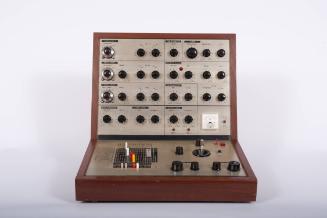
Electronic Music Studios (London) Limited
1969
Not available for use in Recording Studios
On View: Not currently on exhibit
isVirtual:
Photo credit: Don Kennedy
CBS Musical Instruments
1966
Available for use in Recording Studios
On View: Not currently on exhibit
isVirtual:
Photo credit: Meghan MacKrous, courtesy of the National Music Centre
Kurzweil Music Systems
1985
Available for use in Recording Studios
On View: Not currently on exhibit
isVirtual:

Photo credit: Don Kennedy
Francesco Bonafinis
c. 1560
Not available for use in Recording Studios
On View: On exhibit
isVirtual:
Photo credit: Don Kennedy
Kimball Piano and Organ Company
1924
Not available for use in Recording Studios
On View: On exhibit
isVirtual:
Photo credit: Don Kennedy
Symphonion Company
c. 1890
Not available for use in Recording Studios
On View: On exhibit
isVirtual:
Photo credit: Don Kennedy
Hohner Musikinstrumente GmbH & Co. KG
c. 1950
Not available for use in Recording Studios
On View: Not currently on exhibit
isVirtual:
Photo Credit: Don Kennedy
1984
Available for use in Recording Studios
On View: Not currently on exhibit
isVirtual:
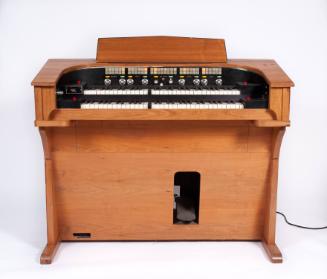
Photo credit: Don Kennedy
Chamberlin Instruments Company, Inc.
1970
Not available for use in Recording Studios
On View: On exhibit
isVirtual:
Photo credit: Don Kennedy
Radio-Victor Corporation of America (RCA)
1929
Not available for use in Recording Studios
On View: On exhibit
isVirtual:
Photo credit: Don Kennedy
Hohner Musikinstrumente GmbH & Co. KG
c. 1967
Available for use in Recording Studios
On View: Not currently on exhibit
isVirtual:
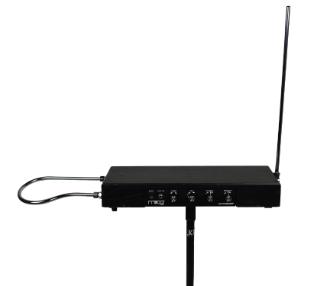
Photo credit: Meghan MacKrous, courtesy of the National Music Centre
Moog Music, Inc.
2001
Available for use in Recording Studios
On View: Not currently on exhibit
isVirtual:
Back