EN / FR
Skip to main content

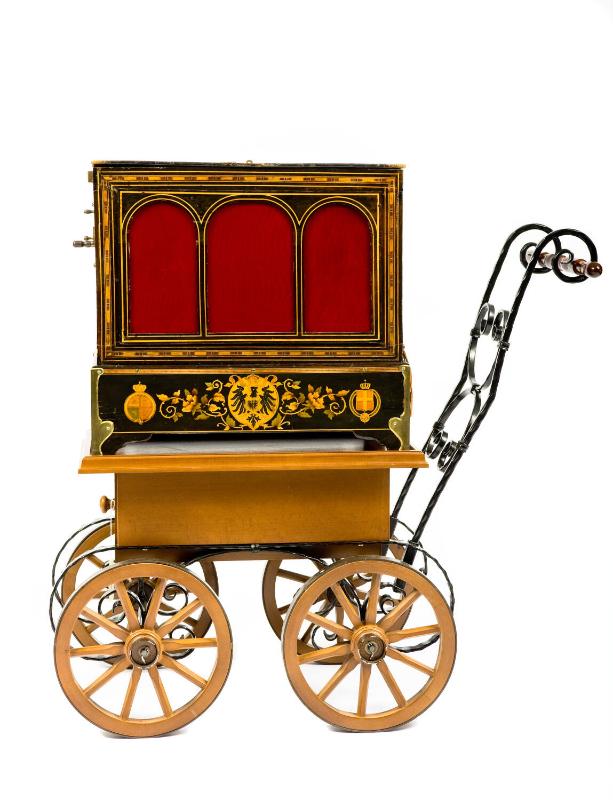
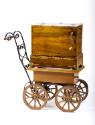
Bacigalupo Barrel Organ

Not available for use in Recording Studios
Not currently on exhibit
Artifact TypeOrgan, Barrel
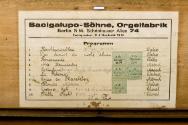
Manufacturer Bacigalupo-Söhne, Orgelfabrik barrel organ manufacturer | 1877 - 1977
Manufacturer LocationGermany, Europe
Datec. 1880
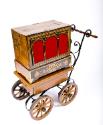
At a time when most popular music was performed in concert halls by professional musicians, the portable, self-playing barrel organ gave people the opportunity to listen to music and—for those without training—to play it. The Italian organ builder Giovanni Bacigalupo, who immigrated to Germany in 1873, manufactured this particular organ sometime around 1880 in Berlin. His family continued to produce such instruments in their Prenzlauer Berg factory for over a century, closing it in 1977. 
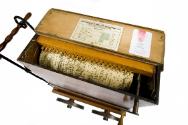
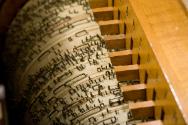
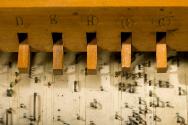
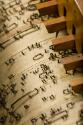
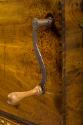
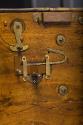
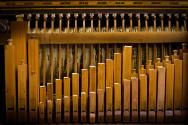
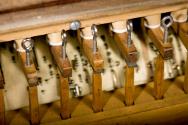
Operation/FunctionThis particular artifact consists of a wooden cabinet that houses the main components of the instrument: the wooden barrel, which contains a series of metal pins and staples, the wooden pipes (approximately 26 notes), and the connecting mechanism of levers, rods, and valves. On the exterior of the cabinet is a metal hand crank. The cabinet sits in a separate wooden roller, which employs four wheels and a handle for portability. The cabinet is highly decorated, featuring inlaid designs.Cultural SignificanceThe barrel organ holds a particularly significant place in the proliferation of musical technology to the greater population. The instrument stands as one of the first “commercially” accessible automated mechanical instruments, and was designed so as to allow those who were not professionally trained in the performance of an orchestral instrument to engage in some form of musical entertainment. Not only were those who may not have had the means to access professional training able to “perform” with these instruments, but also those who may not have had the means or interest to experience formalized musical performances were now being exposed to popular forms while running their day-to-day errands. Instruments such as the barrel organ eschewed in an era that saw increasing value placed on more informal methods of musical entertainment, including those that could be used in a number of uncommon public venues, and signaled a way of experiencing music that diverged from the exclusively orchestral contexts of concert hall settings. As such, the emergence of the barrel organ represented an initial trend in the proliferation of informal musical experience, and helped pave the way for instruments such as the player piano. Although more informal methods of interacting with music were less common throughout the nineteenth century, historical traditions that preceded the emergence of the concert hall advocated a similar concept that stressed the incorporation of music into everyday life. Today, the idea that music making is meant for only the formally or professionally trained is rather antiquated, with many technologies existing that offer greater flexibility for those wishing to engage in listening to or creating music for pure enjoyment or curiosity. The barrel organ remained a fixture in street life throughout the nineteenth and early twentieth centuries in Europe, though especially in Berlin where manufacture of the instrument was centered. Similarly, the concept of music being performed outside of its usual venues is also quite active today, with busking musicians ranging from professionally trained violinists to small electronic ensembles. Although other variations of the barrel organ mechanism existed prior to the late eighteenth century, it was not until this time that the instrument came into its portable and refined design, allowing it to be more accessible in the commercial market. The barrel organ was also written about extensively throughout the eighteenth century, which helped popularize the instrument by contributing to the public fascination with the sorts of automatic devices that were very popular at the time.Technological SignificanceInstruments such as the barrel organ represent an important steppingstone in the development of musical instrument technology in that they are automatic, in a sense, containing a mechanical mechanism that enables them to play themselves, so to speak. Although evidence of mechanisms similar to that used in the “modern” barrel organ can be traced back several centuries, it was not until the late eighteenth century that the instrument emerged in the refined and portable format that helped it gain its popularity throughout the nineteenth century. The instrument’s design, although borrowing elements from the music box and pipe organ, was groundbreaking in its portability and was revered for its ability to produce a commanding tone despite its small size. Its mechanical self-playing qualities helped pave the way for more modern instruments such as the player piano, and could even be viewed as influential on the development of audio playback and recording technologies. Moreover, the manner in which the pins and staples are arranged on the barrels essentially depicts an early iteration of a programming or coding language, which became essential to electronic instruments of the early digital age. The barrel itself represents an early example of recording technology, with musical information encoded into a physical medium that translates into sound when activated by the appropriate reader. In the barrel’s containing a number of different musical pieces, a comparison to recording media such as the long-playing record and cassette tape can easily be seen. The origin of the barrel organ dates to some time in the middle of the fifteenth century, located primarily in the Netherlands. The earliest barrel organs were quite different than the modern examples of the nineteenth century, with most exhibiting a very large size and more complicated internal structure. The earliest barrel organs were also self reliant, not requiring a player to activate the barrel’s rotation. Some early examples employed primitive combinations of gears and weights, similar to those found in other automatic devices such as clocks and carillons, however the first barrel organs are believed to have been powered by hydraulics. In a hydraulic mechanical system, water pressure would have been used to rotate the barrel, similar in concept to a watermill. The first published drawings and diagrams of this technology came from the Italian scholar Giambattista della Porta (about 1535 – 1615) in 1601, and from the French hydraulic engineer Solomon de Caus (1576 – 1626) in 1615. In de Caus’ treaty, the barrel of his organ contains four bellows that are moved via pulleys by the barrel, as well as movable barrel pins that could be rearranged to produce new pieces of music. Although de Caus is often credited with the invention of the hydraulic mechanical organ, he cites his design as being a modification of ancient designs in its replacing the keyboard of early organs with a self-playing wheel. Throughout the eighteenth century, the instrument was often recognized as the ‘Dutch’ organ or the ‘hand’ organ, and was referred to in numerous texts as a fascinating machine that, according to the writings of English art historian and antiquarian Horace Walpole in 1737, “is a thing that will play eight tunes. Handel and all the great musicians say that it is beyond anything they can do, and this may be performed by the most ignorant person, and when you are weary of those eight tunes, you may have them changed for any other that you like.” The “modern” barrel organ, which referred primarily to the small, hand-cranked machine popular with street performers, reached its construction apex in the late eighteenth century. Throughout the nineteenth and twentieth centuries, however, the barrel organ underwent several modifications to accommodate more flexibility in the instrument’s range. The French manufacturer Gavioli was the first to adopt new barrel systems that would allow for greater choices in musical repertoire. Their first modification was a mechanism referred to as ‘book music’, which consisted of a perforated roll of cardboard. Book music was durable, and had the added advantage of being cheaper to manufacture than wooden barrels. Many manufacturers began to incorporate this system, as well as a later system that employed paper rolls, similar to those used on player pianos. In either case, instruments that employed either the book or roll system employed a mechanism powered either by air pressure, suction, or mechanical means, though the latter became less frequent. In order to withstand repeated usage, cardboard books were often coated with a layer of shellac, while paper rolls were typically constructed of heavier and more moisture-resistant paper stocks. Barrel organs of the eighteenth and nineteenth centuries were often smaller instruments, though a number of larger and more complex examples, including some that featured multiple barrels, were produced for use in venues such as churches and chapels. Although the production of barrel organs began to wane in the early twentieth century, the majority of instruments that have been manufactured since the mid twentieth century tend to incorporate an electric mechanism for rotating the barrel and operating the bellows.Users/PerformersUnfortunately, there is little documented information about popular users of the barrel organ. It is likely the case that, since barrel organs were primarily used informally by those who were not trained or particularly skilled in the performance of conventional musical instruments, the identity of the organ grinder controlling the instrument was not often recognized.
Object number1998.06.01
Photo credit: Don Kennedy
Kimball Piano and Organ Company
1924
Not available for use in Recording Studios
On View: On exhibit
isVirtual:
Photo credit: Don Kennedy
Frank Morse Robb
1937
Not available for use in Recording Studios
On View: On exhibit
isVirtual:
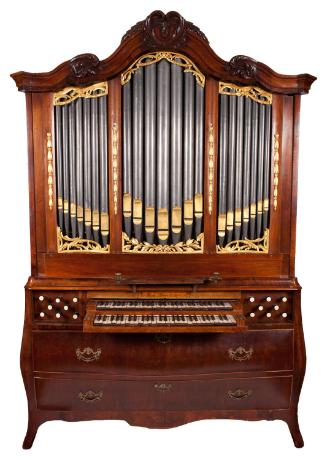
Photo credit: Don Kennedy
Hendrik Anthonie Meijer
1785
Not available for use in Recording Studios
On View: Not currently on exhibit
isVirtual:
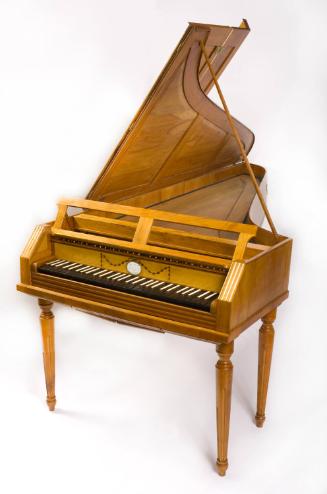
Photo credit: Don Kennedy
Louis Dulcken II
1791
Available for use in Recording Studios
On View: Not currently on exhibit
isVirtual:
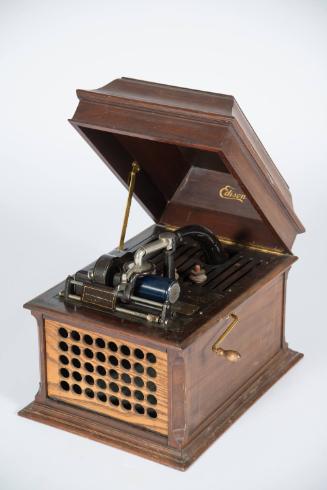
Photo credit: Don Kennedy
Thomas Alva Edison
1904
Not available for use in Recording Studios
On View: On exhibit
isVirtual:
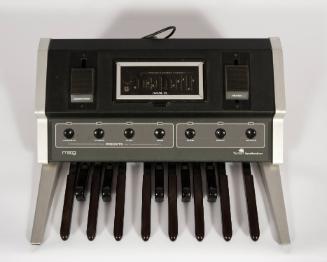
Photo credit: Don Kennedy
Moog Music, Inc.
c. 1978
Not available for use in Recording Studios
On View: On exhibit
isVirtual:
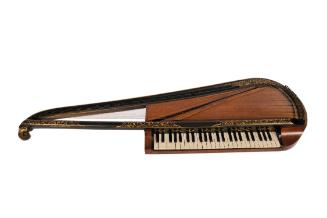
Photo credit: Don Kennedy
Carl (Karl) Leopold Röllig
c. 1800
Not available for use in Recording Studios
On View: Not currently on exhibit
isVirtual:
Photo credit: Don Kennedy
Streetly Electronics/ Mellotronics/ Mellotron
1971
Not available for use in Recording Studios
On View: On exhibit
isVirtual:
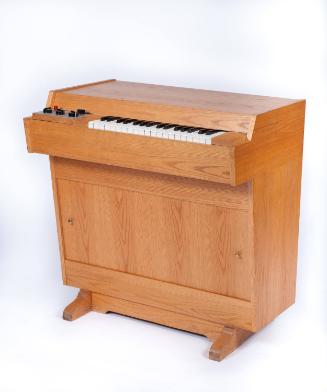
Photo credit: Don Kennedy
Mellotron (Mellotronics Manufacturing)
1973
Not available for use in Recording Studios
On View: Not currently on exhibit
isVirtual:
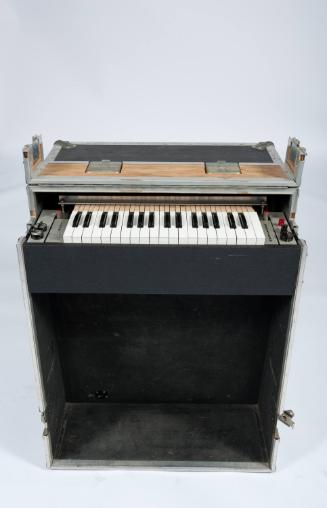
Photo credit: Don Kennedy
Novatron
c. 1981
Available for use in Recording Studios
On View: Not currently on exhibit
isVirtual:
Photo credit: Don Kennedy
Oscar Schmidt Company
Unknown
Not available for use in Recording Studios
On View: Not currently on exhibit
isVirtual:
Photo credit: Don Kennedy
Hammond Organ Company
1957
Not available for use in Recording Studios
On View: Not currently on exhibit
isVirtual:
Back