EN / FR
Skip to main content

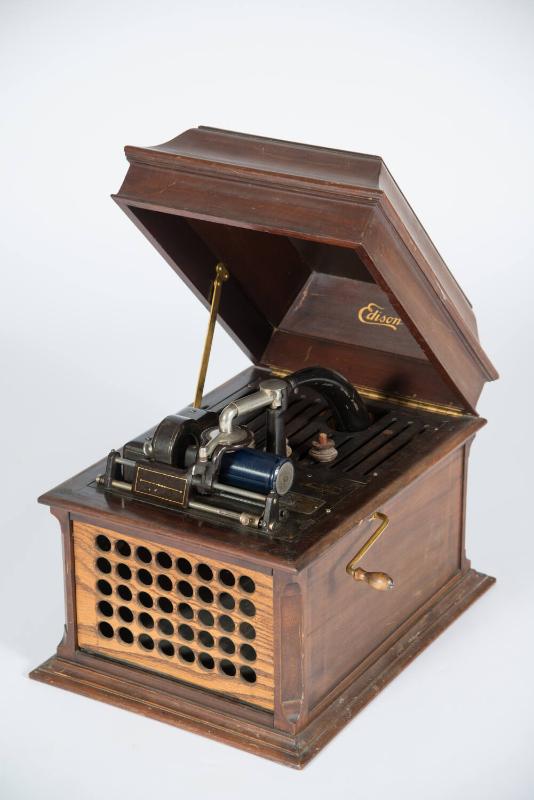
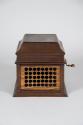
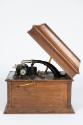
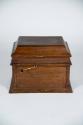
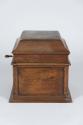
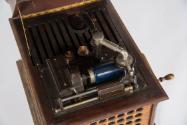
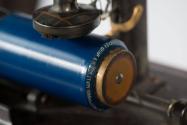
Edison Phonograph

Not available for use in Recording Studios
On exhibit
On exhibit
Artifact TypeSound Equipment, Phonograph
Manufacturer Thomas Alva Edison 1847 - 1931
Manufacturer LocationUSA, North America
Date1904
Thomas Edison invented it all—the incandescent light bulb, the motion picture camera and this, the world’s first sound recording and reproduction device. A longtime telegraph operator, Edison combined that technology with the telephone to mechanically translate sounds into a physical recording that could be played back. The phonograph was so dazzling that it earned Edison the nickname “The Wizard of Menlo Park.”
Operation/FunctionThis artifact is comprised of a metal stylus, diaphragm, and bell component. It is capable of playing both early and later wax cylinders, which sit on the device’s metal mandrel, or shaft while being rotated.Cultural SignificanceAlong with the advent of radio technology in the 1920s, the introduction of the phonograph in the late 1870s significantly altered the way in which the general public was able to access and control acoustic, or sound, communication. Recorded music has had a major impact on the course of the music industry and remains, for most members of the public, their primary form of interaction, largely shifting the function of live music from one of necessity to a chosen experiential or aesthetic status.Technological SignificanceThe phonograph emerged as the invention of Thomas Edison in a merging of technologies used in the telegraph and telephone. The earliest iteration of the device, which developed in 1877, consisted in a machine that was designed to inscribe telephone messages as imprints onto paper. Edison’s design incorporated a crude diaphragm with a pointed device that was held against a piece of moving paraffin paper. The diaphragm was used to collect vibrations from a spoken voice, which in turn caused the pointed device to create indentations into the paper. A prototype of the machine, constructed in December 1877 by John Kruesi, was tested by Edison himself, who spoke the nursery rhyme, Mary Had a Little Lamb; this stands as the first recorded sound. Although a similar device was theorized by the French inventor, Charles Cros, also in 1877, Edison’s remained the only one that was brought into production. Following this prototype, subsequent versions of the device replaced the paper first with a tinfoil-covered cylinder. Several other inventors joined the market throughout the 1880s, including renowned scientist Alexander Graham Bell, who used a portion of the funds he received from the Volta Prize, which was granted by the French government in 1880 for his invention of the telephone, to further electrical and acoustic research. Bell is credited with the introduction of wax-covered cylinders and a floating rather than rigid stylus, receiving patents for his design in 1886. The next significant development of the phonograph came in the early 1900s, with stronger construction and the replacement of spring motors with electric motors. In 1900, the inventor Thomas Lambert received a patent for the mass production of cylinders made from celluloid plastic; this, coupled with the development of the gold molded process, allowed for mass reproduction of sound material. The celluloid, or so-called “indestructible”, series of cylinders was licensed to many of the major manufacturers, including Columbia and Edison. Edison also made several improvements to the design of the device’s bell or horn, including designing unique models with an internal unit. In the early 1910s, the wax cylinder was largely eclipsed by the flat disc, primarily due to the cheaper manufacturing costs associated with the latter. This transition was first initiated by Emile Berliner in the late 1890s. Although the cylinder had the advantage of being capable of rerecording by shaving off the upper layer of wax, arguably better sound fidelity on account of linear rather than circular tracking, and less deterioration over time on account of stylus synchronization, phonographs were expensive, fragile, and cumbersome devices and cylinders were difficult to store and preserve. Improvements in the design of disc players resulted in the introduction of a gear system to turn the device’s belts, making playback more stable. The disc format also allowed for pressing on both sides, which was pioneered by Columbia in 1908, and, thus, greater storage capacity. In 1955, the first transistor-based disc players were introduced by Philco.Users/PerformersThe earliest phonographs were used for a variety of purposes: as a dictation device, to produce phonographic books for the blind, to reproduce music, to provide a registry or sonic “album” for families containing the voices of dying members, and to offer reminders or educational aids.
Object numberT.2016.11.01.1-22
Photo credit: Hayley Robb, courtesy of the National Music Centre
c. 2015
Not available for use in Recording Studios
On View: On exhibit
isVirtual:
Photo credit: Don Kennedy
c.1920
Not available for use in Recording Studios
On View: On exhibit
isVirtual:
Photo credit: Don Kennedy
c.1920
Not available for use in Recording Studios
On View: On exhibit
isVirtual:
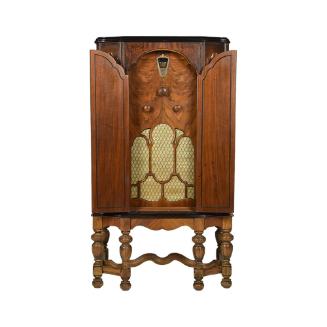
Photo credit: Hayley Robb, courtesy of the National Music Centre
1932
Not available for use in Recording Studios
On View: On exhibit
isVirtual:
Photo credit: Don Kennedy
Electro Music / Donald Leslie
c.1972
Available for use in Recording Studios
On View: Not currently on exhibit
isVirtual:
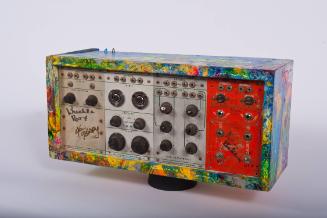
Photo credit: Don Kennedy
Donald Buchla
c. 1966
Not available for use in Recording Studios
On View: On exhibit
isVirtual:
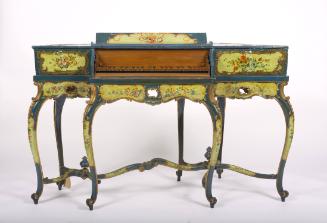
Photo credit: Don Kennedy
Francesco Bonafinis
c. 1560
Not available for use in Recording Studios
On View: On exhibit
isVirtual:
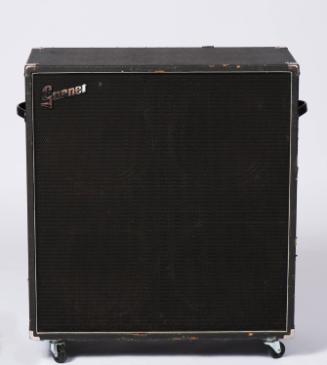
Photo credit: Don Kennedy
Garnet "Gar" Gillies
1965 through 1980
Not available for use in Recording Studios
On View: On exhibit
isVirtual:
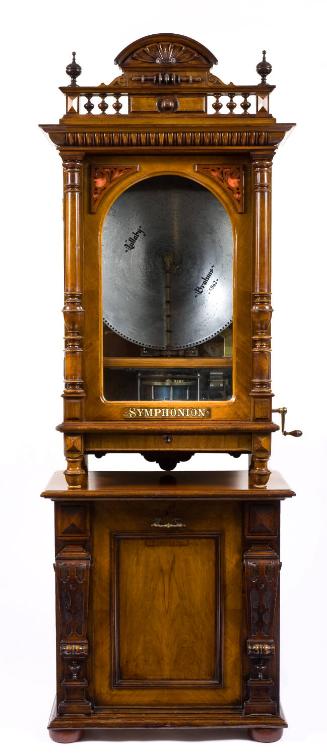
Photo credit: Don Kennedy
Symphonion Company
c. 1890
Not available for use in Recording Studios
On View: On exhibit
isVirtual:
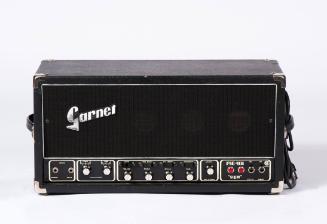
Photo credit: Don Kennedy
Garnet "Gar" Gillies
Available for use in Recording Studios
On View: Not currently on exhibit
isVirtual:
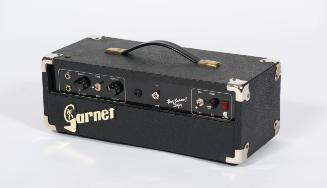
Photo credit: Don Kennedy
Garnet "Gar" Gillies
c. 1960
Not available for use in Recording Studios
On View: On exhibit
isVirtual:
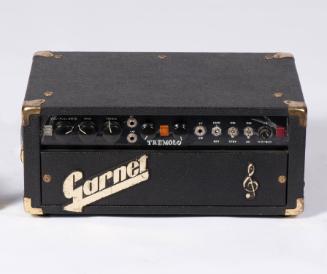
Photo credit: Don Kennedy
Garnet "Gar" Gillies
Available for use in Recording Studios
On View: Not currently on exhibit
isVirtual:
Back