EN / FR
Skip to main content

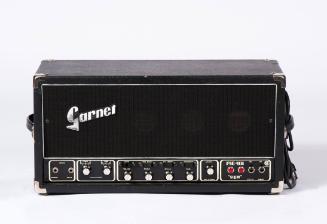
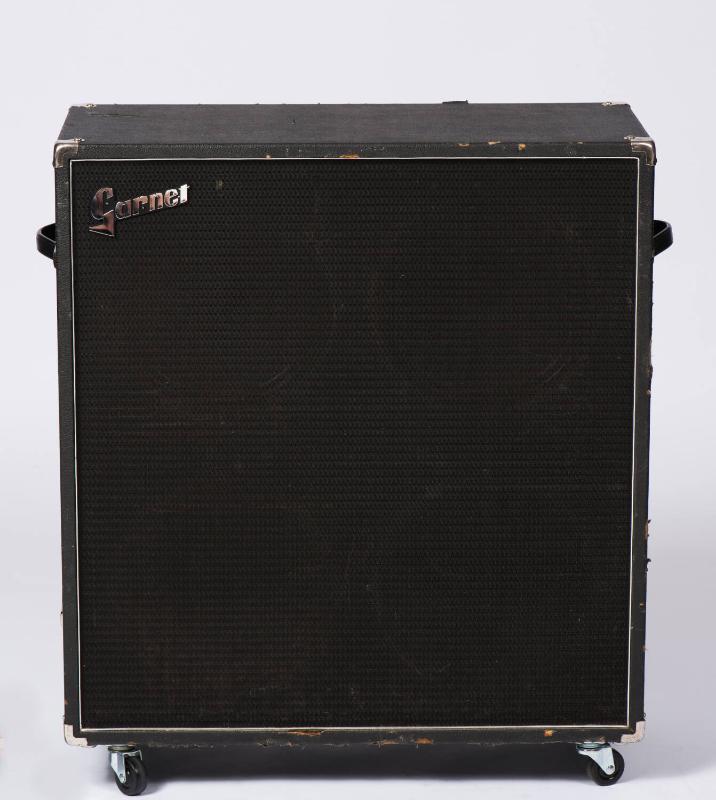
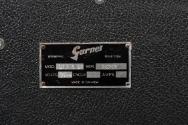
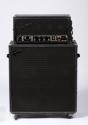
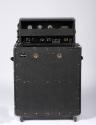
Garnet Speaker

Not available for use in Recording Studios
On exhibit
On exhibit
Artifact TypeSpeaker Cabinet
Manufacturer Garnet "Gar" Gillies amplifier-maker, electronic engineer, musician | 1921 - 2006
Manufacturer LocationManitoba, Canada, North America
Date1965 through 1980

Were it not for the innovations made by musician and tube amp repairman Thomas “Gar” Gillies, the world may never have been exposed to “the Winnipeg sound.” An overdriven, sustained guitar tone embodied by songs like The Guess Who’s “American Woman” – the “sound” derived from the tube amps and distortion units developed by Gillies and his sons, Garnet and Russell. The Garnet Amplifier Company produced sound equipment for many artists, including Neil Young and Big Sugar—but it was the exclusive patronage of The Guess Who that truly cemented its reputation.


Donated by Brian Mills

Operation/FunctionSpeaker cabinet with four 12” driver speakers, built into Tolex case.Cultural SignificanceToday, Garnet units are some of the most sought-after vintage gear, known for their sonic quality, reliability, and innovative characteristics, and often sell for far more than they were originally worth. They are especially important to the context of Canadian music in that they helped define a particular sound within the country. They maintained this association even while garnering greater popularity in the United States. The ‘412’ and ‘stack’ configurations were both pioneered by Marshall in the 1960s, initially consisting of an amp head resting on an 8x12 (eight 12” drivers within a single cabinet). This was later split for logistical reasons, resulting in the standardized 4x12 design, which is often simply referred to as a 412.Technological SignificanceThe tone and sound quality of Garnet equipment has been compared to similar units made by Marshall (founded 1960 in London, UK), Traynor (formed 1963 in Ontario, Canada by Pete Traynor, founder of Yorkville Sound), and Fender (founded as a musical instrument manufacturer in 1946 in Arizona, USA, later based in California, USA). Though Garnet systems were not regarded as having a particularly wide range of tone – at least not to the same extent as their competitors – they have been hailed for their durability and reliable build. The Garnet Amplifier Company remained dedicated to producing tube-based equipment, with Gillies citing a warmth of tone that could not be imitated in modern technology. As a result, however, Garnet was not able to maintain as strong a presence in the market as technology adjusted toward transistor-based units, which were less expensive to manufacture and repair. Despite Garnet’s inability to keep up with the market and eventual closure of the company in 1989, however, Gillies’ point was not lost on the musical community: throughout the 1980s, even as constant developments and improvements were made to solid-state amplifiers, many musicians eventually returned to the tube-based units in search of the richer and more harmonically-lush tones that Gillies’ had believed would be lost in the transition. Loudspeakers are, of course, an essential component in the amplification system. Depending on the function of the speaker, some, such as those used with stereo equipment, are designed to be as faithful as possible to the input sound, while others, such as the iconic Leslie 122, serve the purpose of modifying the output sound. Many loudspeaker units of the 1960s and 1970s incorporated various effects such as reverb and distortion, giving the musician another tool with which to specialize their sound. Unlike the majority of electronics, a good number of amplifiers and preamplifiers did not make the switch from earlier vacuum tube, or valve as they were commonly called, technology to solid-state transistorized technology. Vacuum tubes were the primary electronic components used throughout the first half of the twentieth century and were largely replaced in most electronic devices throughout the late 1950s and early 1960s by solid-state technology and, later, by transistorized and digital integrated circuits. With respect to amplifiers, vacuum tubes offer a high tolerance to distortion or overdrive, which serves to give the output sound characteristic warmth that is often desired among musicians. As such, many prefer to use vintage tube-based amplifiers and speakers over more modern transistorized units. The earliest loudspeakers were developed during the telephone era of the late nineteenth century, but were made far more feasible with the introduction of the vacuum tube in the early twentieth century. The dynamic speaker is the most common type used in amplification systems, designed in 1925 by Edward Kellogg and Chester Rice.Users/PerformersRandy Bachman (born 1943 in Winnipeg, Manitoba), guitarist, songwriter, and radio host, best known as the lead guitarist and one of the founding members of The Guess Who and Bachman-Turner Overdrive. Bachman began his musical career as a child, studying violin in the Royal Conservatory of Toronto system; he would later cite his affection for the sustain of string instruments as informative of his desired sound in the Garnet Herzog amplifier and distortion unit. In 1960, Bachman co-founded the group Al and The Silvertones with Chad Allan, changing the name in 1962 to Chad Allan and the Expressions, and again to The Guess Who. In 1966, Burton Cummings replaced Chad Allan as front man of the band. Bachman co-wrote many of the songs on the first three albums, all of which feature Garnet amplifiers: Wheatfield Soul (1968), Canned Wheat (1969), and American Woman (1970). The single “American Woman” reached number 1 on the U.S. charts in 1970, the first time this achievement had been earned by a Canadian group. Bachman left the group following the release of American Woman, citing irreconcilable differences in lifestyle. Bachman also recorded a solo album at this time, Axe, which was released in March 1970 on RCA Records. In 1971, he and Chad Allan formed the band Brave Belt, later changing the name to Bachman-Turner Overdrive, in reference to a Garnet amplifier, the Big Time Operator, or BTO. The group released their first album, Bachman-Turner Overdrive in 1973. Bachman eventually left BTO in 1977 to pursue a series of solo recordings and collaborations. Bachman was the recipient of an honorary doctorate from Brandon University (Brandon, Manitoba) in 2001, in 2005 he was awarded the Order of Manitoba, and in 2008 he was made an Officer of the Order of Canada. The Guess Who received The Governor General’s Performing Arts Award in 2002.
Object number2016.12.01
Photo credit: Don Kennedy
Garnet "Gar" Gillies
Available for use in Recording Studios
On View: Not currently on exhibit
isVirtual:
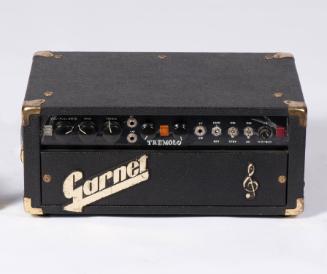
Photo credit: Don Kennedy
Garnet "Gar" Gillies
Available for use in Recording Studios
On View: Not currently on exhibit
isVirtual:
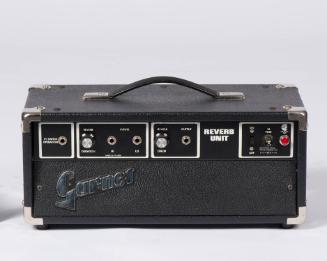
Photo credit: Don Kennedy
Garnet "Gar" Gillies
Available for use in Recording Studios
On View: Not currently on exhibit
isVirtual:
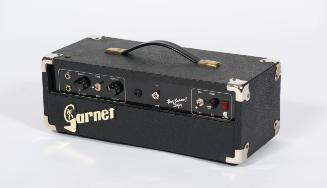
Photo credit: Don Kennedy
Garnet "Gar" Gillies
c. 1960
Not available for use in Recording Studios
On View: On exhibit
isVirtual:
Photo credit: Don Kennedy
Edward "Ted" Rogers Sr.
1935
Not available for use in Recording Studios
On View: Not currently on exhibit
isVirtual:
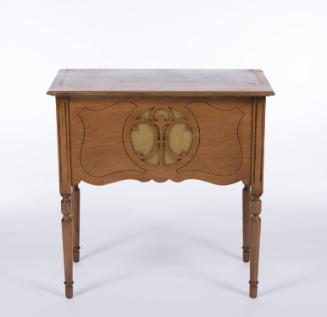
Photo credit: Don Kennedy
Edward "Ted" Rogers Sr.
c. 1920
Not available for use in Recording Studios
On View: Not currently on exhibit
isVirtual:
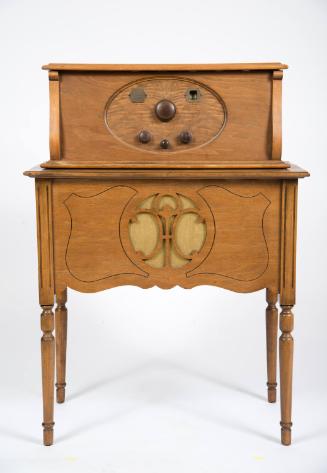
Photo credit: Don Kennedy
Edward "Ted" Rogers Sr.
1928
Not available for use in Recording Studios
On View: Not currently on exhibit
isVirtual:
Photo credit: Don Kennedy
CBS Musical Instruments
1966
Available for use in Recording Studios
On View: Not currently on exhibit
isVirtual:
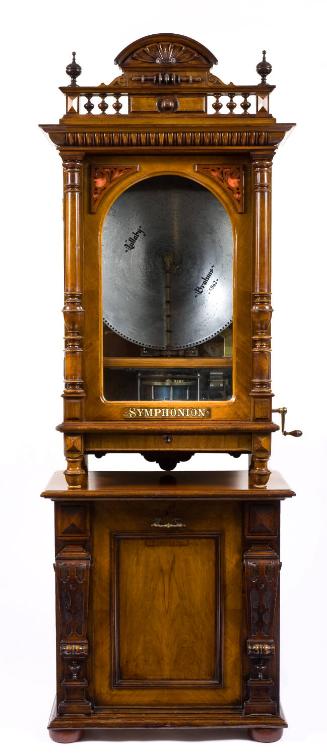
Photo credit: Don Kennedy
Symphonion Company
c. 1890
Not available for use in Recording Studios
On View: On exhibit
isVirtual:
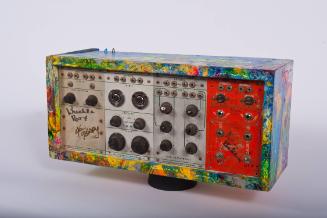
Photo credit: Don Kennedy
Donald Buchla
c. 1966
Not available for use in Recording Studios
On View: On exhibit
isVirtual:
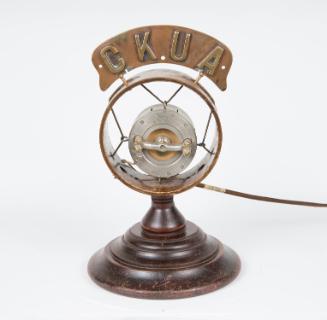
Photo credit: Don Kennedy
Western Electric Company, Inc.
c. 1920
Not available for use in Recording Studios
On View: On exhibit
isVirtual:
Photo credit: Don Kennedy
Electro Music / Donald Leslie
c.1972
Available for use in Recording Studios
On View: Not currently on exhibit
isVirtual:
Back